Testamentary Trust Agreement For Disabled Person
Description
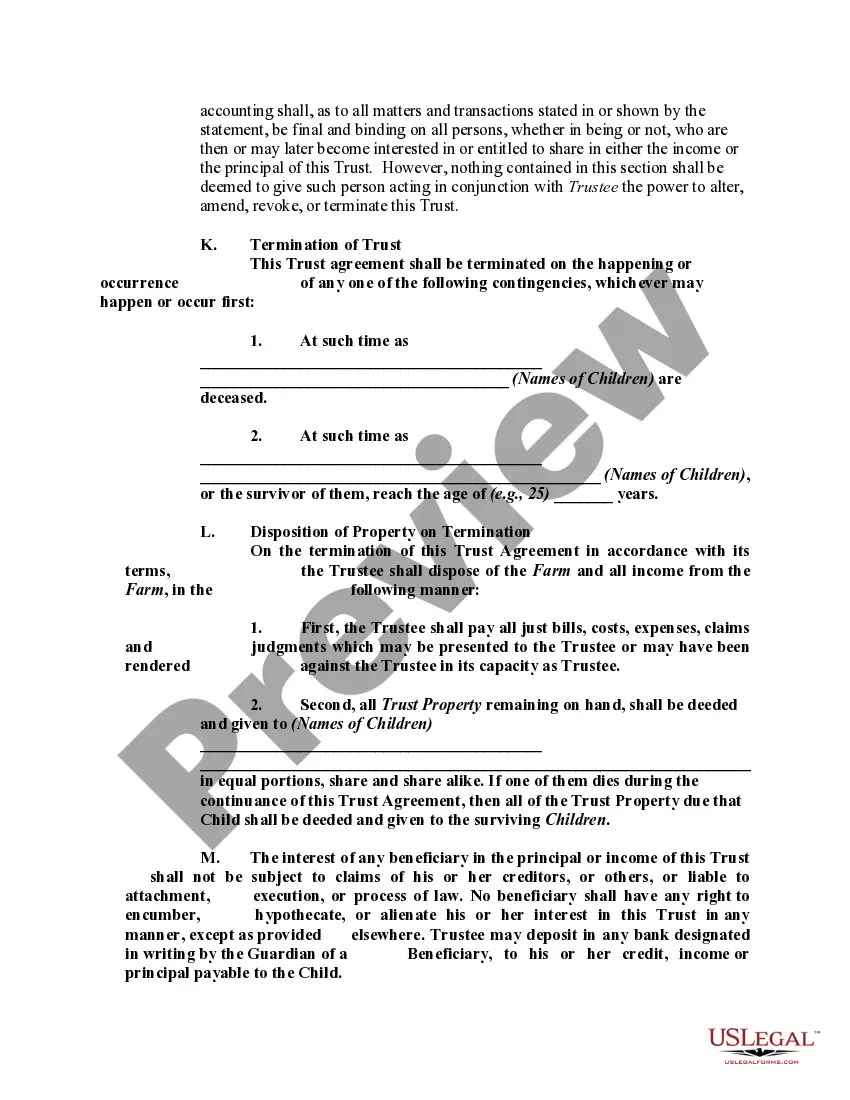
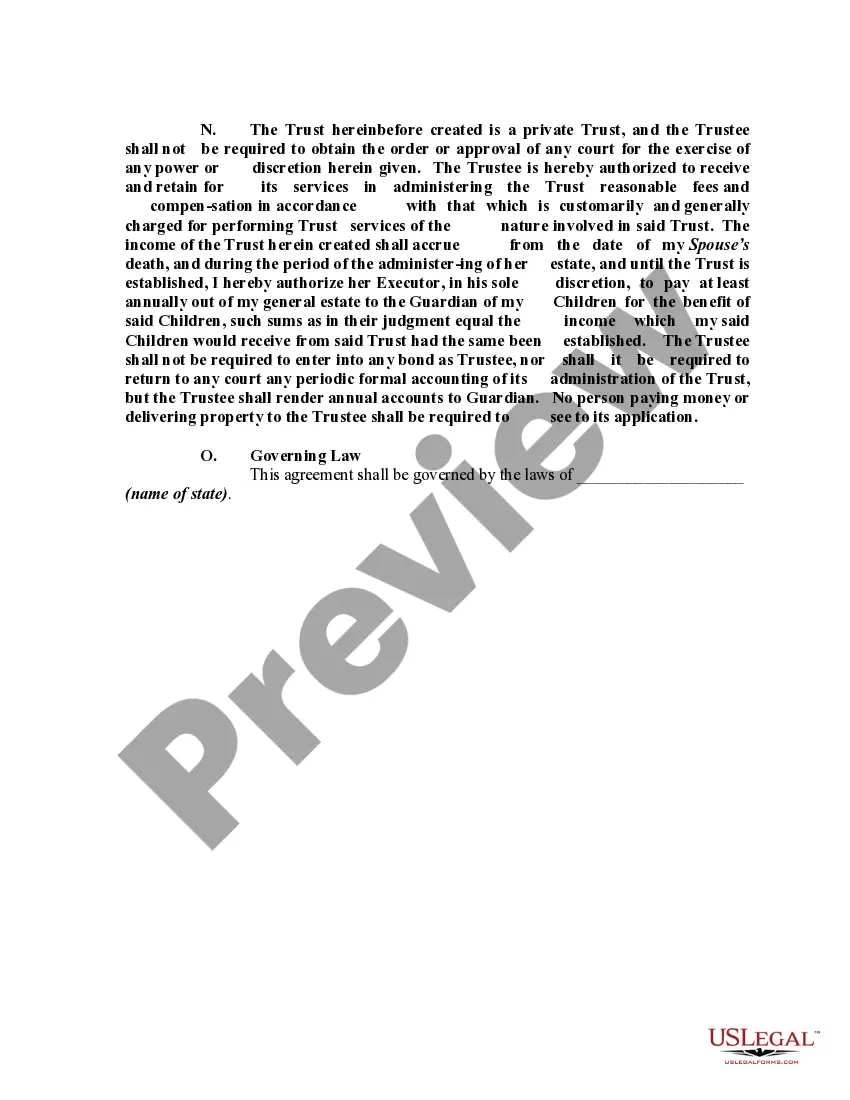
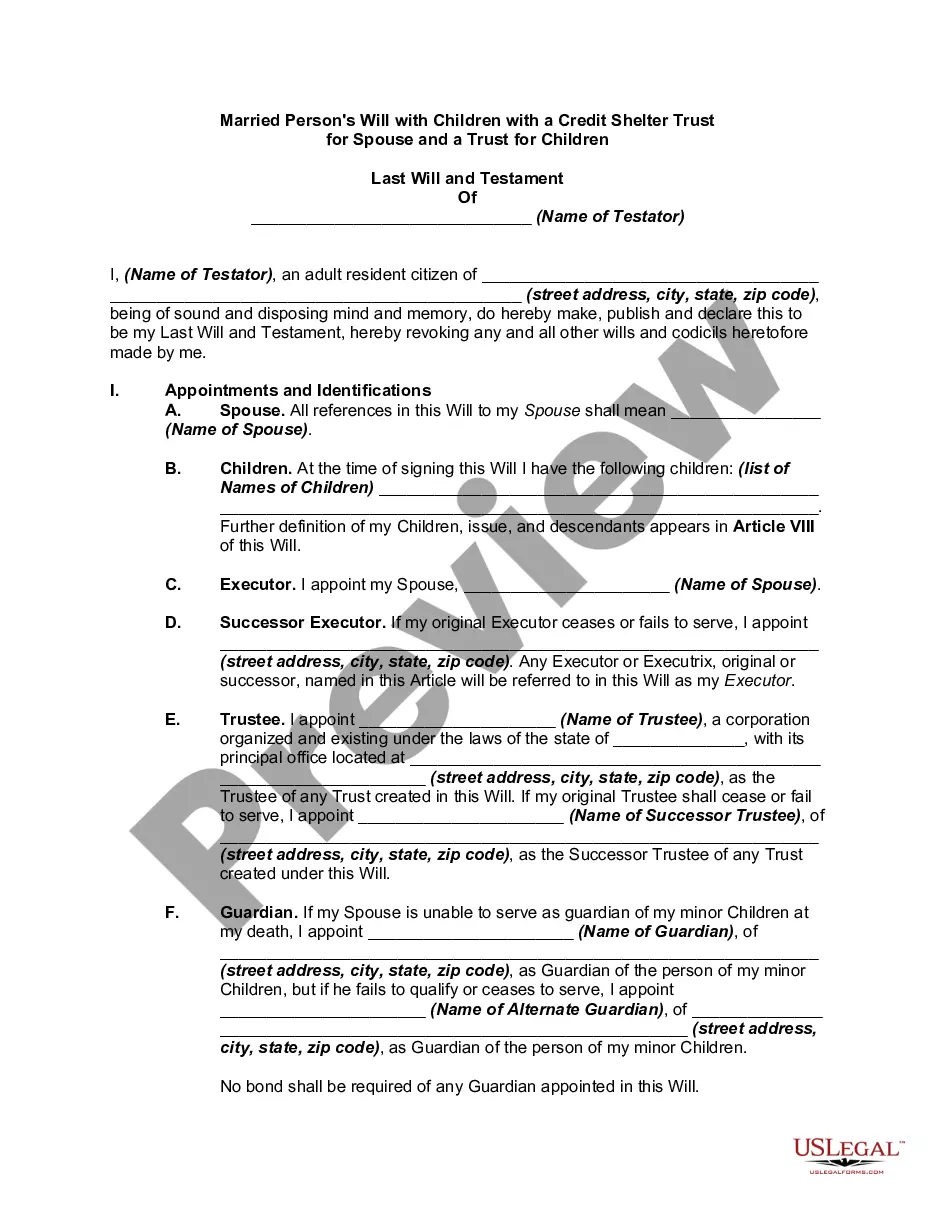
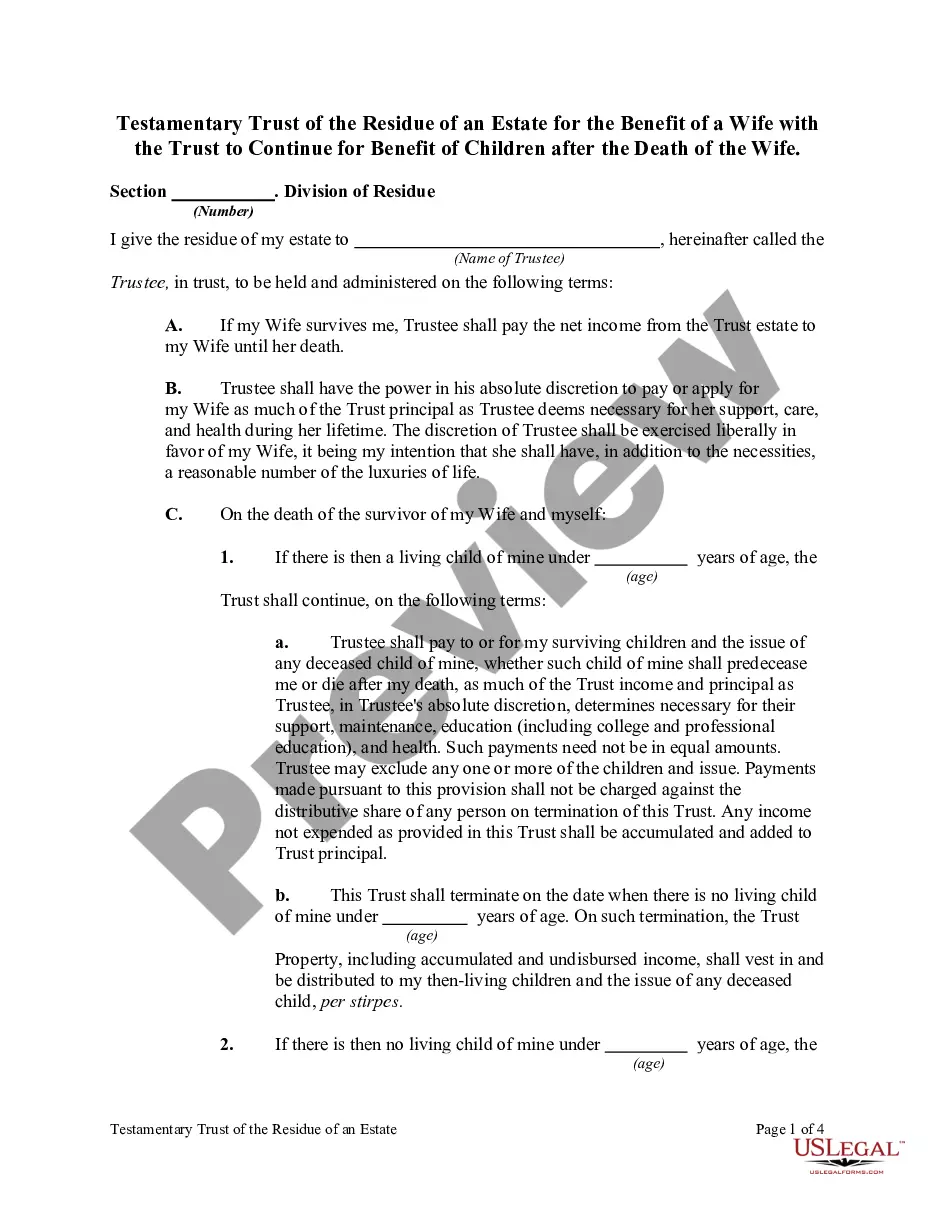

Get your form ready online
Our built-in tools help you complete, sign, share, and store your documents in one place.
Make edits, fill in missing information, and update formatting in US Legal Forms—just like you would in MS Word.
Download a copy, print it, send it by email, or mail it via USPS—whatever works best for your next step.
Sign and collect signatures with our SignNow integration. Send to multiple recipients, set reminders, and more. Go Premium to unlock E-Sign.
If this form requires notarization, complete it online through a secure video call—no need to meet a notary in person or wait for an appointment.
We protect your documents and personal data by following strict security and privacy standards.

Make edits, fill in missing information, and update formatting in US Legal Forms—just like you would in MS Word.

Download a copy, print it, send it by email, or mail it via USPS—whatever works best for your next step.

Sign and collect signatures with our SignNow integration. Send to multiple recipients, set reminders, and more. Go Premium to unlock E-Sign.

If this form requires notarization, complete it online through a secure video call—no need to meet a notary in person or wait for an appointment.

We protect your documents and personal data by following strict security and privacy standards.
Looking for another form?


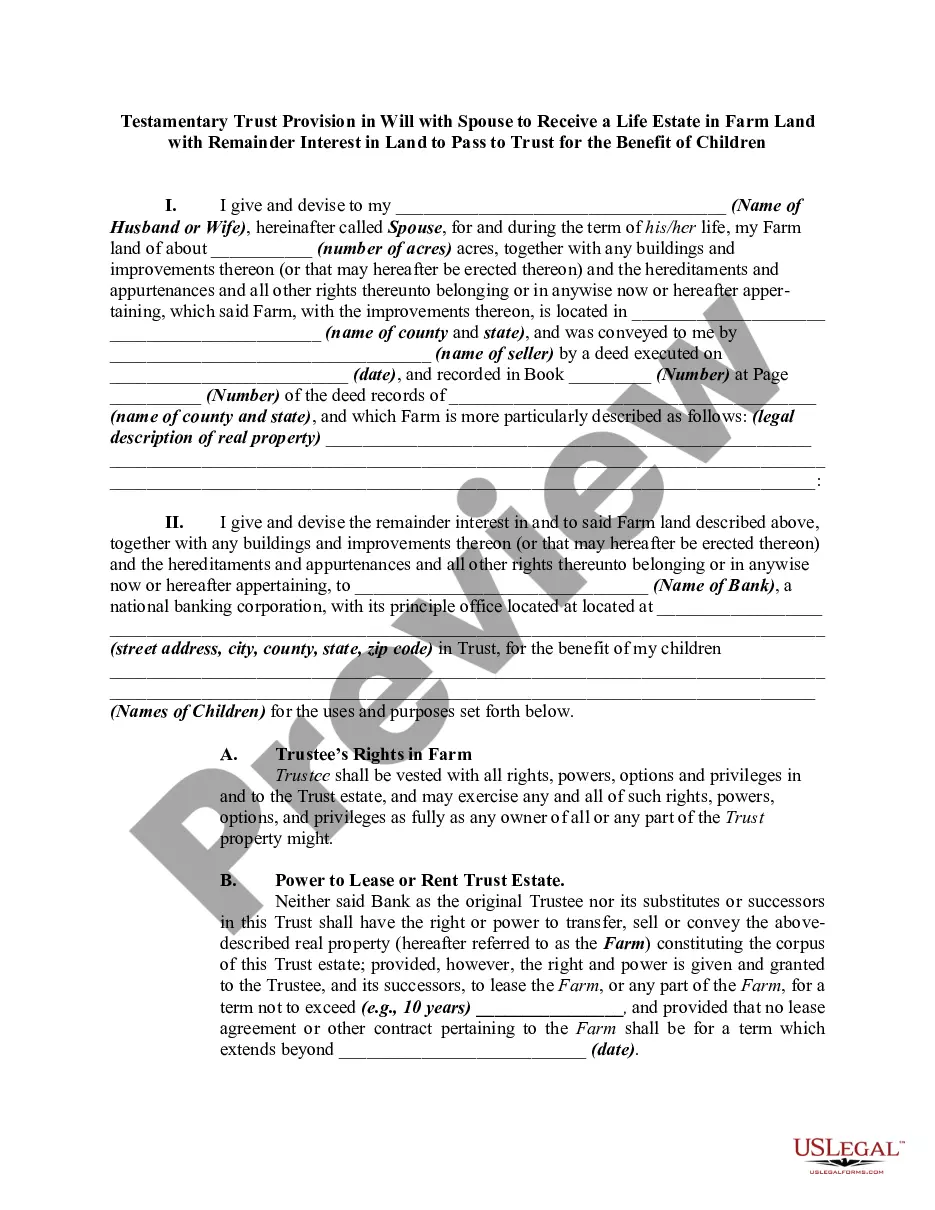
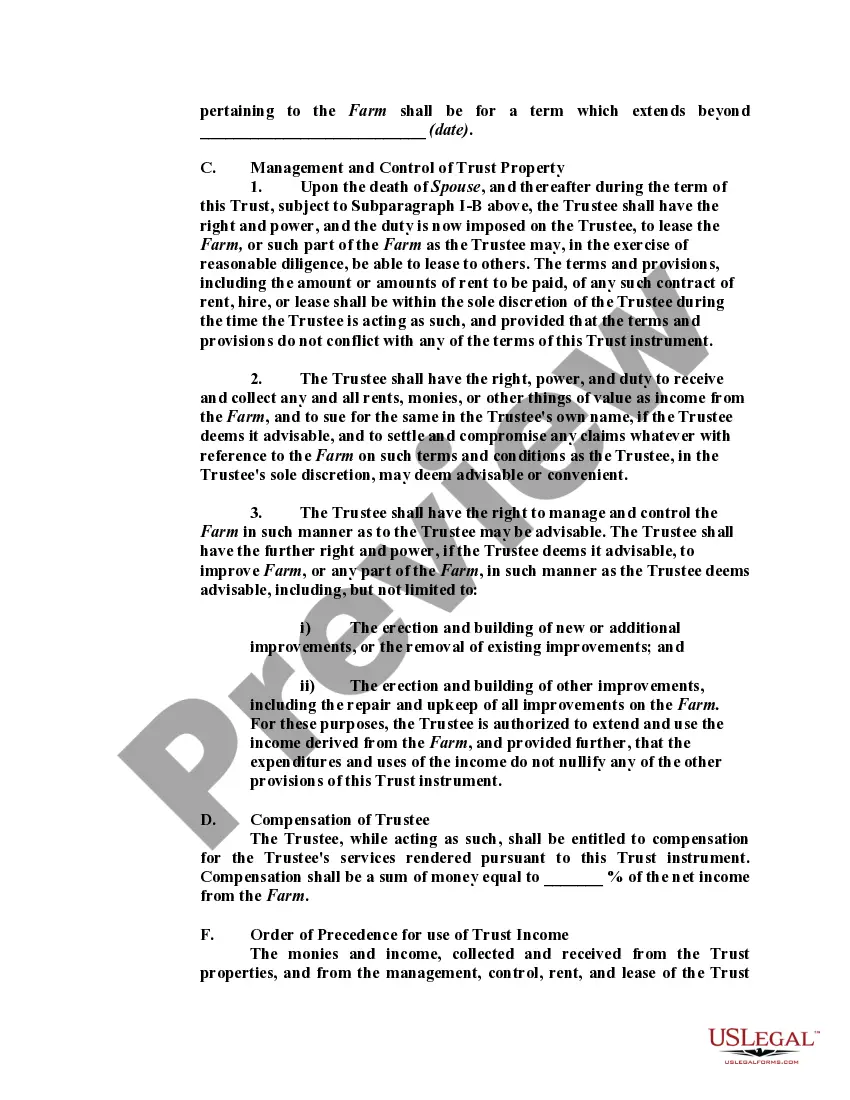
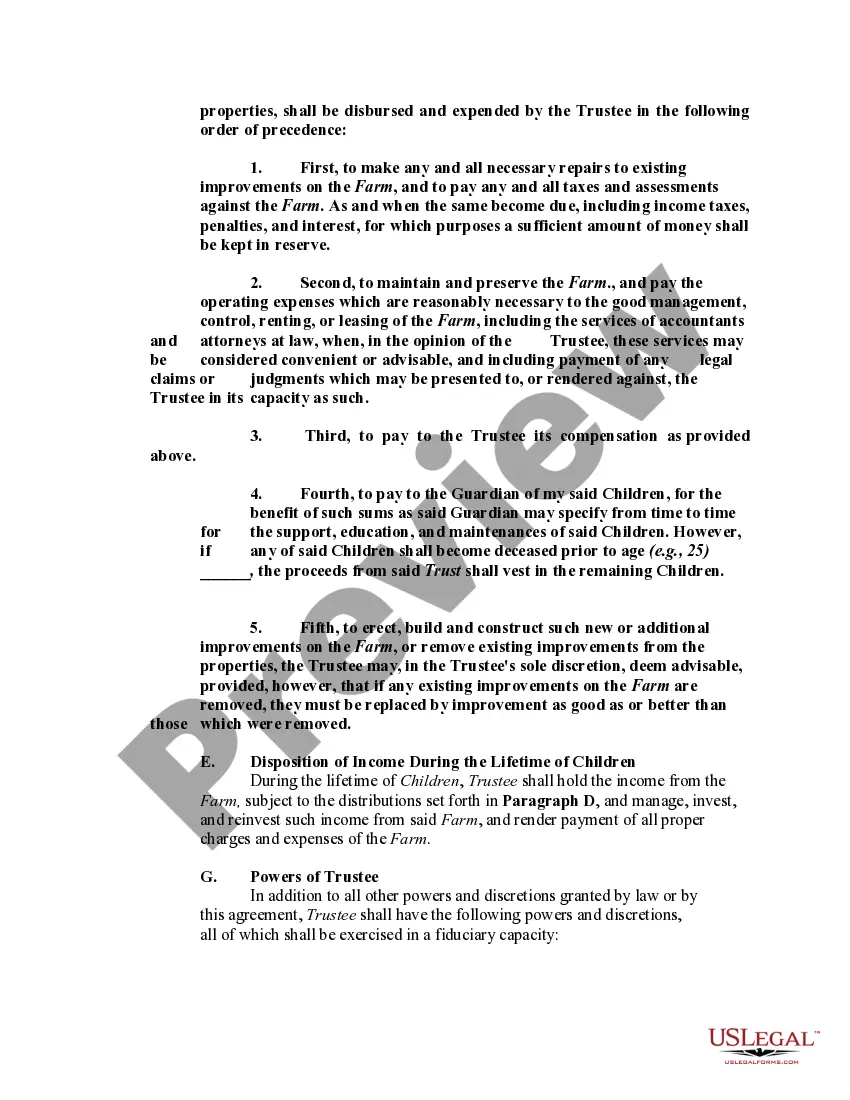
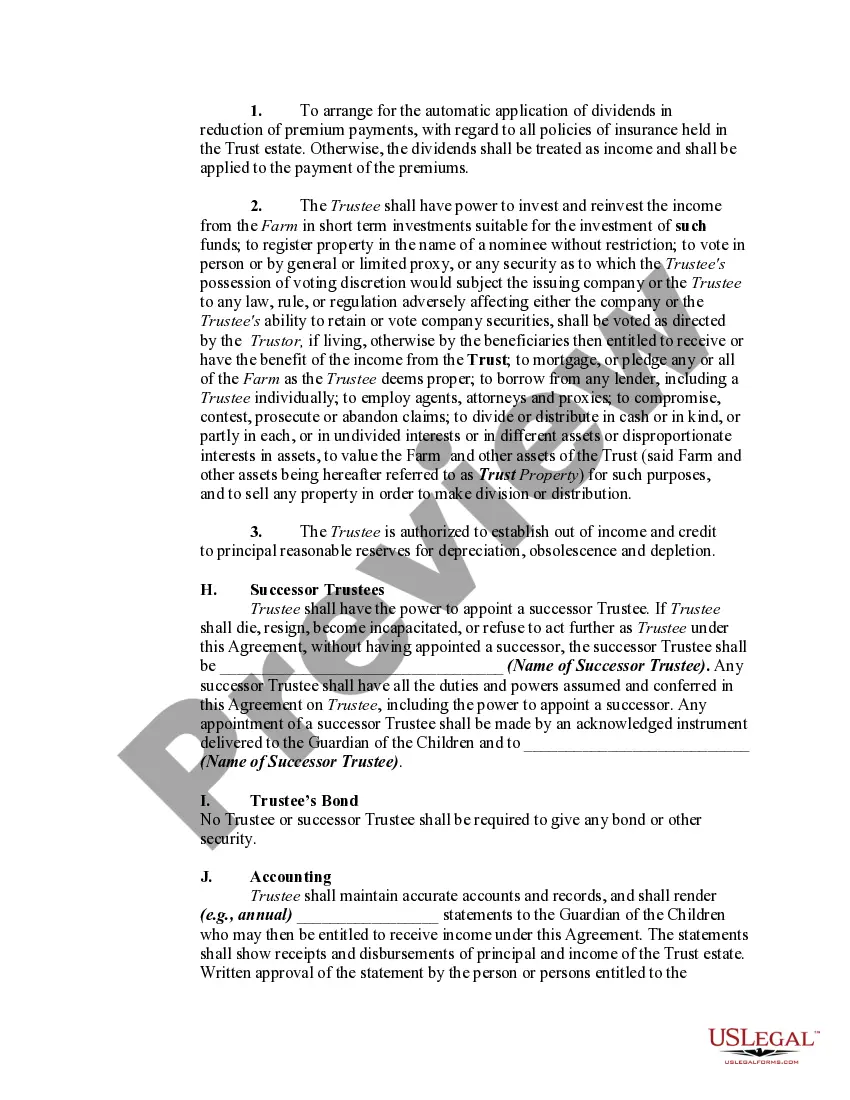
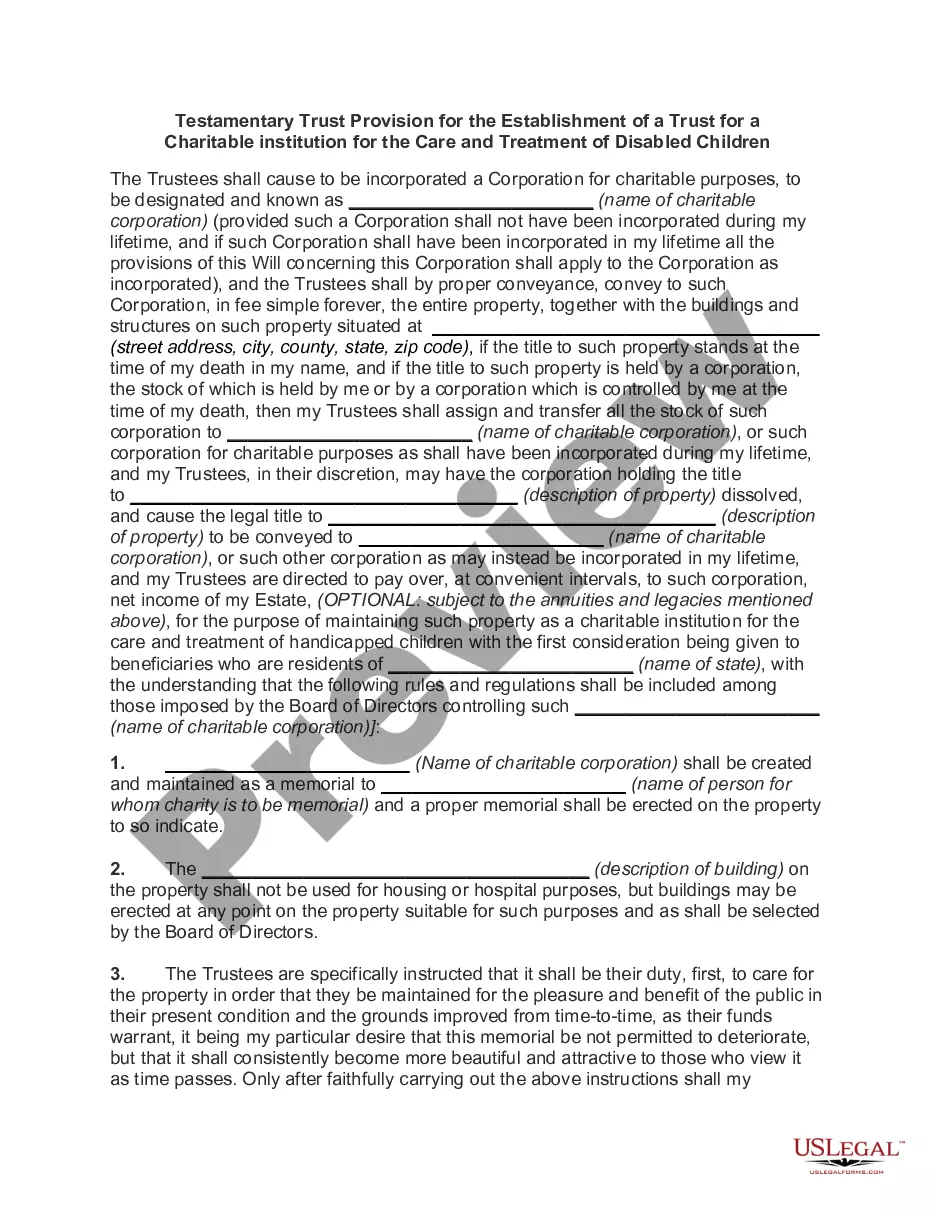
How to fill out Testamentary Trust Provision In Will With Spouse To Receive A Life Estate In Farm Land With Remainder Interest In Land To Pass To Trust For The Benefit Of Children?
Utilizing legal templates that adhere to federal and local laws is essential, and the internet provides numerous choices to select from.
However, what’s the benefit of spending time searching for the appropriate Testamentary Trust Agreement For Disabled Person example online if the US Legal Forms digital library already has such templates assembled in one location.
US Legal Forms is the largest online legal repository with over 85,000 editable templates created by lawyers for any professional and personal situation.
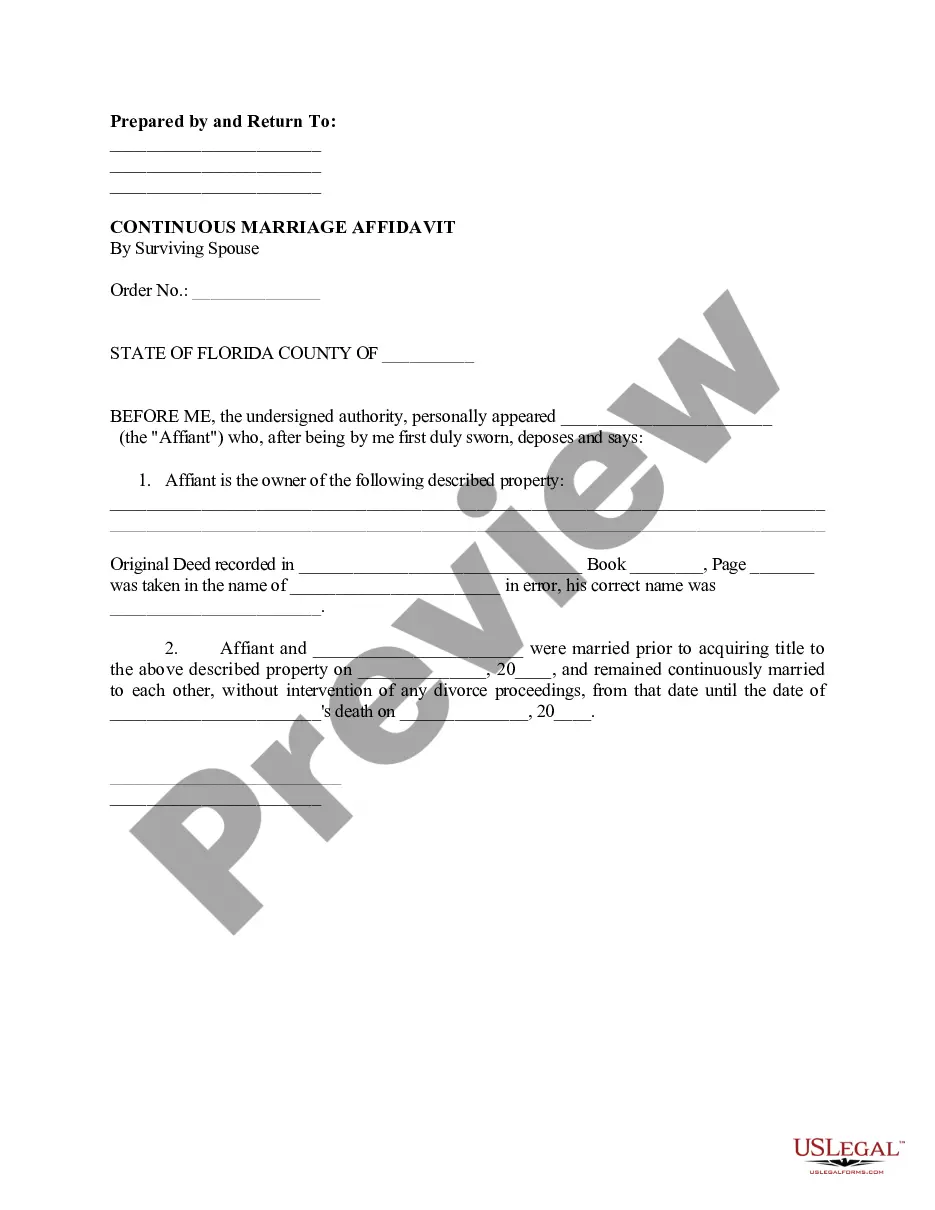
Review the template using the Preview feature or through the text description to ensure it fits your needs.
- They are easy to navigate with all documents organized by state and intended use.
- Our specialists keep up with legal updates, ensuring you can always trust your form is current and compliant when obtaining a Testamentary Trust Agreement For Disabled Person from our site.
- Acquiring a Testamentary Trust Agreement For Disabled Person is quick and straightforward for both existing and new users.
- If you already possess an account with an active subscription, Log In and save the document example you require in your chosen format.
- If you are a newcomer to our site, follow the steps outlined below.
Form popularity
FAQ
A qualified disability trust (QDisT) is a type of trust that qualifies for tax exemptions and applies to most trusts set up for someone with special needs. Normally, you must pay income tax on the income you receive from trusts, and that requirement formerly included special needs trusts.
A Special Needs Trust (SNT) allows for a disabled person to maintain his or her eligibility for public assistance benefits, despite having assets that would otherwise make the person ineligible for those benefits. There are two types of SNTs: First Party and Third Party funded.
What are the disadvantages of an ABLE account? Qualified Disability Expenses. The funds in an ABLE account can only be used for qualified disability expenses. Medicaid Payback. ... The disability must have occurred prior to the beneficiary attaining age 26. ... The total assets in the account cannot exceed $100,000.
SSDI does not depend upon having limited assets, and it is not affected by distributions from a Disability Trust.
There are three main differences between SNTs and ABLE accounts: eligibility, the expenses permitted for each type of account, and the limits on how much money you can save through them.