Nonjudicial Foreclosure States
Description
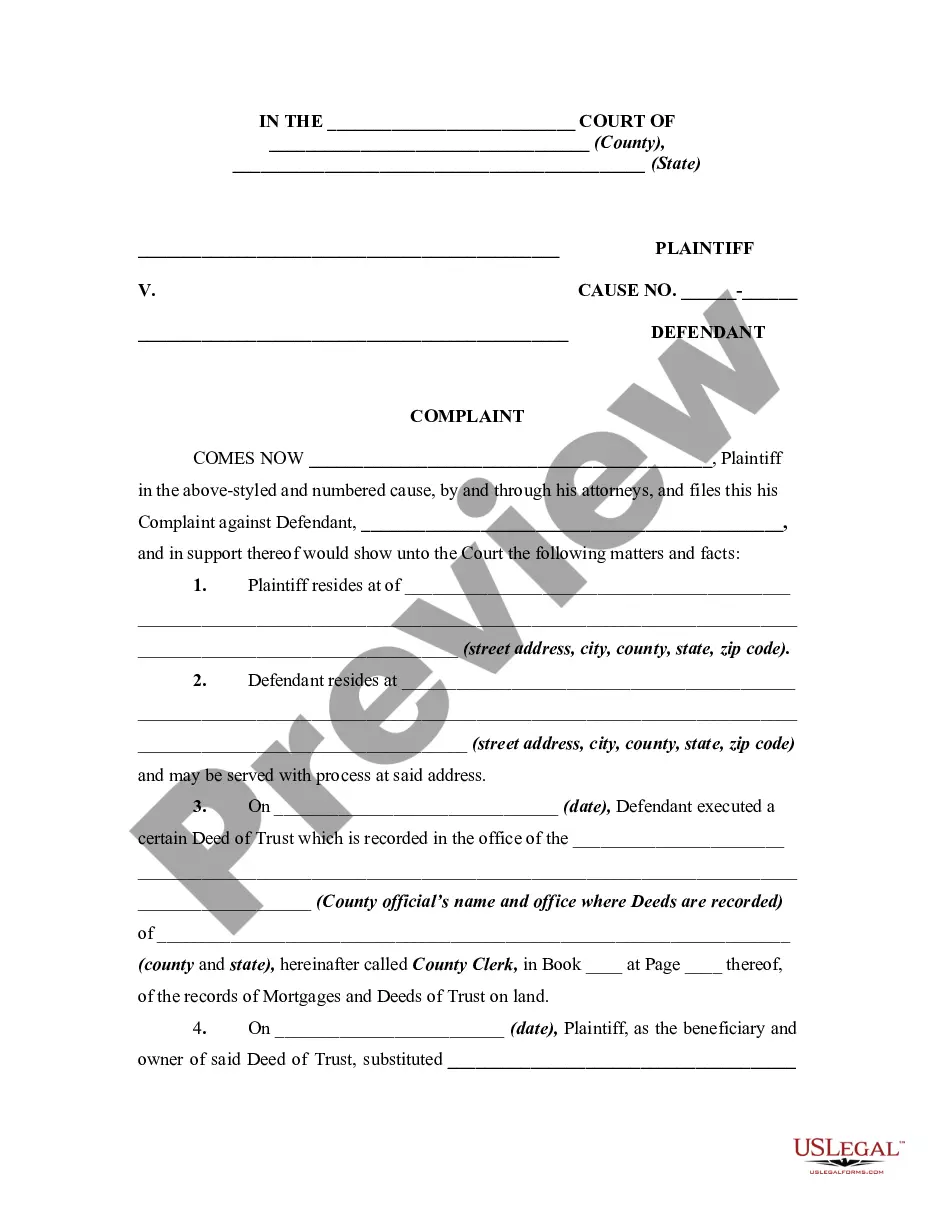
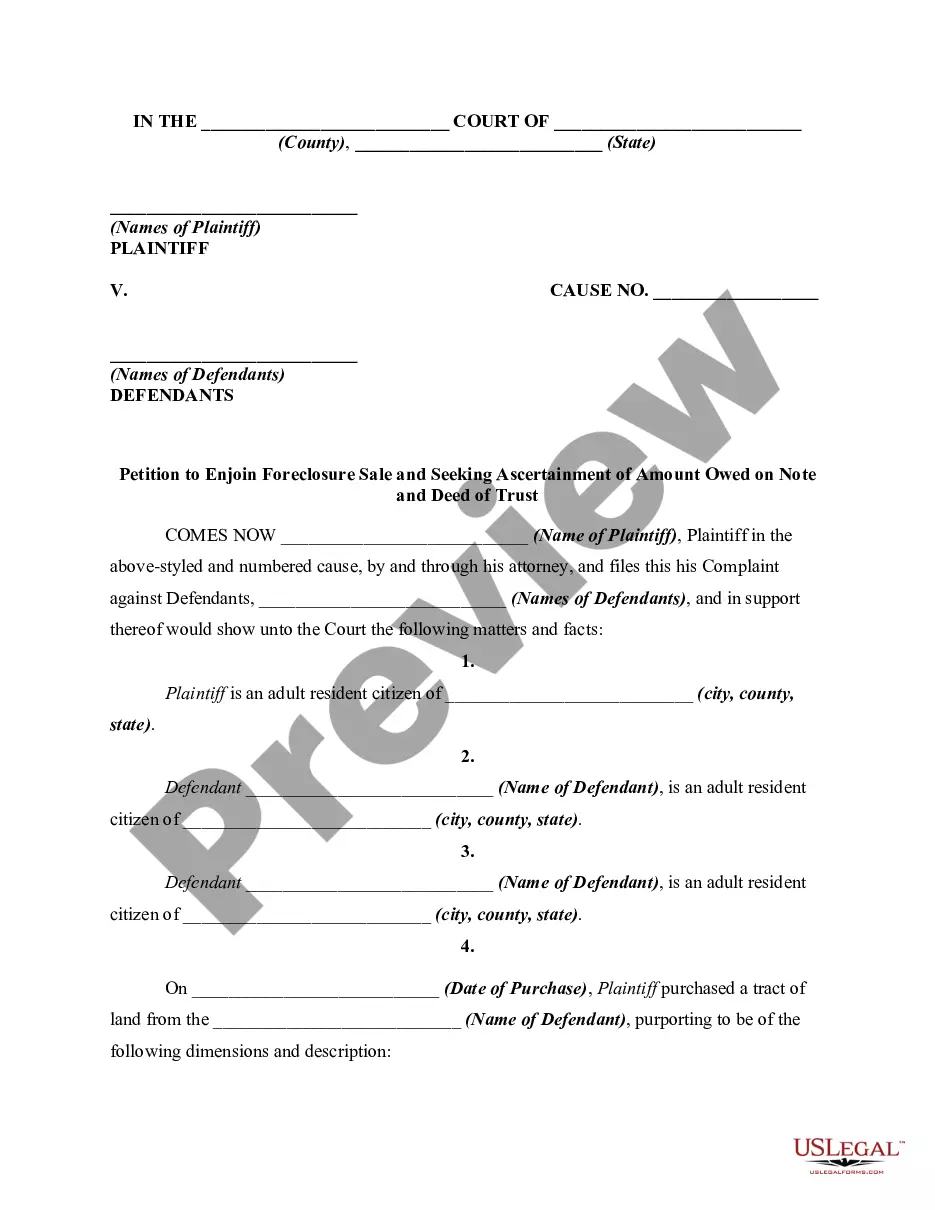
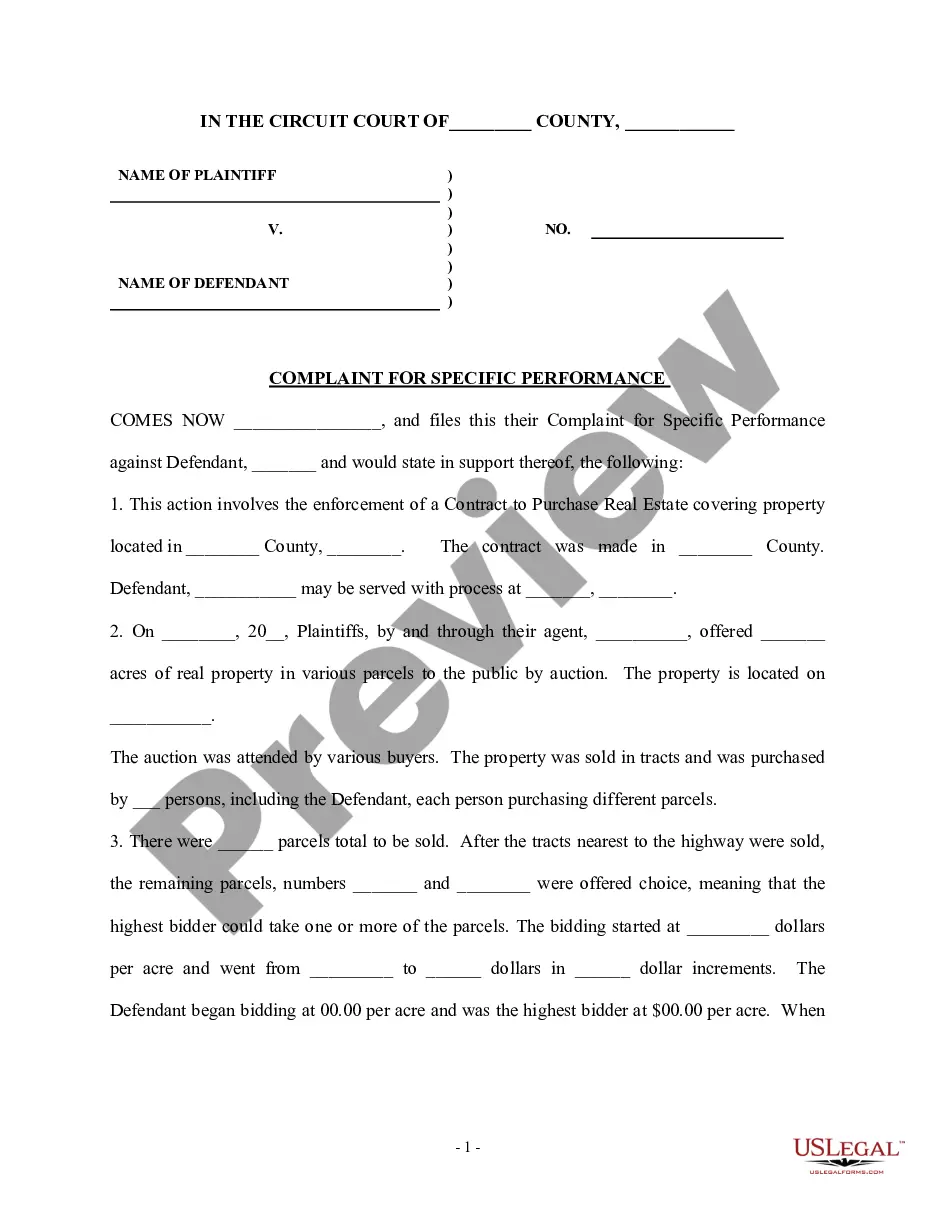
Get your form ready online
Our built-in tools help you complete, sign, share, and store your documents in one place.
Make edits, fill in missing information, and update formatting in US Legal Forms—just like you would in MS Word.
Download a copy, print it, send it by email, or mail it via USPS—whatever works best for your next step.
Sign and collect signatures with our SignNow integration. Send to multiple recipients, set reminders, and more. Go Premium to unlock E-Sign.
If this form requires notarization, complete it online through a secure video call—no need to meet a notary in person or wait for an appointment.
We protect your documents and personal data by following strict security and privacy standards.

Make edits, fill in missing information, and update formatting in US Legal Forms—just like you would in MS Word.

Download a copy, print it, send it by email, or mail it via USPS—whatever works best for your next step.

Sign and collect signatures with our SignNow integration. Send to multiple recipients, set reminders, and more. Go Premium to unlock E-Sign.

If this form requires notarization, complete it online through a secure video call—no need to meet a notary in person or wait for an appointment.

We protect your documents and personal data by following strict security and privacy standards.
Looking for another form?


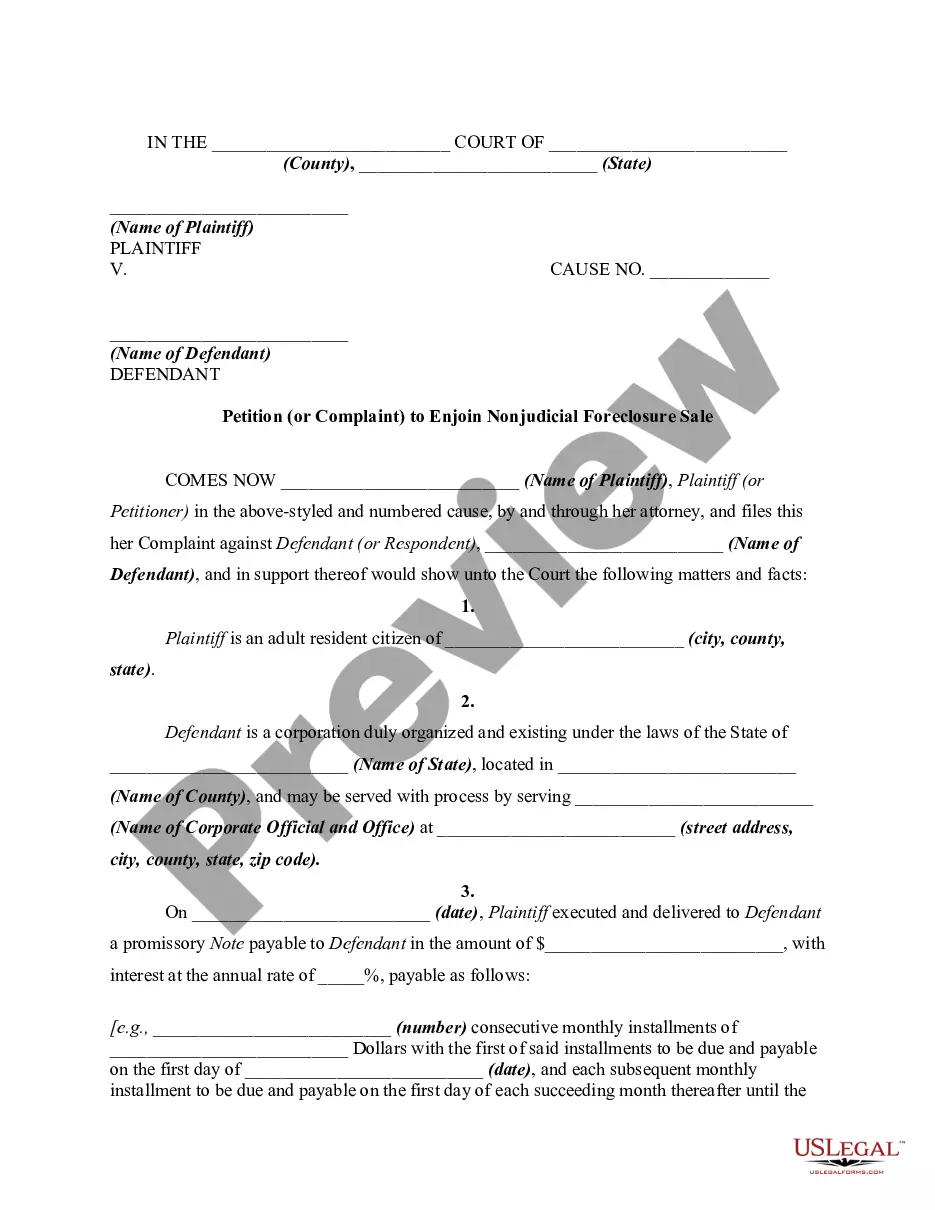
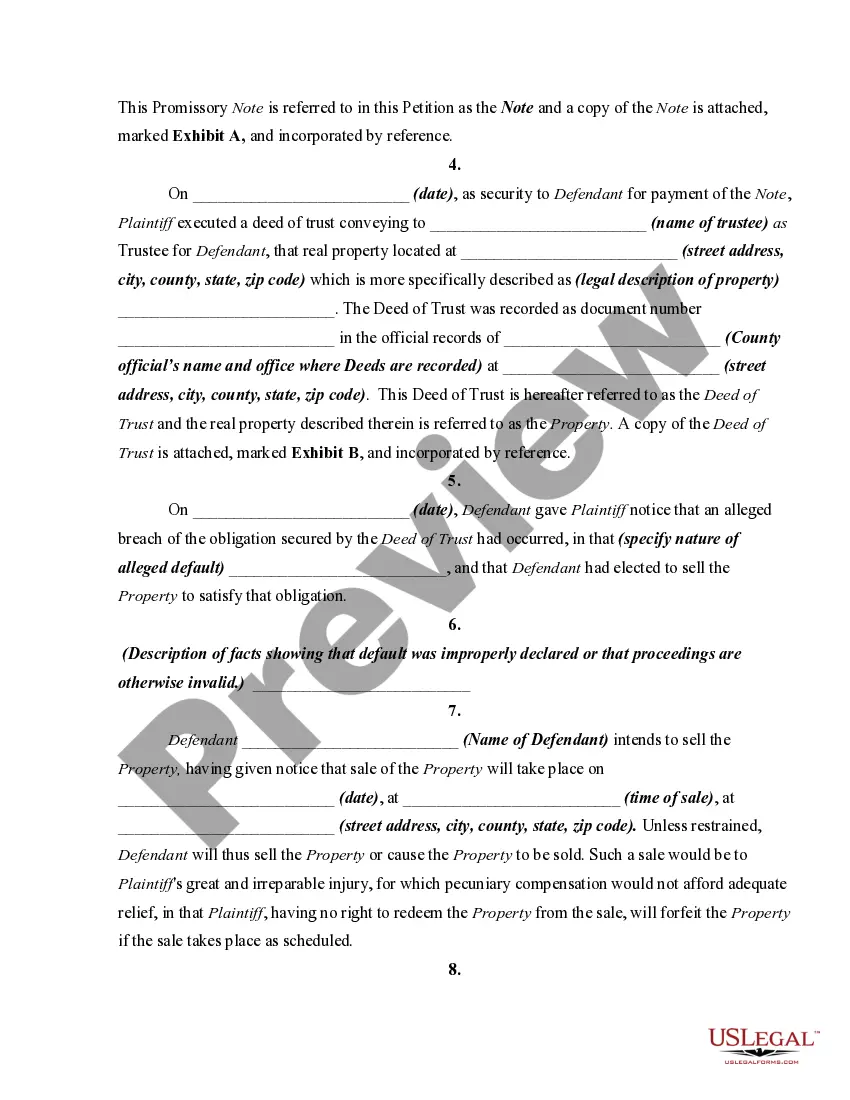
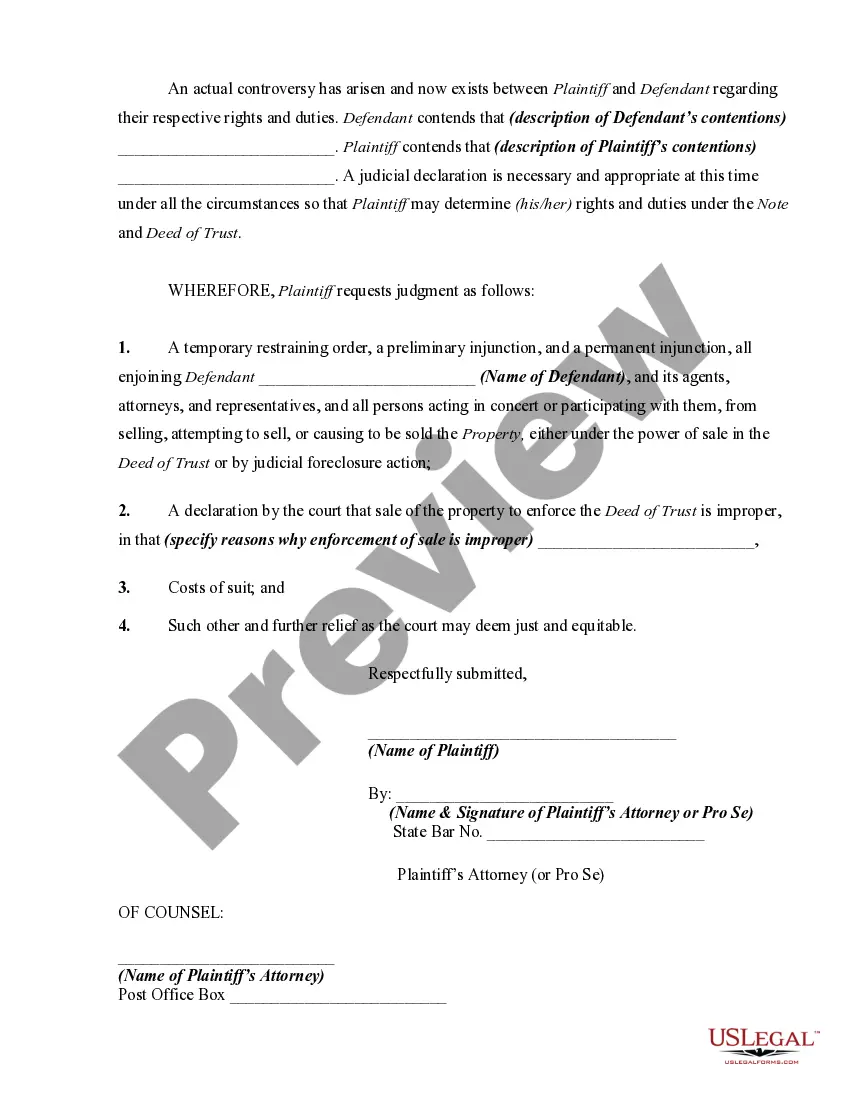
How to fill out Petition Or Complaint To Enjoin Nonjudicial Foreclosure Sale And For Declaratory Relief?
Regardless of whether for commercial reasons or personal matters, everyone eventually encounters legal issues in their lifetime. Completing legal documentation requires meticulous attention, starting with selecting the appropriate form template. For example, if you select an incorrect version of a Nonjudicial Foreclosure States, it will be rejected once submitted. Thus, it is essential to have a trustworthy source for legal documents like US Legal Forms.
If you need to obtain a Nonjudicial Foreclosure States template, follow these straightforward steps.
Once it is saved, you can complete the form using editing software or print it out and finish it manually. With an extensive US Legal Forms catalog available, you won’t need to waste time searching for the correct sample online. Use the library’s straightforward navigation to find the appropriate template for any circumstance.
- Obtain the sample you require by utilizing the search box or catalog navigation.
- Review the form’s description to confirm it aligns with your situation, state, and county.
- Click on the form’s preview to examine it.
- If it is the wrong form, return to the search feature to find the Nonjudicial Foreclosure States sample you require.
- Download the template if it satisfies your requirements.
- If you already possess a US Legal Forms account, simply click Log in to access previously saved templates in My documents.
- In case you do not have an account yet, you may obtain the form by clicking Buy now.
- Select the appropriate pricing option.
- Complete the profile registration form.
- Choose your payment method: you can utilize a credit card or PayPal account.
- Select the document format you prefer and download the Nonjudicial Foreclosure States.
Form popularity
FAQ
The nonjudicial foreclosure process formally begins when the trustee records a notice of default at the county recorder's office. The notice of default includes information like the nature of the breach and how to cure it.
Judicial foreclosure requires the lender to file a lawsuit against the borrower to satisfy the unpaid mortgage loan. Lenders typically cannot take this step until 120 days after the first missed payment (in other words, after the fourth consecutive missed monthly payment).
To institute a nonjudicial foreclosure, the trustee or mortgagee will send a notice of default to the borrower indicating the amount that must be paid to make the debt current, as well as the action that will be taken if the required payment is not made.
In order to qualify for a non-judicial foreclosure, the lienholder must have a deed of trust with a "power of sale" clause, giving them the authority to sell the property. These foreclosures are governed by Section 51.002 of the Texas Property Code as well as the contractual documents.
Non-judicial foreclosures may only be used where the mortgage has a power-of-sale clause. These clauses most often appear in deeds of trust, a type of real estate secured lending instrument similar to a mortgage.