Trademark Class For Food
Description
Get your form ready online
Our built-in tools help you complete, sign, share, and store your documents in one place.
Make edits, fill in missing information, and update formatting in US Legal Forms—just like you would in MS Word.
Download a copy, print it, send it by email, or mail it via USPS—whatever works best for your next step.
Sign and collect signatures with our SignNow integration. Send to multiple recipients, set reminders, and more. Go Premium to unlock E-Sign.
If this form requires notarization, complete it online through a secure video call—no need to meet a notary in person or wait for an appointment.
We protect your documents and personal data by following strict security and privacy standards.

Make edits, fill in missing information, and update formatting in US Legal Forms—just like you would in MS Word.

Download a copy, print it, send it by email, or mail it via USPS—whatever works best for your next step.

Sign and collect signatures with our SignNow integration. Send to multiple recipients, set reminders, and more. Go Premium to unlock E-Sign.

If this form requires notarization, complete it online through a secure video call—no need to meet a notary in person or wait for an appointment.

We protect your documents and personal data by following strict security and privacy standards.
Looking for another form?




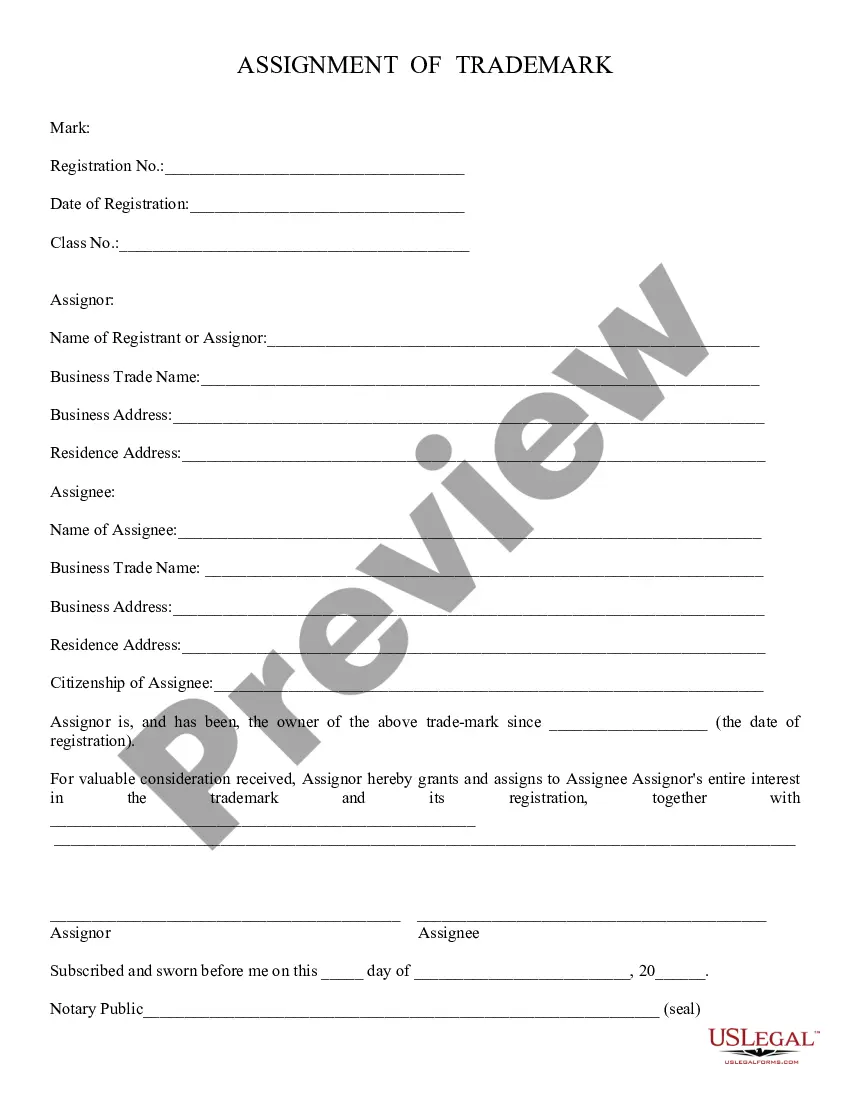
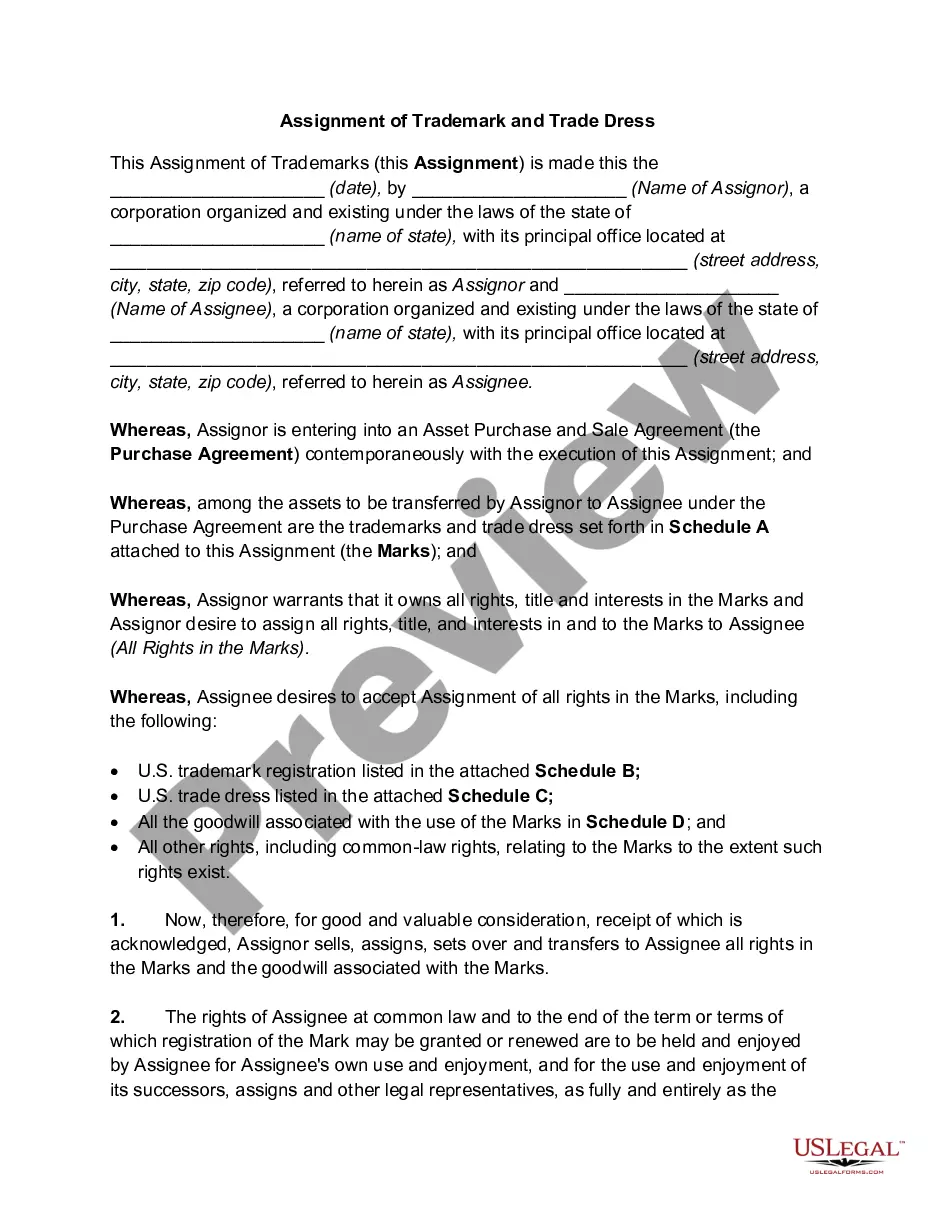
How to fill out Assignment Of Trademark?
Legal documents handling can be daunting, even for seasoned professionals.
When you are looking for a Trademark Class For Food and lack the time to dedicate to find the correct and current version, the processes may be stressful.
US Legal Forms accommodates any requirements you might have, ranging from personal to business documents, all in one location.
Utilize advanced tools to complete and manage your Trademark Class For Food.
Here are the steps to follow after downloading the form you need: Verify it is the correct form by previewing it and reviewing its details. Ensure that the sample is recognized in your state or county. Click Buy Now when you are ready. Choose a monthly subscription plan. Select the file format you desire, and Download, complete, eSign, print, and send your document. Take advantage of the US Legal Forms online catalog, backed by 25 years of experience and reliability. Transform your routine document management into a seamless and user-friendly process today.
- Access a valuable resource library of articles, guides, handbooks, and materials related to your situation and requirements.
- Save time and effort searching for the documents you need, and use US Legal Forms’ advanced search and Review tool to find and download Trademark Class For Food.
- If you have a subscription, Log In to your US Legal Forms account, search for the form, and download it.
- Check the My documents tab to view the documents you have previously saved and organize your folders as you see fit.
- If it’s your first time with US Legal Forms, sign up and gain unlimited access to all the benefits of the library.
- An effective online form directory could be a game-changer for anyone who wishes to manage these matters effectively.
- US Legal Forms is a frontrunner in digital legal documents, with more than 85,000 state-specific legal forms available to you at any time.
- With US Legal Forms, you can access state- or county-specific legal and business forms.
Form popularity
FAQ
The 030 staple food trademark class encompasses various food items that serve as essential dietary components. This includes products like bread, rice, pasta, and other common staples that consumers rely on. When registering your trademark, understanding this classification ensures you protect your brand effectively in the food market. For assistance, US Legal Forms provides resources that help you navigate the trademark class for food, making the registration process straightforward.
Choosing the right trademark class for food involves understanding the various categories under which your product falls. Start by reviewing the Nice Classification system, which organizes products into specific classes. For food-related products, focus on classes like 29 for meat, fish, and dairy, or 30 for staple foods and spices. Using a reliable platform like US Legal Forms can simplify this process, guiding you to the correct trademark class for food that aligns with your business needs.
Class 30 staple foods include a variety of essential food items, such as coffee, tea, rice, flour, and bread. These items are fundamental in many diets and are often the basis for meals. If you're considering trademarking a product within this category, understanding the nuances of Class 30 is crucial. You can explore resources from uslegalforms to get a clearer picture of your options.
Class 42 in trademarks primarily covers scientific and technological services, including research and design. This class does not specifically relate to food products but does encompass services that may support food businesses, such as food technology or consulting. When seeking trademark protection, it's vital to focus on the appropriate trademark class for food to ensure your brand's identity is secure.
To add a class to your trademark, you need to file an amendment with the USPTO. This process typically involves submitting additional documentation that outlines the new goods or services associated with the trademark class for food. It's essential to be thorough and accurate in your filing to avoid any complications. Consider using uslegalforms for assistance with this process.
The food class in trademark refers specifically to the classification of goods related to food products, which is categorized mainly under Class 29 and Class 30. Class 29 includes items such as oils, dairy, and prepared meats, while Class 30 focuses on food staples such as grains, condiments, and sweeteners. Knowing the food class in trademark helps you ensure that your brand is adequately protected. Utilize uslegalforms to learn more about trademark classes and their applications.
Trademark classes for food primarily fall under Class 29 and Class 30. Class 29 includes meats, fish, dairy products, and processed foods, whereas Class 30 covers staple foods like coffee, tea, and spices. Identifying the correct trademark class for food is essential for effective protection and marketing. A platform like uslegalforms can assist you in classifying your food products accurately.
The five categories of trademarks include trademarks, service marks, certification marks, collective marks, and trade dress. Trademarks protect goods or products, while service marks protect services provided. Certification marks indicate that a product meets certain standards, and collective marks represent a group or organization. Understanding these categories is crucial when considering your trademark class for food.
To trademark a food product, you must first ensure that your product name or logo is unique and not already in use. Next, conduct a trademark search to confirm that your desired trademark class for food is available. After that, you can file an application with the United States Patent and Trademark Office (USPTO). Using a platform like uslegalforms can help you navigate the application process smoothly.
Class 25 refers to trademarks related to clothing, footwear, and headgear, which may not seem directly tied to food. However, if your food brand also includes apparel or promotional items, understanding Class 25 is important. It allows you to protect all aspects of your branding, ensuring you cover the full scope of your business.