Disclaim Warranty
Description
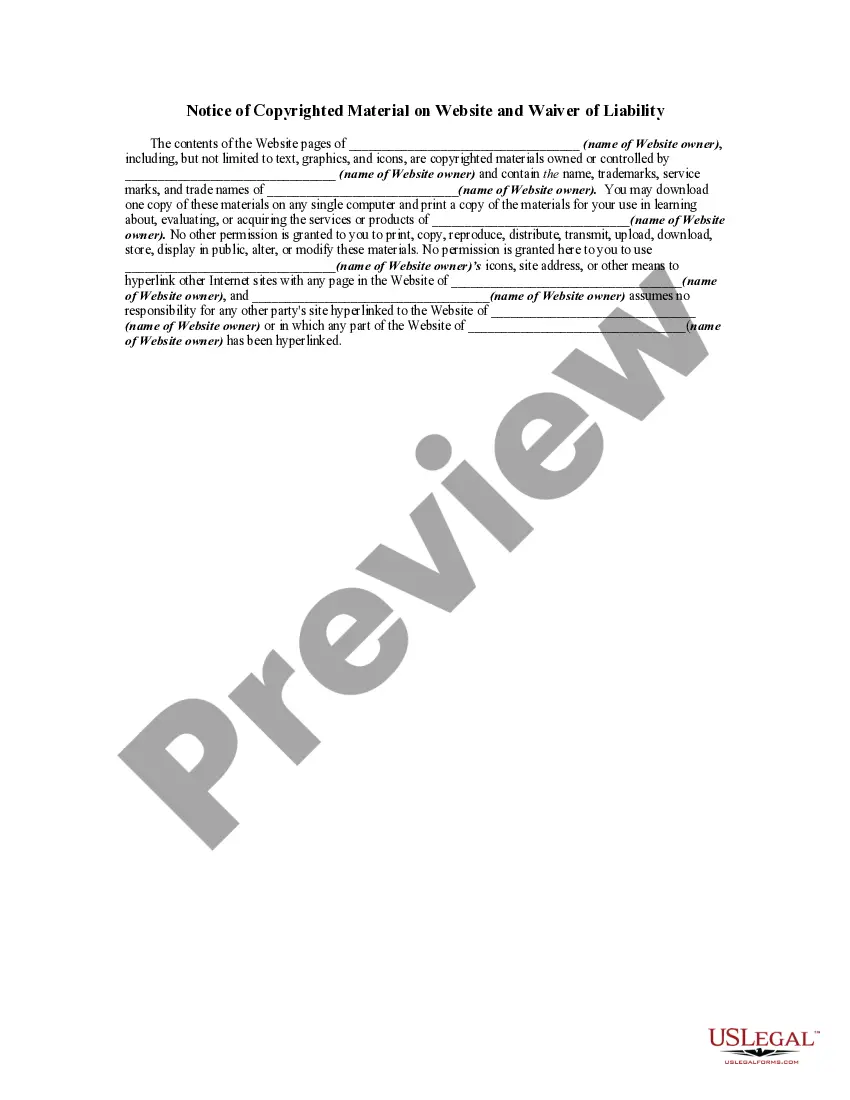
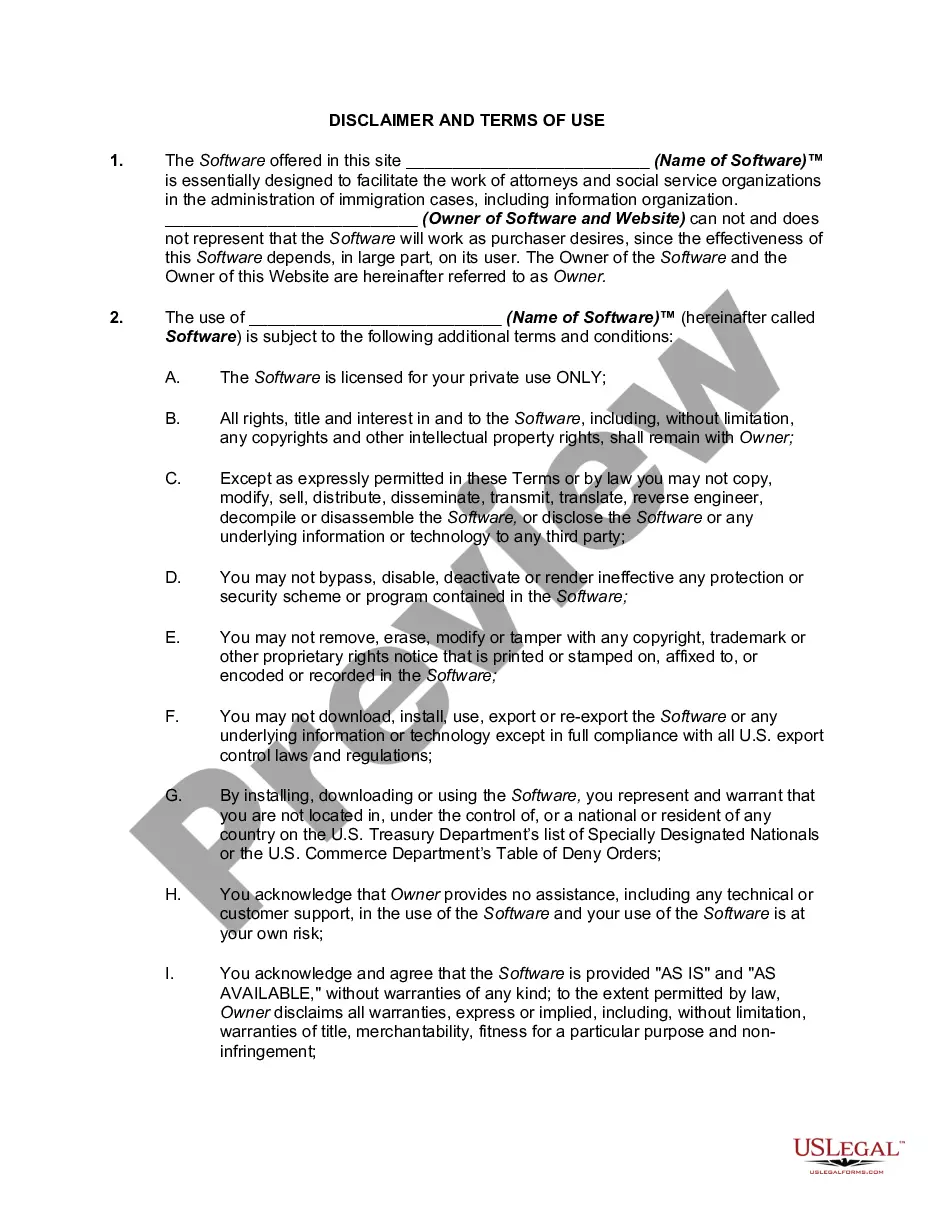



How to fill out Disclaimer Of Warranties And Warnings In Connection With Improper Use Of A Roofing Machine, With Both The Disclaimer And Warnings Being Part Of A Website And To Be Placed With Product When Shipping To Customer?
- Begin by checking the form preview and its description to ensure it meets your specific legal requirements and jurisdiction.
- If the form doesn't fit your needs, use the search bar to find a more suitable template from US Legal Forms' extensive library.
- Once you identify the correct document, click ‘Buy Now’ and select your preferred subscription plan to access the resources.
- Complete your purchase by entering your payment information via credit card or PayPal.
- Finally, download the necessary form to your device and access it anytime through the 'My Documents' section in your profile.
By using US Legal Forms, you can empower yourself with the right tools to navigate legal processes effectively. With their large library of over 85,000 forms and templates, you will find exactly what you need.
Start your legal journey today—visit US Legal Forms and take advantage of their robust resources to create your documents confidently!
Form popularity
FAQ
To disclaim warranty of title, include a clear statement in your contract that specifies you do not warranty the ownership of the goods sold. This might read, 'We disclaim warranty of title and do not guarantee that the seller holds ownership rights.' It’s vital to state this clearly to prevent any potential legal disputes. Utilizing uslegalforms can help ensure that your disclaimer complies with legal standards.
A good disclaimer example might read, 'This platform does not guarantee any results, and we disclaim warranty for any reliance placed on provided information.' Such a statement serves to inform users upfront about the limitations of your product’s effectiveness. Integrate this clearly on your website to enhance transparency. A strong disclaimer can help in managing user expectations.
You can convey that there is no warranty by stating, 'All products are sold as-is, and we disclaim warranty for any defects or discrepancies.' This phrase makes it clear that you do not provide any assurances regarding the quality or suitability of your product. Avoid ambiguity to ensure that your message is understood. Clarity here is crucial in protecting your interests.
An example of a no guarantee disclaimer would be a statement like, 'We disclaim warranty for any results or outcomes related to the use of our services.' This informs users that they cannot expect specific results. It’s essential to communicate that any information or recommendations are provided without guarantees. By doing so, you effectively protect yourself from potential claims.
To write a no responsibility disclaimer, start by clearly stating that you do not assume any liability for damages or losses arising from the use of your product or service. Use straightforward language to articulate that users engage at their own risk. Incorporating the phrase 'disclaim warranty' solidifies your stance. Providing a specific context where this disclaimer applies will enhance its clarity.
An example of a no warranty disclaimer could read, 'The seller disclaims all warranties, either express or implied, including but not limited to implied warranties of merchantability or fitness for a particular purpose.' Such a statement effectively communicates that the buyer accepts the item without any guarantees, making it clear that the risk is theirs.
A no liability clause should be concise and direct, specifying that the seller is not responsible for damages or losses incurred. For instance, you might write, 'The seller shall not be liable for any direct, indirect, or consequential damages arising from the use of the product.' This clause limits the seller's risk and clarifies the extent of their obligations.
To explain no warranty, clearly communicate that the buyer accepts the product without any promises about its performance or reliability. You can state, 'This product is sold with no warranty, meaning the seller does not guarantee it will meet any specific standards or last for any particular duration.' This approach fosters transparency in the transaction and helps manage buyer expectations.
Yes, sellers can disclaim warranties in a sales transaction as long as they provide clear and conspicuous notice to the buyer. By including a disclaimer of warranty in your sales contract, you inform buyers that they accept the product at their own risk. This approach can help sellers minimize liability and avoid potential disputes in the future.
An example of a disclaimer of warranty might state, 'All products are sold without any warranty of any kind, either expressed or implied.' This phrasing clearly communicates to buyers that they cannot expect any guarantees regarding the product’s performance or condition. Incorporating such a statement protects sellers from future claims regarding the quality of their products.