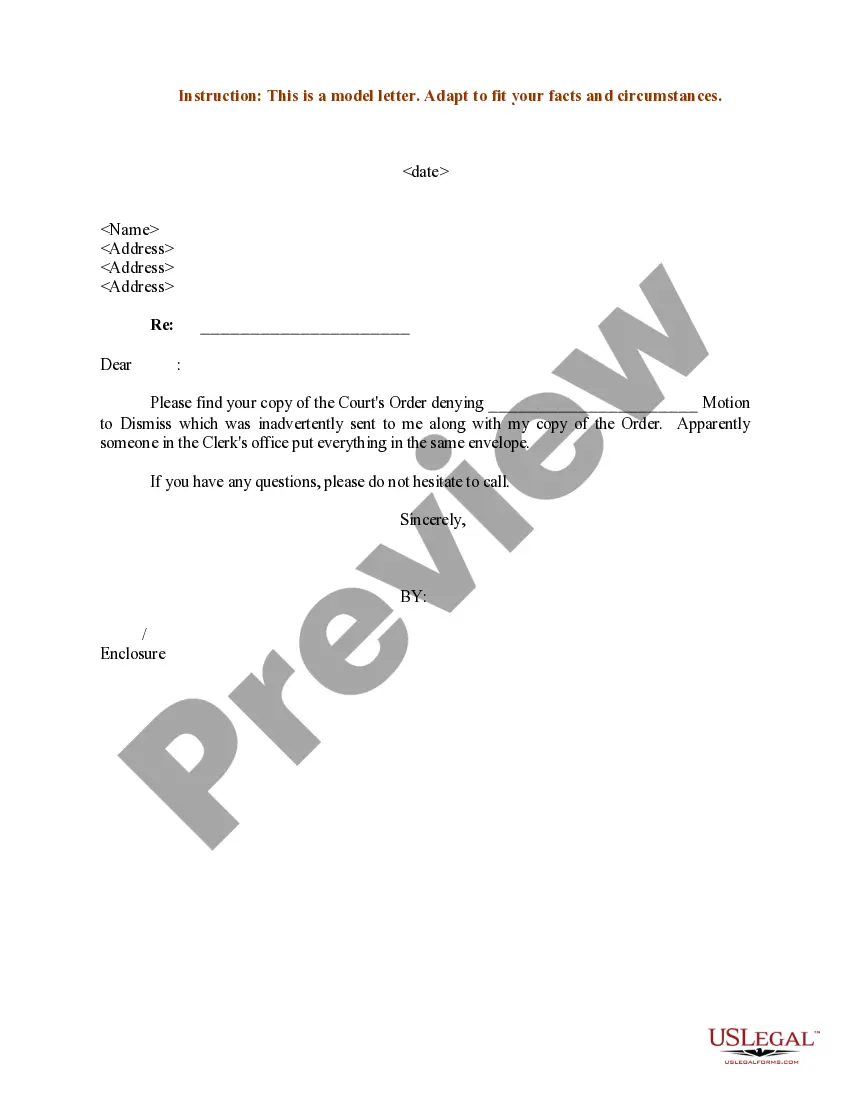
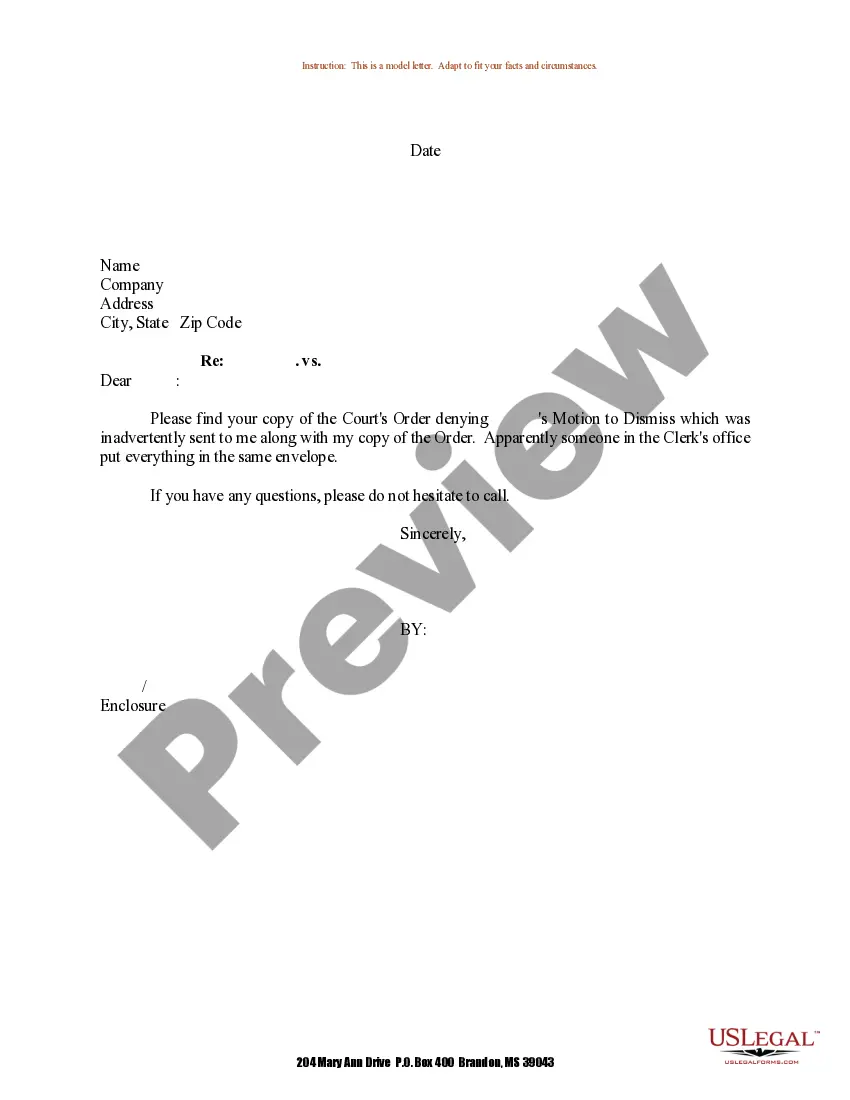
Sample Response To Motion To Dismiss
Description
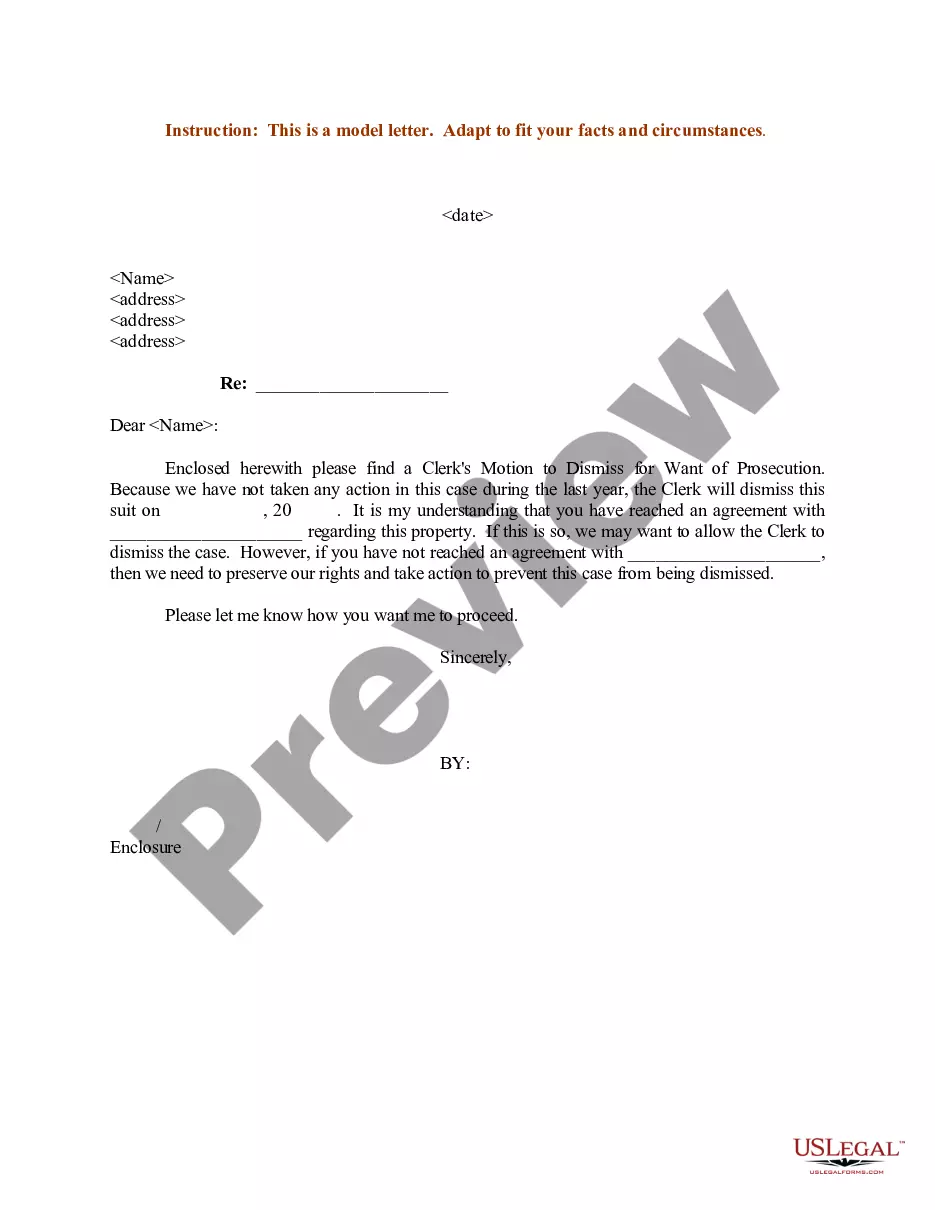
Get your form ready online
Our built-in tools help you complete, sign, share, and store your documents in one place.
Make edits, fill in missing information, and update formatting in US Legal Forms—just like you would in MS Word.
Download a copy, print it, send it by email, or mail it via USPS—whatever works best for your next step.
Sign and collect signatures with our SignNow integration. Send to multiple recipients, set reminders, and more. Go Premium to unlock E-Sign.
If this form requires notarization, complete it online through a secure video call—no need to meet a notary in person or wait for an appointment.
We protect your documents and personal data by following strict security and privacy standards.

Make edits, fill in missing information, and update formatting in US Legal Forms—just like you would in MS Word.

Download a copy, print it, send it by email, or mail it via USPS—whatever works best for your next step.

Sign and collect signatures with our SignNow integration. Send to multiple recipients, set reminders, and more. Go Premium to unlock E-Sign.

If this form requires notarization, complete it online through a secure video call—no need to meet a notary in person or wait for an appointment.

We protect your documents and personal data by following strict security and privacy standards.
Looking for another form?


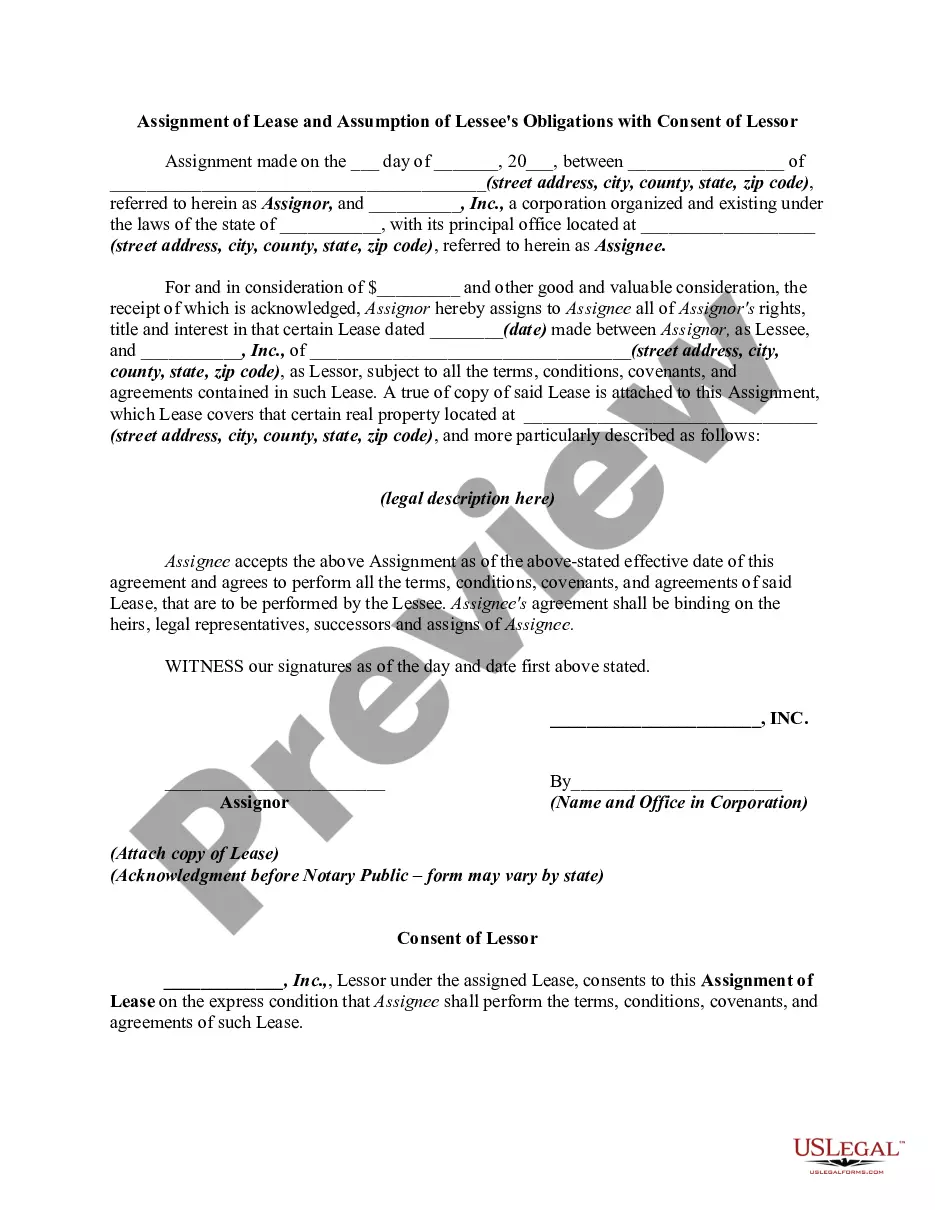
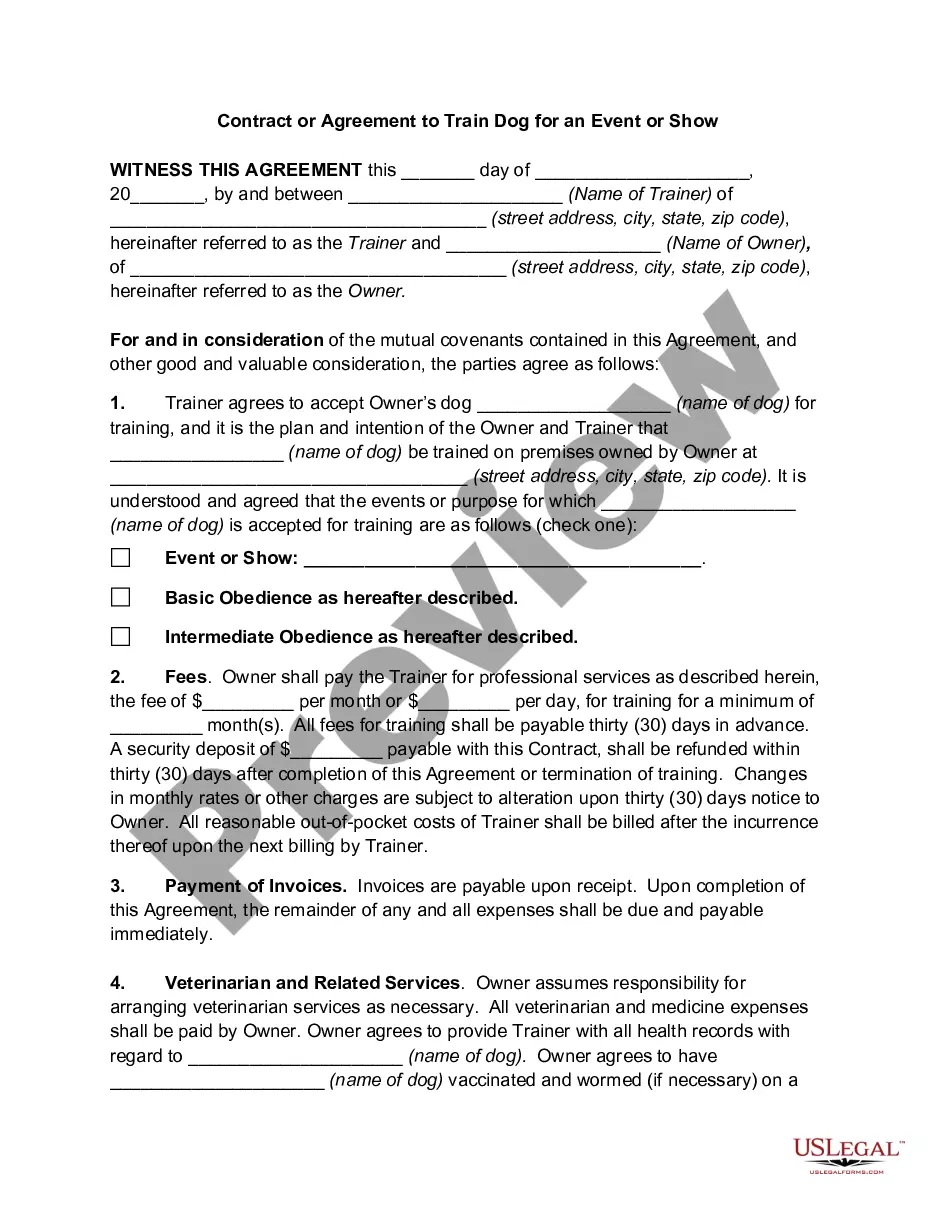

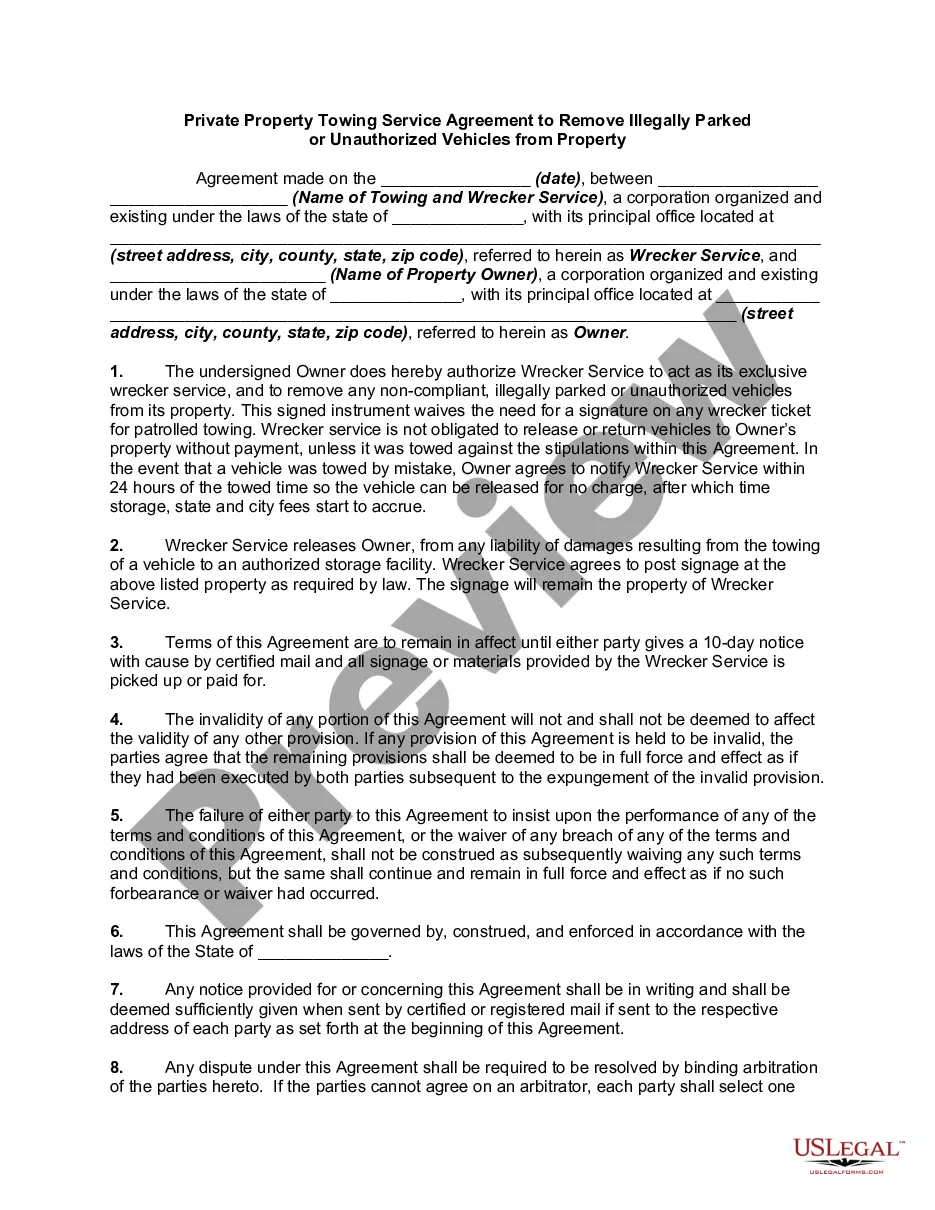
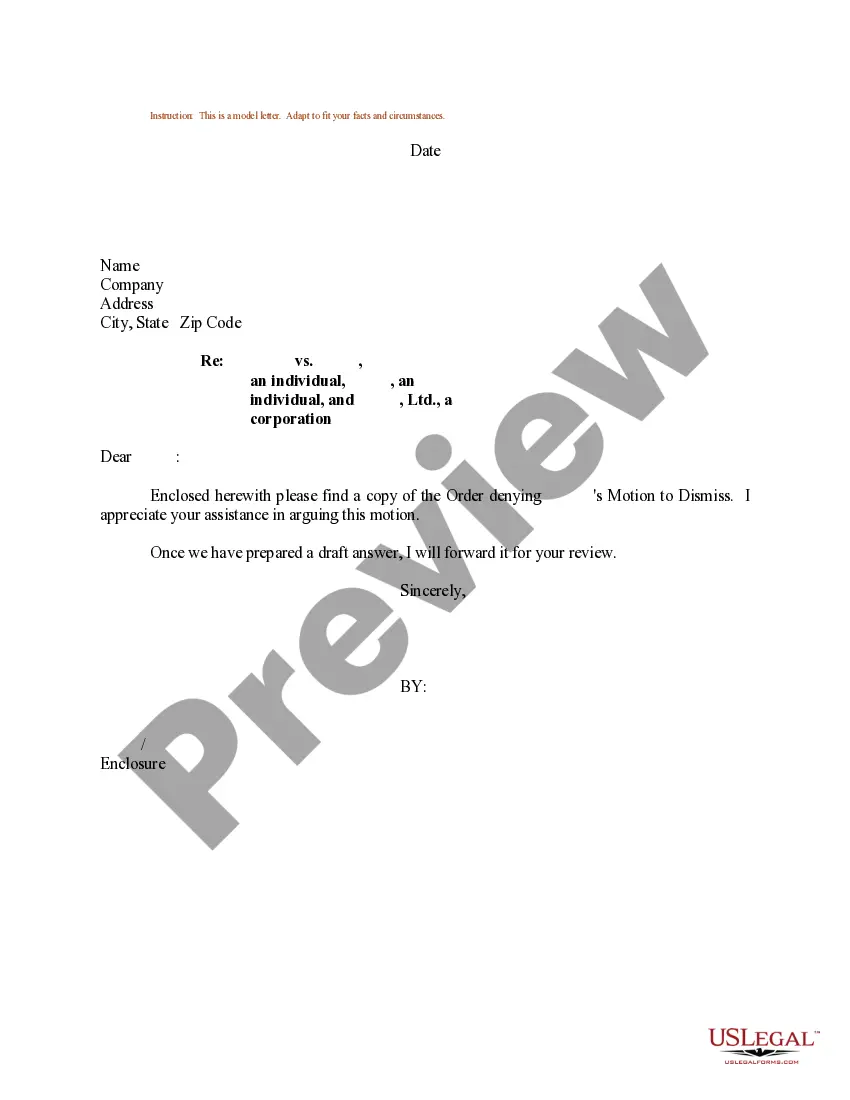
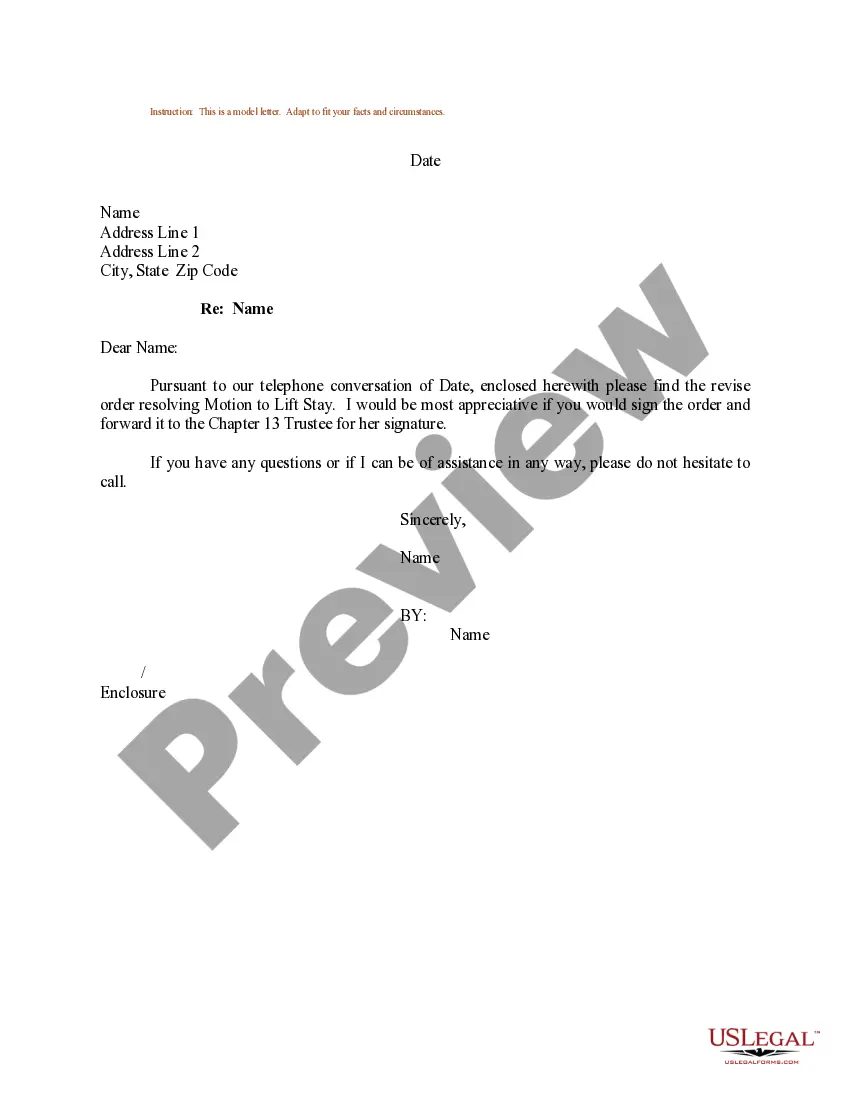
How to fill out Sample Letter For Order Denying Motion To Dismiss?
- Visit the US Legal Forms website and log in to your account. If you're new, create an account for access.
- Use the Preview mode to review the form's details and ensure it meets your jurisdiction's requirements before proceeding.
- If necessary, search for other relevant templates utilizing the search tool to find the right documentation.
- Select the desired document by clicking the Buy Now button and choosing your preferred subscription plan.
- Complete your purchase securely with credit card information or through PayPal to finalize your order.
- Download the template to your device immediately, ensuring you can access it anytime through the My Forms section.
Once you’ve downloaded your form, you can easily fill it out according to your case specifics. The extensive library from US Legal Forms not only aids in finding the right documents but also supports users with access to experts for additional guidance.
Start your legal journey with confidence today. Explore the benefits of US Legal Forms and ensure your documents are thorough and professional!
Form popularity
FAQ
Writing a motion statement requires clear articulation of your request and the reasons behind it. Begin with an introduction stating the relief you seek and outline the relevant facts and legal basis for your motion. Conciseness and straightforward language can enhance readability. Referring to a sample response to motion to dismiss may help streamline your drafting process.
In writing a motion response, it's essential to address the claims made in the initial motion directly. Begin by restating the motion and then present your arguments with supporting evidence and legal references. Clarity is vital, so ensure each point logically flows to reinforce your position. A sample response to motion to dismiss can illustrate effective strategies for writing your response.
Surviving a motion to dismiss requires a robust strategy and thorough preparation. Start by understanding the grounds for the motion and prepare to counter each argument with factual evidence and legal precedents. Additionally, a well-structured sample response to motion to dismiss can provide insights on effectively communicating your perspective to the court.
To write a written response to the court, outline your arguments in a clear and respectful manner. Address the specific issues raised in the motion or claim you are responding to. Focus on the facts and present your legal reasoning coherently. For guidance, consider using a sample response to motion to dismiss to formulate your approach.
Writing a response to a claim involves acknowledging the claim and presenting your defense. Detail each allegation, and clearly state your stance on the issues raised. Incorporate facts, evidence, and legal citations where necessary. A strong sample response to motion to dismiss can serve as a valuable reference in crafting your document.
To write a response to a motion to dismiss, start by reviewing the motion carefully. Identify the key arguments presented and gather supporting facts and evidence. Use a structured format to address each point raised, ensuring clarity and coherence. A well-crafted sample response to motion to dismiss can effectively counter the claims and strengthen your position.
To respond to a request for dismissal, you should file an opposition or an argument against the request. This response outlines your reasons for opposing the dismissal, asserting the validity of your case. A sample response to motion to dismiss can help you construct a compelling argument for the court.
Filing a response means officially submitting a document to the court that addresses a motion or complaint against you. This filing serves to present your side of the argument and can influence the court's decision. To draft a strong response, consider using a sample response to motion to dismiss for inspiration.
A reply to a motion is often referred to as a rebuttal or a reply brief. This document serves to refute the arguments presented in the initial motion and further clarify your position. Reviewing a sample response to motion to dismiss can provide you with templates and ideas for your rebuttal.
When writing a reply to a motion to dismiss, focus on directly addressing the arguments raised in the opposing party’s motion. Clearly articulate your position and include supportive evidence where applicable. A sample response to motion to dismiss can guide you on how to structure your reply effectively.