Funeral Contract Agreement With Church
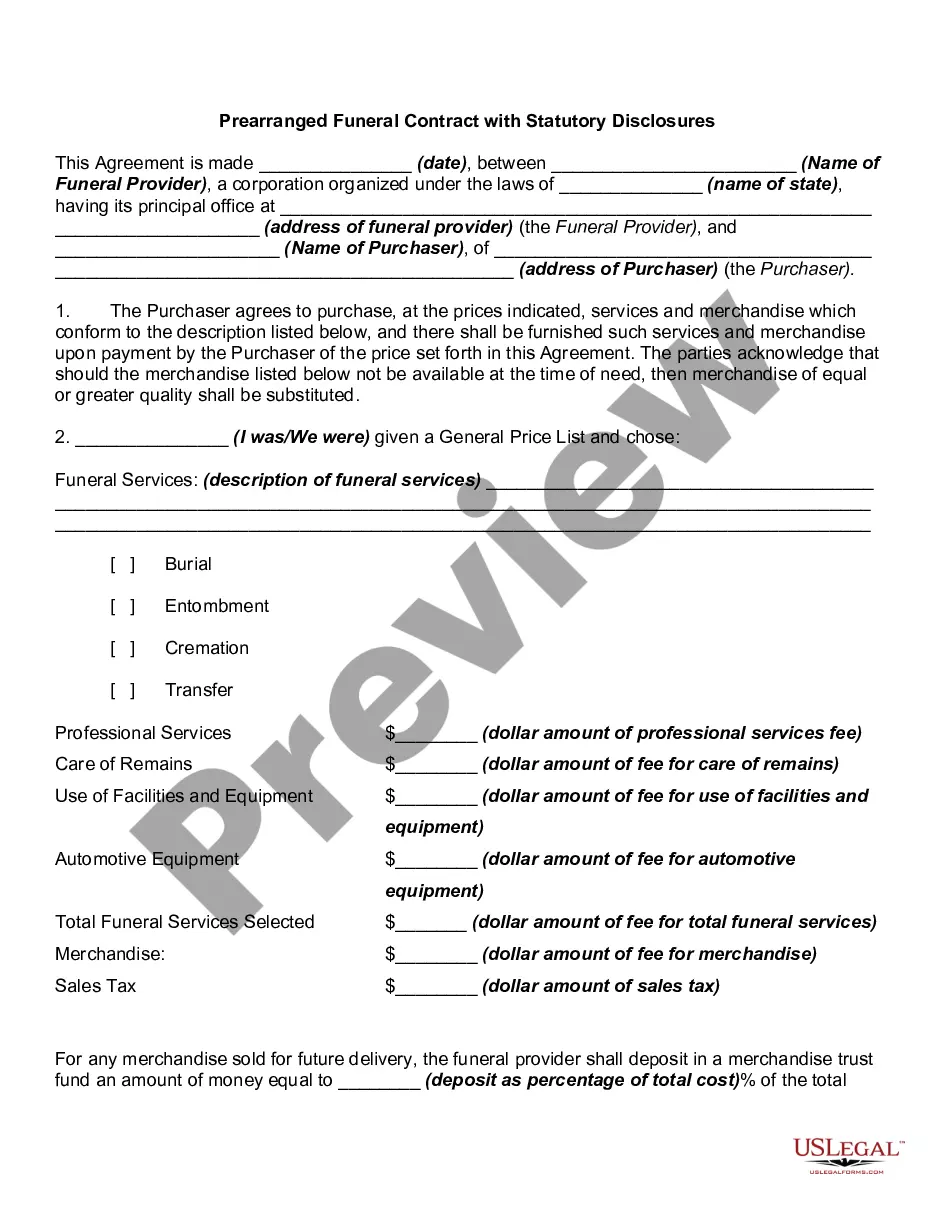
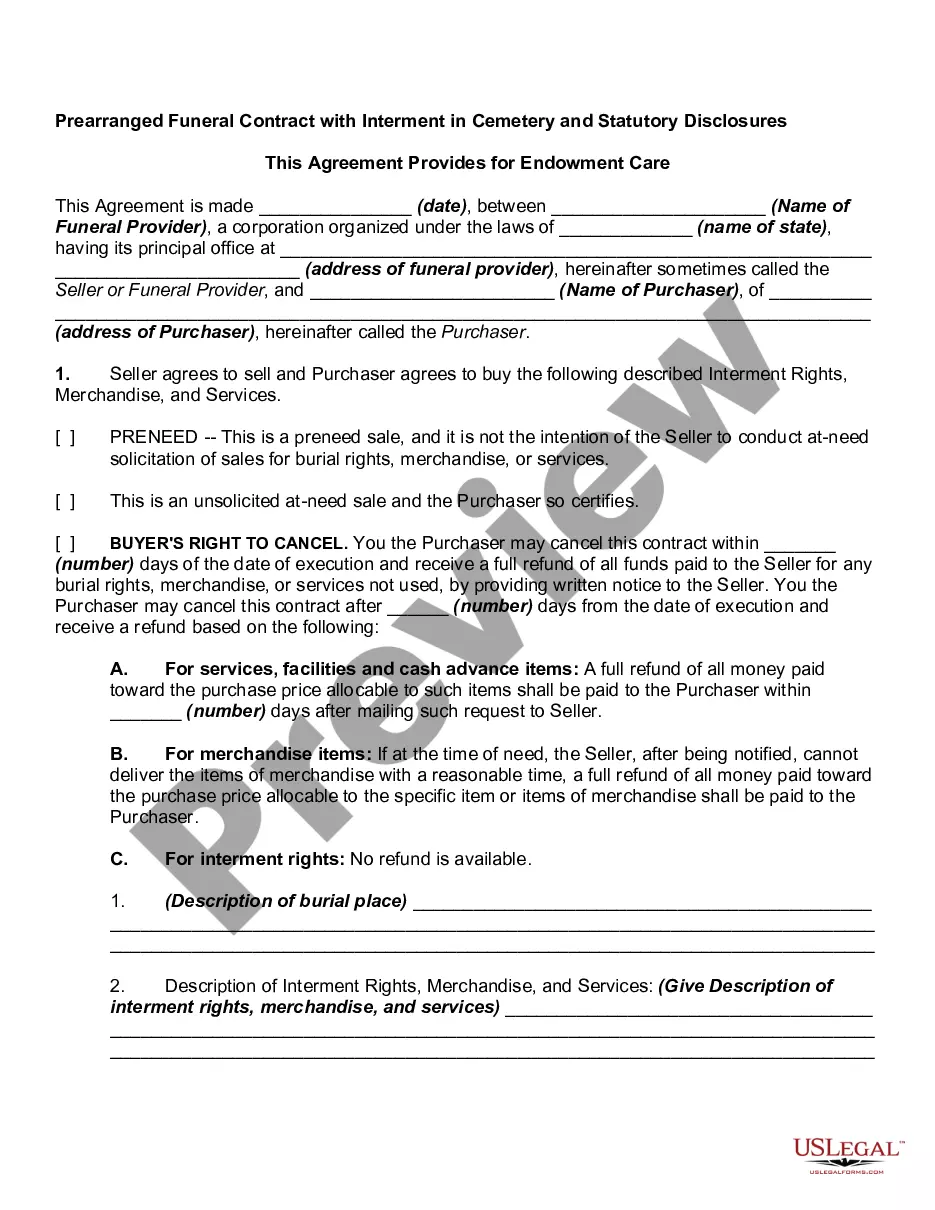
Description
Get your form ready online
Our built-in tools help you complete, sign, share, and store your documents in one place.
Make edits, fill in missing information, and update formatting in US Legal Forms—just like you would in MS Word.
Download a copy, print it, send it by email, or mail it via USPS—whatever works best for your next step.
Sign and collect signatures with our SignNow integration. Send to multiple recipients, set reminders, and more. Go Premium to unlock E-Sign.
If this form requires notarization, complete it online through a secure video call—no need to meet a notary in person or wait for an appointment.
We protect your documents and personal data by following strict security and privacy standards.

Make edits, fill in missing information, and update formatting in US Legal Forms—just like you would in MS Word.

Download a copy, print it, send it by email, or mail it via USPS—whatever works best for your next step.

Sign and collect signatures with our SignNow integration. Send to multiple recipients, set reminders, and more. Go Premium to unlock E-Sign.

If this form requires notarization, complete it online through a secure video call—no need to meet a notary in person or wait for an appointment.

We protect your documents and personal data by following strict security and privacy standards.
Looking for another form?


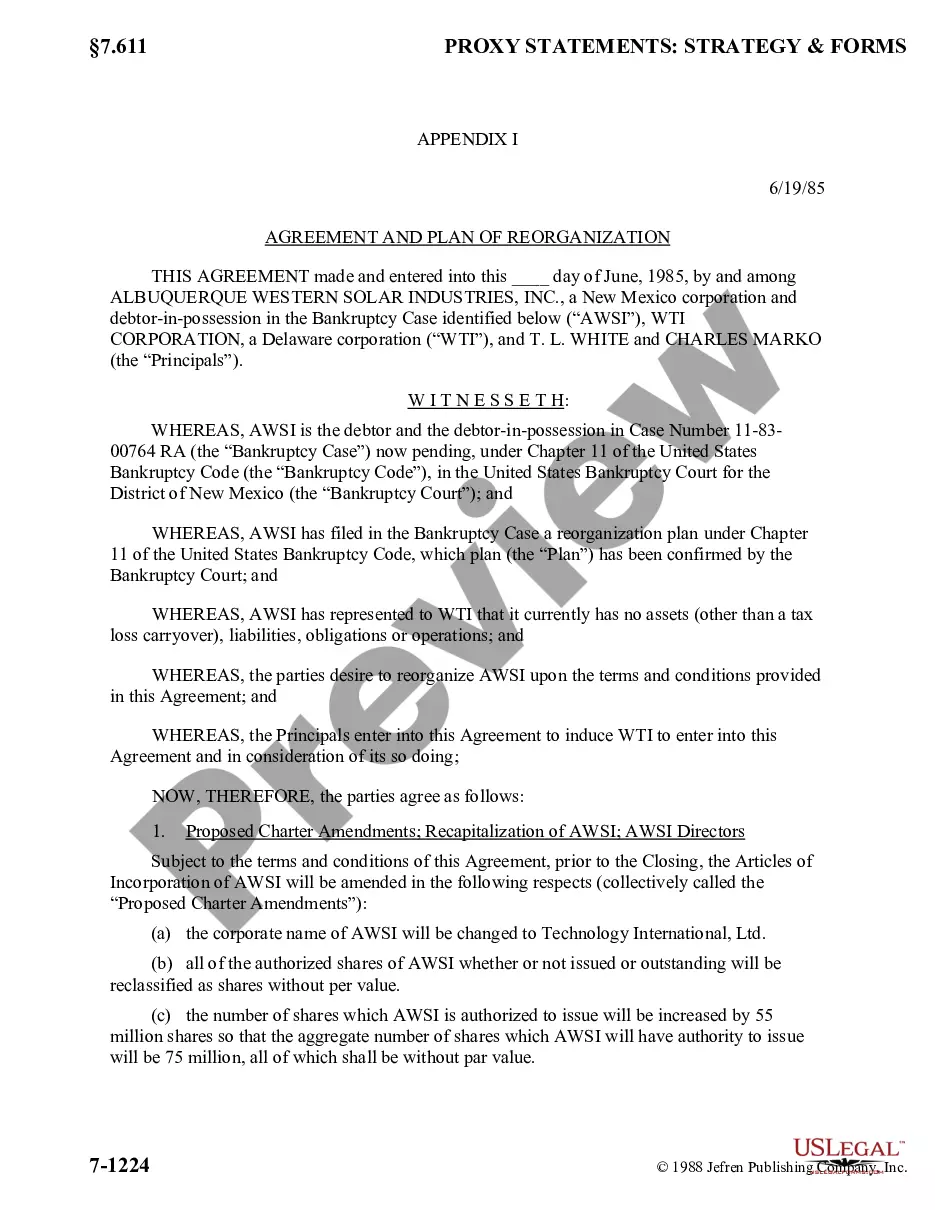
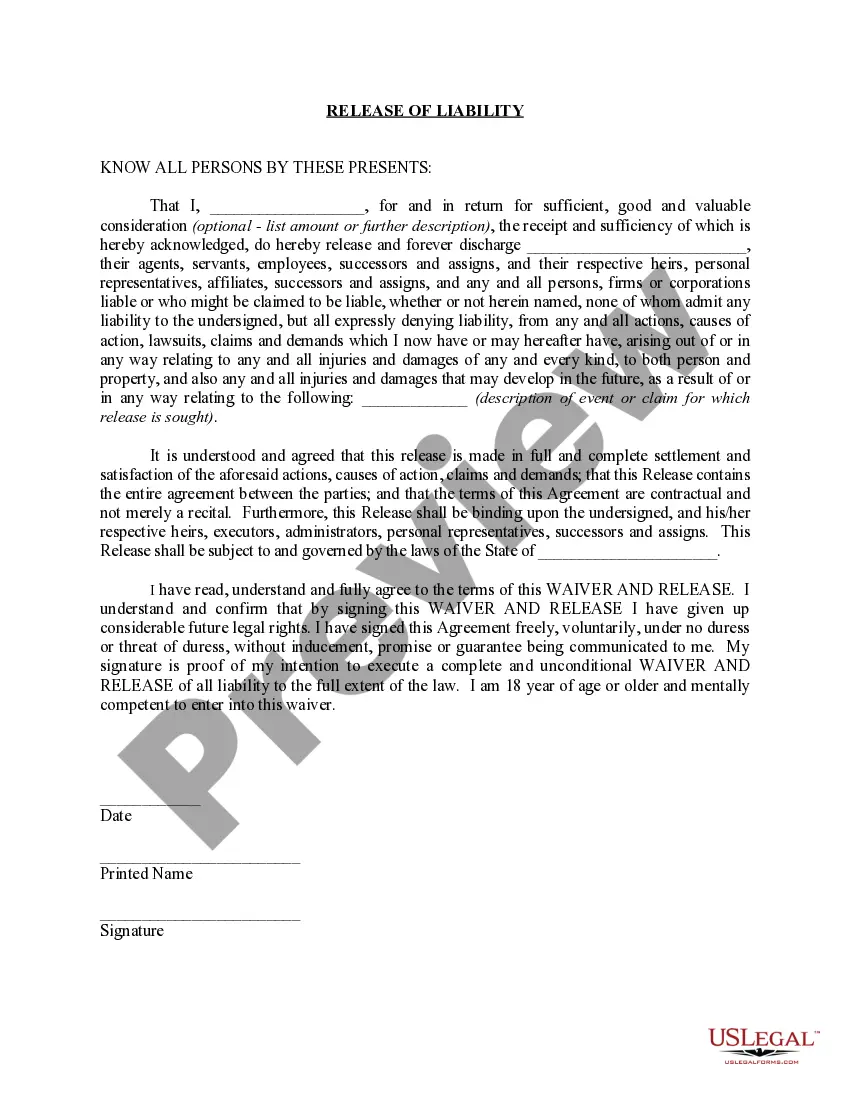
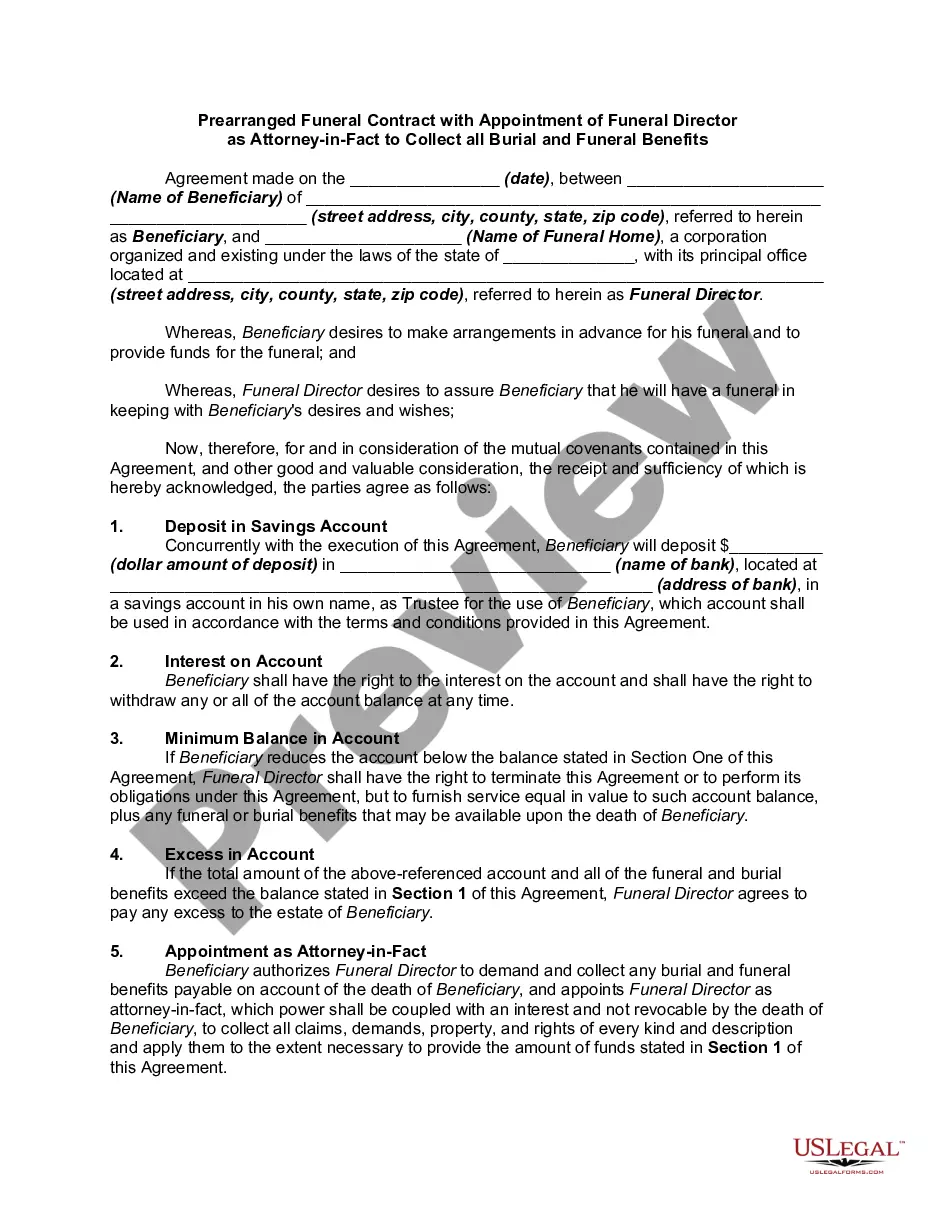
How to fill out Prearranged Funeral Contract With Appointment Of Funeral Director As Attorney-in-Fact To Collect All Burial And Funeral Benefits?
Utilizing legal document examples that adhere to federal and local regulations is crucial, and the web provides numerous alternatives to choose from.
However, what’s the benefit of squandering time hunting for the properly constructed Funeral Contract Agreement With Church template online when the US Legal Forms digital library already houses such documents gathered in a single location.
US Legal Forms is the largest internet legal repository featuring over 85,000 editable documents created by attorneys for every business and personal scenario.
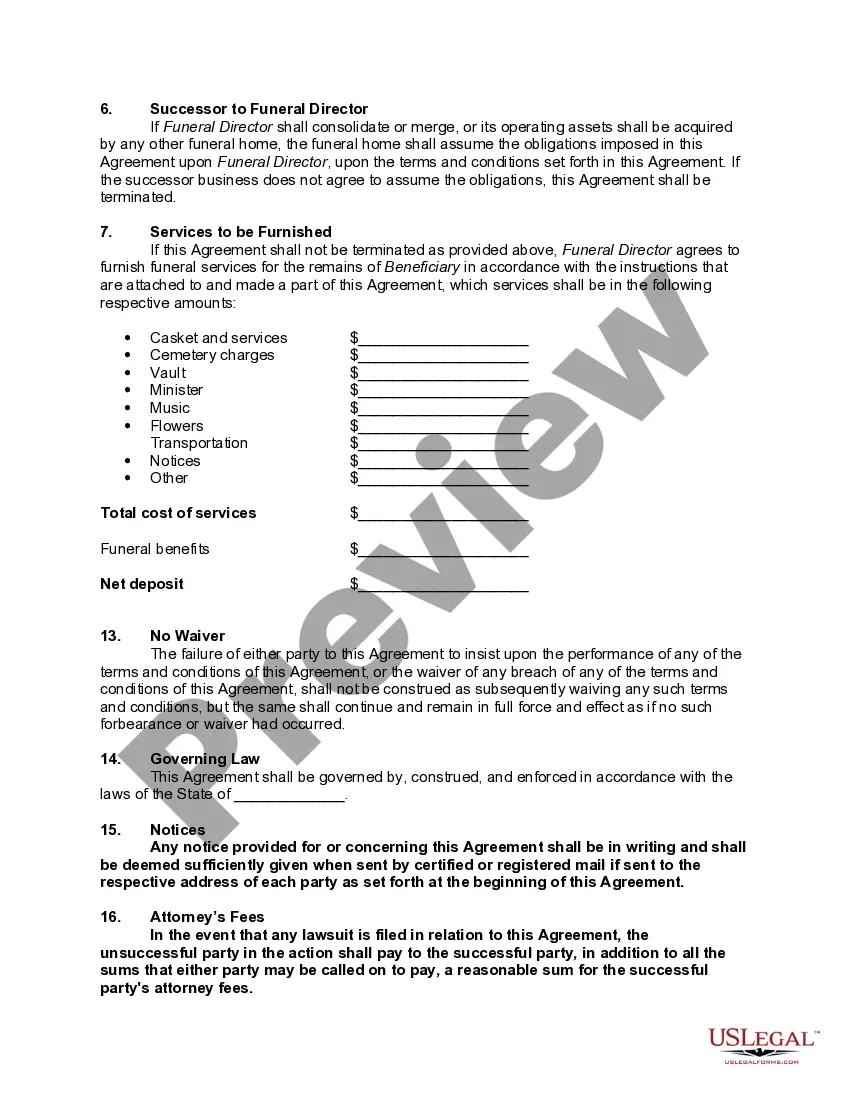
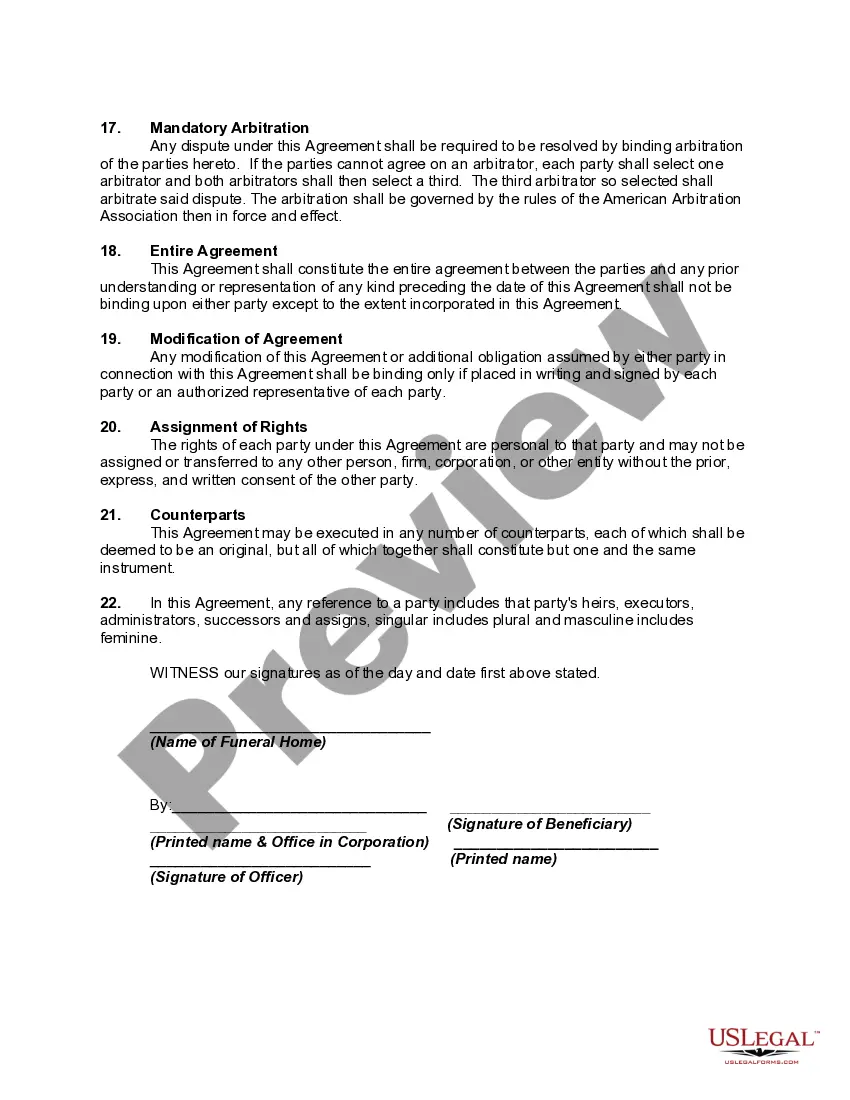
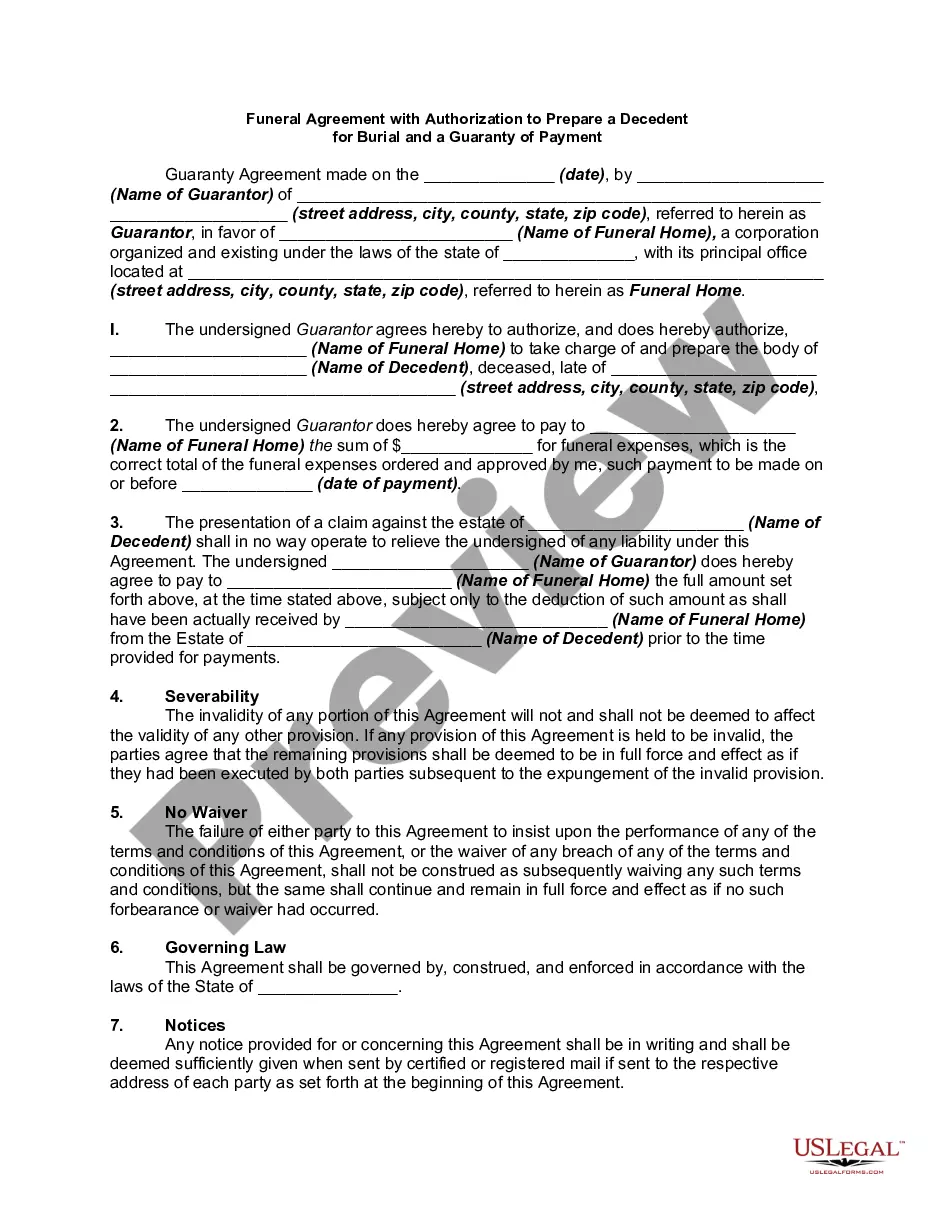
Explore the template using the Preview feature or through the text description to ensure it satisfies your requirements.
- They are simple to navigate with all forms organized by state and intended usage.
- Our experts stay updated with legislative changes, ensuring that your documents remain current and compliant when acquiring a Funeral Contract Agreement With Church from our site.
- Acquiring a Funeral Contract Agreement With Church is simple and swift for both existing and new users.
- If you possess an account with an active subscription, Log In and store the document sample you require in your desired format.
- If you are visiting our website for the first time, follow the steps outlined below.
Form popularity
FAQ
The right to make funeral arrangements typically falls to the person designated in a funeral contract agreement with the church. This can vary based on state laws and family dynamics, but usually, close relatives such as a spouse or adult children are involved. In cases where no specific designation exists, state laws will dictate who has the authority. Understanding these rights can help streamline the planning process.
Funeral plans are generally considered legally binding, especially when documented in a funeral contract agreement with the church. These agreements establish expectations for the services and products to be provided. However, certain terms may allow for modifications or cancellations, depending on state laws. It is wise to familiarize yourself with the specifics of your agreement to ensure compliance.
Yes, a funeral plan can be legally binding, particularly when formalized through a funeral contract agreement with the church. This contract ensures that both the services and products outlined are honored by the funeral provider. However, it’s essential to read the agreement carefully to understand any conditions or stipulations. Consulting with legal expertise may also clarify your obligations and rights under the plan.
In general, the person designated in the funeral contract agreement with the church holds the final say on funeral arrangements. Typically, this individual is the deceased's spouse, adult child, or another family member. However, if there is a pre-existing funeral contract, that agreement usually outlines who makes the decisions. It’s important to communicate openly with all parties involved to avoid any confusion.
The next of kin is usually the closest living relative, such as a spouse, adult child, or parent. However, the definition can vary depending on state laws and may include siblings or other relatives. If a funeral contract agreement with a church exists, it might define who has priority in making arrangements. Understanding your rights and responsibilities can help facilitate smoother planning during a challenging time.
Typically, the estate of the deceased parent is responsible for covering funeral costs. If there are no funds available, the next of kin may need to cover these expenses, unless a funeral contract agreement with a church specifies otherwise. Having a clear plan in place can alleviate financial burdens during a difficult time. Utilizing resources like US Legal Forms can help you create a comprehensive agreement to clarify financial responsibilities.
In most cases, the person who has the legal right to make funeral arrangements is the next of kin, which could be a spouse, child, or parent. However, if a funeral contract agreement with a church is in place, it could outline specific responsibilities. This agreement may designate an individual or committee to handle arrangements, ensuring clarity and peace of mind. It’s important to check any pre-existing agreements that may influence decision-making.
A church resolution for a funeral is a formal statement that outlines the church's support for the family during their time of loss. This document may include details about the church service, memorial activities, and any specific requests from the family. Involving a church in your funeral contract agreement with church can provide additional comfort and guidance. This resolution fosters a sense of community and connection during the grieving process.
A funeral service contract outlines the agreement between a family and a funeral service provider. This contract specifies the services provided, costs, and any other arrangements for the funeral. When creating a funeral contract agreement with church, it is essential to include all necessary details to ensure a smooth process. Understanding this contract helps families make informed decisions during a difficult time.
Writing a church resolution for a funeral requires a structured approach. Start with a formal introduction, followed by a detailed description of the deceased's impact on the church community. It's beneficial to reference the funeral contract agreement with church, detailing how it facilitates the service and honors the person's legacy. End with a heartfelt conclusion that offers comfort to the grieving family.