Funeral Contract Agreement With 501
Description
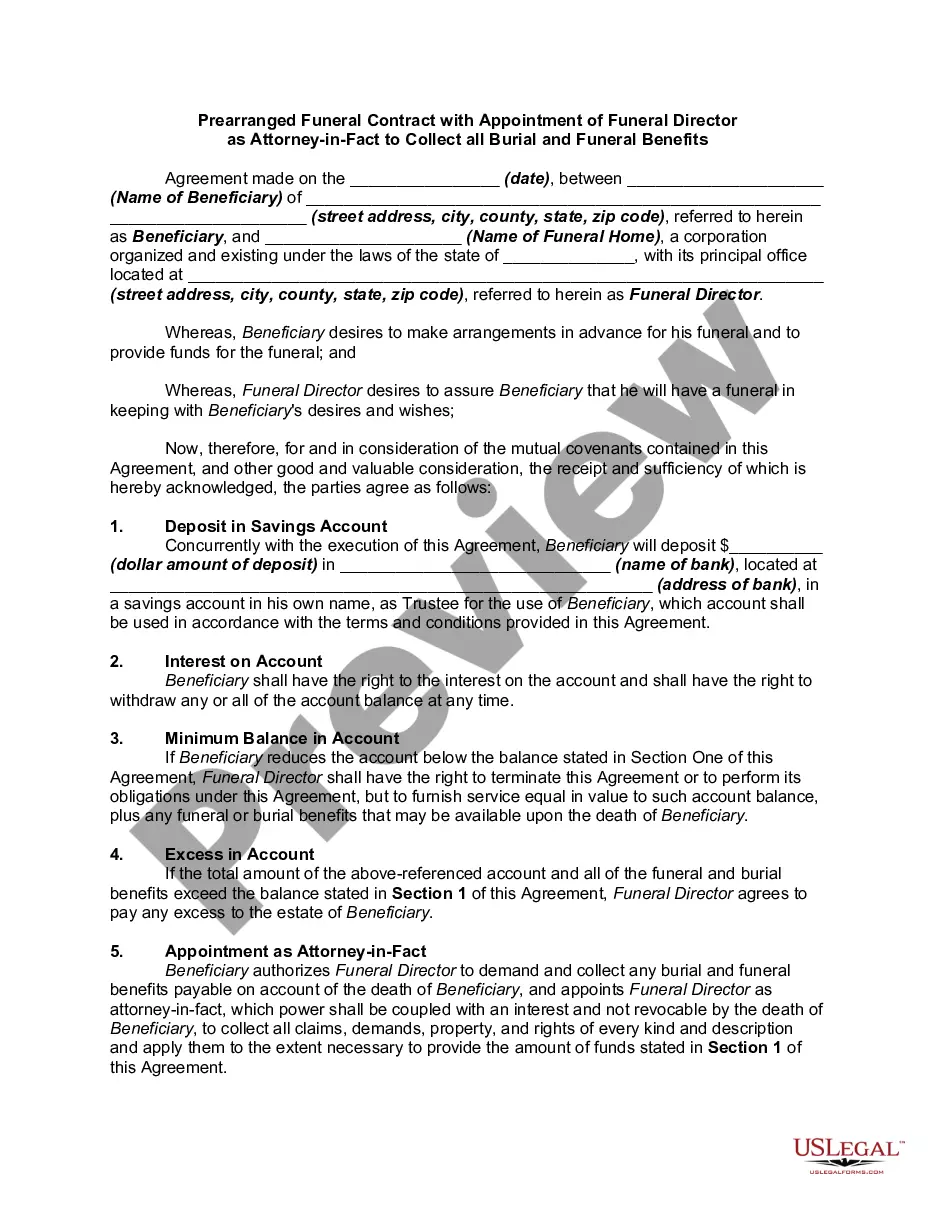
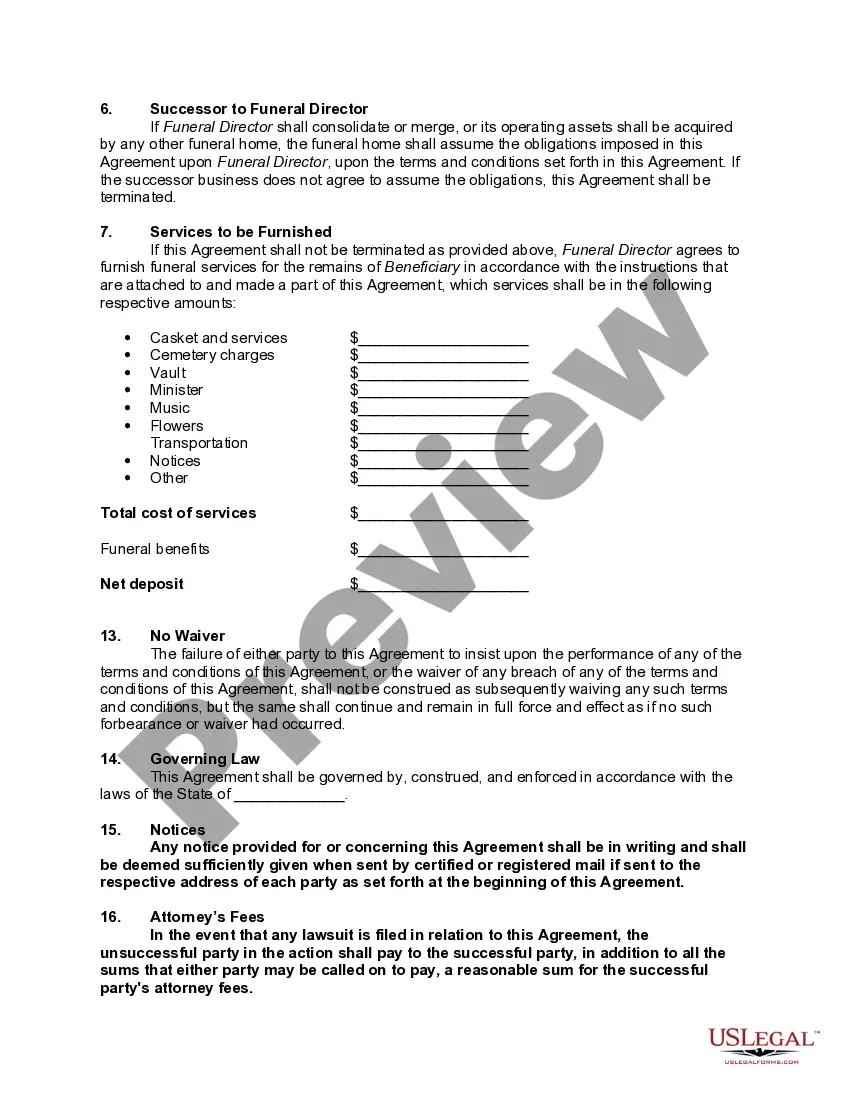
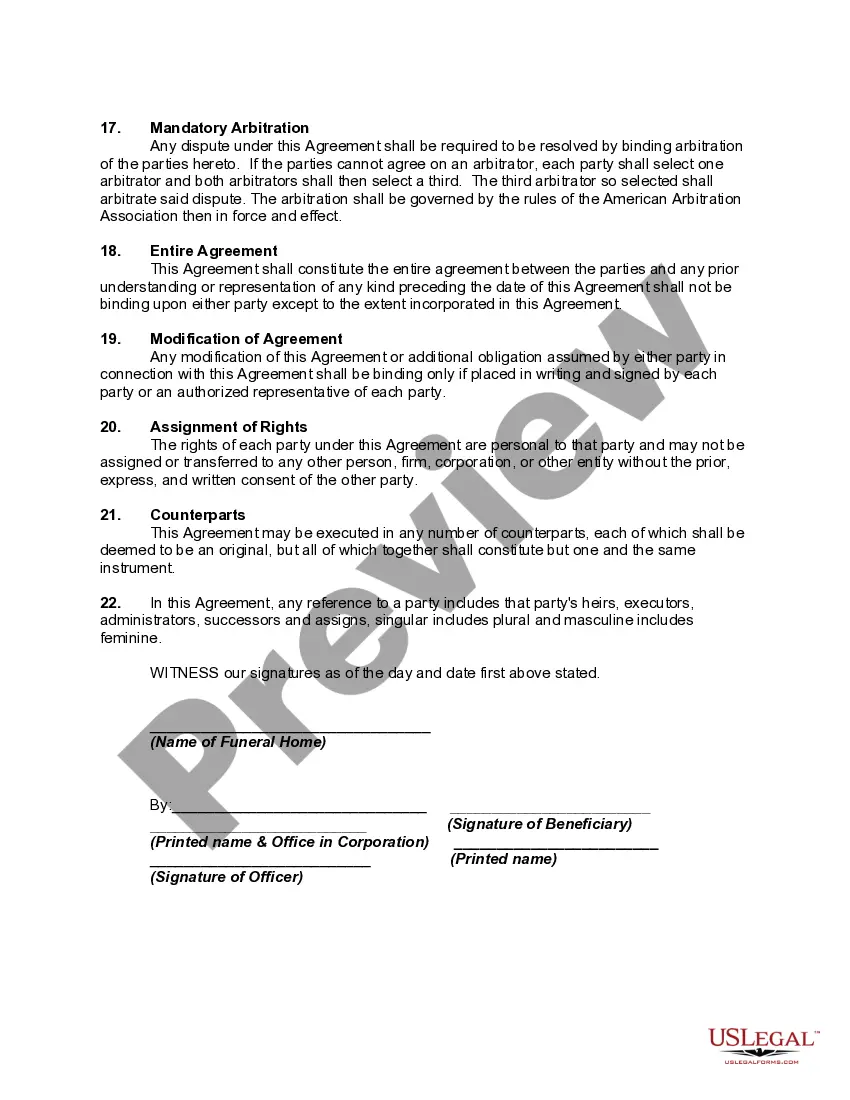
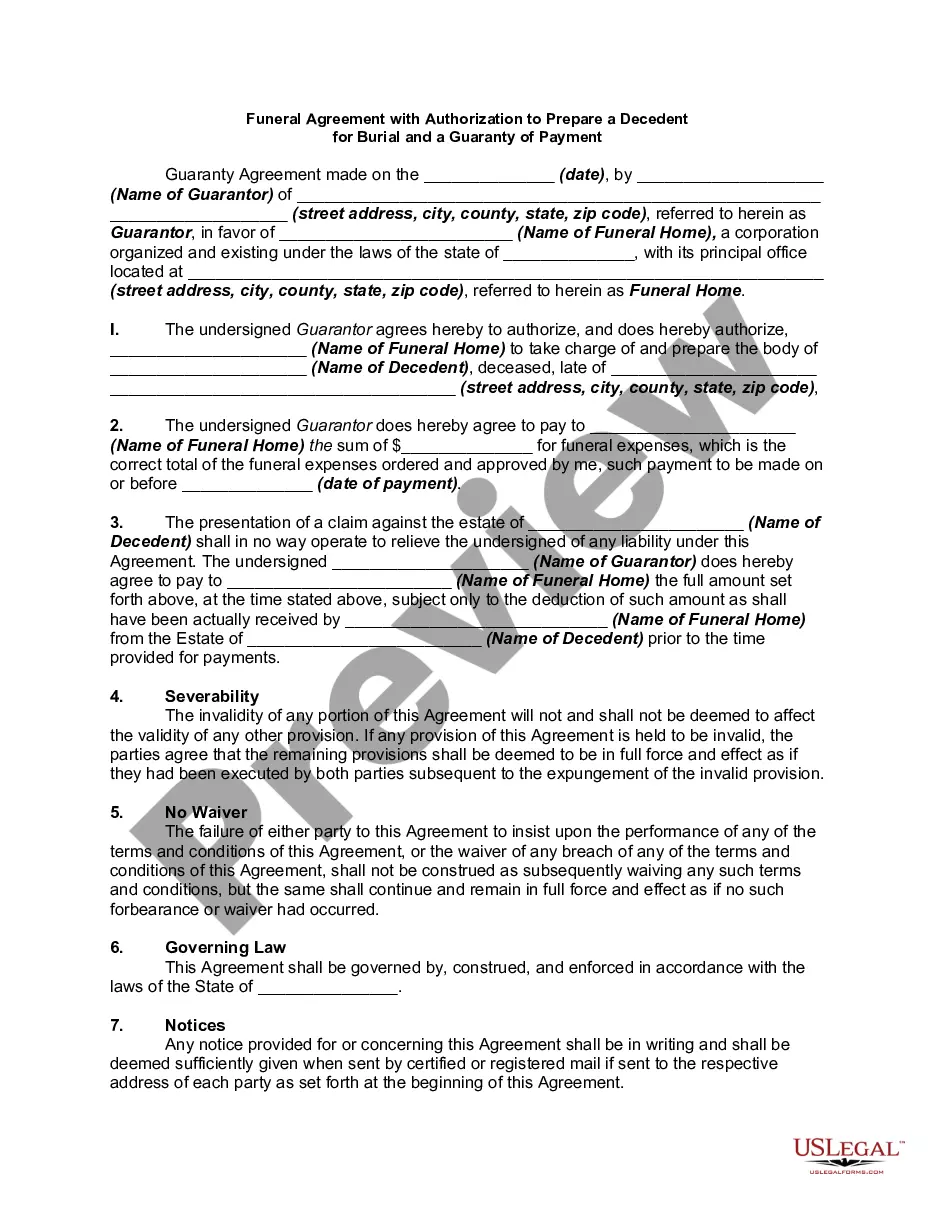
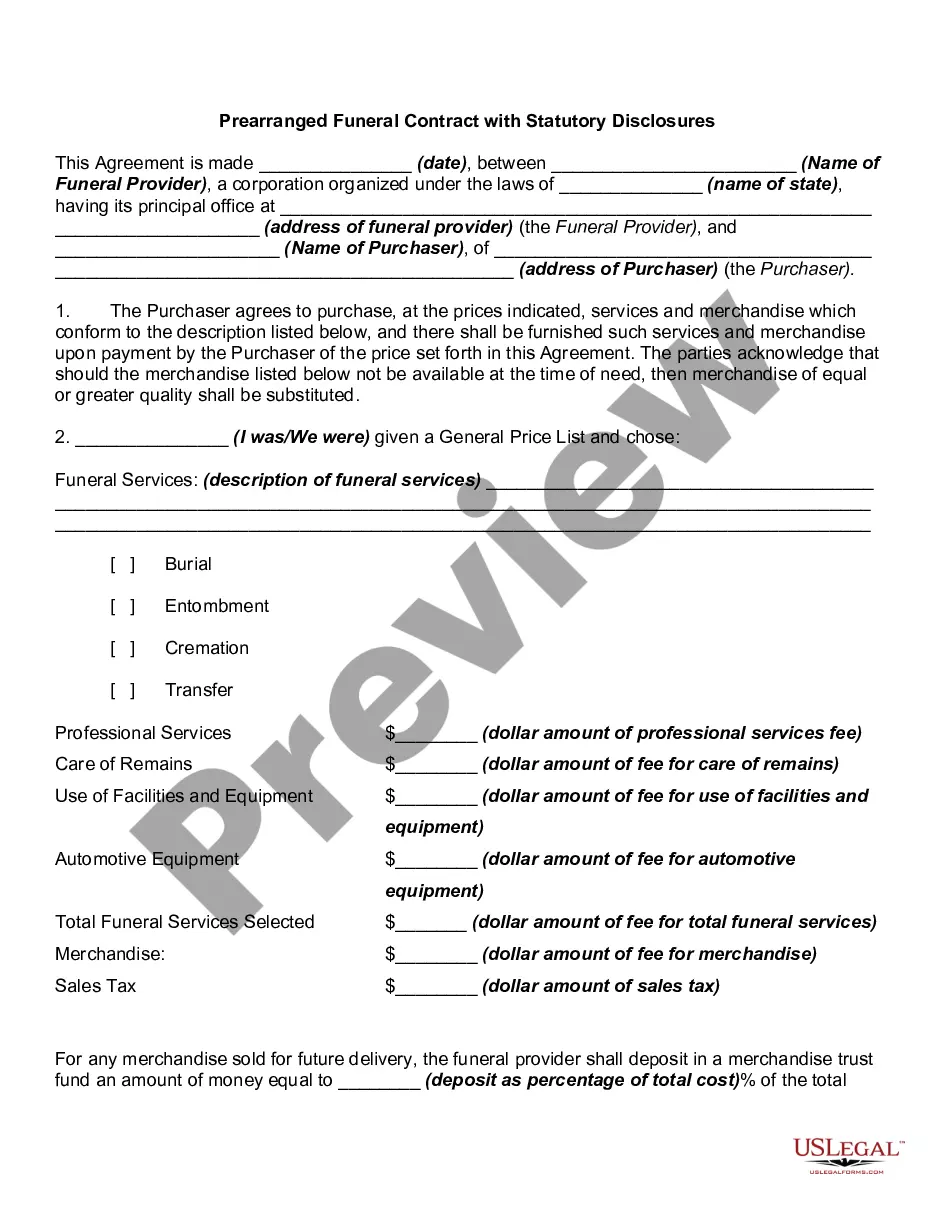
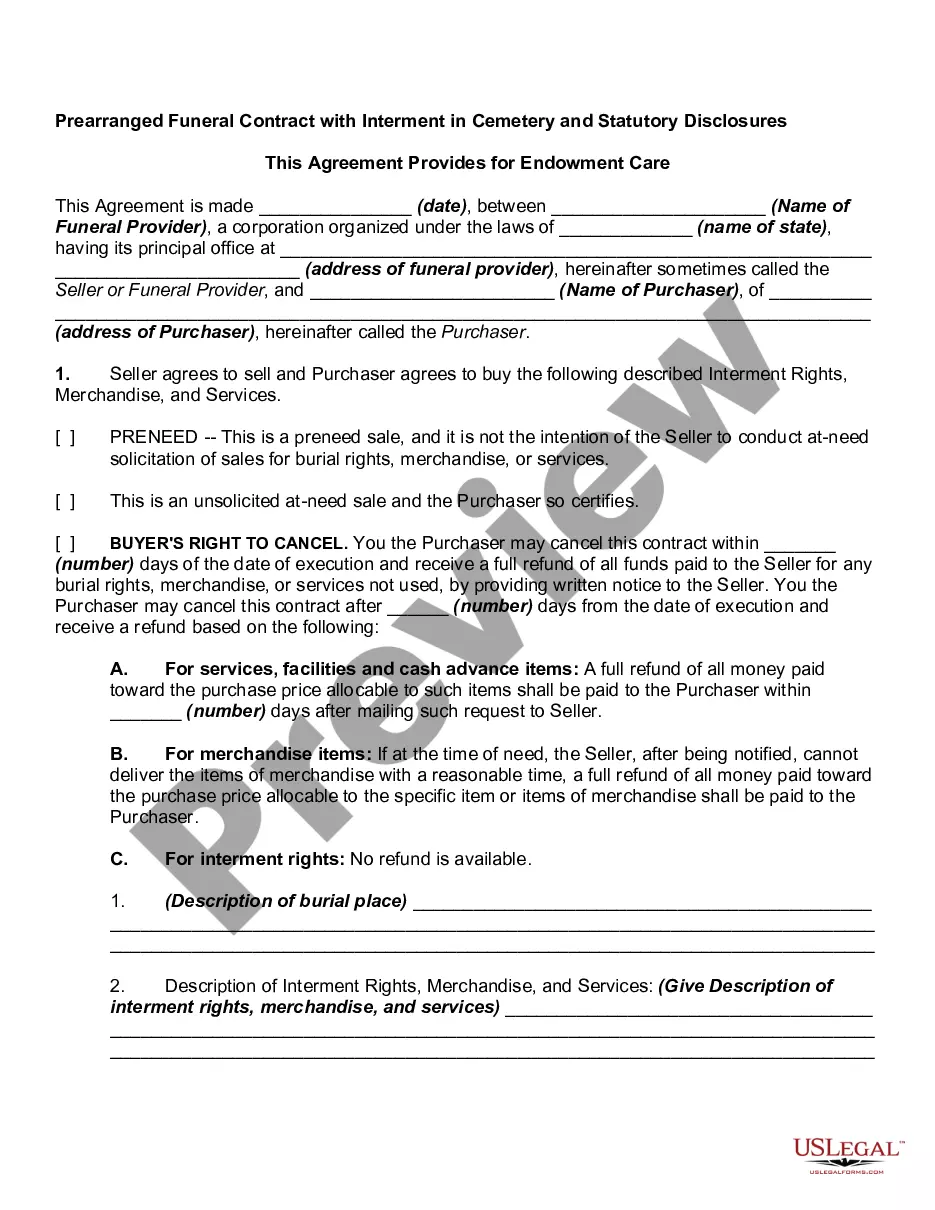


How to fill out Prearranged Funeral Contract With Appointment Of Funeral Director As Attorney-in-Fact To Collect All Burial And Funeral Benefits?
The Funeral Agreement Contract With 501 you see on this page is a reusable official template created by skilled attorneys in accordance with national and regional regulations.
For over 25 years, US Legal Forms has supplied individuals, entities, and legal experts with over 85,000 validated, state-specific forms for any commercial or personal need. It’s the fastest, easiest, and most dependable way to acquire the documents you require, as the service assures the utmost level of data protection and anti-malware safeguards.
Register with US Legal Forms to have authenticated legal templates for every aspect of life available at your fingertips.
- Search for the form you require and examine it.
- Browse through the document you searched and preview it or review the form description to be sure it meets your needs. If it doesn’t, use the search bar to find the appropriate one. Click Buy Now after you locate the template you need.
- Subscribe and Log In.
- Select the payment plan that works for you and create an account. Use PayPal or a credit card for a swift transaction. If you already possess an account, Log In and check your subscription status to proceed.
- Obtain the editable form.
- Choose the format you prefer for your Funeral Agreement Contract With 501 (PDF, DOCX, RTF) and download the example onto your device.
- Complete and sign the document.
- Print the template to fill it out manually. Alternatively, utilize an online multifunctional PDF editor to swiftly and precisely complete and sign your document with a legally binding electronic signature.
- Re-download your documents.
- Utilize the same form again whenever necessary. Access the My documents tab in your profile to retrieve any previously downloaded documents.
Form popularity
FAQ
Forming a 501(c)(3) organization involves several key steps. First, you need to choose a unique name and file your articles of incorporation with your state. Next, draft bylaws that govern your organization and hold an initial board meeting. Finally, complete and submit Form 1023 to the IRS for tax-exempt status. Incorporating a funeral contract agreement with 501 can streamline this process and provide you with necessary legal protections.
To start a 501(c)(3), you need a clear mission statement outlining your organization’s purpose. You also require a board of directors, bylaws, and a detailed plan for your activities. Additionally, you will need to file Form 1023 with the IRS, which is essential for obtaining tax-exempt status. Using a funeral contract agreement with 501 can help ensure that your organization adheres to legal standards and operates smoothly.
Yes, donations made to a 501(c)(13) organization are generally tax-deductible for the donor. This feature makes it easier for your organization to raise funds, especially when establishing a funeral contract agreement with 501(c)(13). By promoting this benefit, you can encourage more individuals to contribute, knowing their donations will provide them with a tax advantage while supporting a worthy cause.
Being recognized as a 501(c)(3) public charity offers several advantages, particularly in the context of a funeral contract agreement with 501. You gain tax-exempt status, which can enhance your fundraising capabilities, as donors can make tax-deductible contributions. Additionally, you may receive grants and other funding opportunities available only to public charities, allowing you to expand your services and support to the community during difficult times.
A 501(c)(13) organization is a tax-exempt entity that operates as a cemetery and provides burial services. Unlike 501(c)(3) organizations, 501(c)(13) entities focus on the preservation and maintenance of cemeteries rather than charitable activities. If you are entering a funeral contract agreement with a 501(c)(13), it is essential to understand their specific regulations and guidelines.
501(c)(3) organizations are prohibited from engaging in political activities, substantial lobbying, and any activities that do not align with their charitable purpose. Violating these prohibitions can result in losing tax-exempt status. When drafting a funeral contract agreement with a 501(c)(3), ensure that all activities comply with IRS regulations to safeguard your organization.
Common examples of 501(c)(3) violations include excessive lobbying, engaging in political campaigns, and providing private benefits to individuals. These violations can lead to penalties, including loss of tax-exempt status. It's essential to understand these risks when managing a funeral contract agreement with 501(c)(3) entities.
501(c)(3) organizations face several limitations, including restrictions on political activities and the requirement to operate primarily for charitable purposes. They must also keep detailed records of finances and activities. When considering a funeral contract agreement with a 501(c)(3), be aware of these limitations to avoid potential issues down the line.
The '5% rule' refers to the IRS guideline that allows a 501(c)(3) organization to spend up to 5% of its budget on lobbying activities. It's crucial to stay within this limit to maintain tax-exempt status. If you plan to engage in lobbying, consider consulting with professionals or utilizing tools from USLegalForms to ensure compliance while drafting your funeral contract agreement.
A 501(c)(3) organization cannot engage in political campaigning or substantial lobbying activities. Additionally, it must not benefit private interests or individuals. Violating these restrictions can jeopardize your tax-exempt status, which is why it's important to understand the rules when entering a funeral contract agreement with 501(c)(3) organizations.