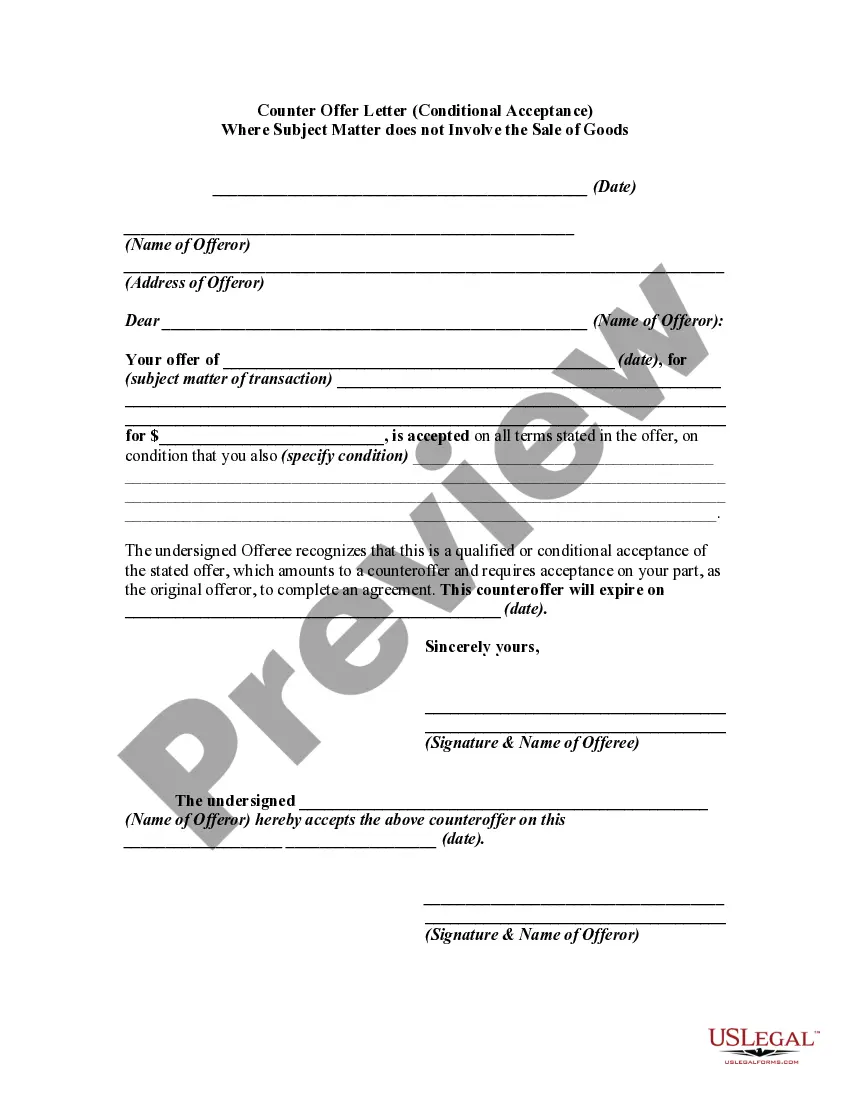
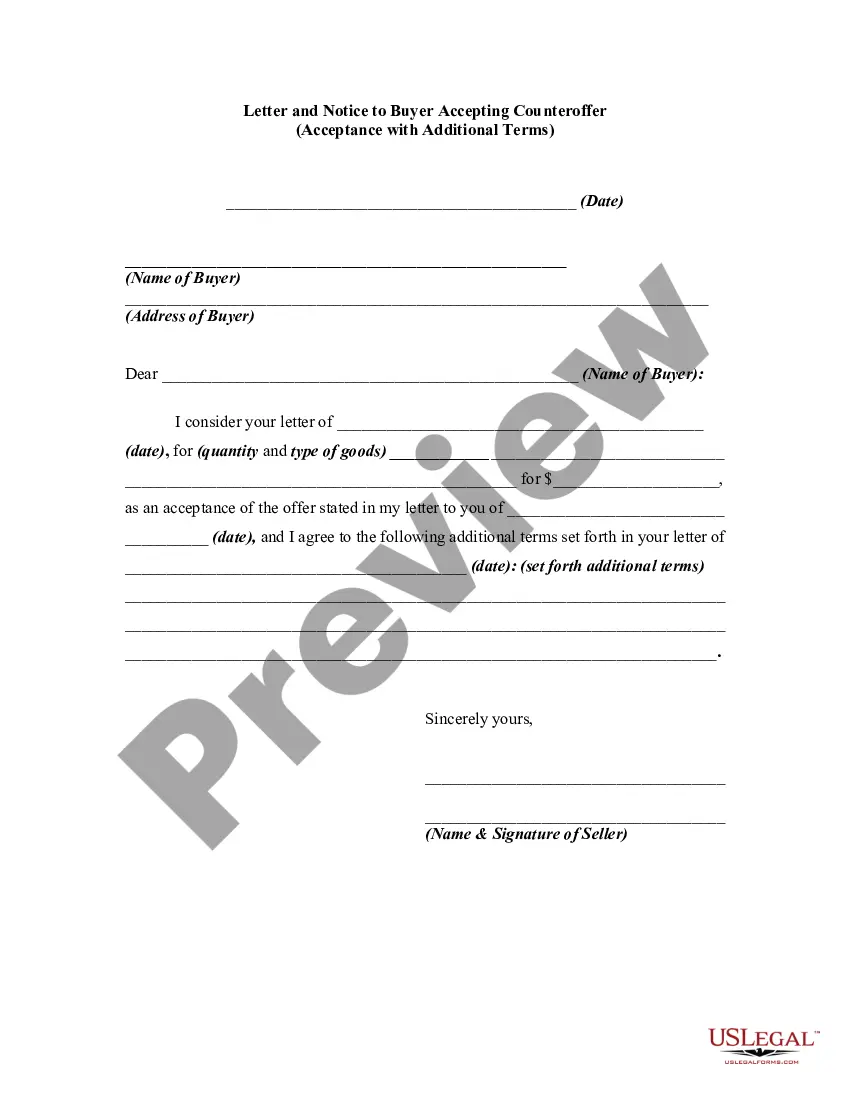
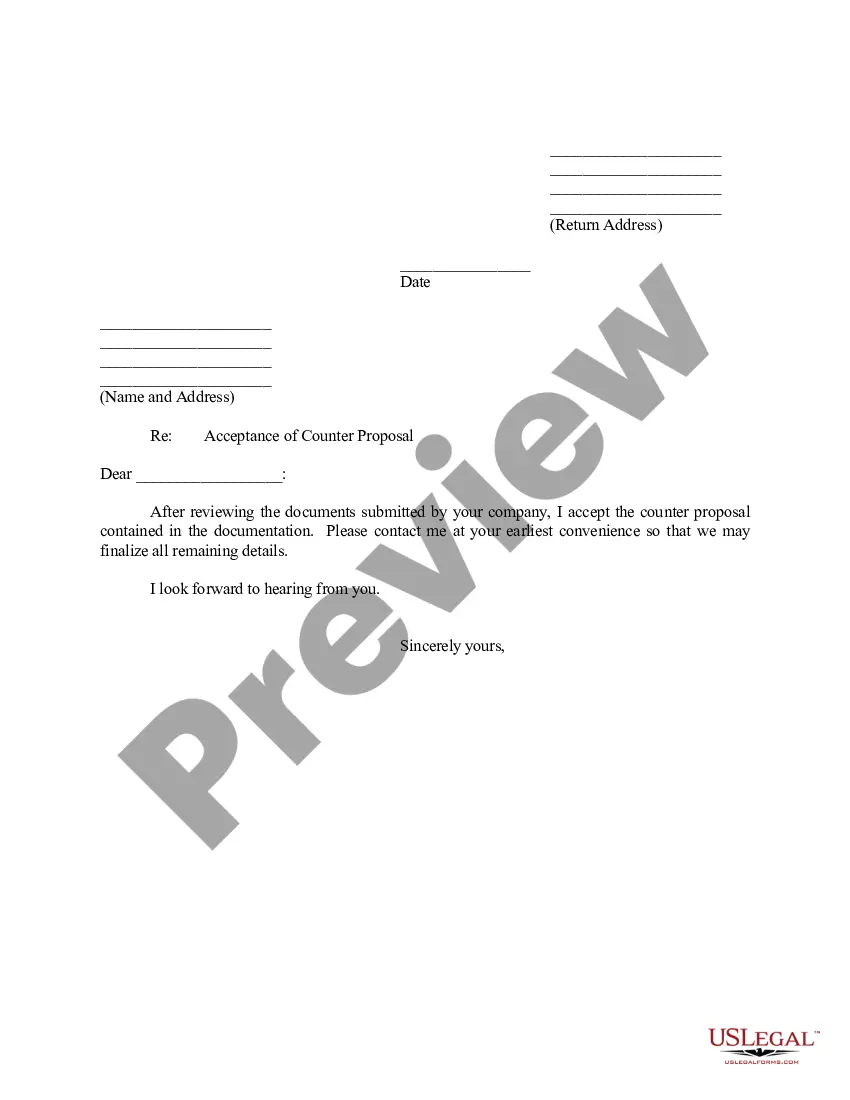
Counter Offer After Signing Offer Letter
Description
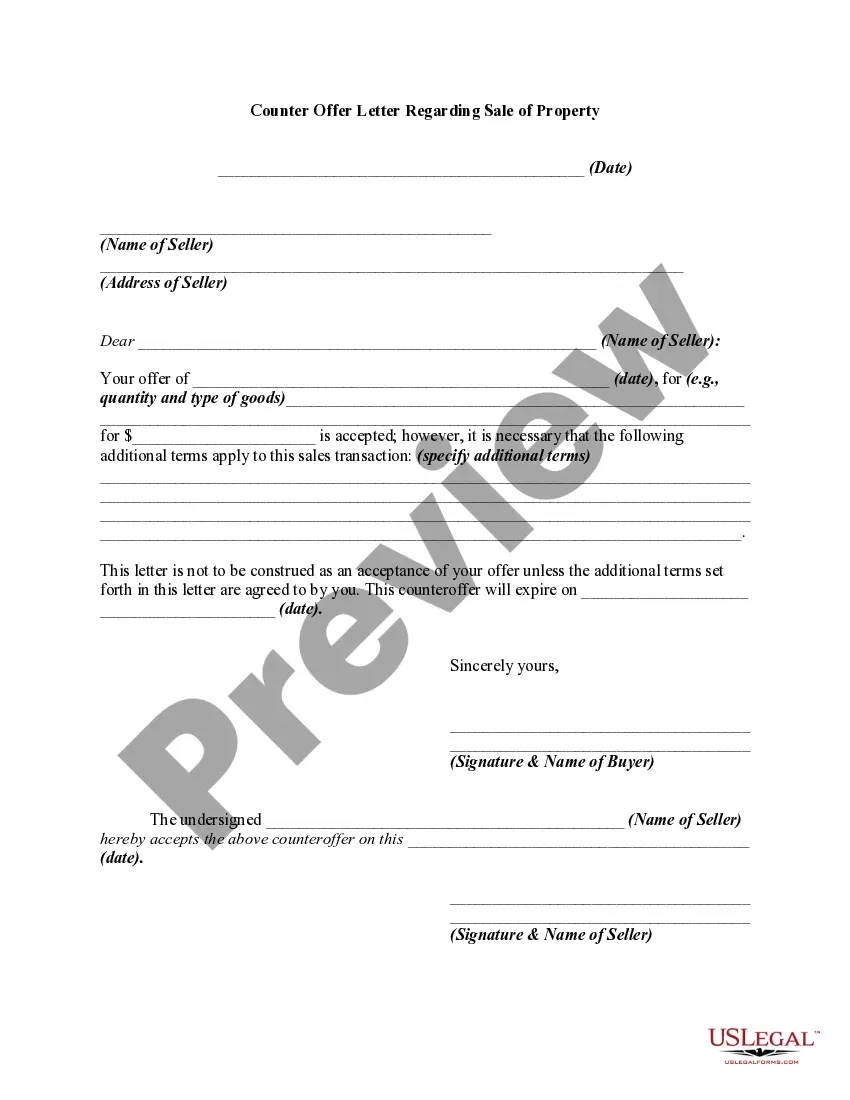
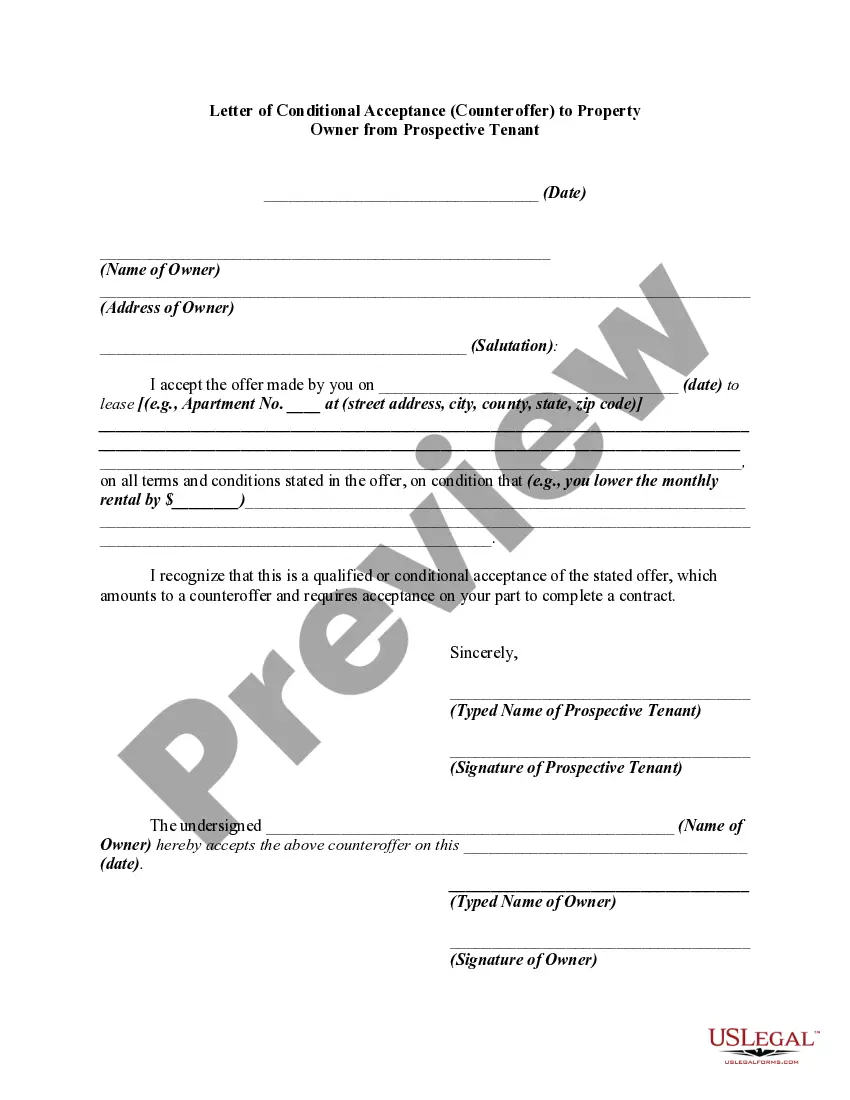
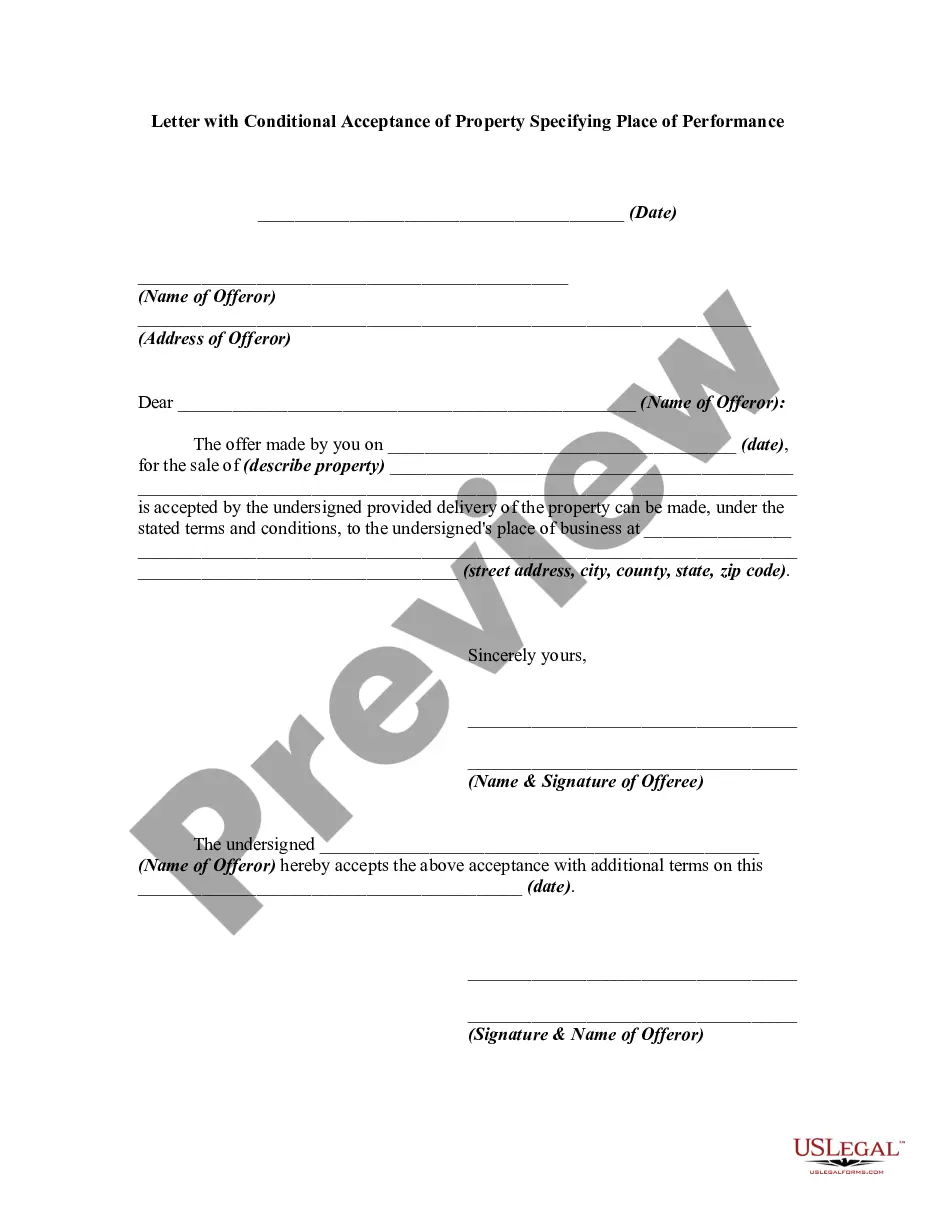
Get your form ready online
Our built-in tools help you complete, sign, share, and store your documents in one place.
Make edits, fill in missing information, and update formatting in US Legal Forms—just like you would in MS Word.
Download a copy, print it, send it by email, or mail it via USPS—whatever works best for your next step.
Sign and collect signatures with our SignNow integration. Send to multiple recipients, set reminders, and more. Go Premium to unlock E-Sign.
If this form requires notarization, complete it online through a secure video call—no need to meet a notary in person or wait for an appointment.
We protect your documents and personal data by following strict security and privacy standards.

Make edits, fill in missing information, and update formatting in US Legal Forms—just like you would in MS Word.

Download a copy, print it, send it by email, or mail it via USPS—whatever works best for your next step.

Sign and collect signatures with our SignNow integration. Send to multiple recipients, set reminders, and more. Go Premium to unlock E-Sign.

If this form requires notarization, complete it online through a secure video call—no need to meet a notary in person or wait for an appointment.

We protect your documents and personal data by following strict security and privacy standards.
Looking for another form?

How to fill out Counter Offer Letter - Conditional Acceptance Where Subject Matter Does Not Involve The Sale Of Goods?
Handling legal documentation can be exasperating, even for the most adept practitioners.
When you seek a Counter Offer After Signing Offer Letter and lack the opportunity to invest time searching for the appropriate and current version, the processes can be burdensome.
Utilize a resource hub of articles, guides, and materials pertinent to your circumstances and needs.
Conserve time and effort locating the documents you require, and use US Legal Forms’ sophisticated search and Preview feature to identify the Counter Offer After Signing Offer Letter and download it.
Take advantage of the US Legal Forms online library, supported by 25 years of experience and reliability. Transform your daily documentation management into a straightforward and user-friendly procedure today.
- If you have a membership, Log Into your US Legal Forms account, search for the form, and download it.
- Check your My documents section to view the documents you have previously stored and organize your folders as you prefer.
- If it's your inaugural experience with US Legal Forms, create a free account and gain unlimited access to all the advantages of the library.
- Here are the actions to take after obtaining the desired form.
- Verify it is the correct form by viewing it and reviewing its details.
- Make sure the template is valid in your state or county.
- Select Buy Now when you are prepared.
- Pick a subscription plan.
- Locate the format you desire and Download, fill out, sign, print, and submit your documents.
- Access state- or county-specific legal and organizational documents.
- US Legal Forms addresses any requirements you may have, ranging from personal to business papers, all in one spot.
- Utilize advanced tools to complete and manage your Counter Offer After Signing Offer Letter.
Form popularity
FAQ
An order to show cause is a type of court order that requires one or more of the parties to a case to justify, explain, or prove something to the court. Courts commonly use orders to show cause when the judge needs more information before deciding whether or not to issue an order requested by one of the parties.
IT IS THEREFORE ORDERED AS FOLLOWS: Except in exigent or unusual circumstances, any continuance motion or request must be in writing, signed by the client, and filed not later than seven days before the court event for which rescheduling is requested.
In Iowa, you have to file an action against the other party to seek enforcement of the existing court decree order. The enforcement action is formally known as an Application for Rule to Show Cause, commonly referred to as a contempt filing. This filing brings the opposing party's bad acts to the court's attention.
In addition, rule 1.943 allows for voluntary dismissal of the plaintiff's petition without prejudice once as a matter of right. Id. r. 1.943.
An attorney can issue a subpoena without a court file being opened, but if the clerk issues a blank subpoena, a court file must be opened and will collect a $50 fee. Rule 1.1702(5). A court file will also be opened for any motions relating to the subpoena and the clerk will collect a $50 fee then as well.
In Iowa, you have to file an action against the other party to seek enforcement of the existing court decree order. The enforcement action is formally known as an Application for Rule to Show Cause, commonly referred to as a contempt filing. This filing brings the opposing party's bad acts to the court's attention.
You can file a Petition for Change of Name in the district court. See Iowa Code chapter 674. You will need to electronically file the Petition for Change of Name and pay the $195 filing fee.
A ?motion to quash? is a request to the court to end enforcement of a court order or declare the order invalid. Sometimes parties desire to quash an injunction, subpoena, guilty plea, garnishment, or order for mandatory income withholding that has been filed against the person.