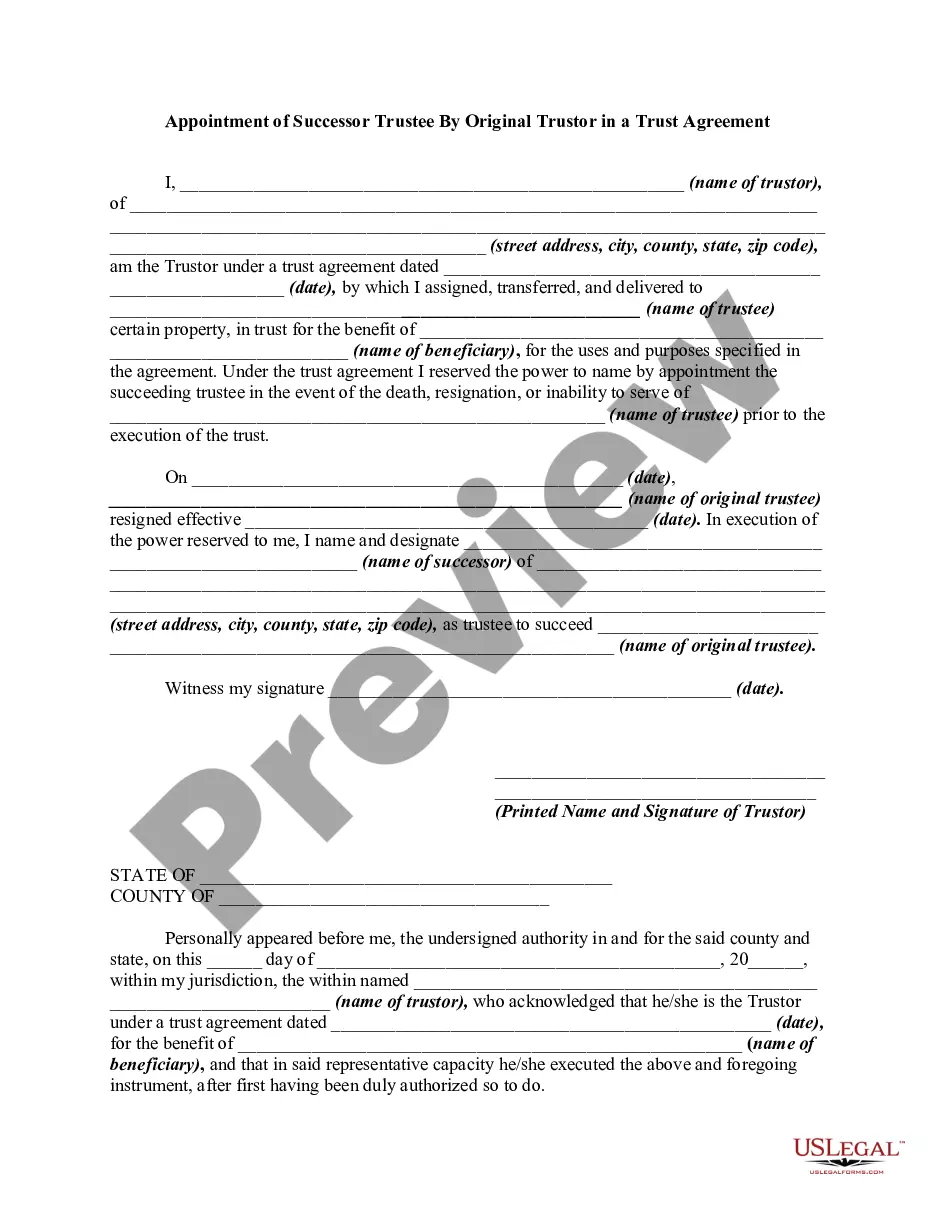
Successor Trustee Appointment Form With Trustee
Description

Get your form ready online
Our built-in tools help you complete, sign, share, and store your documents in one place.
Make edits, fill in missing information, and update formatting in US Legal Forms—just like you would in MS Word.
Download a copy, print it, send it by email, or mail it via USPS—whatever works best for your next step.
Sign and collect signatures with our SignNow integration. Send to multiple recipients, set reminders, and more. Go Premium to unlock E-Sign.
If this form requires notarization, complete it online through a secure video call—no need to meet a notary in person or wait for an appointment.
We protect your documents and personal data by following strict security and privacy standards.

Make edits, fill in missing information, and update formatting in US Legal Forms—just like you would in MS Word.

Download a copy, print it, send it by email, or mail it via USPS—whatever works best for your next step.

Sign and collect signatures with our SignNow integration. Send to multiple recipients, set reminders, and more. Go Premium to unlock E-Sign.

If this form requires notarization, complete it online through a secure video call—no need to meet a notary in person or wait for an appointment.

We protect your documents and personal data by following strict security and privacy standards.
Looking for another form?
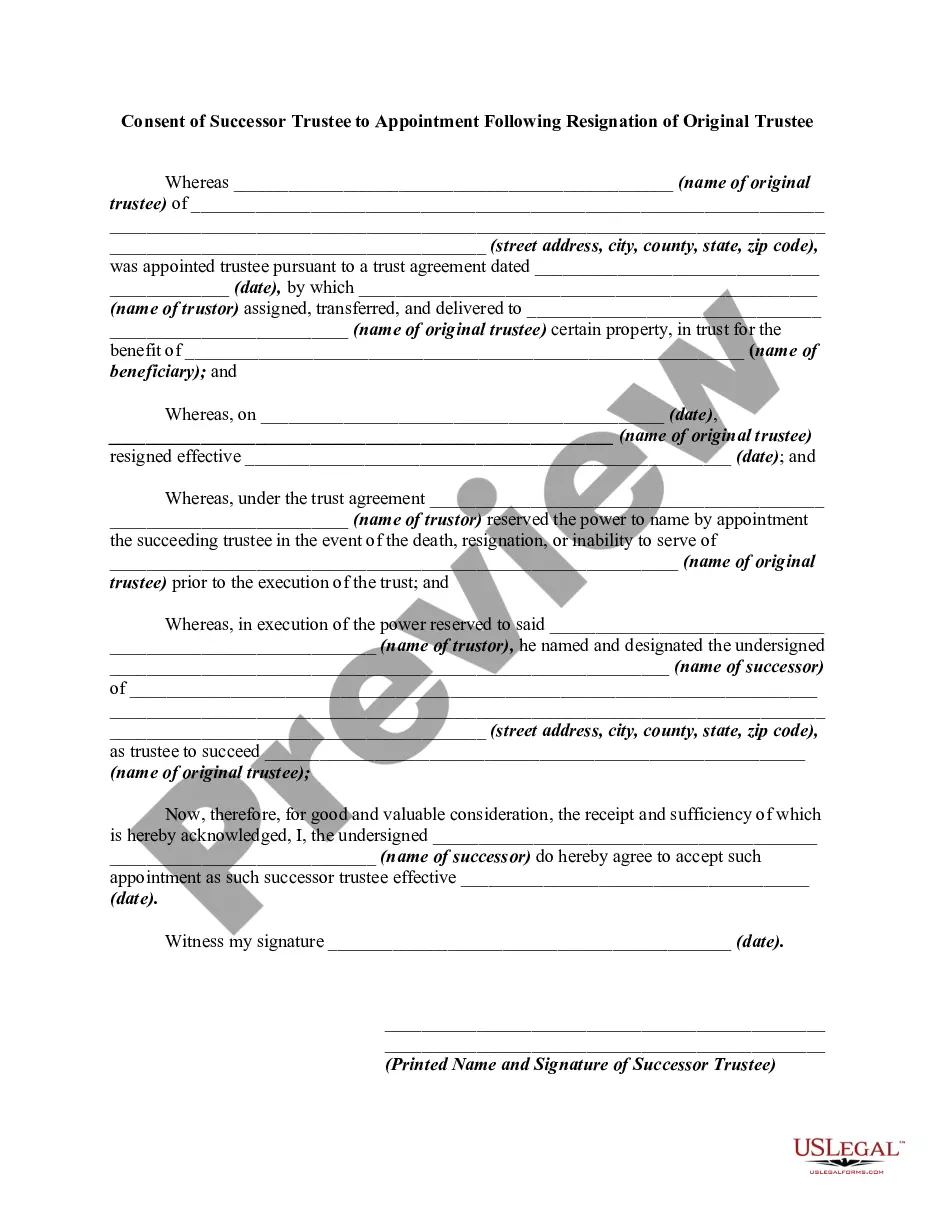
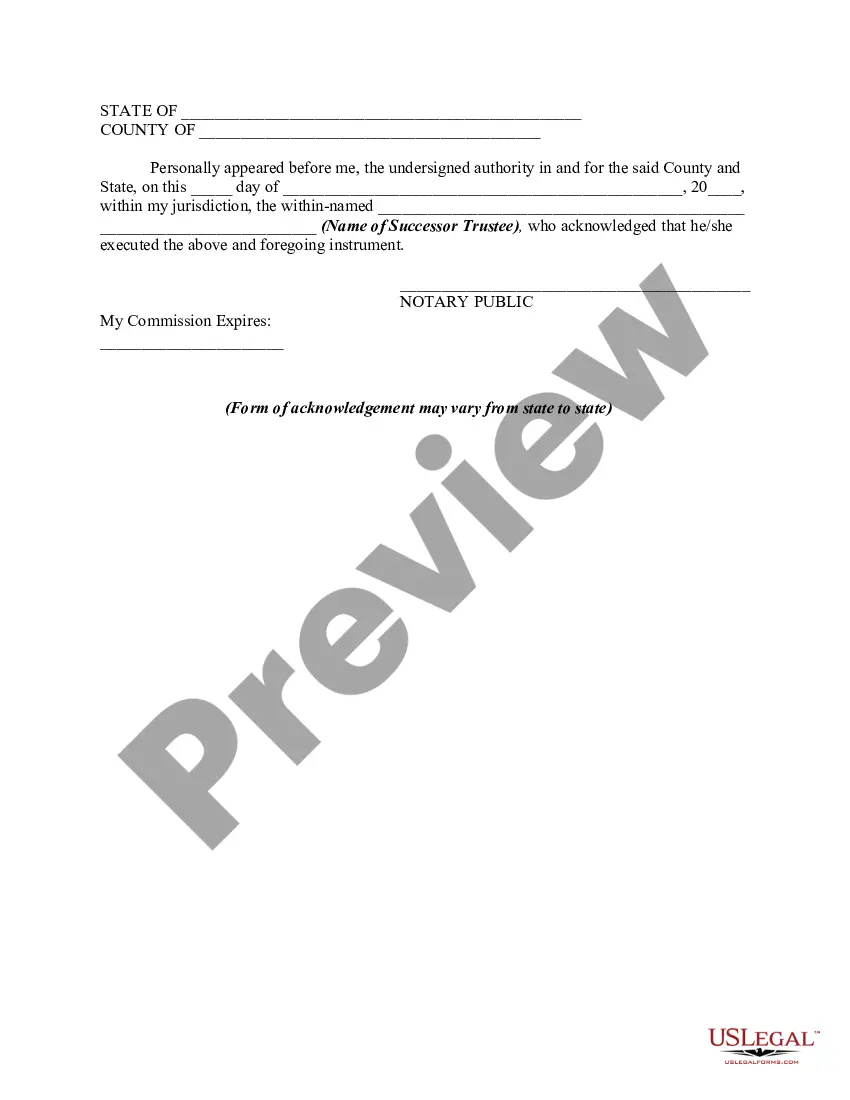
How to fill out Consent Of Successor Trustee To Appointment Following Resignation Of Original Trustee?
The Successor Trustee Appointment Document With Trustee you see on this page is a reusable legal template created by expert attorneys in compliance with federal and local regulations.
For over 25 years, US Legal Forms has supplied individuals, businesses, and lawyers with more than 85,000 approved, state-specific documents for any commercial and personal event.
Select the format you prefer for your Successor Trustee Appointment Document With Trustee (PDF, DOCX, RTF) and save the sample to your device.
- Browse for the document you require and review it.
- Peruse the file you searched and preview it or examine the document description to ensure it meets your needs. If it does not, use the search feature to find the appropriate one. Click Buy Now when you have identified the template you want.
- Sign up and Log In.
- Choose the pricing plan that works for you and create an account. Use PayPal or a credit card to ensure swift payment. If you already possess an account, Log In and check your subscription to proceed.
- Obtain the fillable template.
Form popularity
FAQ
Grantors can choose to nominate a close relative, family friend, or even financial institution to take on the role of Successor Trustee. A Grantor will name their Successor Trustee within a document called a Declaration of Trust, which is also where their role will be explained.
EXAMPLE: Caroline names her two children, Eugene and Vanessa, as successor trustees. She names a close friend, Nicole, as alternate successor trustee. When Caroline dies, Vanessa is ill and can't serve as trustee, so Eugene acts as sole successor trustee. If he becomes unable to serve, Nicole would take over.
Successor trustees are typically granted immediate access to the assets held by the trust upon accepting their appointment; what they can do with these assets and their rights to withdraw money from a trust, however, are limited.
In fact, by law, a designated trustee alone may access trust checking account, to cut checks and replenish funds as needed. Even if there are multiple trustees, banks usually require one specific signature to endorse all checks.
Successor Trustee is the person or institution who takes over the management of a living trust property when the original trustee has died or become incapacitated. The exact responsibilities of a successor trustee will vary depending on the instructions left by the creator of the trust (called the Grantor).