Fire Attorney Sample Format
Description

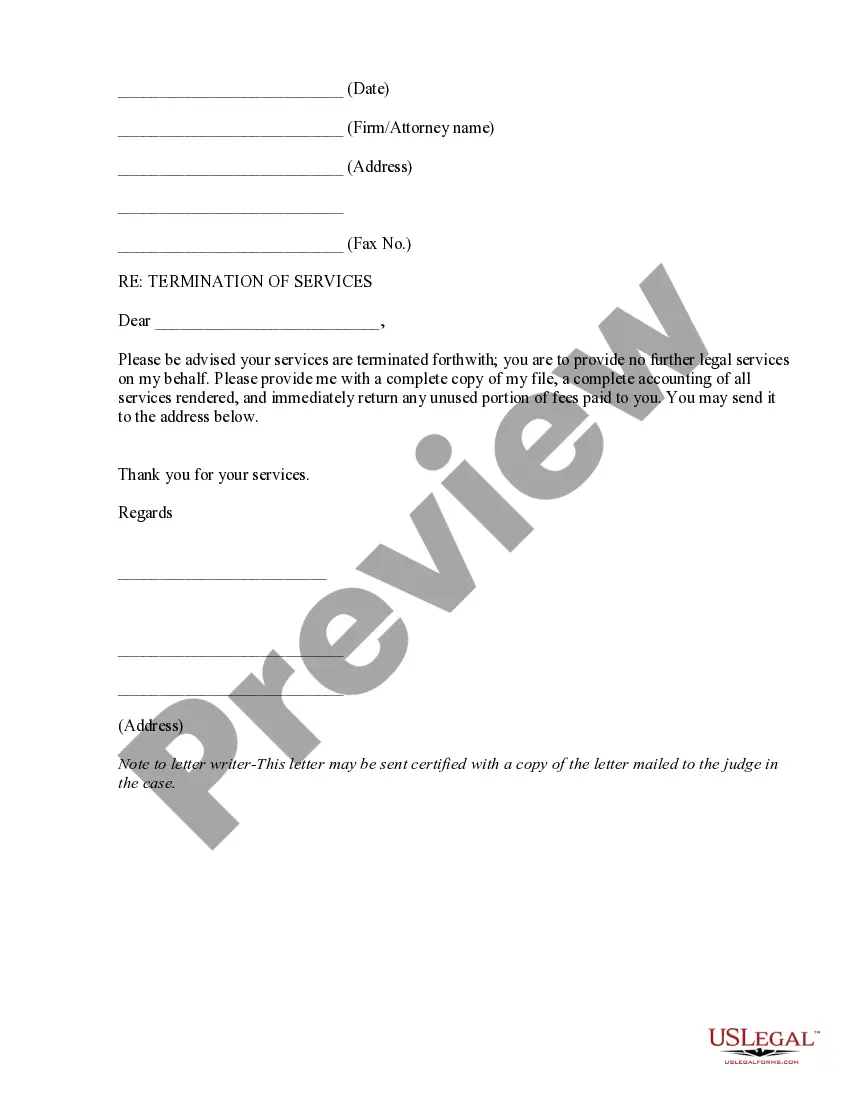
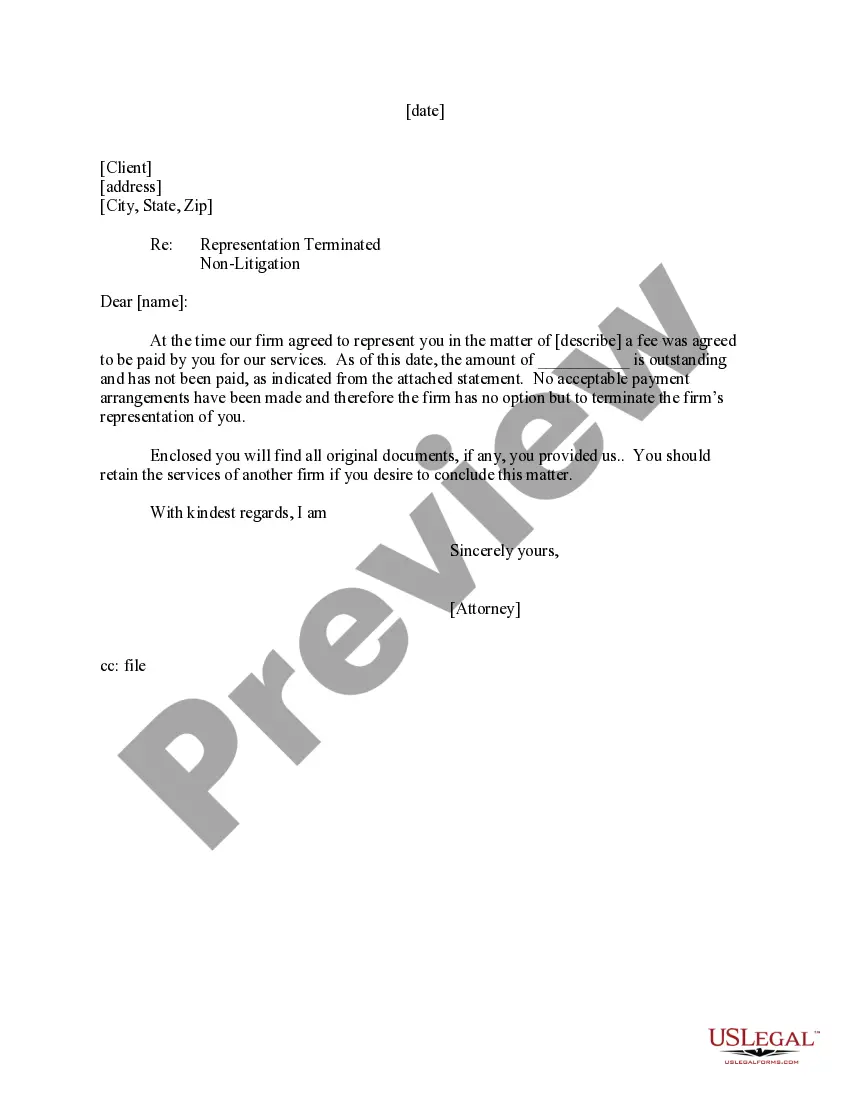
Get your form ready online
Our built-in tools help you complete, sign, share, and store your documents in one place.
Make edits, fill in missing information, and update formatting in US Legal Forms—just like you would in MS Word.
Download a copy, print it, send it by email, or mail it via USPS—whatever works best for your next step.
Sign and collect signatures with our SignNow integration. Send to multiple recipients, set reminders, and more. Go Premium to unlock E-Sign.
If this form requires notarization, complete it online through a secure video call—no need to meet a notary in person or wait for an appointment.
We protect your documents and personal data by following strict security and privacy standards.

Make edits, fill in missing information, and update formatting in US Legal Forms—just like you would in MS Word.

Download a copy, print it, send it by email, or mail it via USPS—whatever works best for your next step.

Sign and collect signatures with our SignNow integration. Send to multiple recipients, set reminders, and more. Go Premium to unlock E-Sign.

If this form requires notarization, complete it online through a secure video call—no need to meet a notary in person or wait for an appointment.

We protect your documents and personal data by following strict security and privacy standards.
Looking for another form?
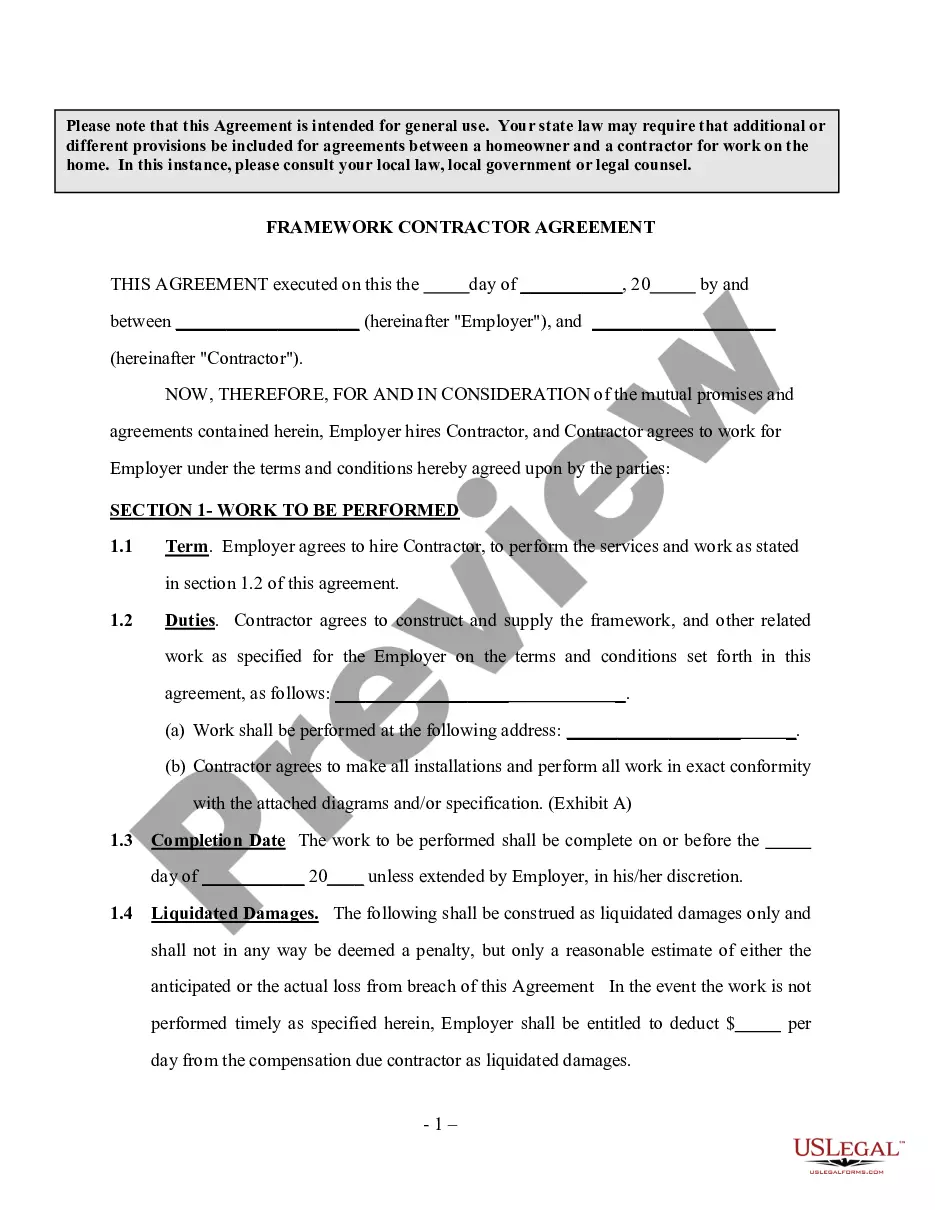


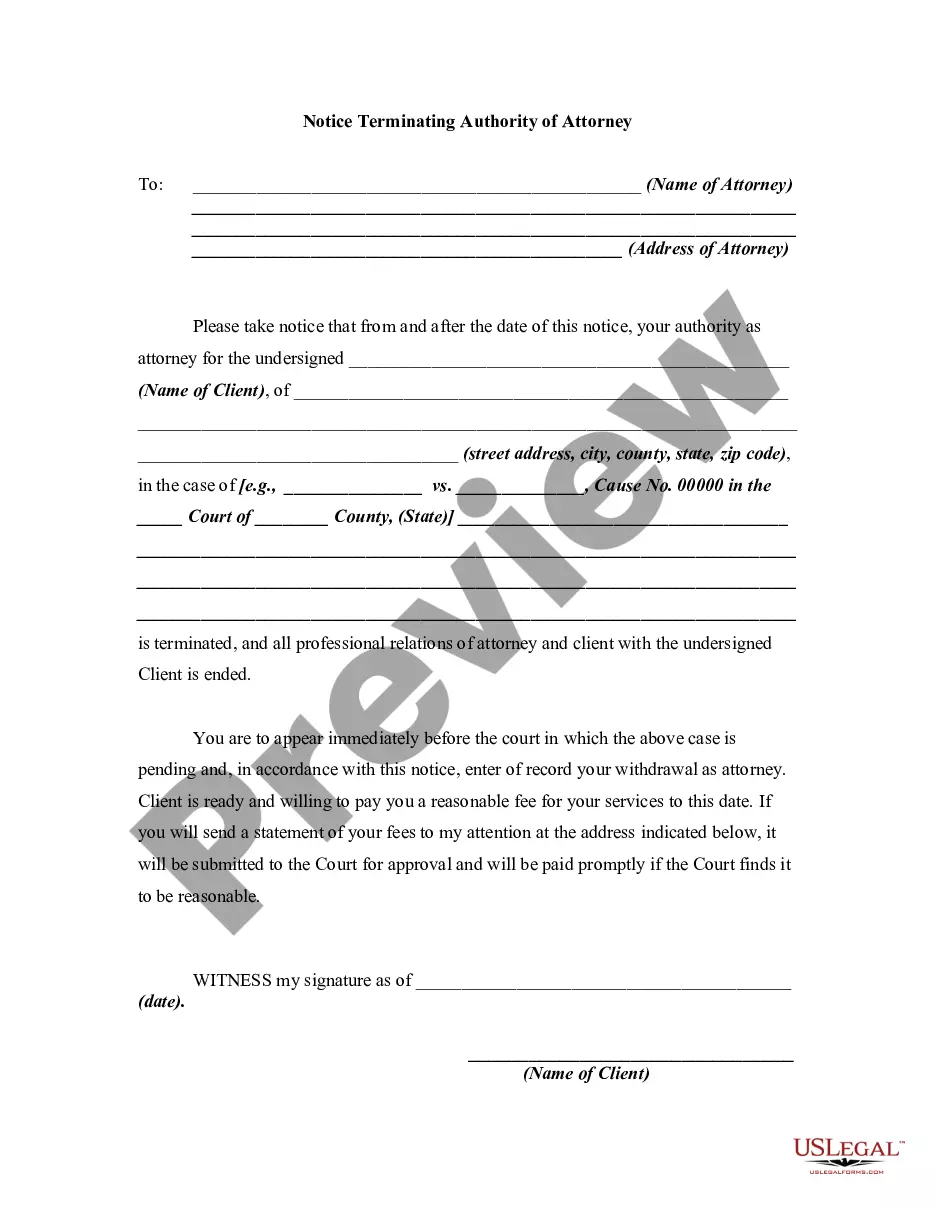
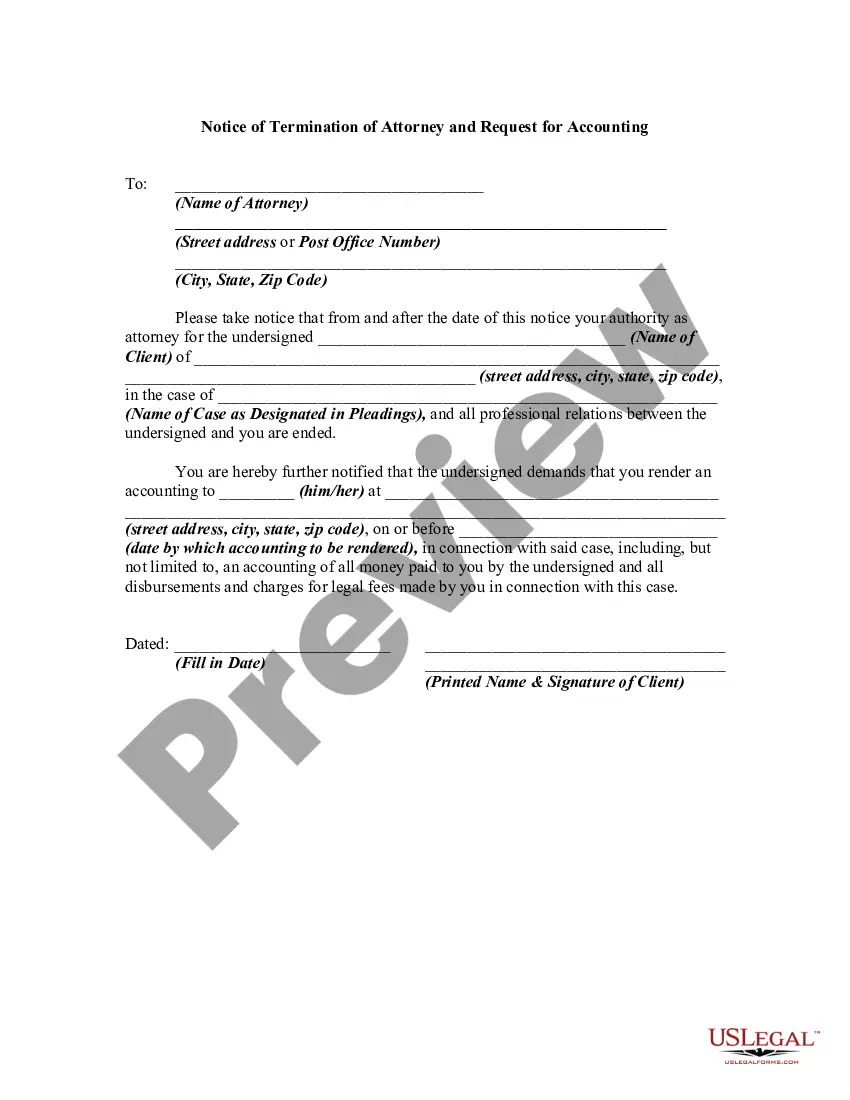
How to fill out Notice To Fire Or Terminating Authority Of Attorney?
The Fire Attorney Sample Template displayed on this page is a reusable legal document prepared by expert attorneys in compliance with federal and local regulations.
For over 25 years, US Legal Forms has supplied individuals, enterprises, and legal practitioners with more than 85,000 verified, state-specific templates for any commercial and personal scenario.
Select the format you prefer for your Fire Attorney Sample Template (PDF, DOCX, RTF) and download the document onto your device.
- Search for the document you require and review it.
- Browse through the file you searched and preview it or check the form description to ensure it meets your requirements. If it doesn't, use the search bar to find the right one. Click Buy Now once you've found the template you need.
- Choose a subscription plan and Log In.
- Select the pricing option that fits you and create an account. Use PayPal or a credit card to make a swift payment. If you already have an account, Log In and verify your subscription to proceed.
- Obtain the editable template.
Form popularity
FAQ
When you correspond with a lawyer, you have two choices: Write the person using a standard courtesy title (?Mr. Robert Jones? or ?Ms. Cynthia Adams?) Skip the courtesy title and put ?Esquire? after the name, using its abbreviated form, ?Esq.? (?Robert Jones, Esq.? or ?Cynthia Adams, Esq.?)
An attorney letter of representation usually contains the following: your attorney's name and contact information (or the name of the law office/law firm representing you), the reason for legal representation (for example, personal injury, malpractice, divorce), a brief summary of the facts of your case,
Your letter, whether on behalf of an individual or organization, should include general information, the type of legal assistance needed, the reason for seeking pro bono help, the temporal sensitivity of your case, and budget information to justify the free service.
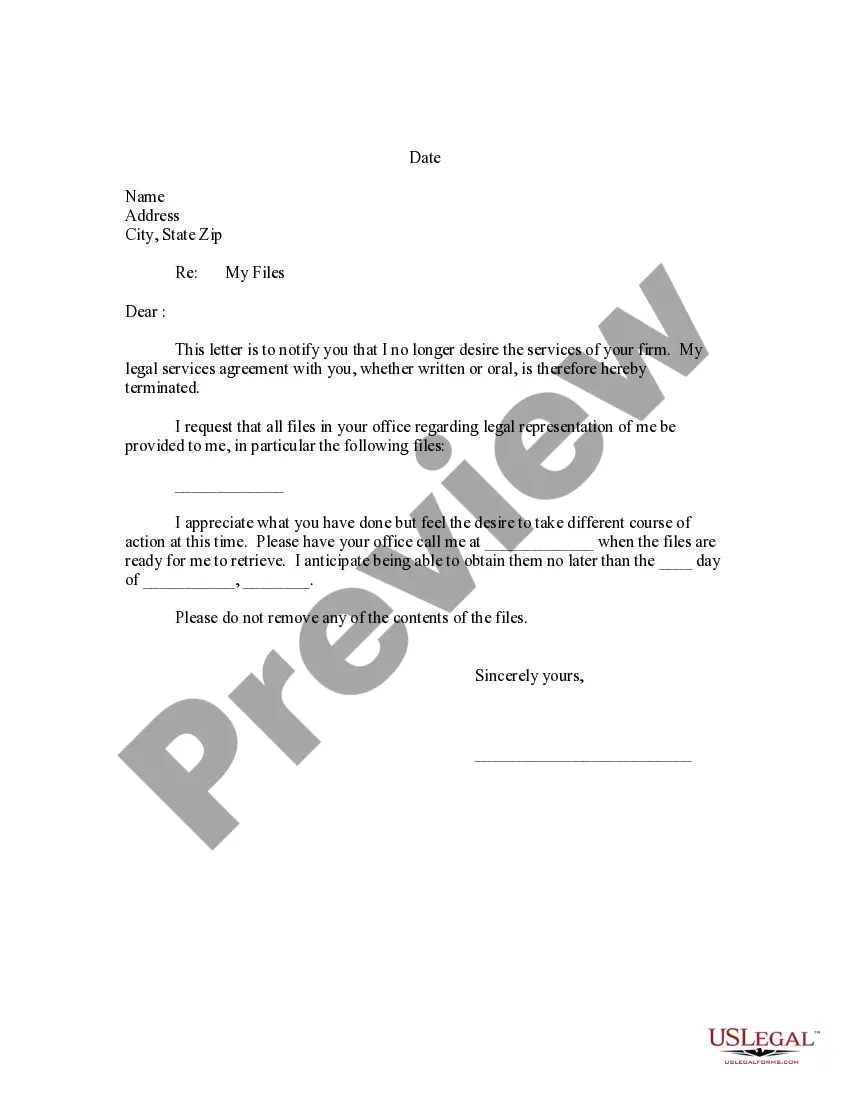
Dear [Client's Name]: This letter will confirm our understanding that effective [DATE] this firm will no longer represent you in connection with [LEGAL MATTER]. I urge you to promptly retain other counsel to represent you in this matter.
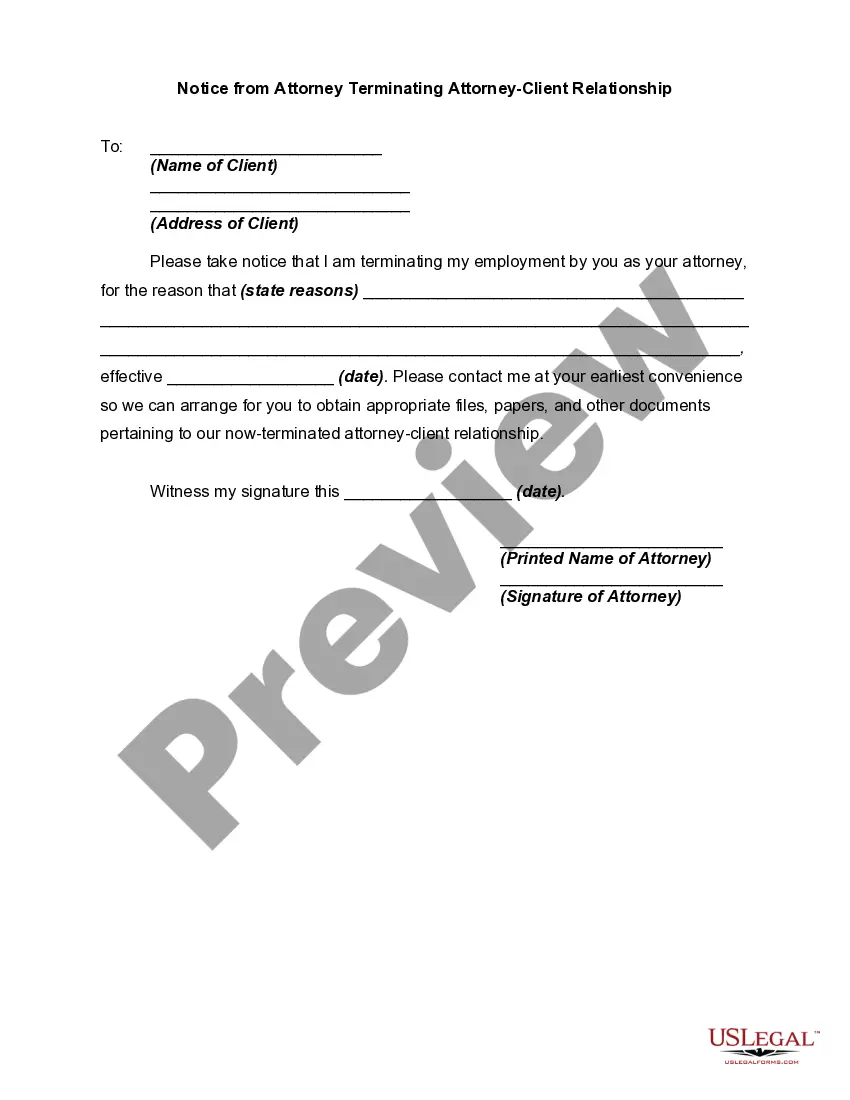
A disengagement letter is sent by an attorney or law firm to a client when they're withdrawing from representing them. The purpose of a disengagement letter is to provide notice and document the withdrawal in ance with Rule of Professional Conduct (RPC) 1.16 Declining or Terminating Representation.