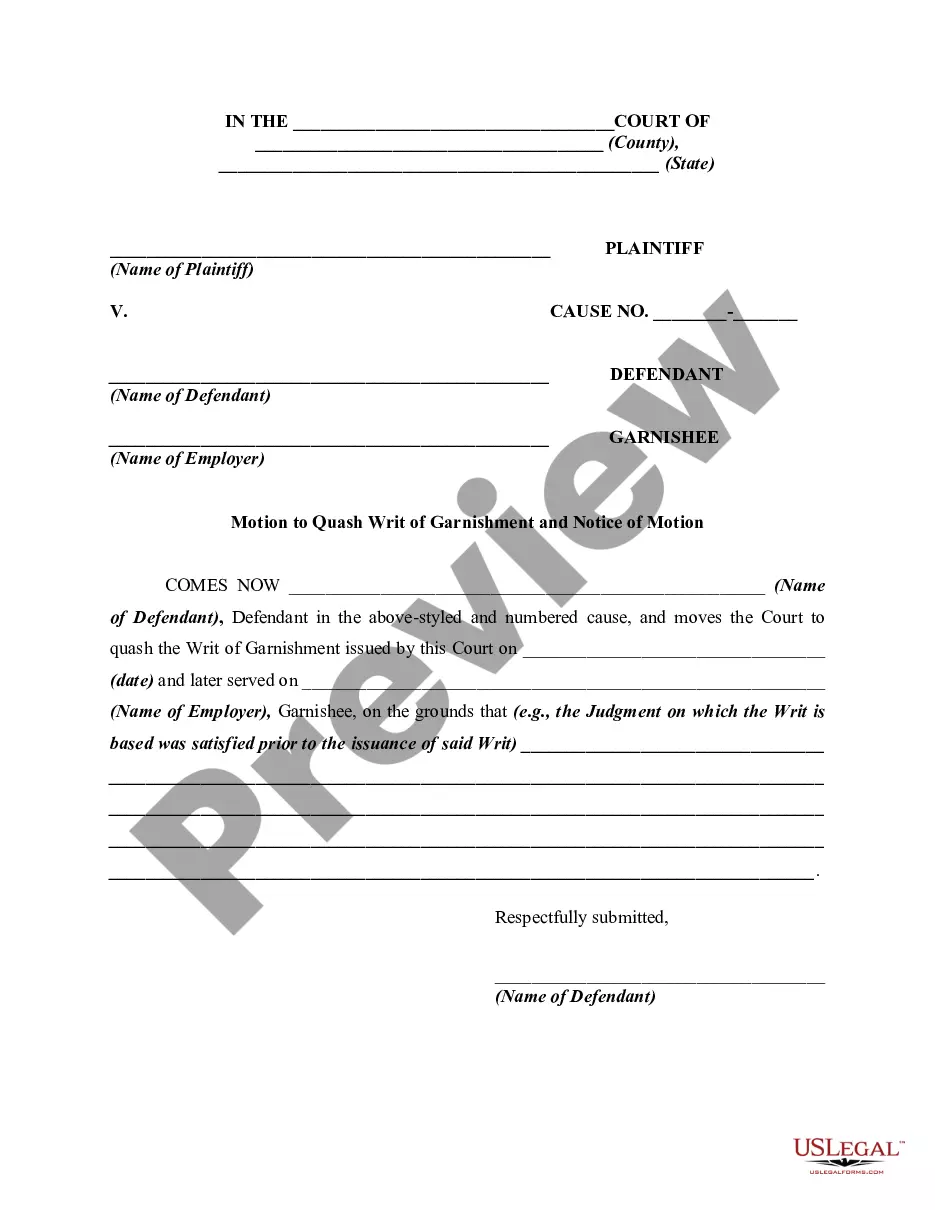
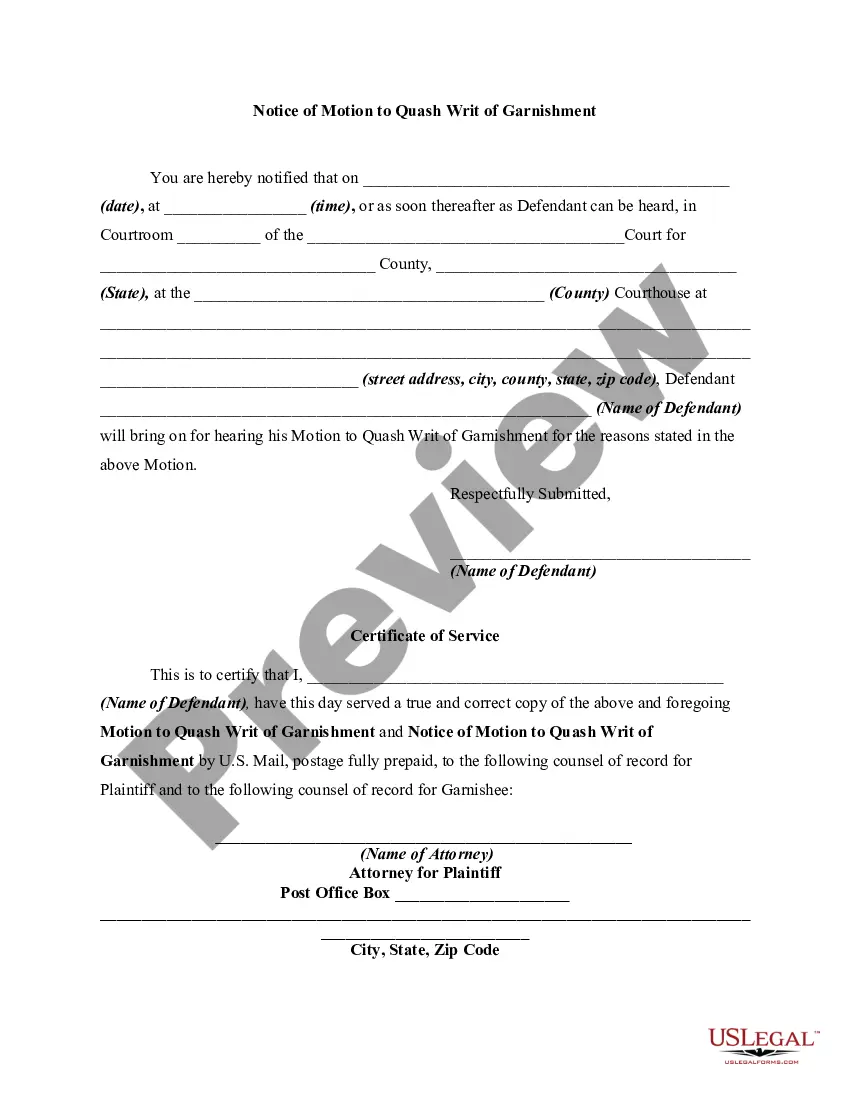
Motion State Garnishment For Tennessee
Description
Get your form ready online
Our built-in tools help you complete, sign, share, and store your documents in one place.
Make edits, fill in missing information, and update formatting in US Legal Forms—just like you would in MS Word.
Download a copy, print it, send it by email, or mail it via USPS—whatever works best for your next step.
Sign and collect signatures with our SignNow integration. Send to multiple recipients, set reminders, and more. Go Premium to unlock E-Sign.
If this form requires notarization, complete it online through a secure video call—no need to meet a notary in person or wait for an appointment.
We protect your documents and personal data by following strict security and privacy standards.

Make edits, fill in missing information, and update formatting in US Legal Forms—just like you would in MS Word.

Download a copy, print it, send it by email, or mail it via USPS—whatever works best for your next step.

Sign and collect signatures with our SignNow integration. Send to multiple recipients, set reminders, and more. Go Premium to unlock E-Sign.

If this form requires notarization, complete it online through a secure video call—no need to meet a notary in person or wait for an appointment.

We protect your documents and personal data by following strict security and privacy standards.
Looking for another form?








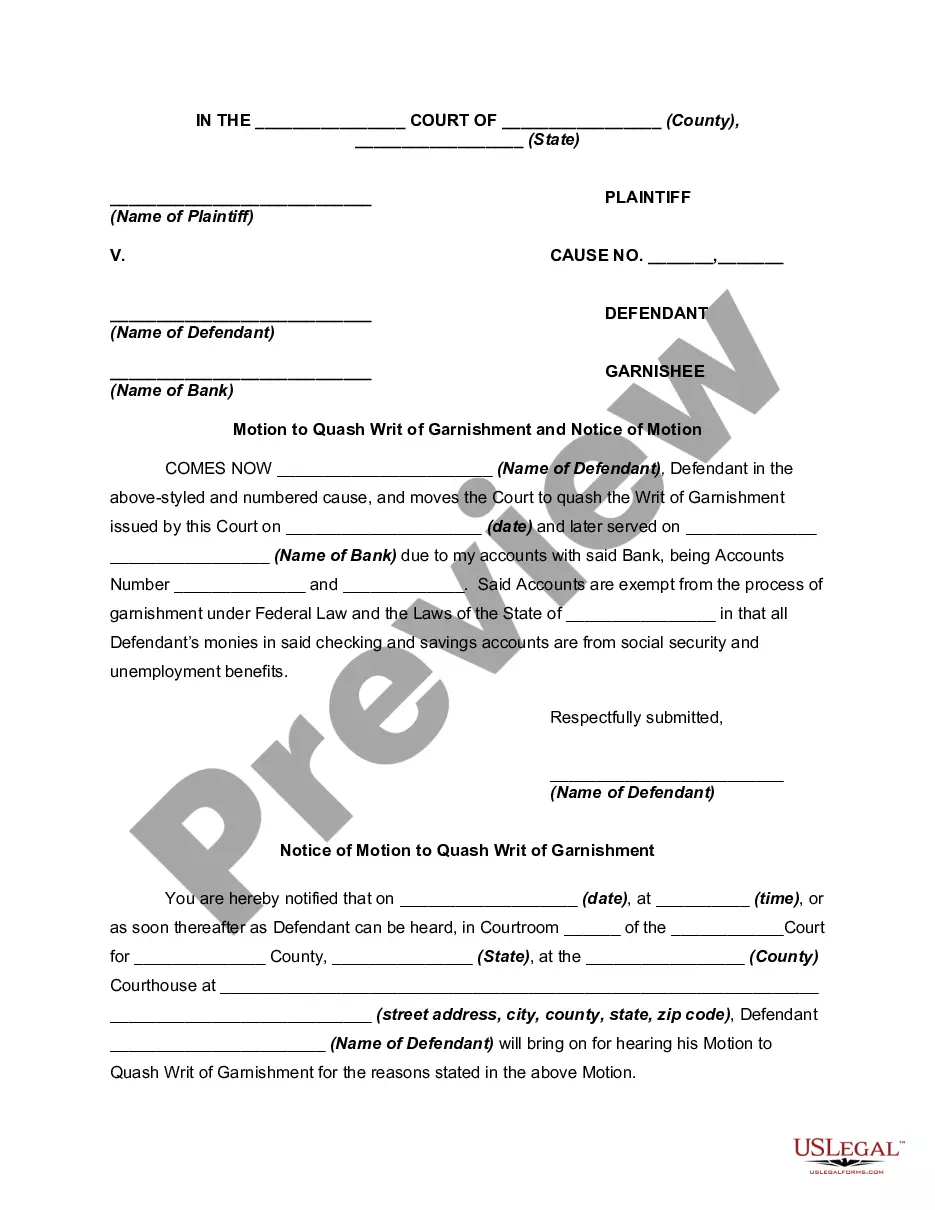
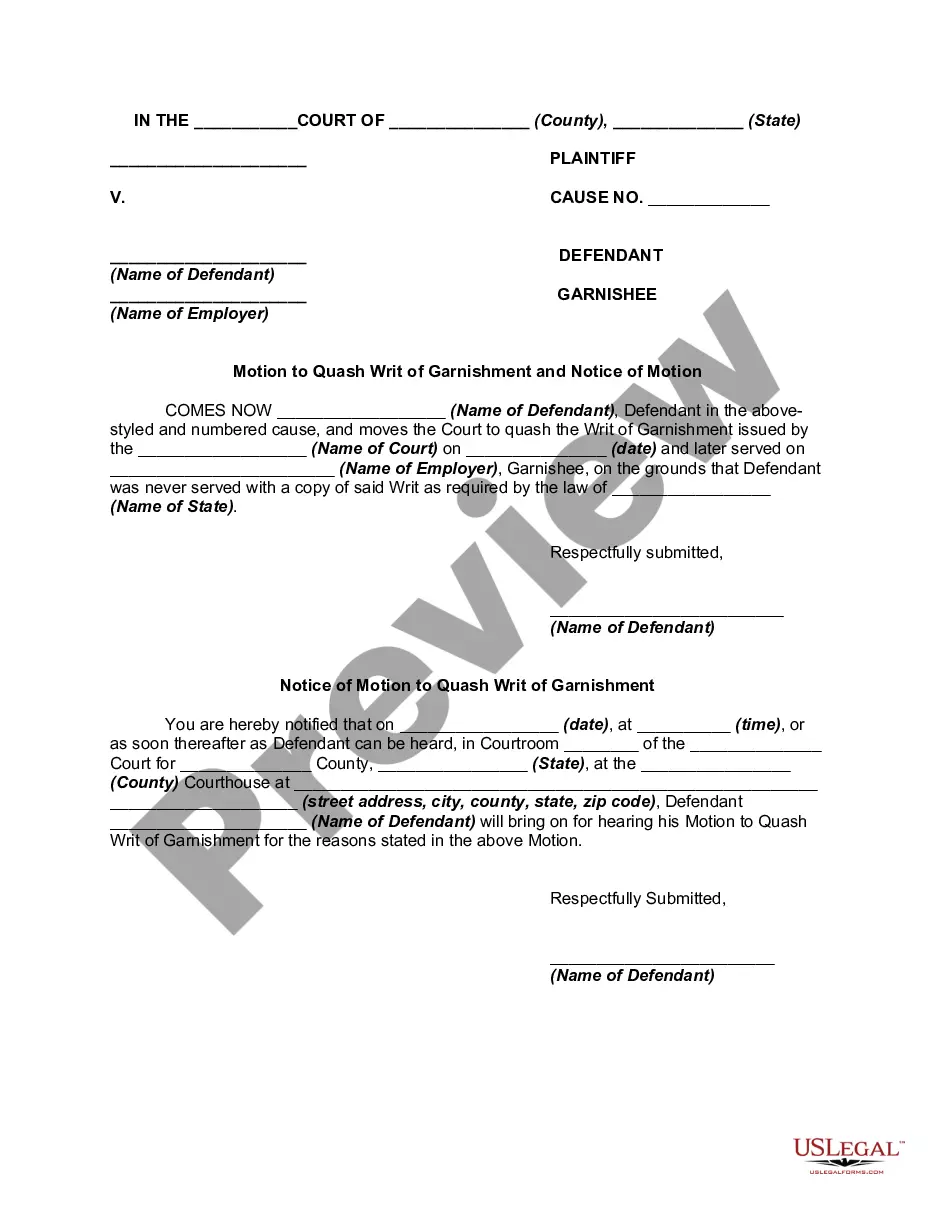
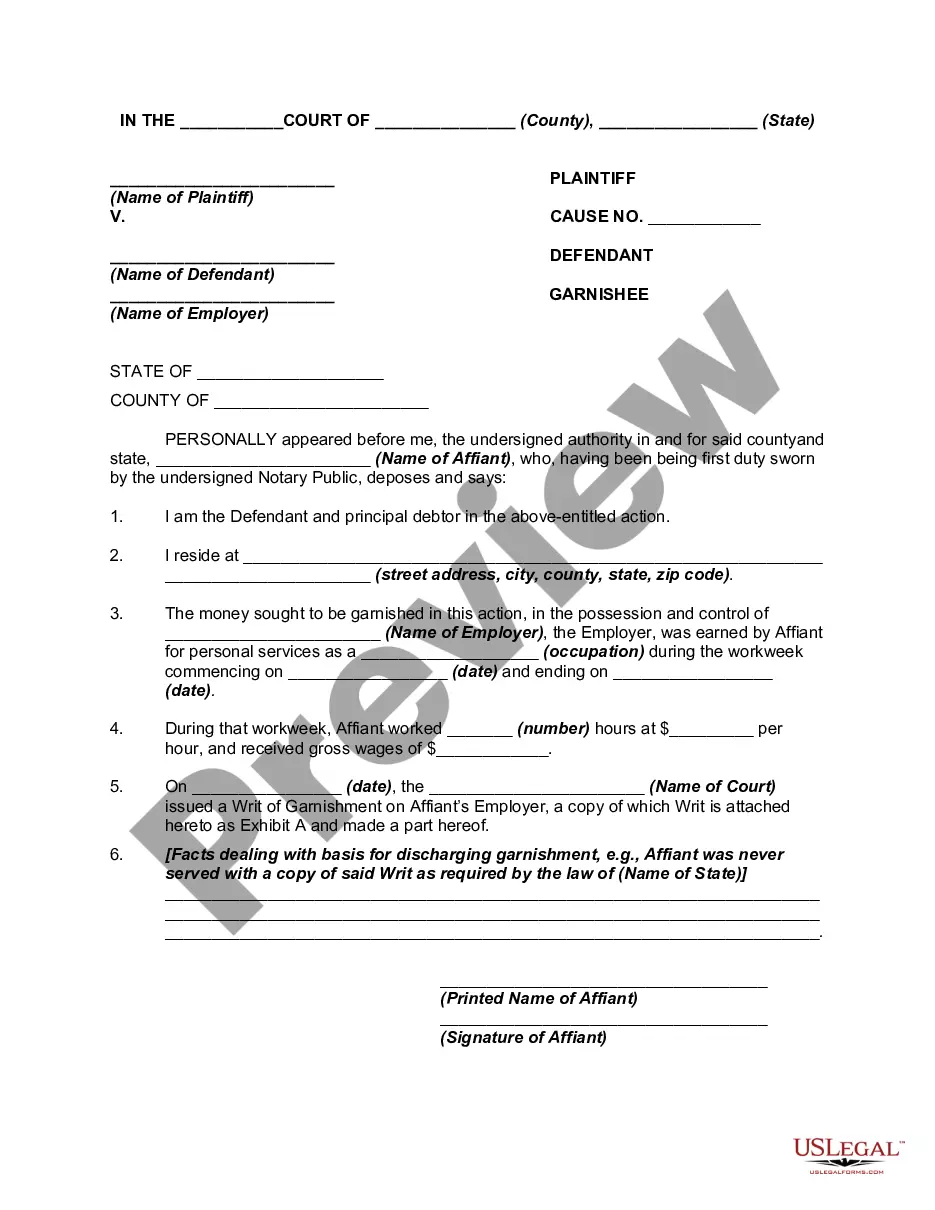
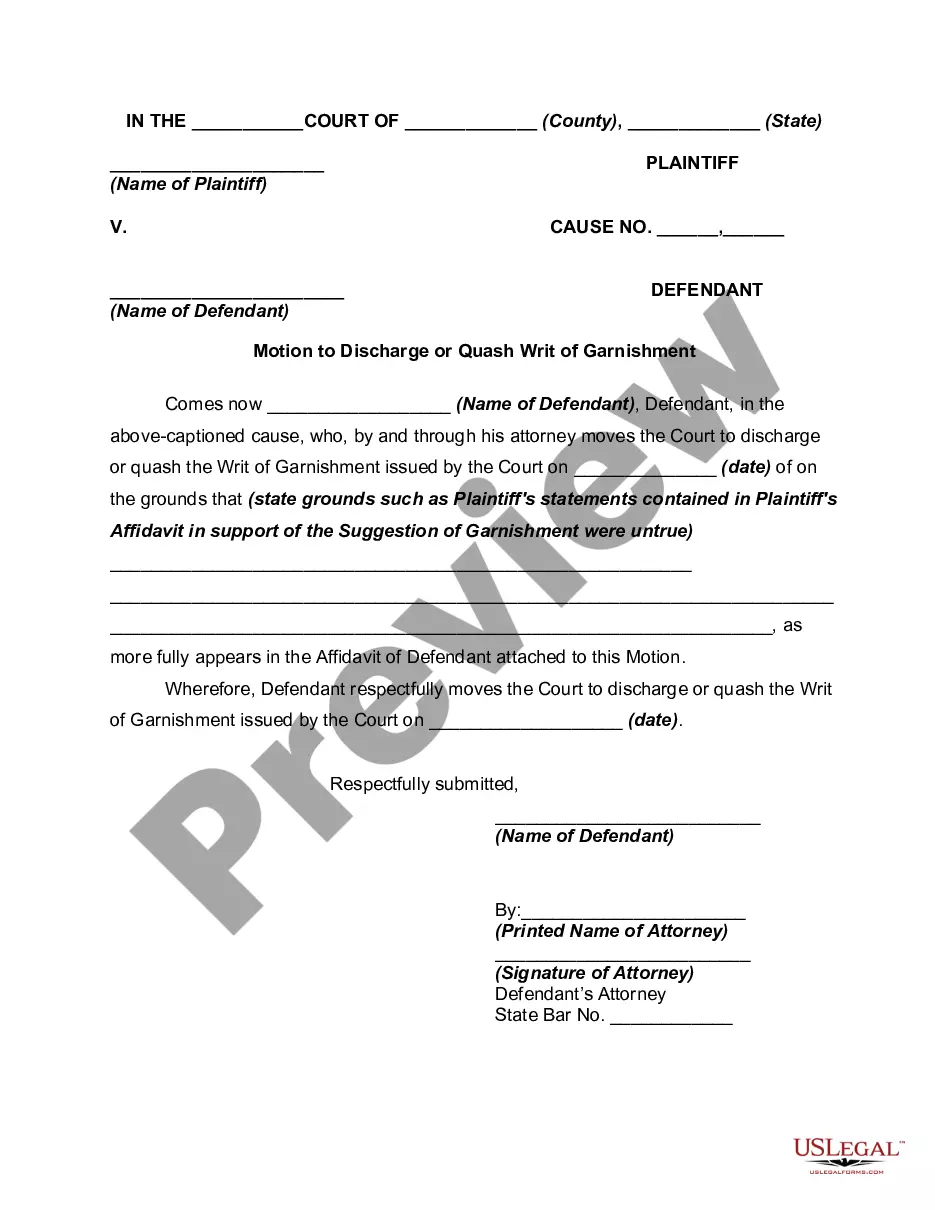
How to fill out Motion Of Defendant To Discharge Or Quash Writ Of Garnishment And Notice Of Motion?
Engaging with legal paperwork and processes can be a lengthy addition to your routine.
Motion State Garnishment For Tennessee and similar forms usually necessitate you to search for them and understand how to fill them out accurately.
For that purpose, if you are managing financial, legal, or personal issues, possessing a comprehensive and user-friendly online repository of forms at your disposal will be incredibly beneficial.
US Legal Forms is the leading online resource for legal templates, featuring over 85,000 state-specific forms and various tools to help you complete your documents with ease.
Simply Log In to your account, find Motion State Garnishment For Tennessee, and obtain it instantly from the My documents section. You also have the opportunity to access forms you have previously downloaded.
- Explore the collection of relevant documents accessible to you with just a single click.
- US Legal Forms offers you access to state- and county-specific forms available for download anytime.
- Safeguard your document management processes with an exceptional service that enables you to create any form in just a few minutes without any extra or hidden fees.
Form popularity
FAQ
A Rule 60 motion in Tennessee allows a party to request the court to relieve them from a prior judgment or order. This type of motion can be crucial for those facing a motion state garnishment for Tennessee since it can provide an opportunity to correct mistakes or present new evidence. By filing this motion, you can ask the court to reconsider its decision, thus potentially halting the garnishment process. Utilizing resources like US Legal Forms can guide you through the necessary steps, ensuring you effectively navigate this legal avenue.
In Tennessee, the maximum amount that can be garnished from your paycheck is typically 25% of your disposable earnings, although there are other specific limits based on federal regulations and your unique financial circumstances. It’s essential to know these limits to protect your income effectively. If you receive a motion state garnishment for Tennessee, understanding these figures can help you assess your financial position and options.
Rule 69.05 of the Tennessee Rules of Civil Procedure defines the process for executing a judgment against a debtor's property, including wage garnishments. This rule specifies the necessary steps for creditors to take in order to legally obtain funds from a debtor’s income. If you are facing a motion state garnishment for Tennessee, being aware of Rule 69.05 can give you insights into your situation and potential defenses.
Tennessee garnishment rules dictate how and when creditors may collect debt from a debtor's wages or assets. For instance, the process must follow state law requiring proper notification to the debtor and adherence to specified withholding percentages. Understanding these garnishment rules can help you navigate the complexities of a motion state garnishment for Tennessee effectively.
A motion to quash garnishment is a legal request to stop or challenge a garnishment action that you believe is incorrect or unfair. This may involve demonstrating that the debt is not valid or that the amount being garnished exceeds legal limits. It is crucial to file this motion promptly if you want to contest a motion state garnishment for Tennessee, as delays could result in unfavorable outcomes.
In Tennessee, garnishment is a legal process that allows creditors to collect debts directly from a debtor's income or bank account. The law outlines specific procedures for initiating garnishment actions, including notification and obtaining a court order. If you're facing a situation where a motion state garnishment for Tennessee is being applied, it’s essential to understand your rights and obligations under this law.
For most creditors, the first step toward garnishing your wages is filing a debt collection lawsuit against you and securing a judgment. When you are served with a lawsuit, you should not ignore it. If you don't respond and don't go to court, a default judgment will usually be entered against you.
Tennessee's wage garnishment law protects the same amount of your income as federal garnishment law but allows you to protect additional income if you support minor children. So, in Tennessee, a creditor can garnish the lesser of: 25% of your disposable earnings for that week, or.
You will need to file a Slow Pay motion in the court where the judgment was entered. In your motion, you must include the payment amount and frequency (e.g., monthly, biweekly) that you are proposing to pay on the judgment.
You may apply to the court at the clerk's office shown below within twenty (20) days from any improper withholding of your wages for a motion to stop the garnishment.