Answer To Writ Of Garnishment Washington State
Description
Get your form ready online
Our built-in tools help you complete, sign, share, and store your documents in one place.
Make edits, fill in missing information, and update formatting in US Legal Forms—just like you would in MS Word.
Download a copy, print it, send it by email, or mail it via USPS—whatever works best for your next step.
Sign and collect signatures with our SignNow integration. Send to multiple recipients, set reminders, and more. Go Premium to unlock E-Sign.
If this form requires notarization, complete it online through a secure video call—no need to meet a notary in person or wait for an appointment.
We protect your documents and personal data by following strict security and privacy standards.

Make edits, fill in missing information, and update formatting in US Legal Forms—just like you would in MS Word.

Download a copy, print it, send it by email, or mail it via USPS—whatever works best for your next step.

Sign and collect signatures with our SignNow integration. Send to multiple recipients, set reminders, and more. Go Premium to unlock E-Sign.

If this form requires notarization, complete it online through a secure video call—no need to meet a notary in person or wait for an appointment.

We protect your documents and personal data by following strict security and privacy standards.
Looking for another form?

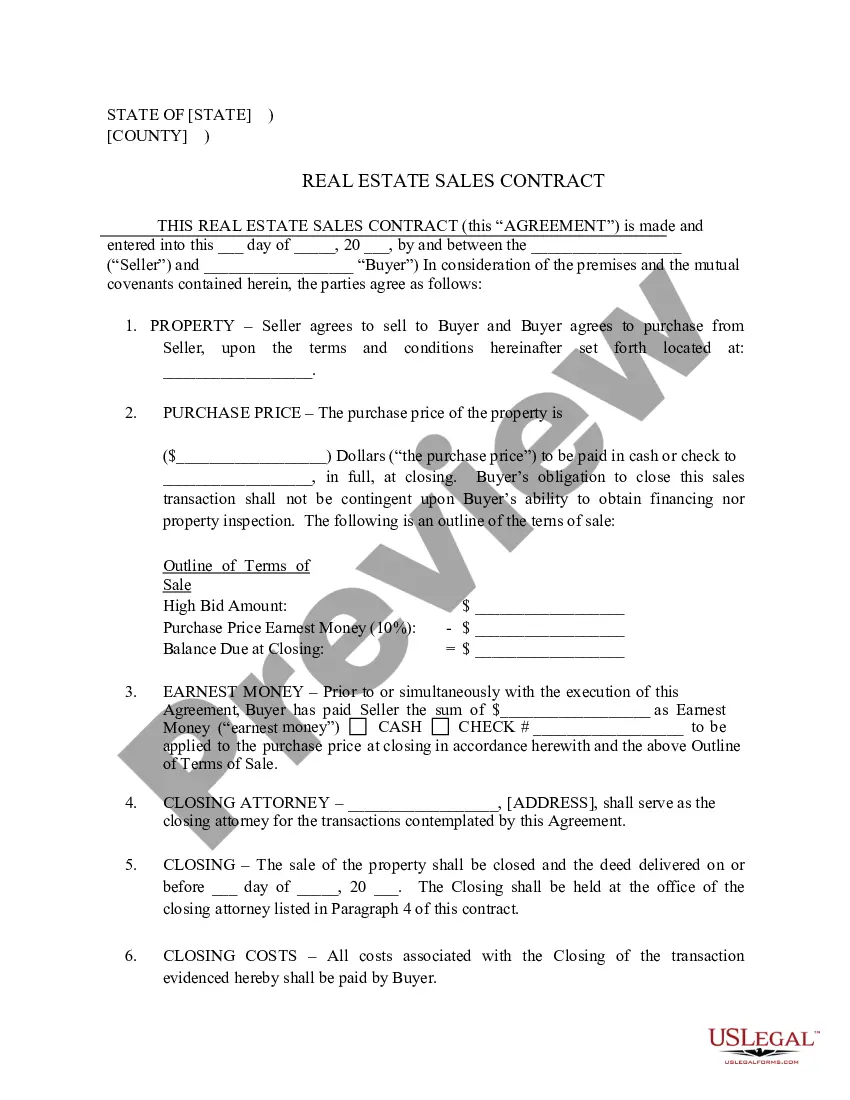


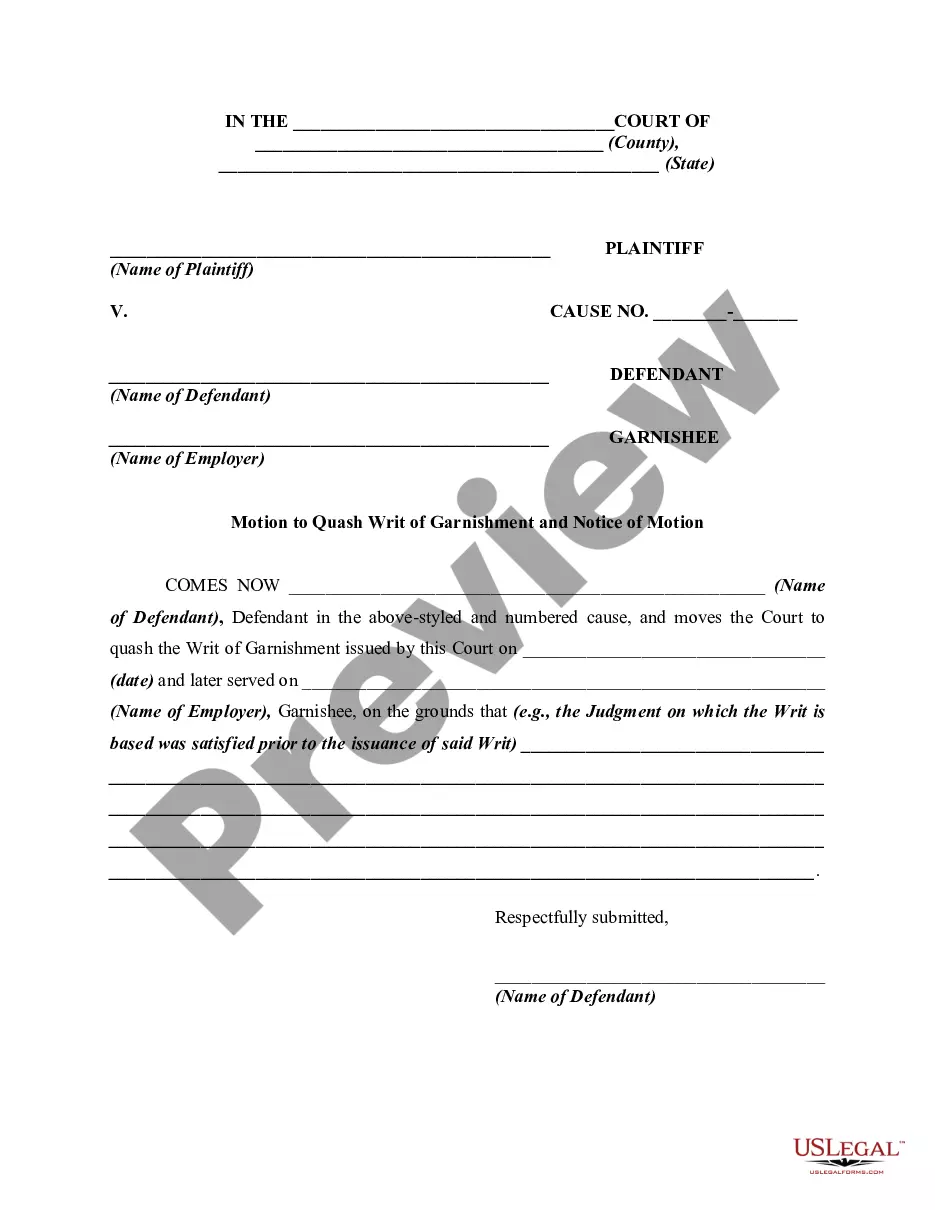
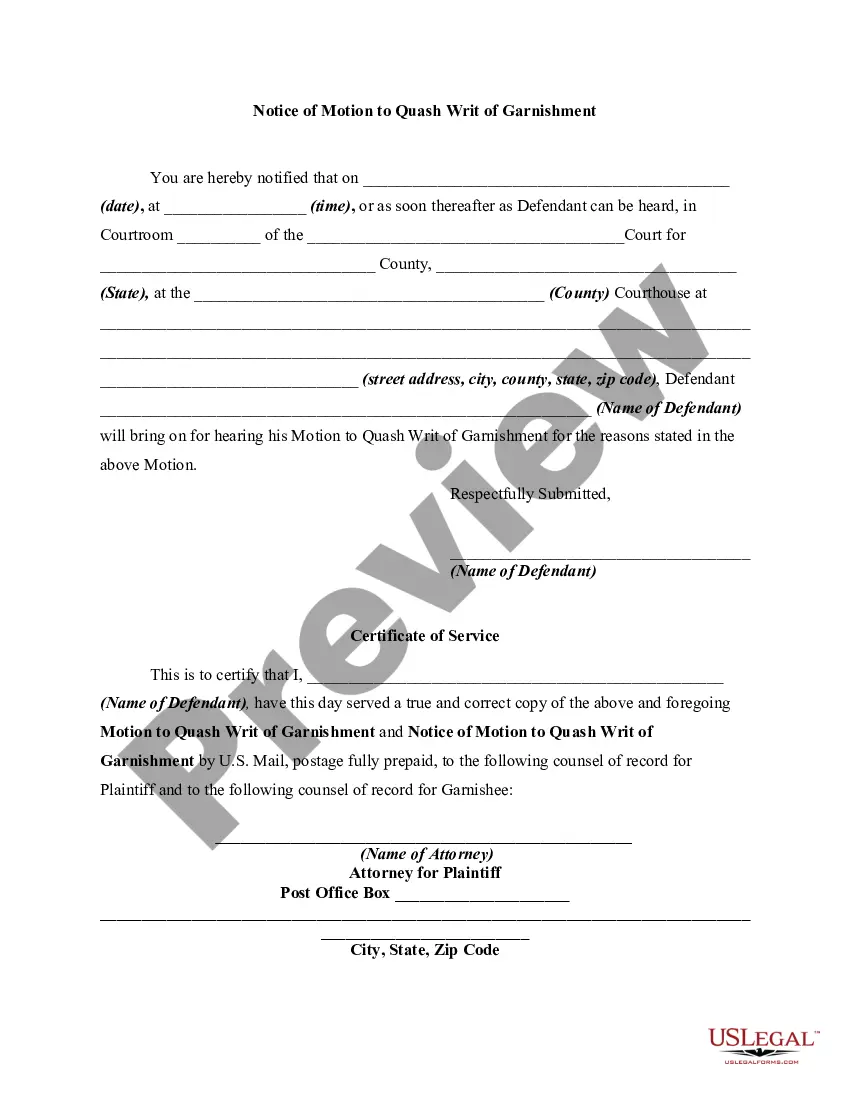
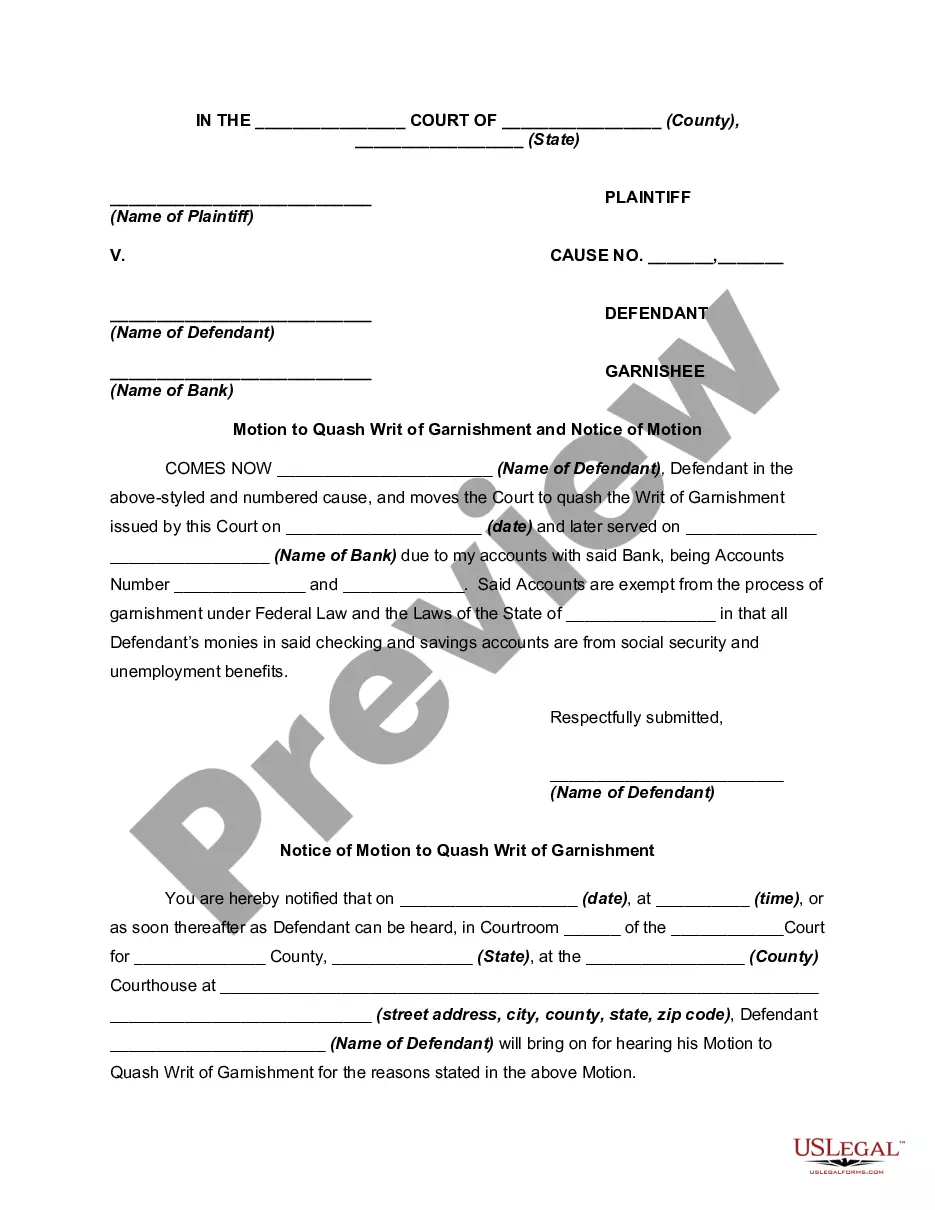
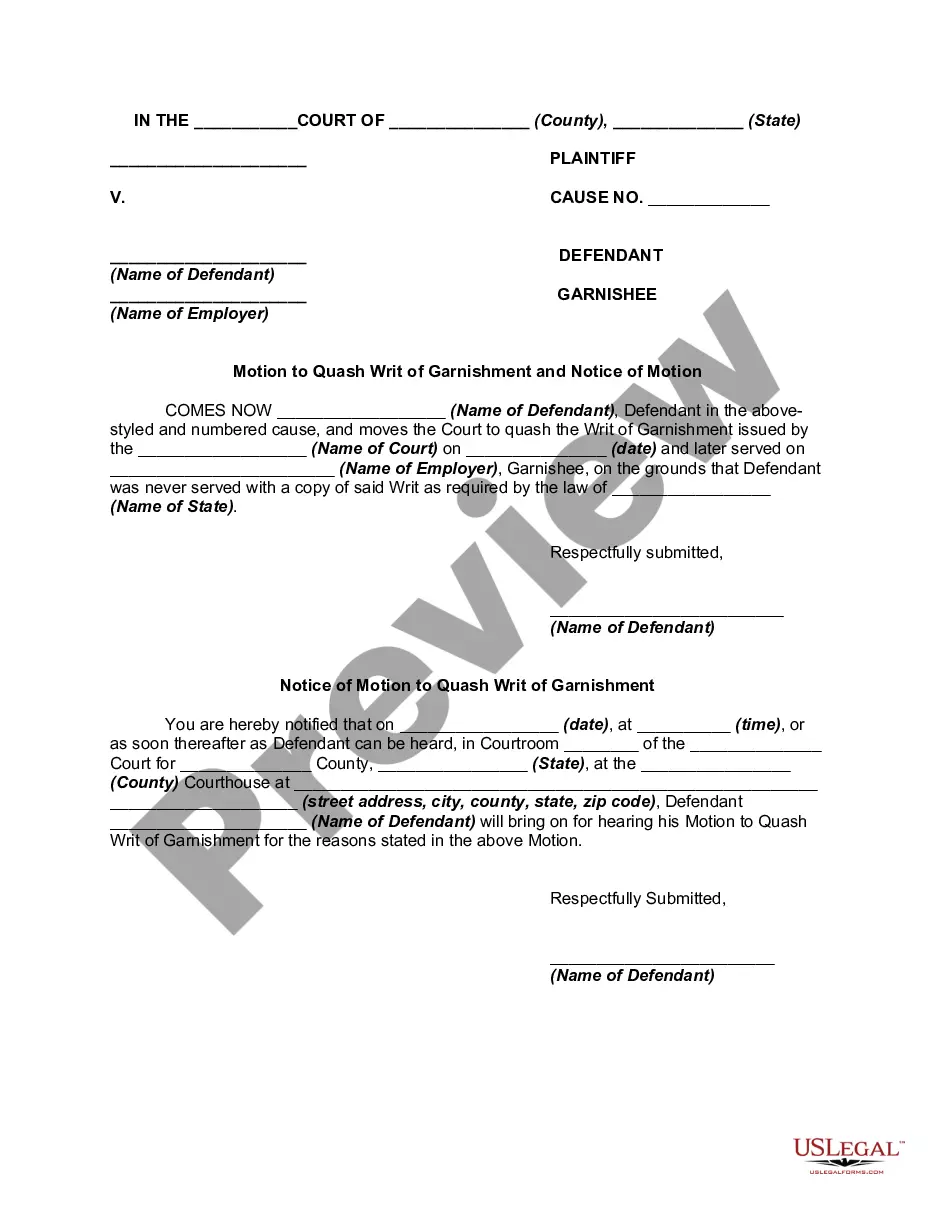
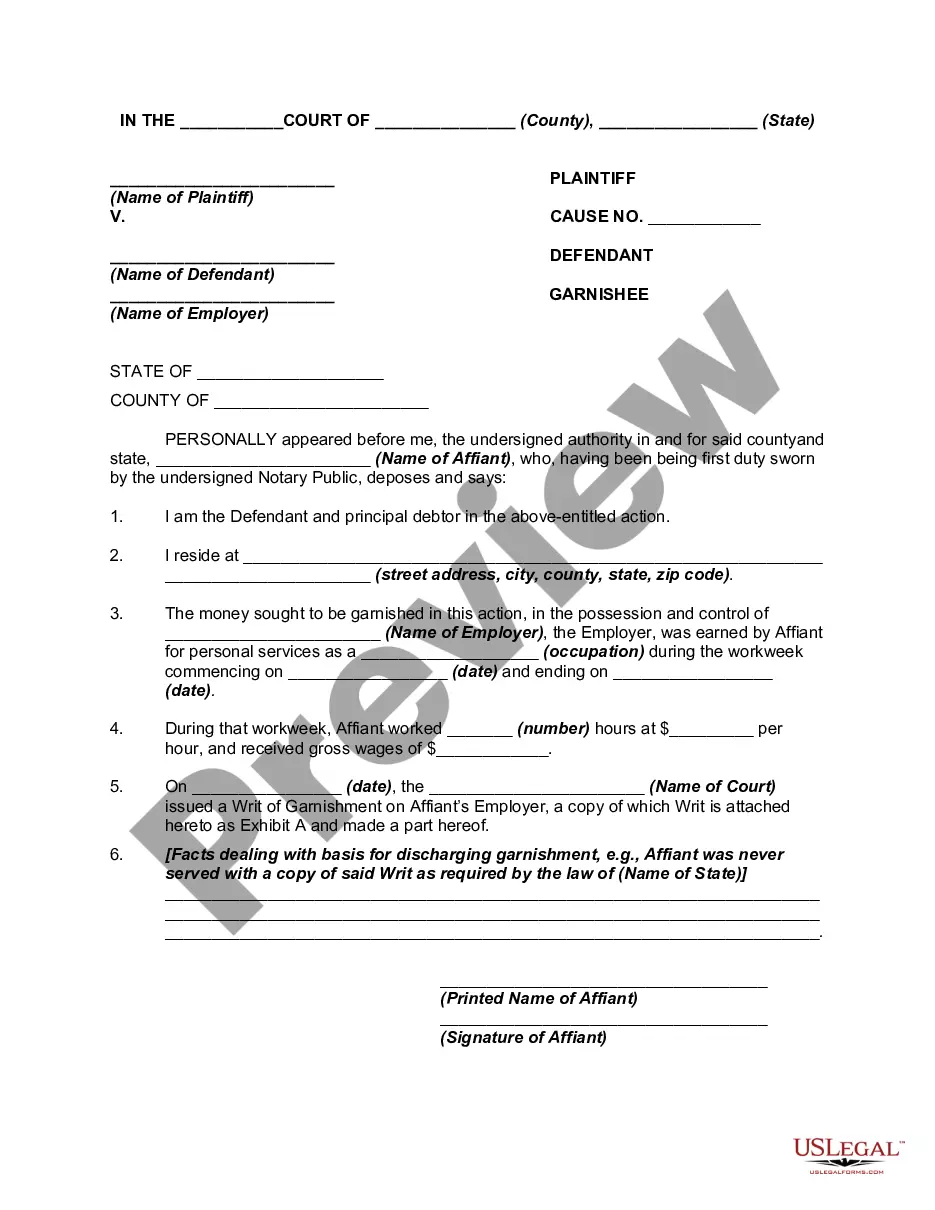
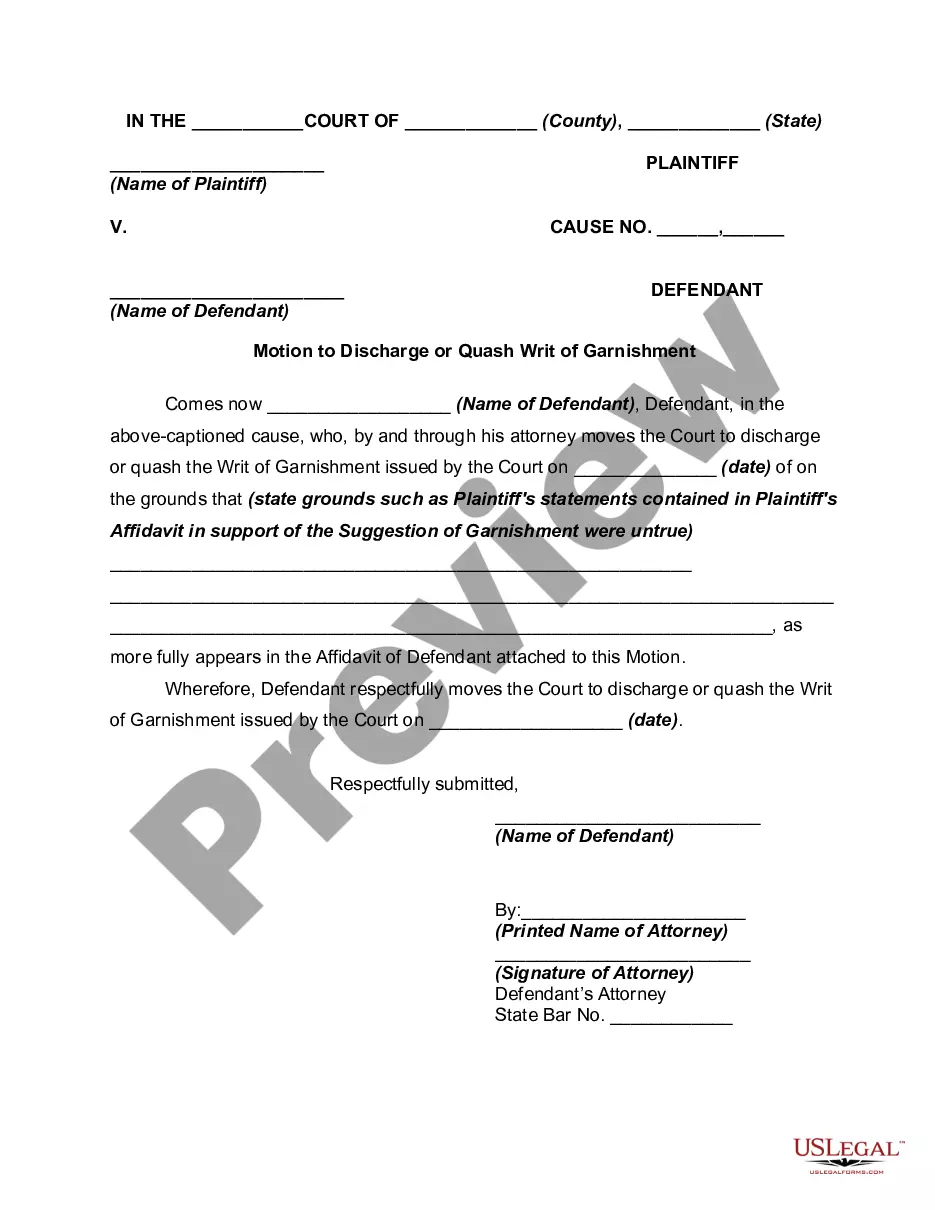
How to fill out Motion Of Defendant To Discharge Or Quash Writ Of Garnishment And Notice Of Motion?
- If you're a returning user, log in to your account and access the required template by clicking the Download button. Ensure your subscription is active; if not, renew it as needed.
- For new users, start by previewing the document and reading its description to confirm it aligns with your legal requirements.
- If adjustments are needed, utilize the Search feature at the top to locate the correct template that fits your criteria.
- Once satisfied, click on the Buy Now button and select your desired subscription plan, ensuring you create an account to unlock full access.
- Complete your purchase by entering payment details via credit card or PayPal.
- Finally, download the form to your device and access it later anytime in the My Forms section of your profile.
US Legal Forms empowers both individuals and legal professionals to efficiently create necessary documents. With more than 85,000 forms available, our extensive online library far surpasses competitors in terms of variety and usability.
Don't hesitate to experience the ease of filing your legal documents. Start your membership today and ensure your paperwork is handled correctly and efficiently!
Form popularity
FAQ
A hardship letter for wage garnishment should explain your financial difficulties in a straightforward manner. Include your current income, necessary expenses, and how the garnishment impacts your ability to meet essential needs. Be honest and provide any relevant documentation to support your claim. For additional help, uslegalforms offers resources that simplify the process of drafting such letters in Washington State.
Writing an objection letter for wage garnishment requires a clear structure. Start with your contact details and the subject line stating your objection. In the body, outline your reasons for opposing the garnishment, referencing any relevant laws or personal circumstances. Seek templates and examples on uslegalforms to craft a persuasive letter that adheres to Washington State guidelines.
To negotiate a wage garnishment, begin by contacting the creditor or collection agency directly. Clearly explain your financial situation and propose a manageable payment plan or settlement. Keep in mind that effective negotiation relies on presenting a convincing argument, so consider using tools and resources available on uslegalforms to enhance your approach. Remember, understanding the answer to writ of garnishment in Washington State can empower your negotiation.
Filling out a challenge to garnishment form involves providing your personal information, including your name and contact details. Next, state the reasons for your challenge clearly and attach any evidence that supports your case. It’s crucial to understand the specific instructions for the form, which can be found on platforms like uslegalforms, as they offer detailed guidance tailored to Washington State.
To write a letter to stop a garnishment in Washington State, start by addressing the creditor or collection agency. Clearly state your intention to dispute the garnishment and include relevant details, such as your case number. Be professional and concise in your explanation, and attach any supporting documents. Utilize the resources available on uslegalforms to guide you through this process effectively.
To write a letter to stop a garnishment, you should include your name, address, and the details about the garnishment. Clearly state your request for cessation and provide a brief explanation of your reasons, such as financial hardship. Be concise and formal in your tone, as this communicates respect and seriousness. Knowing the answer to writ of garnishment washington state can guide your letter's content.
In Washington state, a writ of garnishment is typically valid for 90 days from the date it is issued. If the garnishment is not executed within this timeframe, the creditor may need to refile. Understanding these time constraints is vital for managing your finances and seeking the answer to writ of garnishment washington state.
To dissolve a writ of garnishment, you can file a motion with the court where the original garnishment was issued. This motion should highlight valid reasons for dissolution, such as wrongful garnishment or improper procedures. Alternatively, negotiate directly with the creditor for an agreement. The answer to writ of garnishment washington state provides the framework for this legal action.
A motion to quash a writ of garnishment is a legal request to invalidate the garnishment order. It typically argues that the garnishment should not proceed due to specific reasons, such as exempt income or improper issuance. Filing this motion can significantly impact your financial obligations. Get informed about the answer to writ of garnishment washington state for effective advocacy.
After a writ of garnishment is filed, the creditor can legally seize a portion of your wages or funds held in a bank. The court sends the writ to your employer or bank, prompting them to withhold funds. You should receive a notice of the garnishment. It is crucial to understand the answer to writ of garnishment washington state to navigate your rights and options.