Grandparent Rights Parents With Custody
Description
Get your form ready online
Our built-in tools help you complete, sign, share, and store your documents in one place.
Make edits, fill in missing information, and update formatting in US Legal Forms—just like you would in MS Word.
Download a copy, print it, send it by email, or mail it via USPS—whatever works best for your next step.
Sign and collect signatures with our SignNow integration. Send to multiple recipients, set reminders, and more. Go Premium to unlock E-Sign.
If this form requires notarization, complete it online through a secure video call—no need to meet a notary in person or wait for an appointment.
We protect your documents and personal data by following strict security and privacy standards.

Make edits, fill in missing information, and update formatting in US Legal Forms—just like you would in MS Word.

Download a copy, print it, send it by email, or mail it via USPS—whatever works best for your next step.

Sign and collect signatures with our SignNow integration. Send to multiple recipients, set reminders, and more. Go Premium to unlock E-Sign.

If this form requires notarization, complete it online through a secure video call—no need to meet a notary in person or wait for an appointment.

We protect your documents and personal data by following strict security and privacy standards.
Looking for another form?


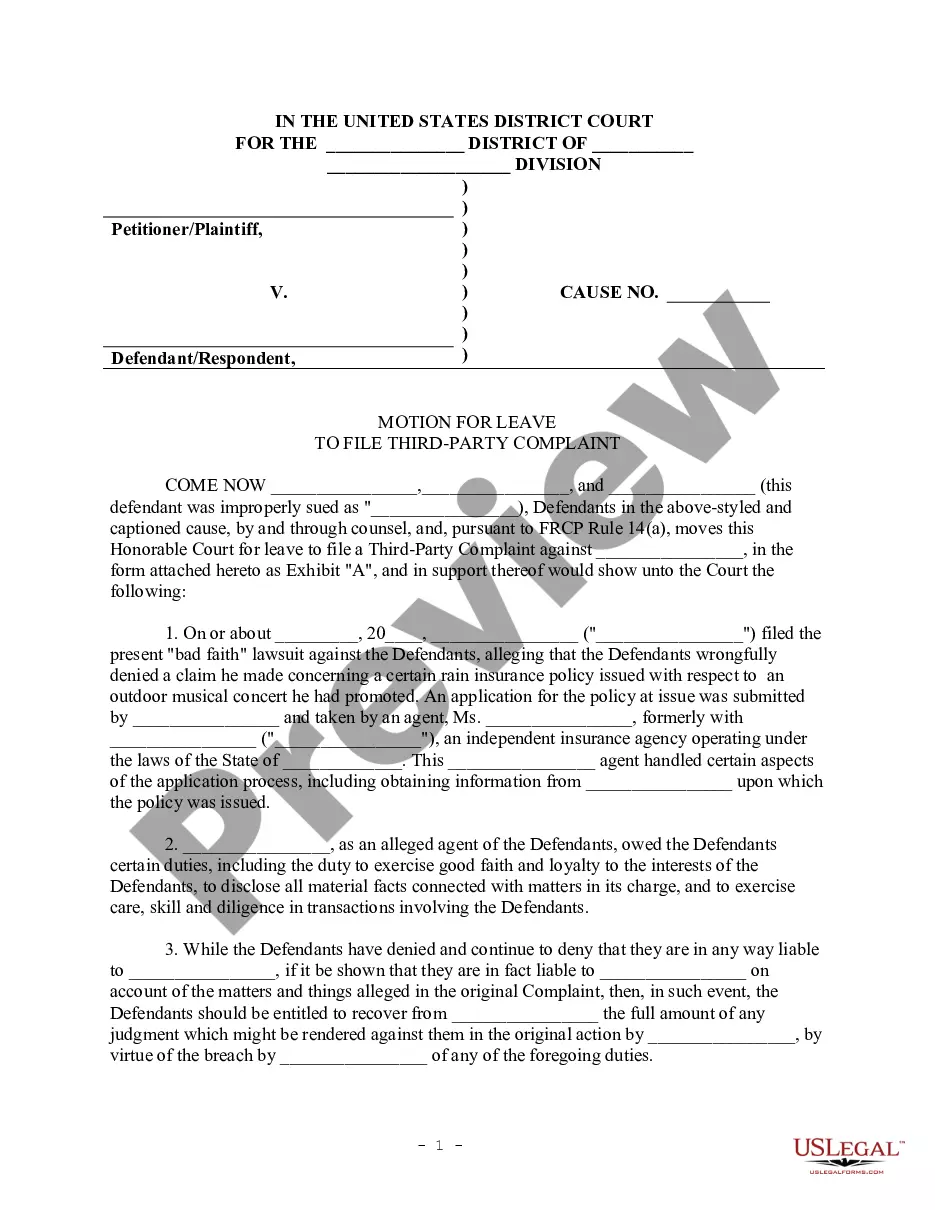
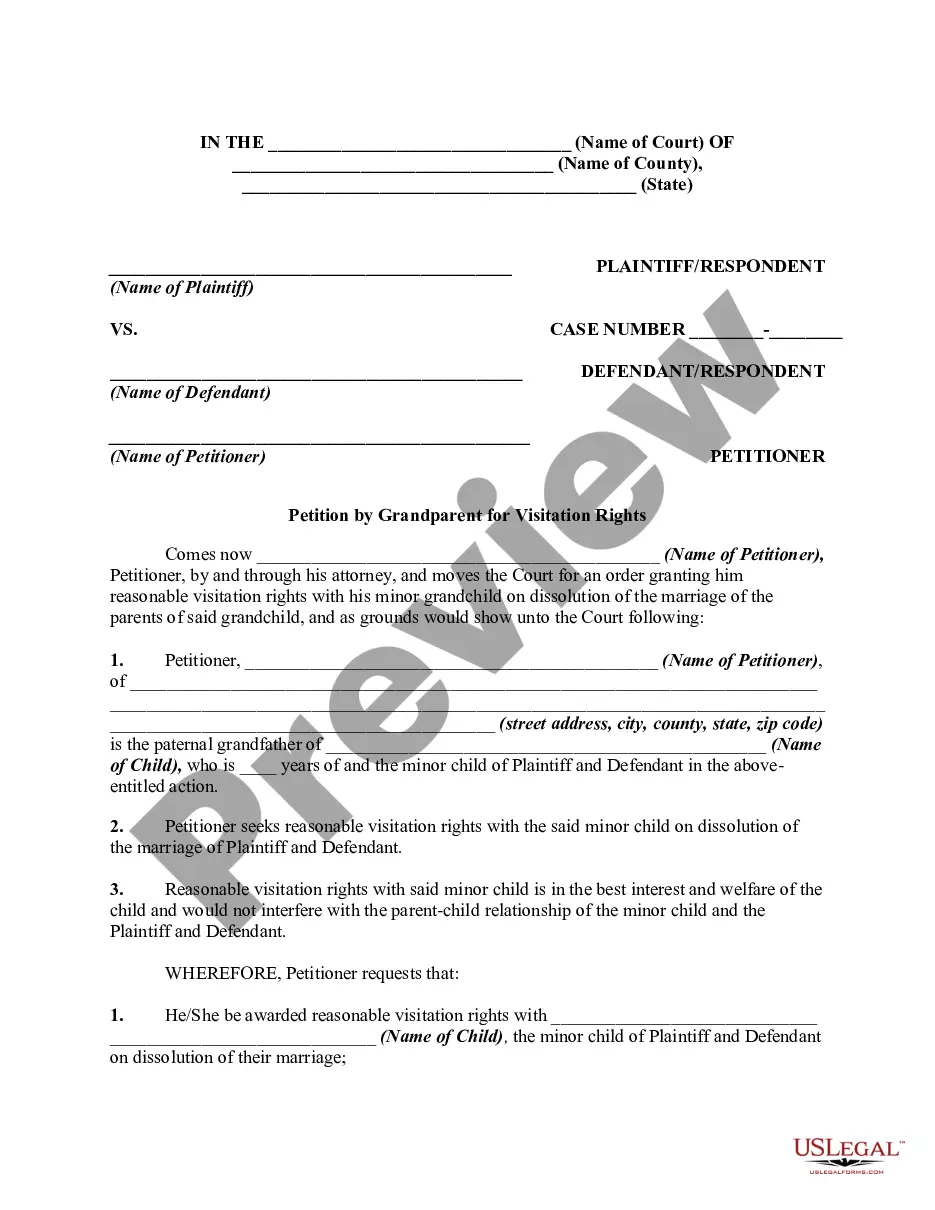
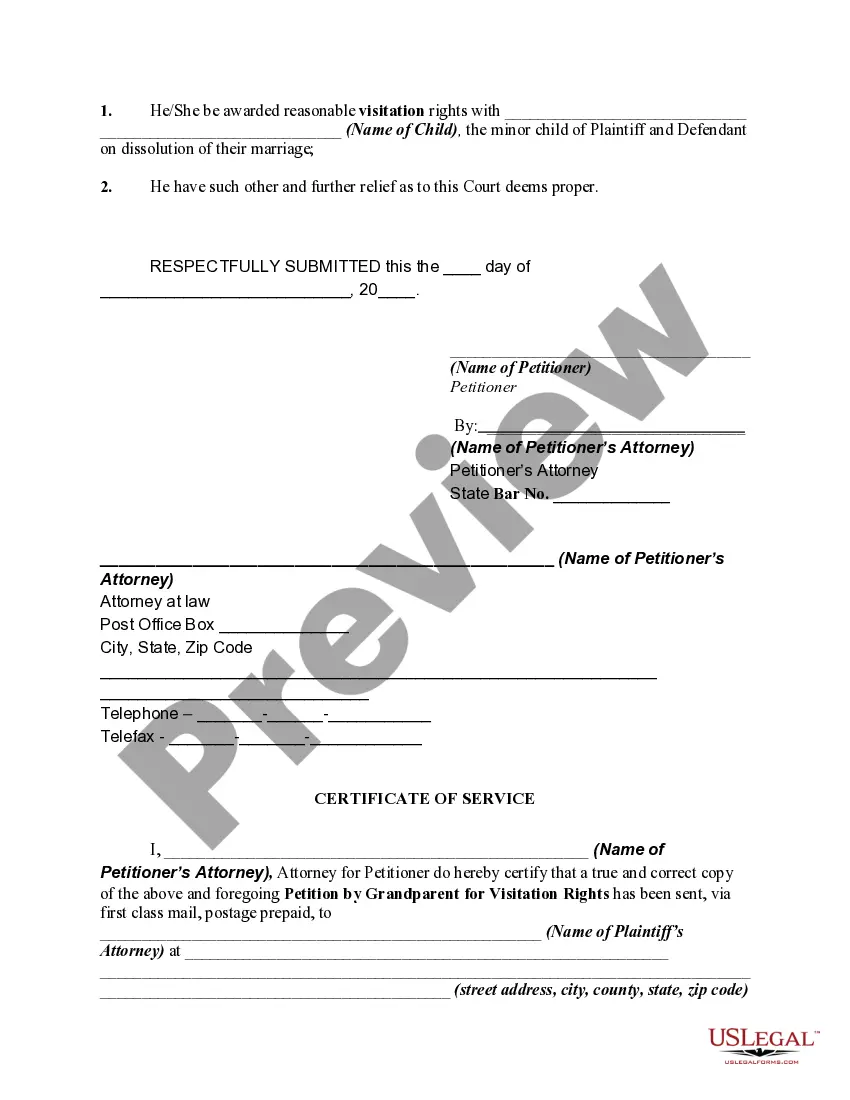
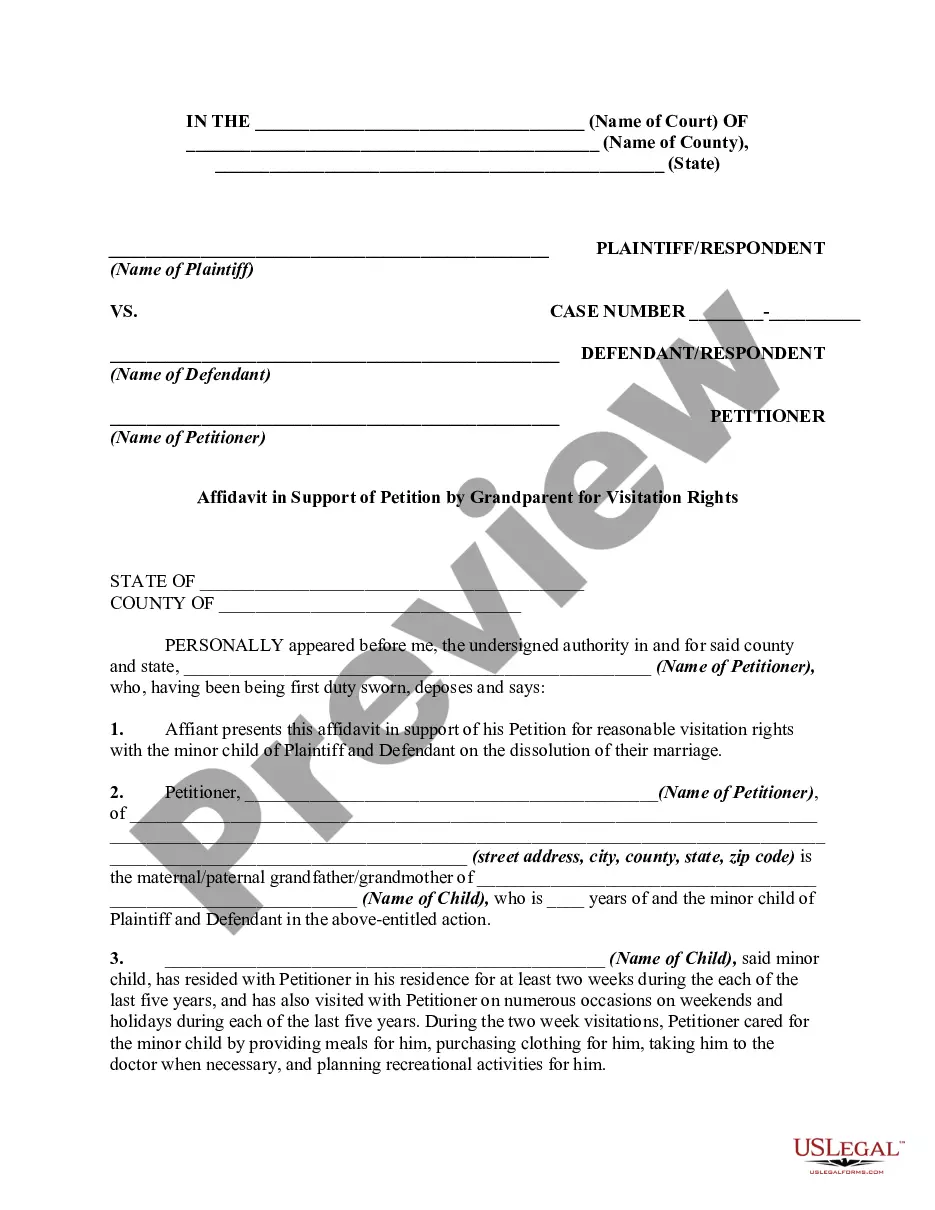
How to fill out Petition By Grandparent For Visitation Rights With Minor Grandchild On Dissolution Of The Marriage Of The Parents Of Minor Child?
The Grandparent Rights for Parents with Custody available on this site is a versatile legal document created by skilled attorneys in accordance with national and local laws.
For over 25 years, US Legal Forms has supplied individuals, companies, and legal experts with more than 85,000 confirmed, location-specific documents for various professional and personal circumstances. It is the fastest, easiest, and most reliable method to access the forms you require, as the service ensures bank-grade data security and malware protection.
Subscribe to US Legal Forms to have verified legal documents for every scenario in life readily available.
- Examine the document you require and review it.
- Search through the file you queried and view it or check the form details to confirm it meets your requirements. If it doesn't, use the search feature to locate the correct one. Click Buy Now once you have identified the template you need.
- Register and Log In.
- Choose the pricing option that best fits your needs and create an account. Make a quick payment using PayPal or a credit card. If you already hold an account, Log In and review your subscription to continue.
- Obtain the editable template.
- Select the format you prefer for your Grandparent Rights for Parents with Custody (PDF, Word, RTF) and download the example onto your device.
- Complete and sign the document.
- Print the template to fill it out manually. Alternatively, use an online multi-functional PDF editor to quickly and accurately fill in and sign your document with an eSignature.
- Re-download your documents as needed.
- Utilize the same document again whenever necessary. Access the My documents section in your account to download any previously saved forms.
Form popularity
FAQ
Obtaining grandparents' rights parents with custody can be challenging, as courts prioritize the parents' decisions regarding their children. Grandparents must present compelling evidence that visitation is in the child's best interest. The difficulty can vary by state, and legal guidance from platforms like USLegalForms can simplify the process by providing the necessary forms and information.
Kentucky does allow for grandparents' rights parents with custody, particularly when parents are divorced or have passed away. Grandparents can file for visitation rights, but they must prove that such visitation serves the child's welfare. The process can be complex, so seeking assistance through services like USLegalForms can help ensure that all necessary legal documents are correctly completed.
Yes, Indiana recognizes grandparent rights parents with custody under certain conditions. In cases where a child's parents are divorced or one parent is deceased, grandparents may petition for visitation rights. However, the grandparents must demonstrate that maintaining a relationship with them is in the child's best interest. To navigate this process effectively, consider using platforms like USLegalForms, which provide resources for legal documentation.
Grandparents can have custody rights, but these rights vary by state and depend on the specifics of each case. Generally, if parents with custody are unable to provide a safe and stable environment for their children, grandparents may seek legal intervention for custody. It's essential to understand that the process can be complex, and it often requires demonstrating that granting custody to grandparents serves the best interests of the child. For those navigating these issues, US Legal Forms offers resources and legal documents to help grandparents understand and assert their rights effectively.
A grandparent will be able to easily prove that either a parent has died, or that a divorce has occurred prior to the grandparent petitioning the Court. It becomes much more difficult when the remaining spouse (who presumably has sole custody) is objecting to the grandparents visiting the grandchild.
Grandparent alienation is a type of elder abuse, a term for the mistreatment of older people in a society. It occurs when grandparents are unreasonably denied meaningful opportunities to have a relationship and spend time with their grandchildren.
In Missouri, grandparents can legally request reasonable visitation provided it is within normal limits and does not intrude too much on the family. Only biological grandparents are extended this right and maybe applied if: The child's parents are married and file for legal separation or divorce in Missouri.
New Law for Grandparents' Rights ing to New York's Domestic Relations Law §72, grandparents possess the privilege to request visitation rights concerning their grandchildren under specific conditions.
This means that a court will not interfere with the decision of legally married parents to allow or deny grandparent visitation unless a grandparent can prove that the parents are not acting in their child's best interests.