Sample Recording Contract With Force Majeure
Description
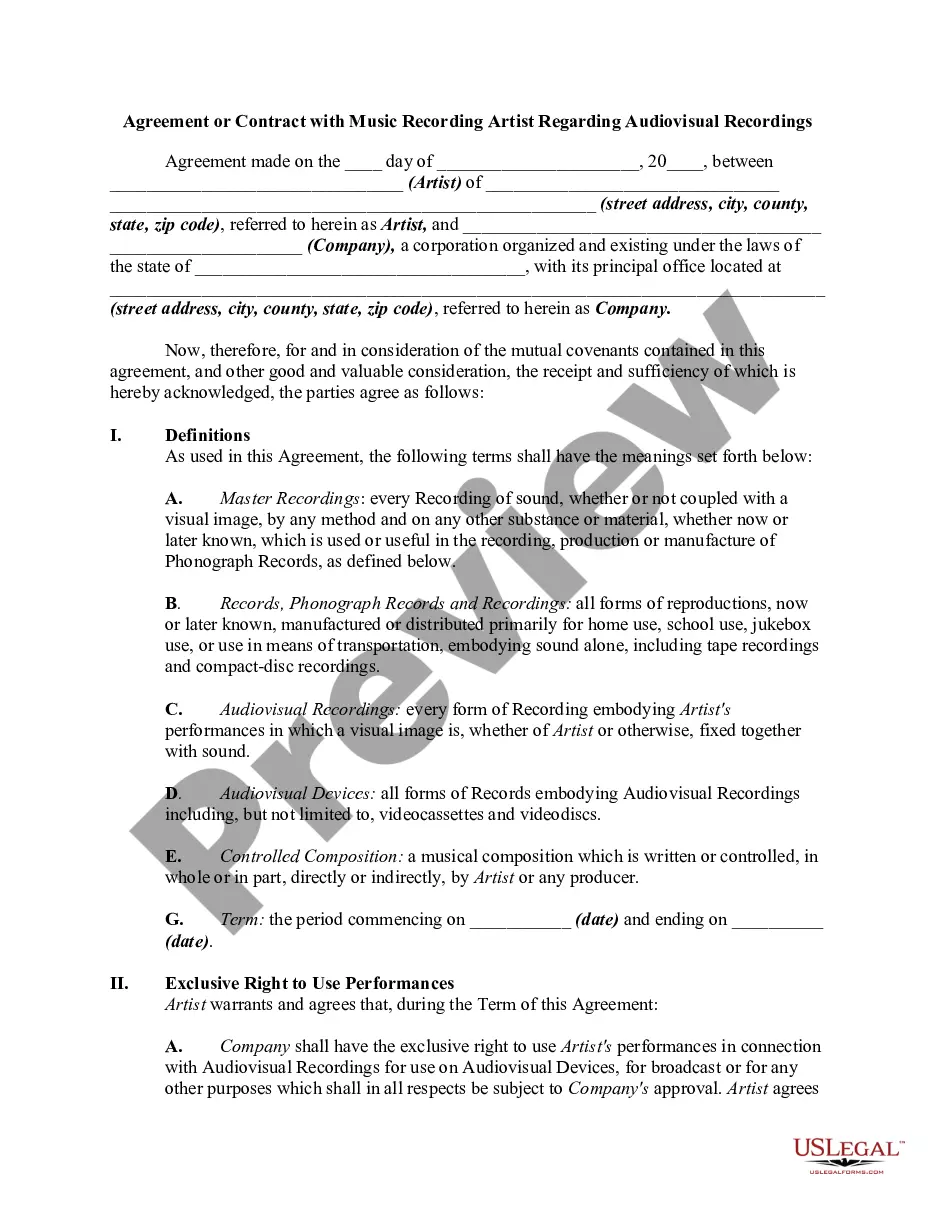
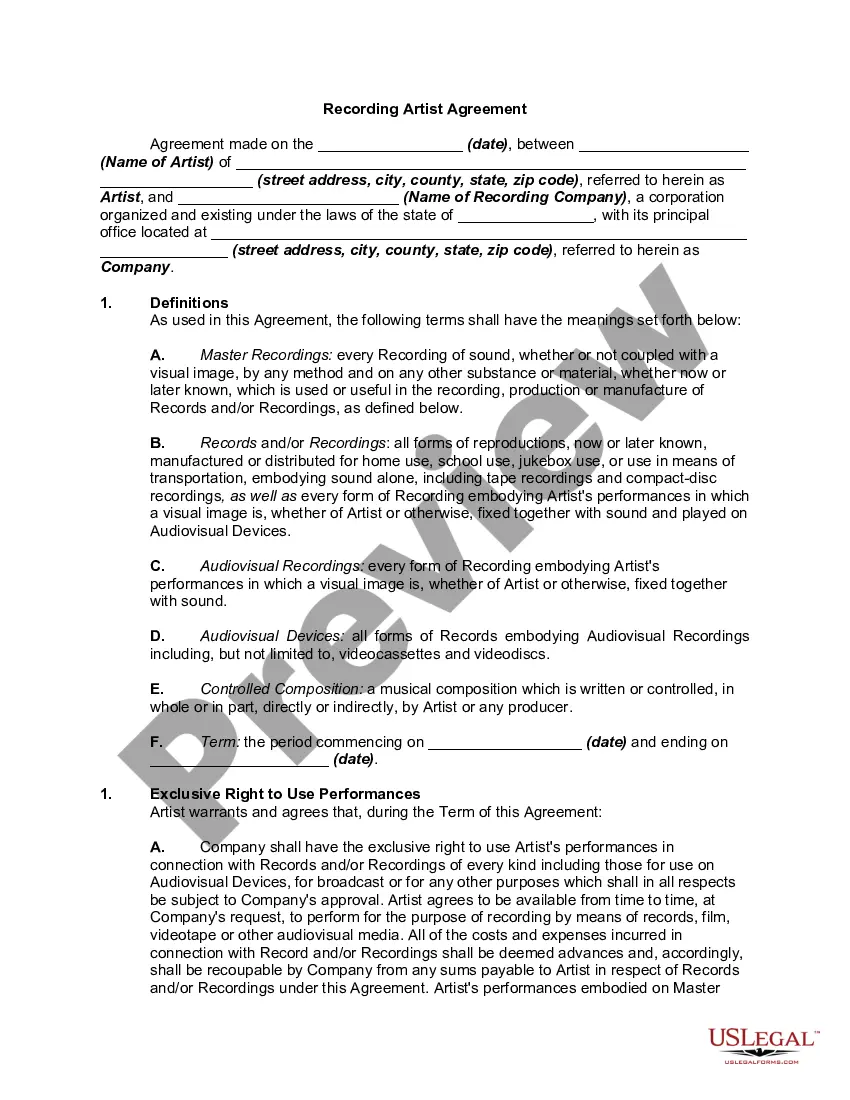
Get your form ready online
Our built-in tools help you complete, sign, share, and store your documents in one place.
Make edits, fill in missing information, and update formatting in US Legal Forms—just like you would in MS Word.
Download a copy, print it, send it by email, or mail it via USPS—whatever works best for your next step.
Sign and collect signatures with our SignNow integration. Send to multiple recipients, set reminders, and more. Go Premium to unlock E-Sign.
If this form requires notarization, complete it online through a secure video call—no need to meet a notary in person or wait for an appointment.
We protect your documents and personal data by following strict security and privacy standards.

Make edits, fill in missing information, and update formatting in US Legal Forms—just like you would in MS Word.

Download a copy, print it, send it by email, or mail it via USPS—whatever works best for your next step.

Sign and collect signatures with our SignNow integration. Send to multiple recipients, set reminders, and more. Go Premium to unlock E-Sign.

If this form requires notarization, complete it online through a secure video call—no need to meet a notary in person or wait for an appointment.

We protect your documents and personal data by following strict security and privacy standards.
Looking for another form?
How to fill out Exclusive Recording Contract Or Agreement With Recording Artist?
Regardless of whether it is for commercial reasons or for individual matters, everyone must confront legal circumstances at some stage in their lives.
Completing legal documents requires meticulous care, starting with choosing the appropriate form template. For instance, selecting an incorrect version of the Sample Recording Contract With Force Majeure will result in its rejection upon submission.
With an extensive US Legal Forms catalog available, you do not have to waste time searching for the suitable template across the internet. Utilize the library’s user-friendly navigation to locate the right template for any occasion.
- Locate the template you require by using the search box or browsing the catalog.
- Review the form’s details to confirm it aligns with your situation, jurisdiction, and locality.
- Click on the form’s preview to inspect it.
- If it is not the correct form, return to the search option to find the Sample Recording Contract With Force Majeure template you need.
- Obtain the template if it meets your criteria.
- If you already possess a US Legal Forms account, simply click Log in to access previously stored templates in My documents.
- If you do not have an account yet, you can download the form by clicking Buy now.
- Select the appropriate pricing option.
- Fill out the profile registration form.
- Choose your payment method: use a credit card or PayPal account.
- Select the document format you desire and download the Sample Recording Contract With Force Majeure.
- After it is saved, you can complete the form using editing software or print it out and finish it manually.
Form popularity
FAQ
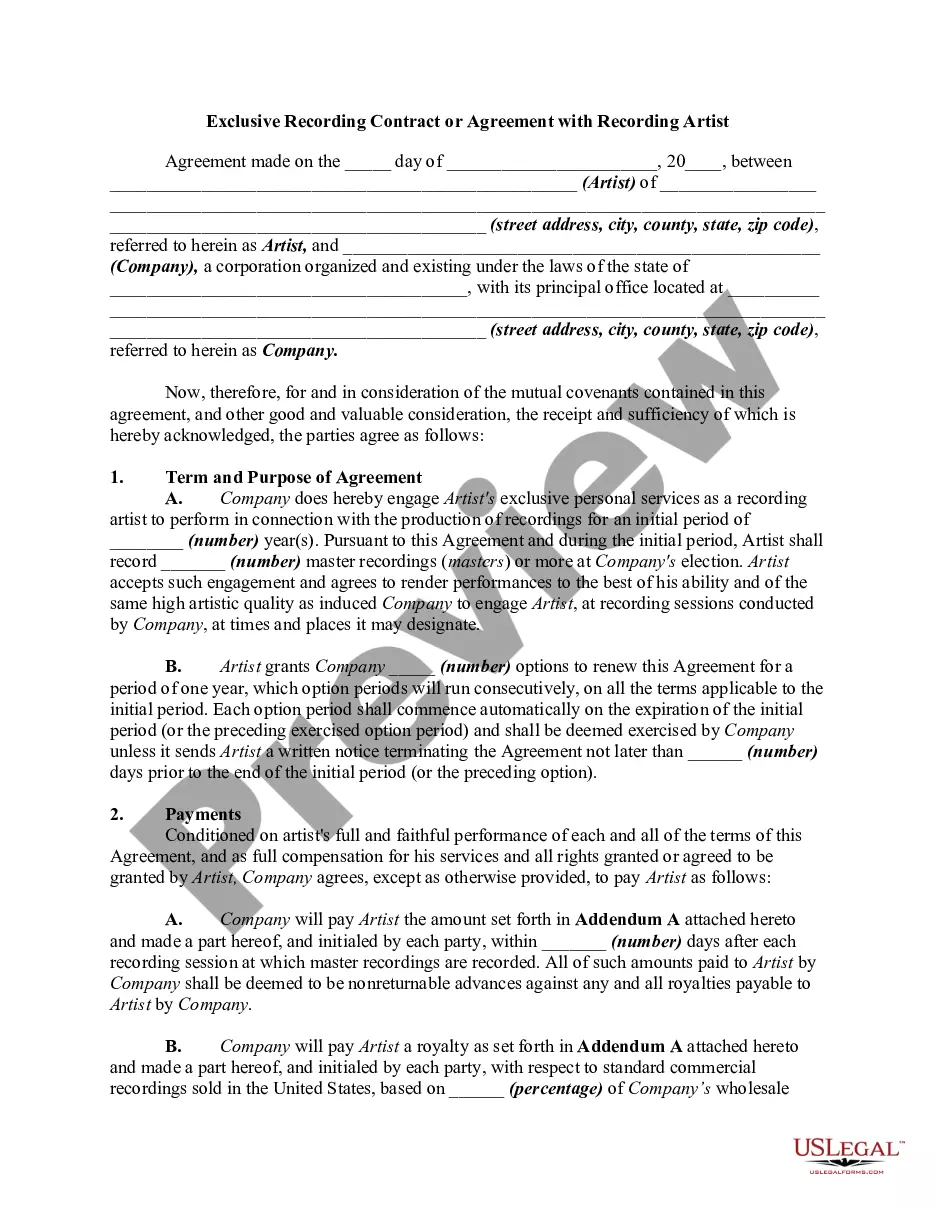
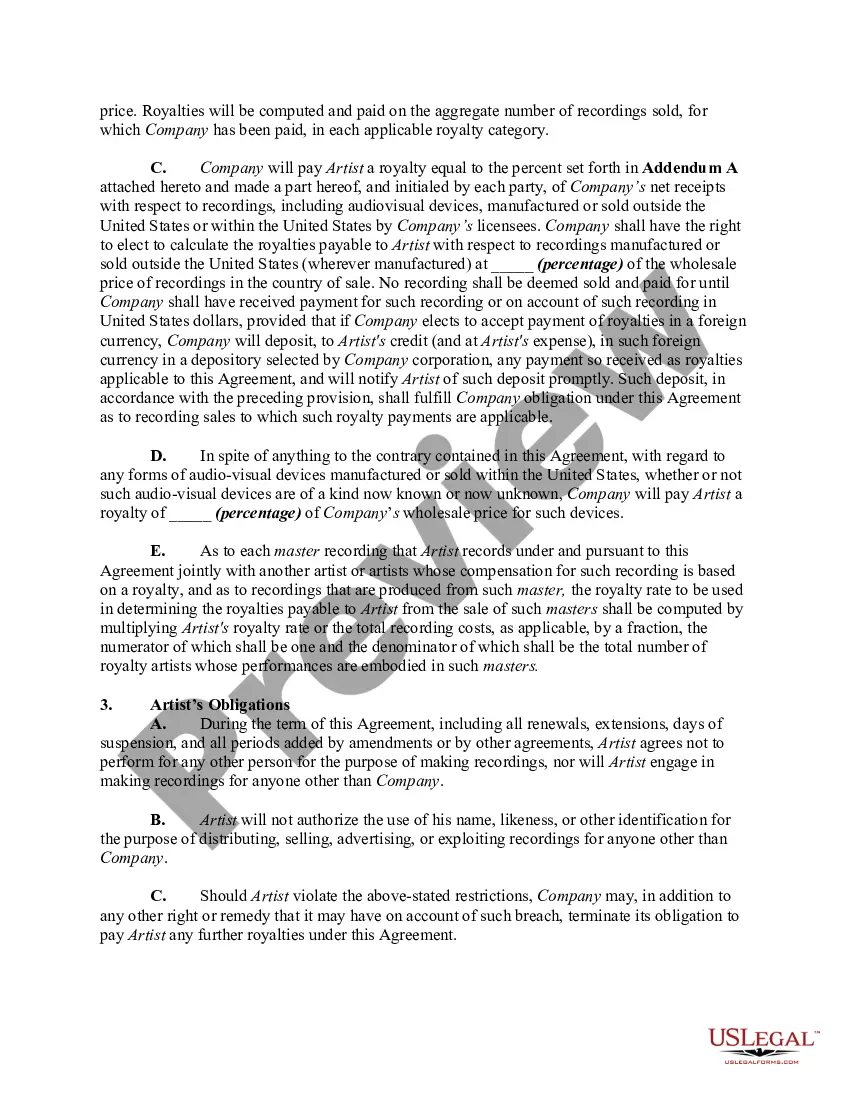
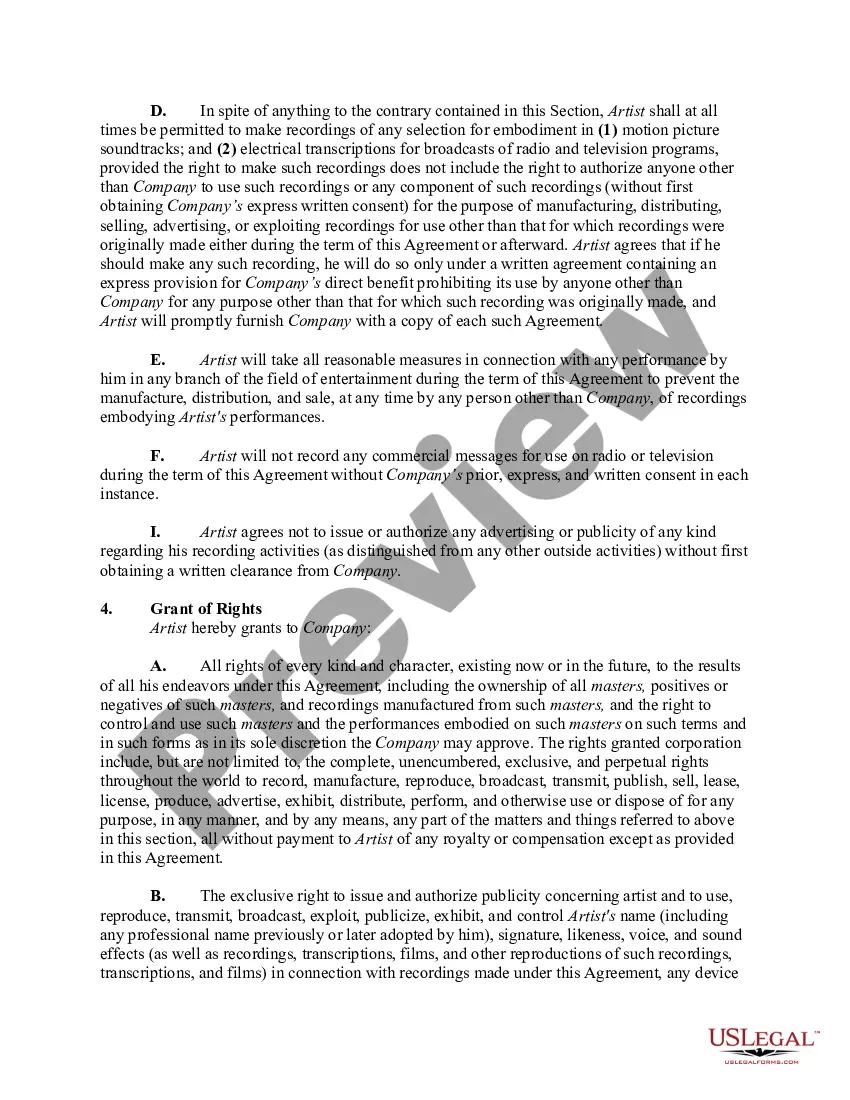
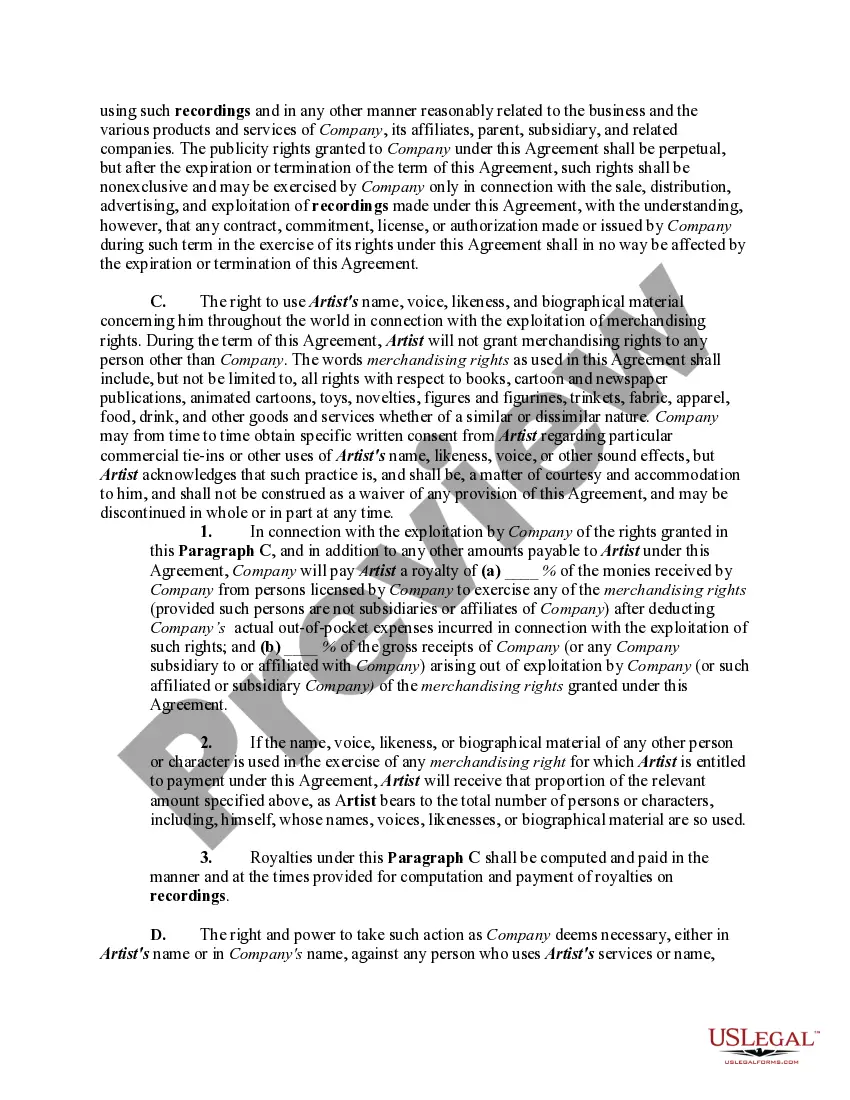
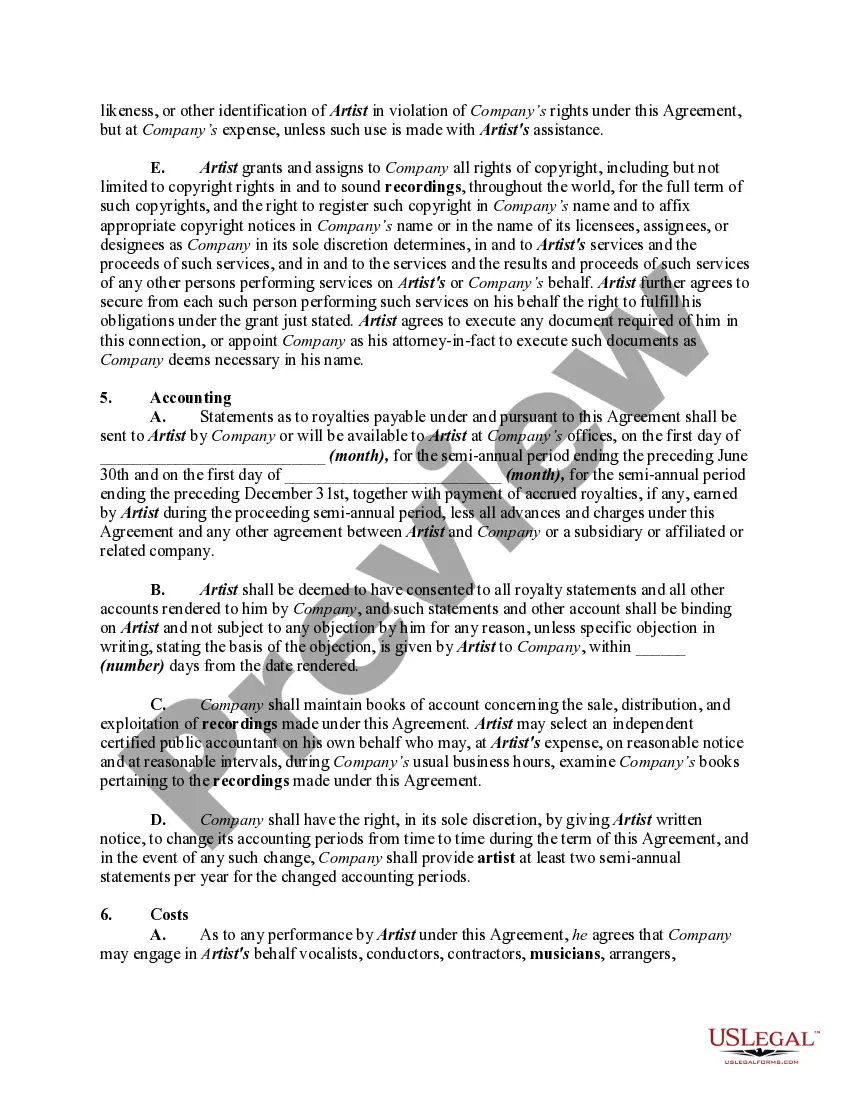
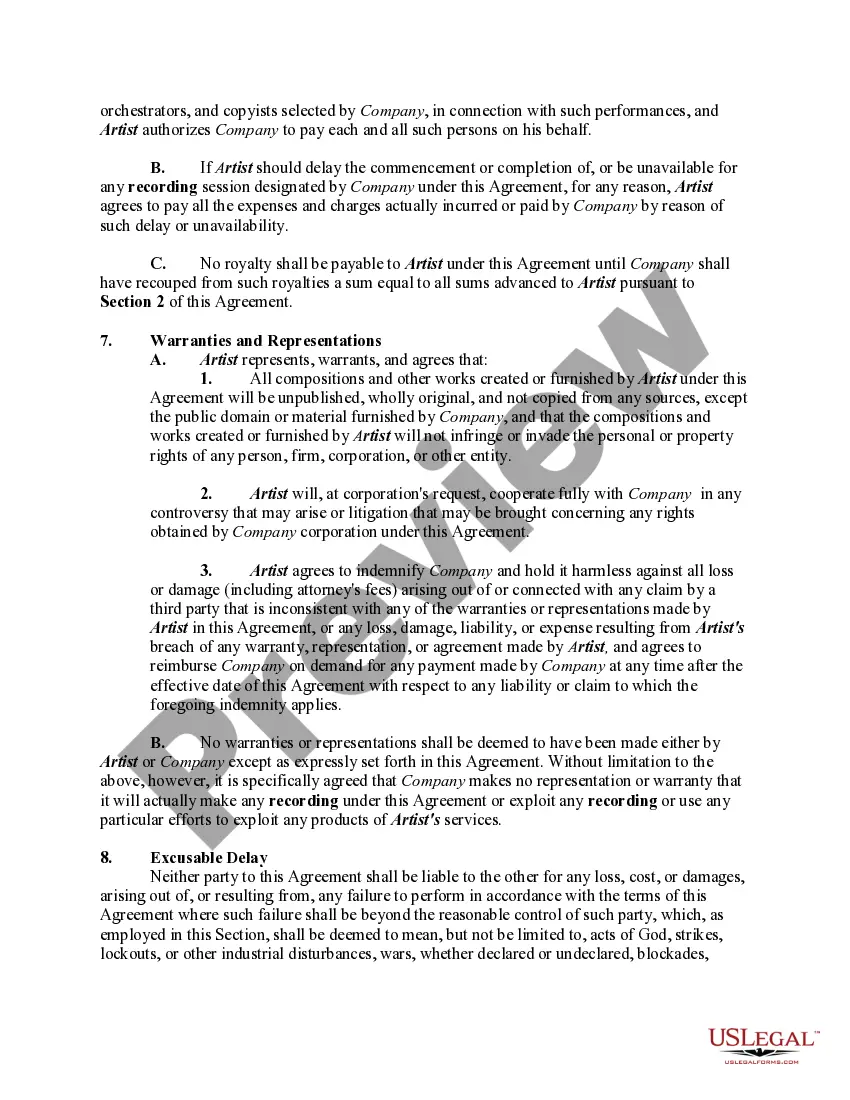
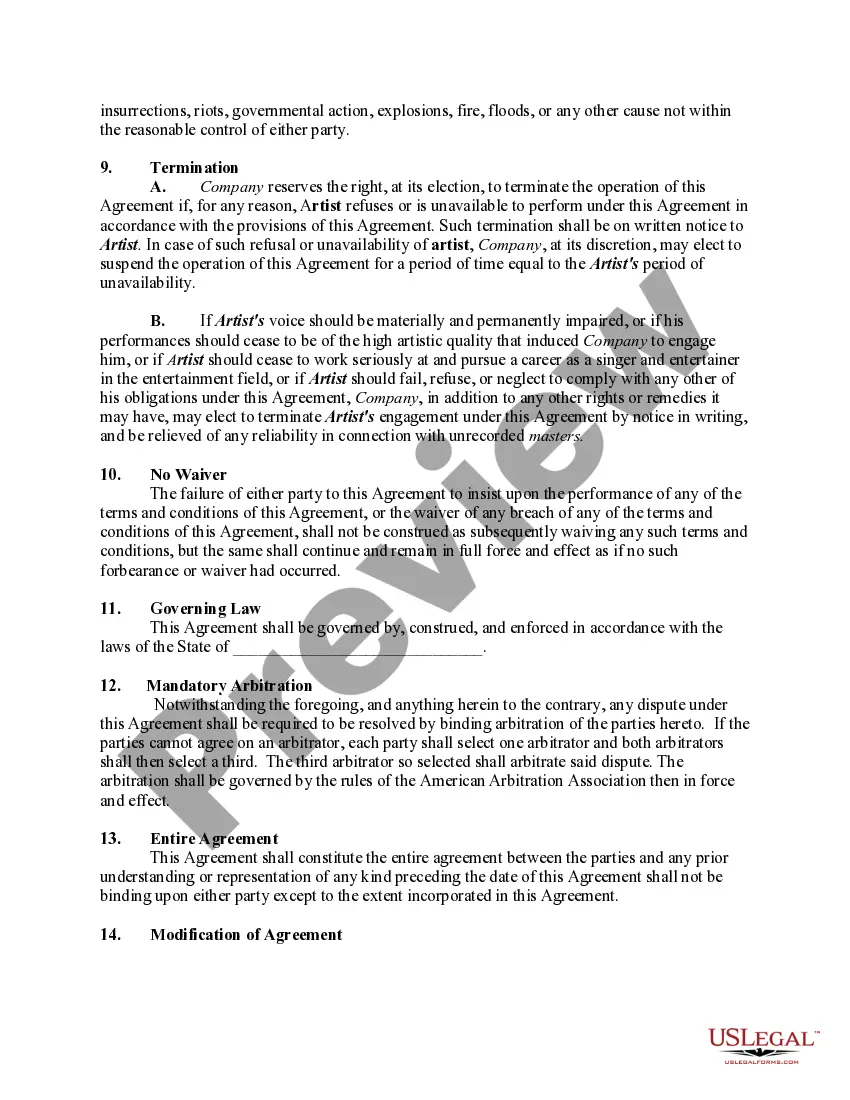
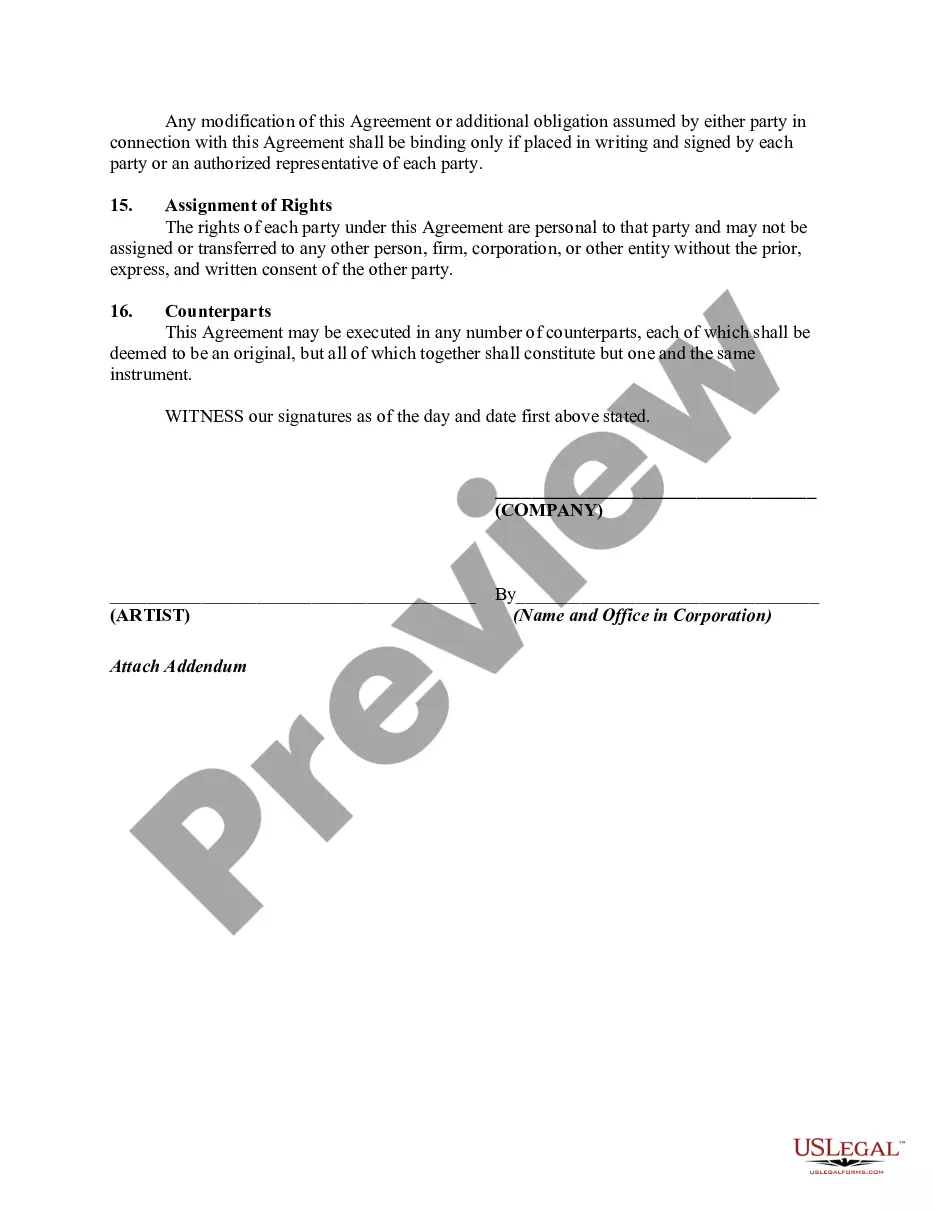
A force majeure situation refers to an unforeseen event that prevents parties from fulfilling their contractual obligations. For instance, natural disasters like hurricanes, earthquakes, or floods can disrupt planned events or recordings. In the context of a sample recording contract with force majeure, such situations allow artists and producers to postpone or cancel projects without facing penalties. It's essential to understand these scenarios to protect your interests when entering into a recording agreement.
If a contract lacks a force majeure clause, parties may face challenges during unforeseen events that hinder performance. Without this clause, you may not have legal grounds to excuse non-performance due to circumstances like natural disasters or pandemics. Incorporating a sample recording contract with force majeure can provide clarity and protection in such situations. Consider using USLegalForms to create a robust contract that includes this essential clause.
Yes, you can write your own legally binding contract. However, it's important to ensure that it meets all legal requirements to be enforceable. A sample recording contract with force majeure can serve as a helpful template, guiding you through necessary clauses. Using a reliable platform like USLegalForms can simplify this process, offering customizable templates that protect your interests.
To include force majeure in a contract, create a dedicated section that outlines the definition of force majeure events, the obligations affected, and the process for notification. Be clear about how the clause will operate, including any time limits for declaring force majeure. Incorporating this into your sample recording contract with force majeure provides essential protection for all parties involved.
To declare force majeure, the affected party must formally notify the other party of the event preventing contract obligations. This notification should include details about the event, its impact on the contract, and the expected duration of the disruption. Properly documenting this process is crucial when dealing with a sample recording contract with force majeure to ensure compliance and transparency.
A contract does not have to include a force majeure clause, but it is highly advisable to do so, especially in industries like music where unforeseen events can disrupt business. This clause provides clarity and protection for all parties involved. Including a force majeure section in your sample recording contract can prevent costly disputes and misunderstandings.
Force majeure does not automatically void a contract; rather, it suspends the parties' obligations for the duration of the unforeseen event. This means that while certain duties are paused, the contract itself remains valid. When drafting a sample recording contract with force majeure, it is essential to clarify that the agreement continues once normal conditions resume.
To write a force majeure clause, start by clearly defining what constitutes a force majeure event, such as natural disasters, war, or pandemics. Specify the obligations that are excused during such events and the duration of the excusal. Including this in your sample recording contract with force majeure ensures that both parties understand their rights and responsibilities during unforeseen circumstances.
Writing a recording contract involves several key components, including defining the parties, detailing the rights and obligations, and outlining payment terms. It's important to include clauses that address issues like royalties, creative control, and termination conditions. Additionally, incorporating a force majeure clause in your sample recording contract can safeguard both parties against unexpected circumstances.
A force majeure case typically involves unforeseen events that prevent one or both parties from fulfilling their contractual obligations. For instance, natural disasters such as hurricanes or earthquakes can disrupt recording schedules. In the context of a sample recording contract with force majeure, this clause would protect artists and producers from penalties in the event of such disruptions.