Reason For Mediation
Description

Get your form ready online
Our built-in tools help you complete, sign, share, and store your documents in one place.
Make edits, fill in missing information, and update formatting in US Legal Forms—just like you would in MS Word.
Download a copy, print it, send it by email, or mail it via USPS—whatever works best for your next step.
Sign and collect signatures with our SignNow integration. Send to multiple recipients, set reminders, and more. Go Premium to unlock E-Sign.
If this form requires notarization, complete it online through a secure video call—no need to meet a notary in person or wait for an appointment.
We protect your documents and personal data by following strict security and privacy standards.

Make edits, fill in missing information, and update formatting in US Legal Forms—just like you would in MS Word.

Download a copy, print it, send it by email, or mail it via USPS—whatever works best for your next step.

Sign and collect signatures with our SignNow integration. Send to multiple recipients, set reminders, and more. Go Premium to unlock E-Sign.

If this form requires notarization, complete it online through a secure video call—no need to meet a notary in person or wait for an appointment.

We protect your documents and personal data by following strict security and privacy standards.
Looking for another form?





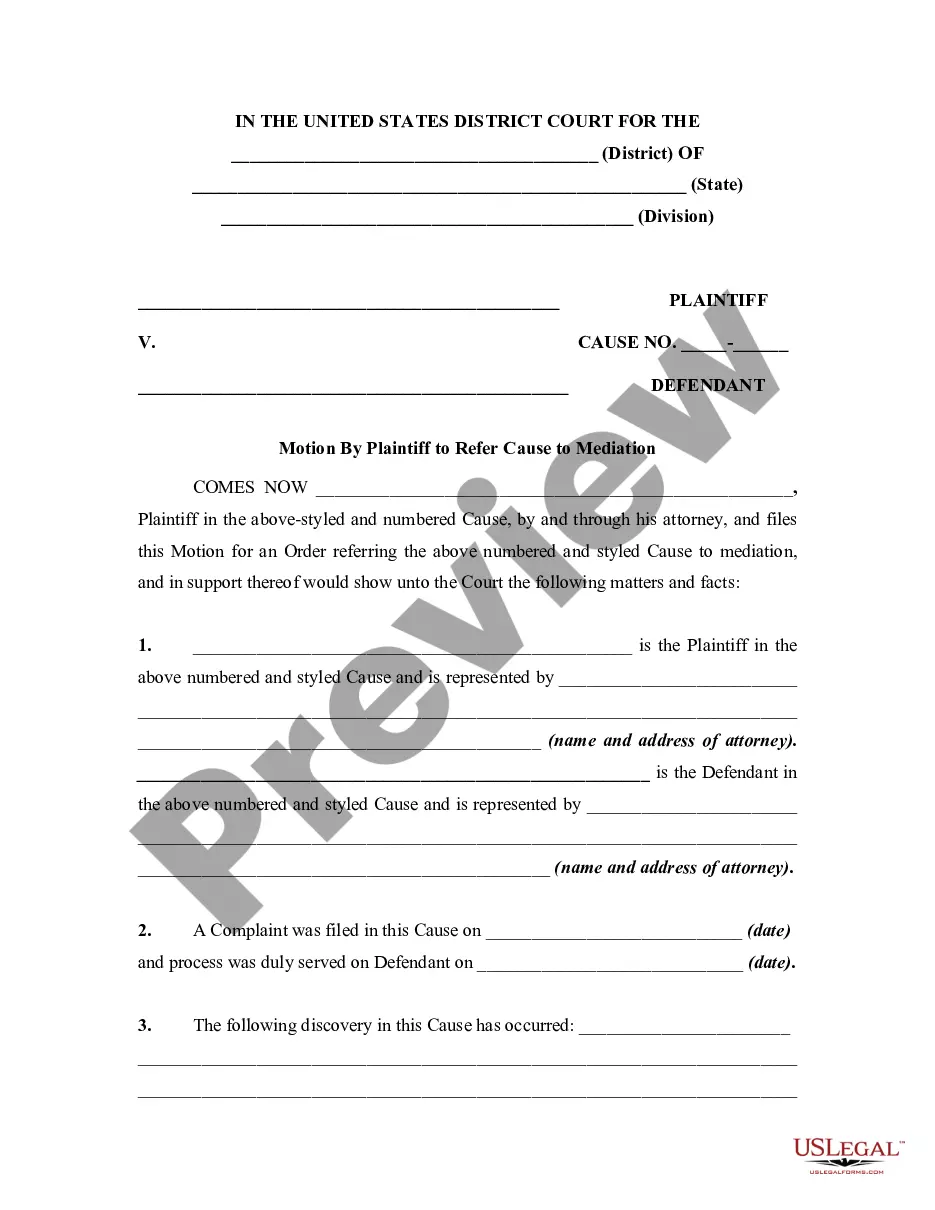
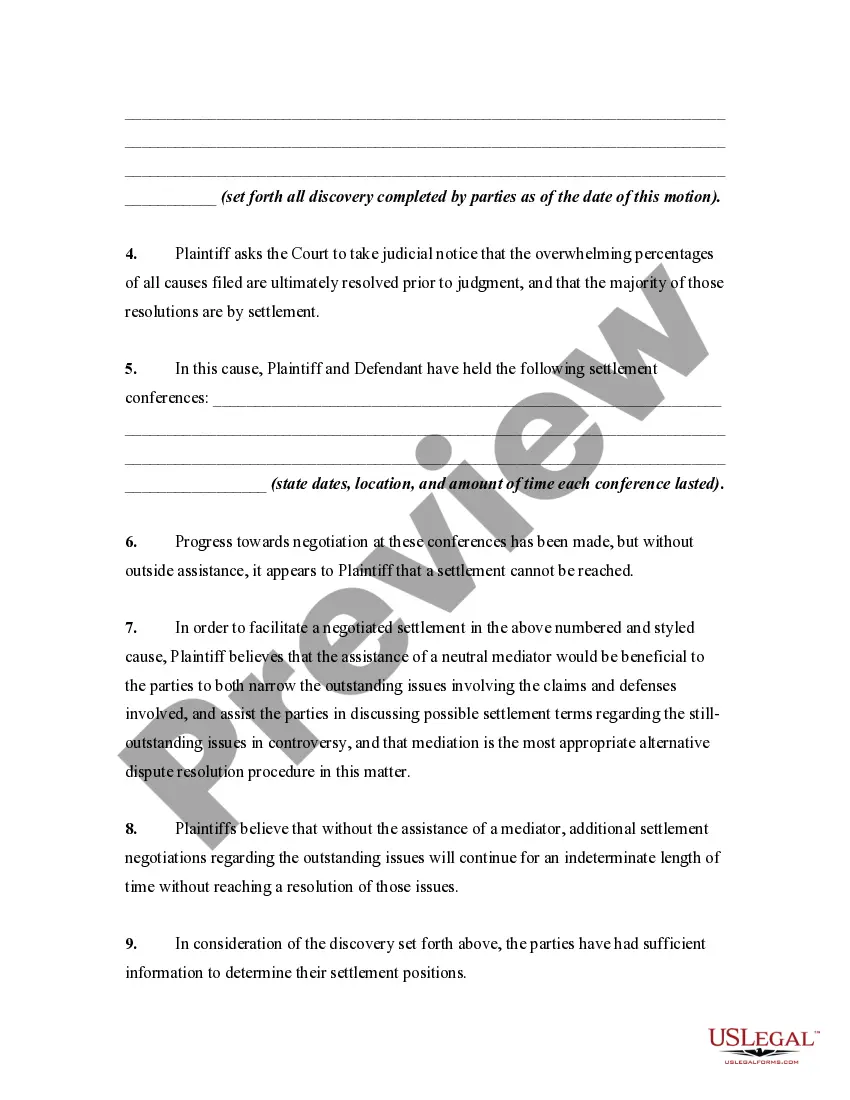
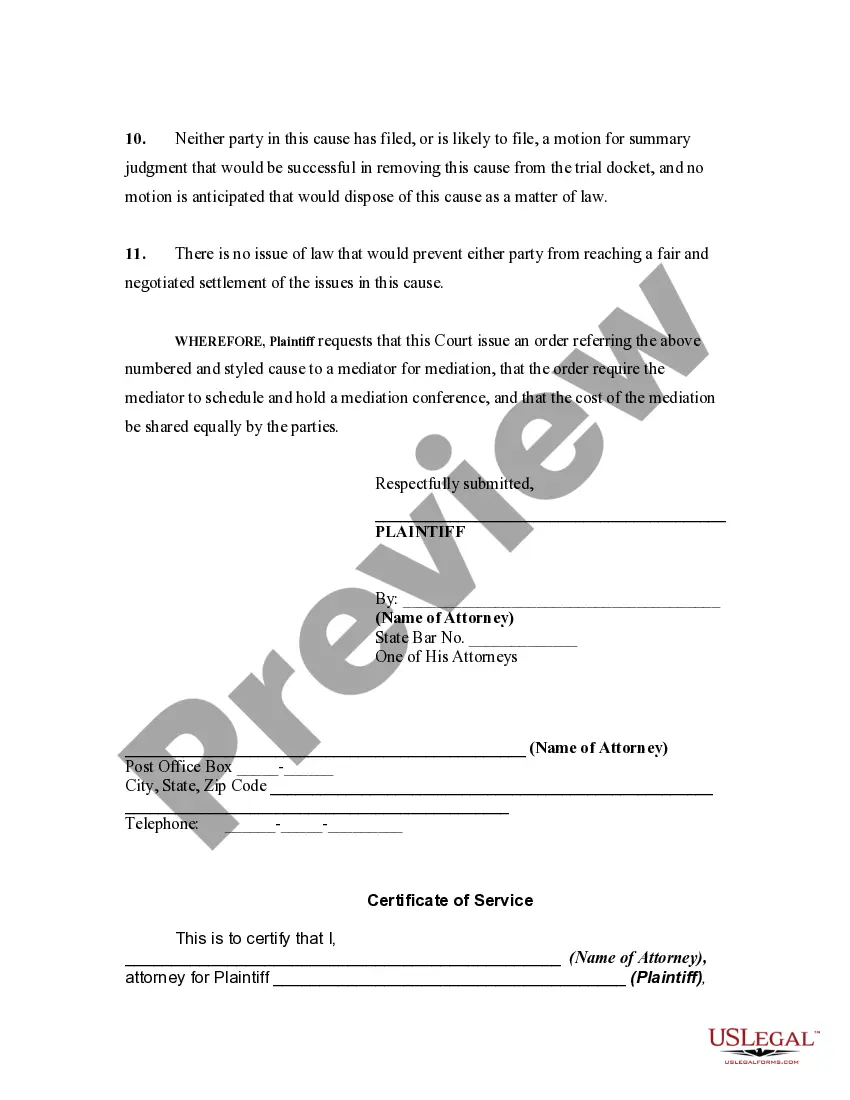
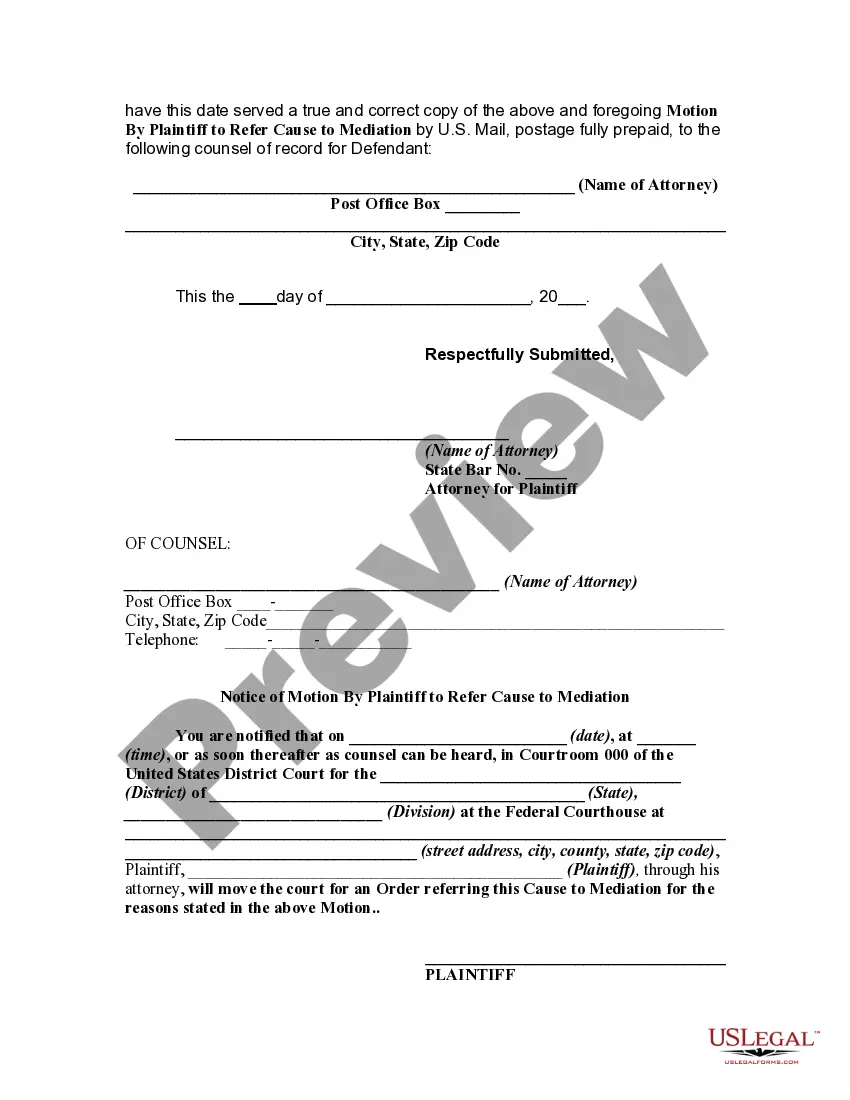
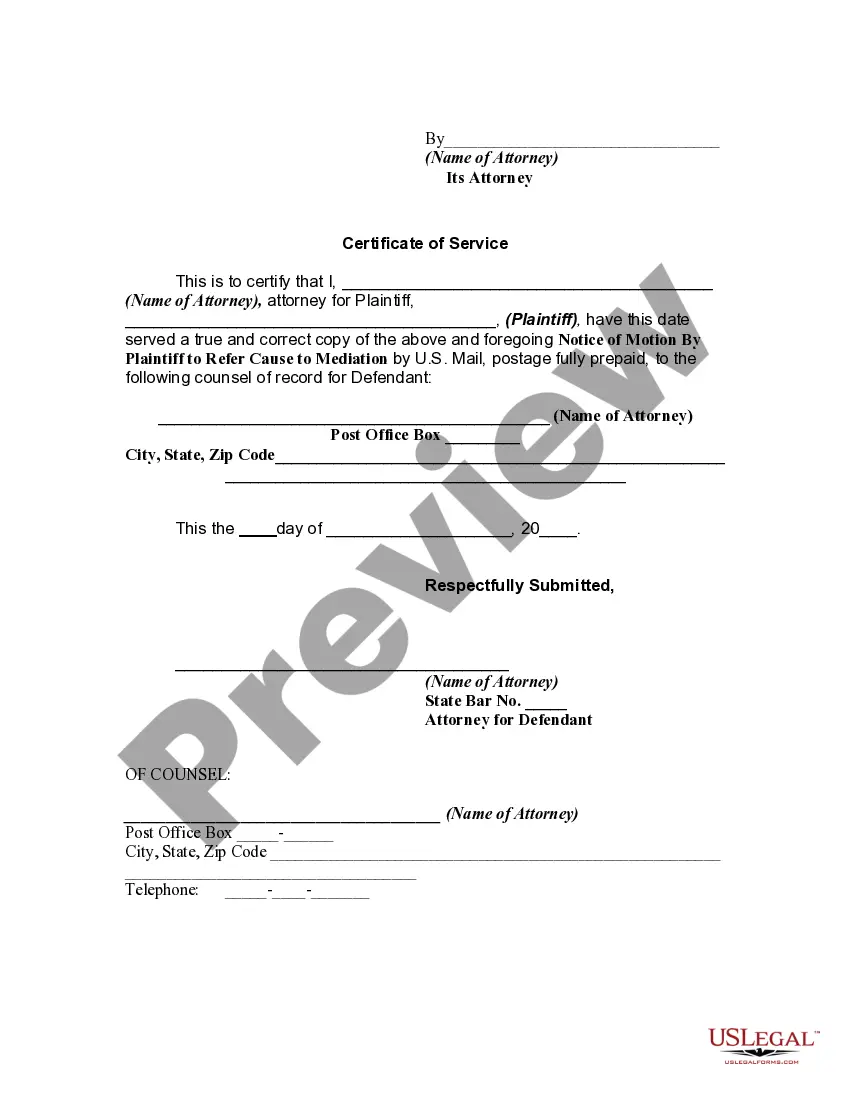
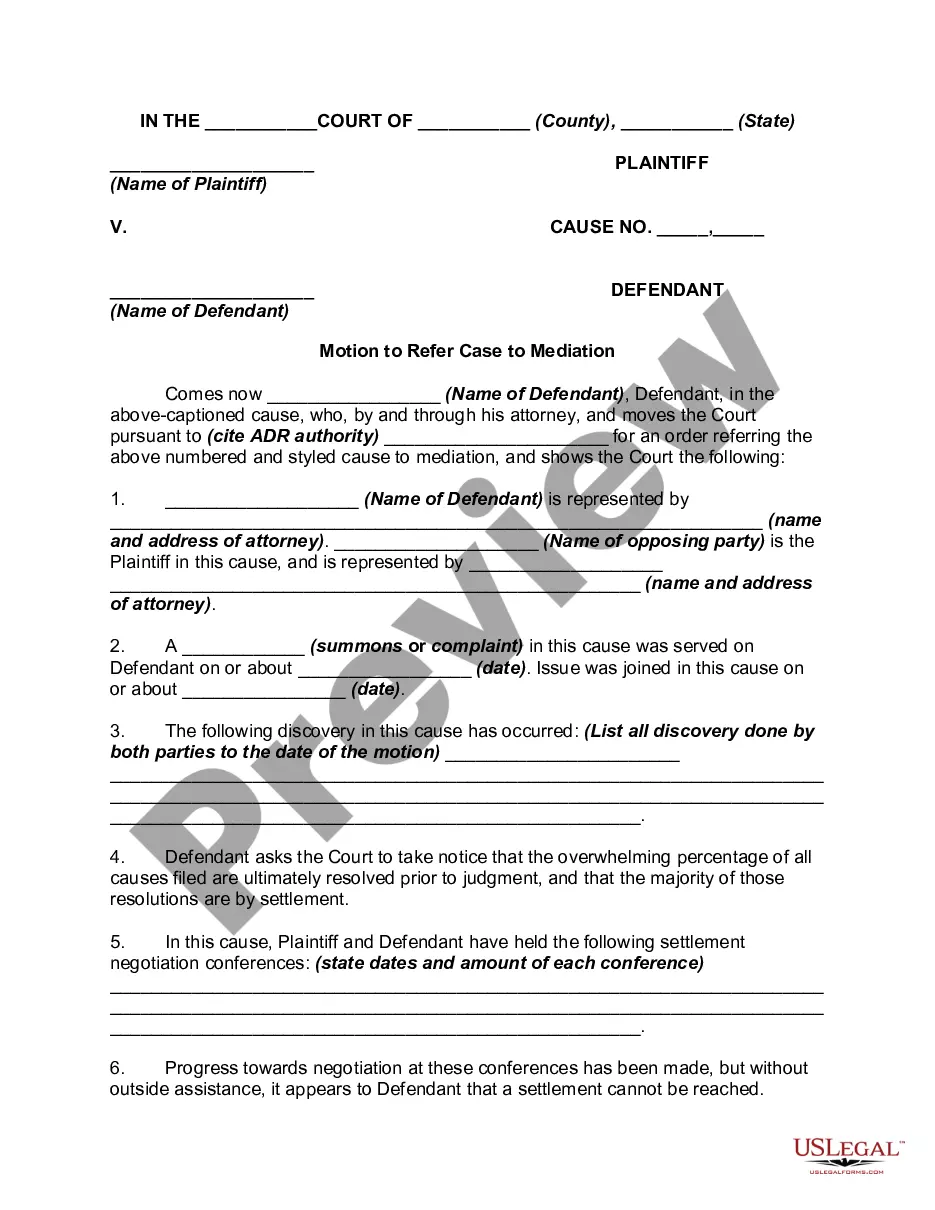
How to fill out Motion By Plaintiff To Refer Cause To Mediation?
It’s well known that you can’t transform into a legal expert instantly, nor can you discover how to rapidly create Reason For Mediation without possessing a specialized skill set.
Compiling legal documents is an arduous task that demands specific education and expertise. So, why not entrust the development of the Reason For Mediation to the professionals.
With US Legal Forms, one of the most extensive legal template collections, you can locate anything from court paperwork to templates for internal communication.
If you require a different form, initiate your search again.
Establish a complimentary account and select a subscription plan to purchase the form. Choose Buy now. Once the payment process is completed, you can acquire the Reason For Mediation, complete it, print it, and send or mail it to the specified individuals or entities.
- Understand how crucial compliance and adherence to federal and state regulations are.
- That’s why, on our platform, all templates are region-specific and current.
- Here’s how to start on our website and obtain the document you need in just minutes.
- Find the document you require using the search bar located at the top of the page.
- Preview it (if this option is available) and review the accompanying description to ascertain whether Reason For Mediation is what you’re seeking.
Form popularity
FAQ
To write a mediation request, start by clearly stating your intention to mediate and the issues you wish to address. Include relevant details such as your contact information, the parties involved, and a brief explanation of the reason for mediation. This helps set the stage for a collaborative conversation. Utilizing platforms like US Legal Forms can simplify this process, providing templates that guide you through creating an effective mediation request.
During mediation, avoid making statements that can escalate tensions or create defensiveness. Steer clear of blaming language or accusations, as they can derail productive discussions. Instead, focus on expressing your interests and concerns clearly. Remember, the reason for mediation is to reach a mutually agreeable solution, so maintaining a respectful tone is crucial.
The reason for mediation is to create a platform for parties to resolve their disputes collaboratively and efficiently. It offers an alternative to court, where individuals can communicate their needs and interests in a supportive environment. The process aims to empower participants by giving them a voice in their resolution, leading to more satisfactory outcomes. Utilizing resources like the USLegalForms platform can further streamline the mediation process, making it easier to manage agreements and documentation.
Someone may need mediation to resolve a conflict in a way that avoids the stress and costs associated with litigation. Mediation provides a confidential setting where parties can discuss their issues openly, which can lead to a quicker and more amicable resolution. Moreover, it gives individuals control over the outcome, as they work together to create an agreement that suits everyone. The reason for mediation often lies in the desire to find a practical solution without the adversarial nature of court proceedings.
Mediation is particularly effective in situations where relationships are important, such as family disputes or business conflicts. It works well when parties are willing to negotiate and seek a resolution that meets their needs. Additionally, mediation is beneficial in cases where the emotional stakes are high, as it allows for a more personal approach. The reason for mediation in these scenarios is to preserve relationships while resolving issues constructively.
The 4 C's of mediation are communication, cooperation, creativity, and compromise. These principles help create a positive atmosphere where parties can share their concerns and desires openly. Effective communication ensures that everyone feels heard, while cooperation fosters a collaborative spirit. The reason for mediation is often rooted in the hope that these elements will lead to innovative solutions that satisfy all parties involved.
When a case goes to mediation, it means that the parties involved have chosen to engage in a facilitated negotiation process. A neutral mediator guides the discussion, helping both sides express their viewpoints and explore possible solutions. This approach often leads to more satisfactory outcomes as it encourages cooperation rather than confrontation. The reason for mediation in this context is to reach a resolution without the need for a formal trial.
The primary purpose of mediation is to provide a structured environment where parties can resolve their disputes amicably. Mediation encourages open dialogue, fostering understanding and collaboration. By facilitating communication, the process helps parties identify their needs and interests, ultimately leading to a mutually beneficial agreement. The reason for mediation often stems from a desire to avoid lengthy court battles and find a quicker resolution.
To get what you want in mediation, focus on clear communication and understanding the other party's needs. Prepare to articulate your interests and the reasons for mediation. Use a problem-solving mindset to explore creative solutions that benefit both parties. Consider leveraging US Legal Forms for guidance and tools to improve your negotiation strategy.
Gather relevant documents and evidence that support your position before entering mediation. This might include contracts, emails, or other communications that highlight your concerns. Understanding the reason for mediation helps you focus on the most pertinent information. US Legal Forms provides templates and resources to help you organize your evidence effectively.