Agreement Between Neighbors Fence Without Permission
Description
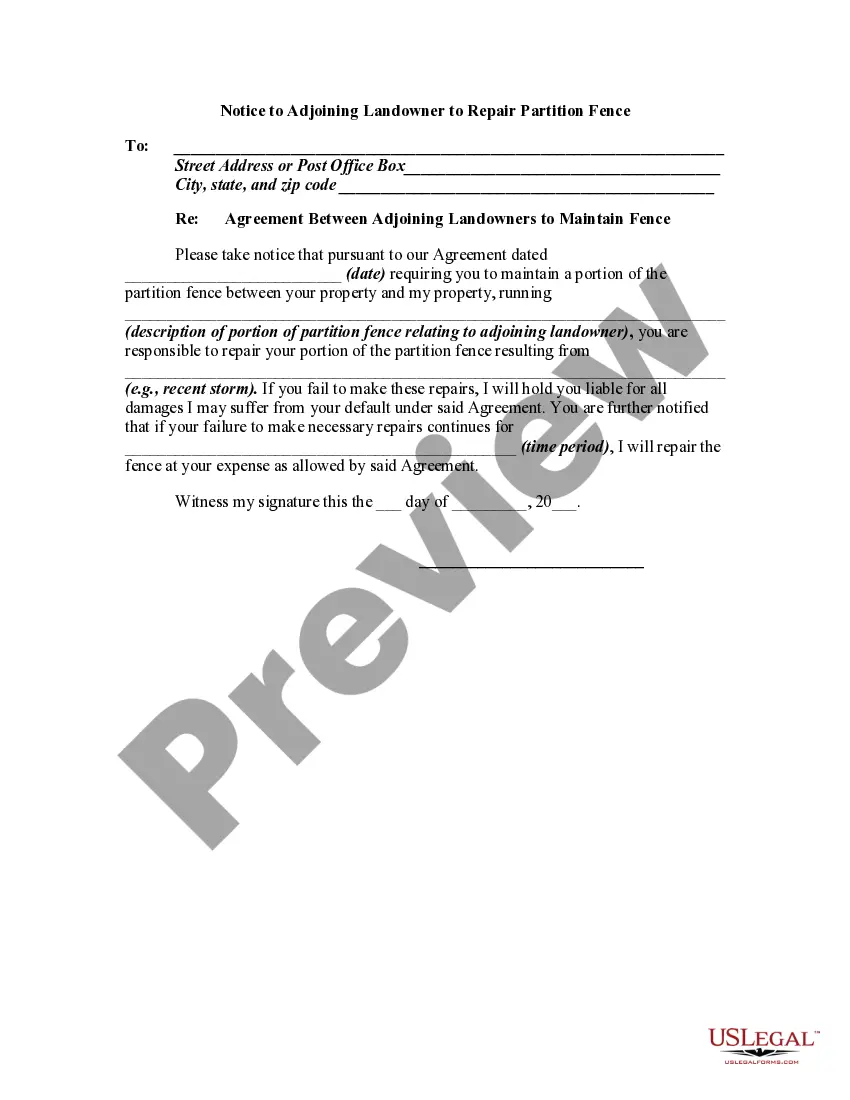
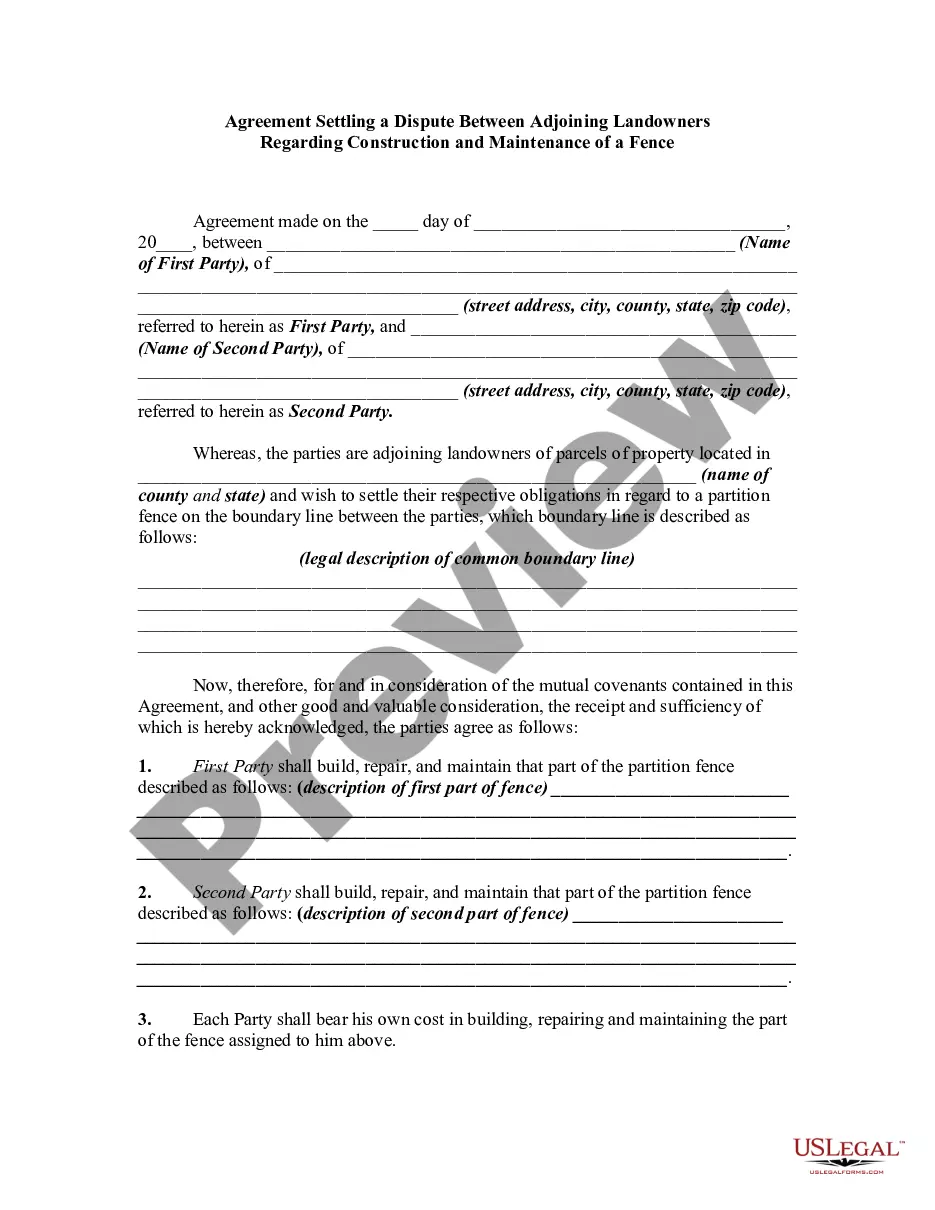
Get your form ready online
Our built-in tools help you complete, sign, share, and store your documents in one place.
Make edits, fill in missing information, and update formatting in US Legal Forms—just like you would in MS Word.
Download a copy, print it, send it by email, or mail it via USPS—whatever works best for your next step.
Sign and collect signatures with our SignNow integration. Send to multiple recipients, set reminders, and more. Go Premium to unlock E-Sign.
If this form requires notarization, complete it online through a secure video call—no need to meet a notary in person or wait for an appointment.
We protect your documents and personal data by following strict security and privacy standards.

Make edits, fill in missing information, and update formatting in US Legal Forms—just like you would in MS Word.

Download a copy, print it, send it by email, or mail it via USPS—whatever works best for your next step.

Sign and collect signatures with our SignNow integration. Send to multiple recipients, set reminders, and more. Go Premium to unlock E-Sign.

If this form requires notarization, complete it online through a secure video call—no need to meet a notary in person or wait for an appointment.

We protect your documents and personal data by following strict security and privacy standards.
Looking for another form?







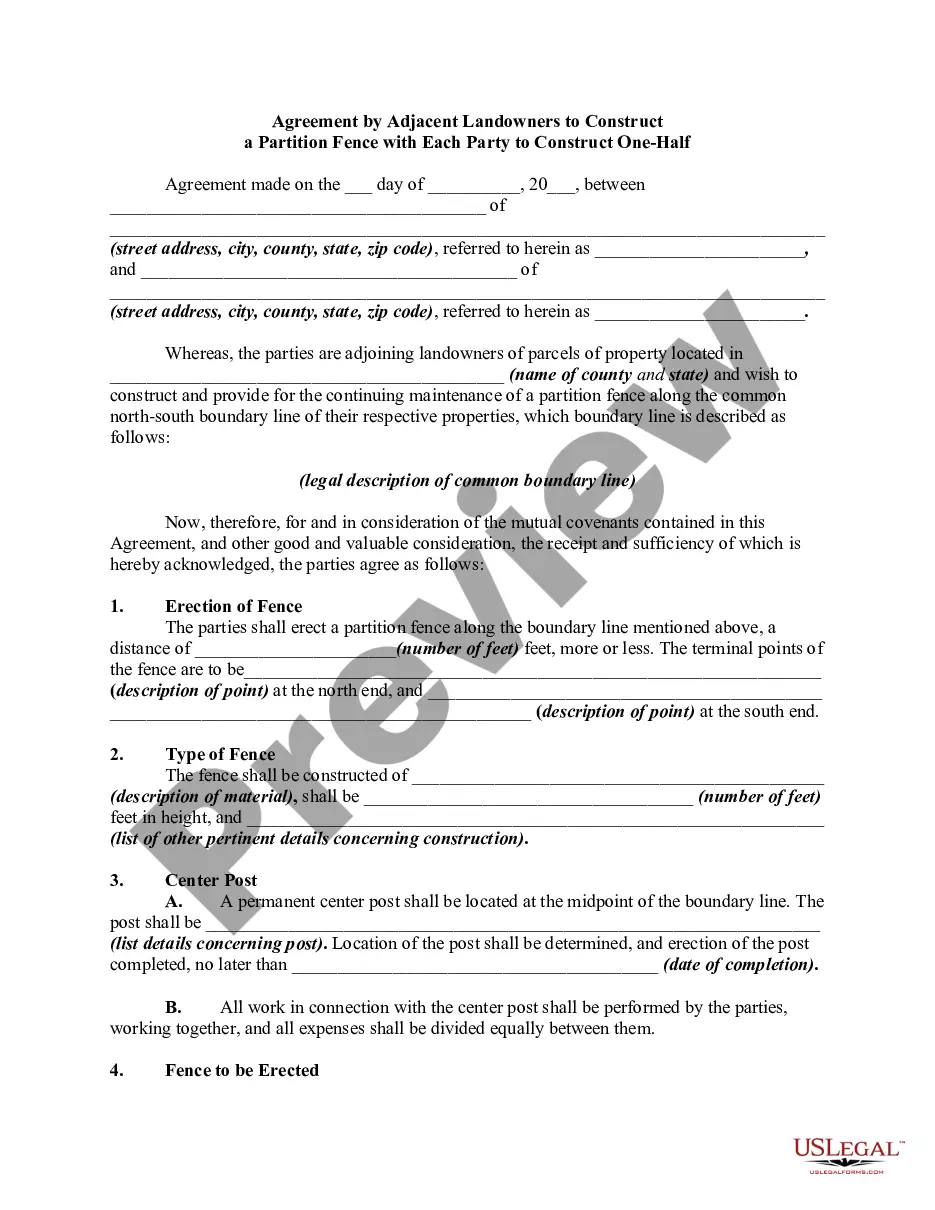
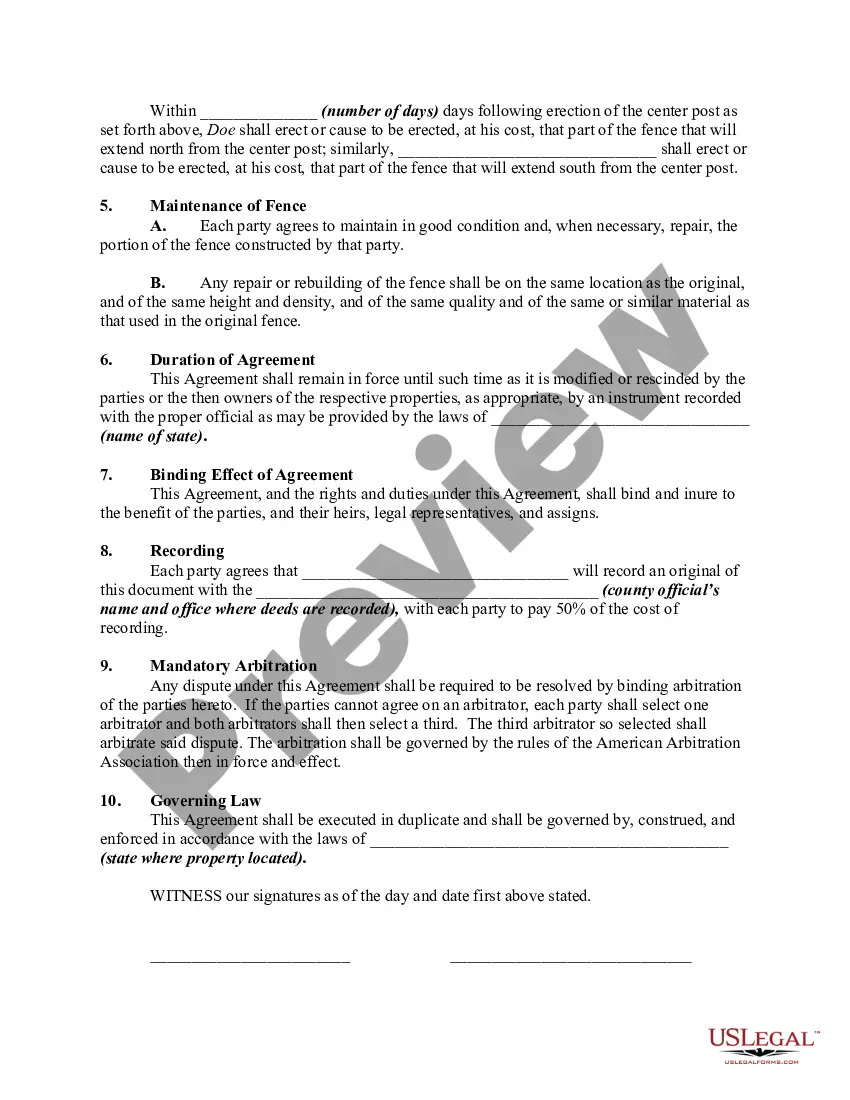
How to fill out Agreement By Adjacent Landowners To Construct A Partition Fence With Each Party To Construct One-Half?
It’s clear that you cannot transform into a legal expert instantly, nor can you swiftly master how to formulate an Agreement Between Neighbors Fence Without Permission without possessing specialized knowledge.
Compiling legal documents is a lengthy endeavor that necessitates specific education and abilities. Therefore, why not entrust the development of the Agreement Between Neighbors Fence Without Permission to the professionals.
With US Legal Forms, one of the most extensive collections of legal templates, you can access everything from judicial papers to templates for internal communication.
You can revisit your forms from the My documents tab at any time. If you’re an existing customer, you can simply Log In, and find and download the template from the same section.
No matter the purpose of your documentation—whether it’s financial, legal, or personal—our platform has you covered. Experience US Legal Forms today!
- Locate the form you need by utilizing the search bar at the top of the webpage.
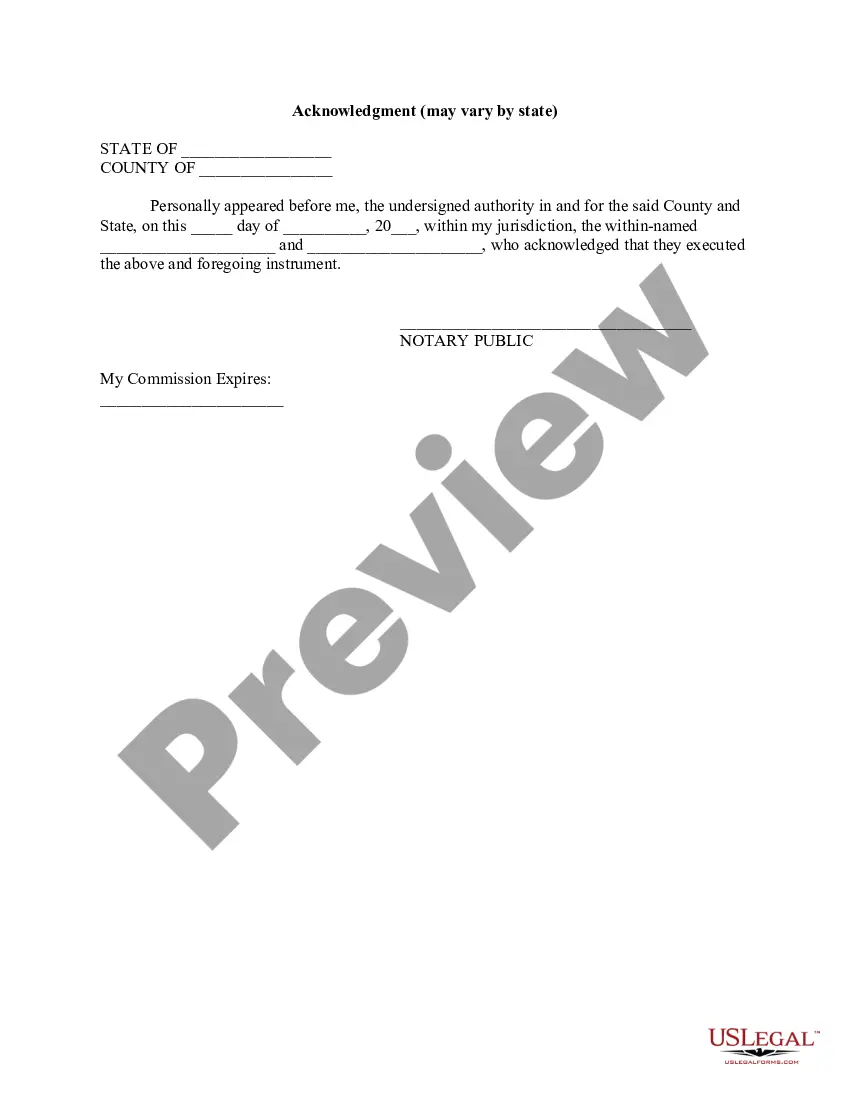
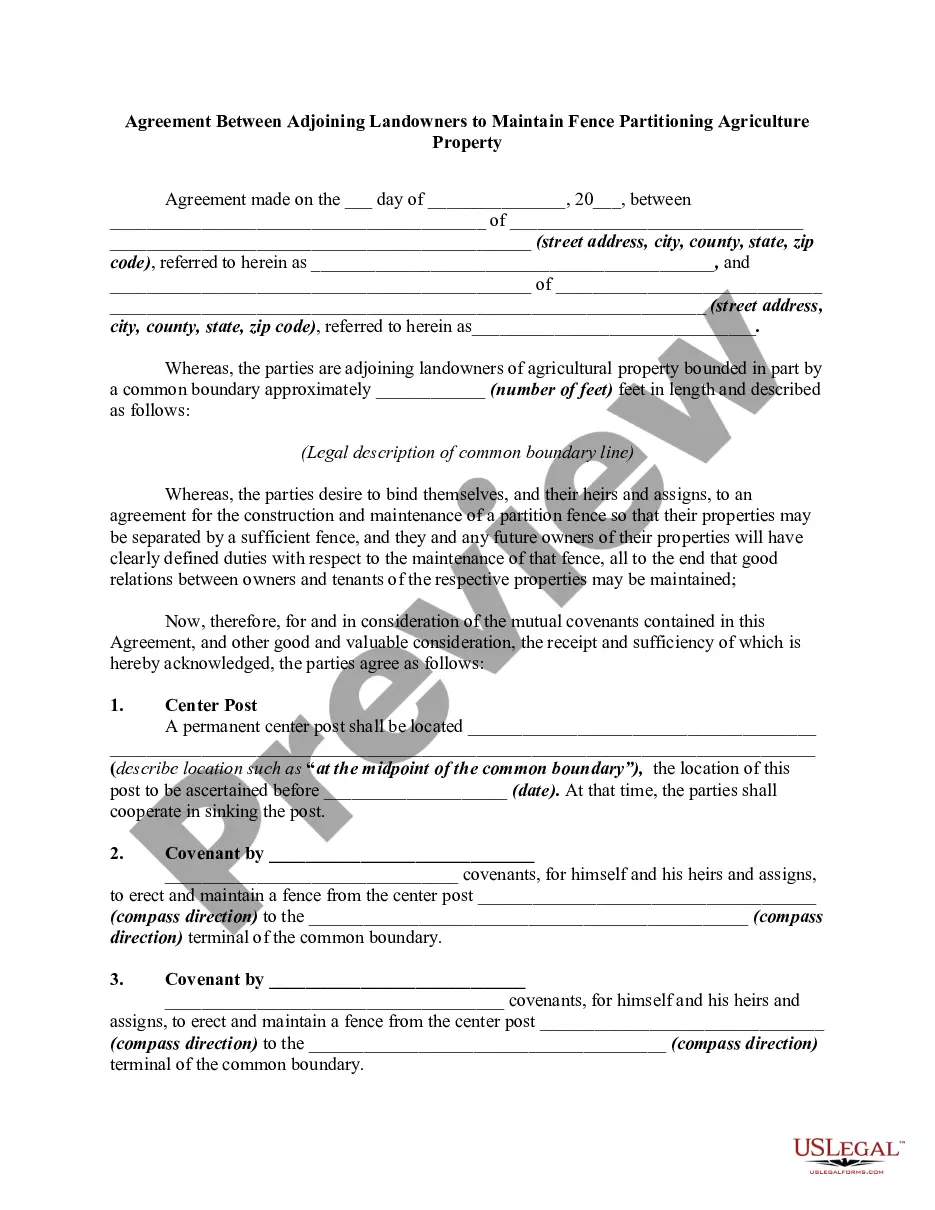
- Preview it (if this option is available) and examine the accompanying description to determine if the Agreement Between Neighbors Fence Without Permission is what you seek.
- Restart your search if you require any additional form.
- Create a complimentary account and select a subscription plan to acquire the template.
- Select Buy now. After the payment is successful, you can download the Agreement Between Neighbors Fence Without Permission, fill it out, print it, and send or mail it to the relevant individuals or organizations.
Form popularity
FAQ
Legally, your neighbour should not attach anything to your fence without your consent. Addressing this issue is crucial to avoid complications due to the Agreement between neighbors fence without permission. Initiating a friendly conversation will usually clear up misunderstandings and maintain a positive relationship.
Your neighbour should not hang items on your fence without your permission, as it can infringe on your property rights. The Agreement between neighbors fence without permission often leads to conflicts, so it’s essential to politely set boundaries. Open dialogue can prevent these situations from escalating.
You can check your property boundaries to figure out if a fence belongs to you or your neighbor. Look for physical markers, like survey pins, or review your land survey documents. It’s helpful to discuss this openly with your neighbor to reach a mutual agreement regarding the fence without permission, ensuring both parties are clear on ownership.
The simple answer to this one is no. If you're the fence owner, your neighbour cannot attach anything to the fence without permission.
The Importance of Asking for Permission When you attach something to a fence without the owner's permission, you could technically be considered trespassing or even committing criminal damage.
A spite fence is a fence (whether a division fence or otherwise) built maliciously, with the sole purpose or intent of annoying, injuring, or spiting an adjoining owner (commonly a neighbor). For example, a spite fence might block the neighbor's view or obstruct the passage and enjoyment of light or air.
Fence Placement Fences can be placed on the property line or attached to a neighbor's fence only with the neighbor's written consent. Otherwise fences should be placed six inches to one foot away from the property line to avoid disputes in the future.
Fences have a maximum height of six feet in residential areas, which is lowered to four feet for fences in the front yard. Additionally, if you plan to use the land for agricultural purposes, the fence has to be at least four feet and two inches high.