Adverse Possession Requirements In California
Description
Get your form ready online
Our built-in tools help you complete, sign, share, and store your documents in one place.
Make edits, fill in missing information, and update formatting in US Legal Forms—just like you would in MS Word.
Download a copy, print it, send it by email, or mail it via USPS—whatever works best for your next step.
Sign and collect signatures with our SignNow integration. Send to multiple recipients, set reminders, and more. Go Premium to unlock E-Sign.
If this form requires notarization, complete it online through a secure video call—no need to meet a notary in person or wait for an appointment.
We protect your documents and personal data by following strict security and privacy standards.

Make edits, fill in missing information, and update formatting in US Legal Forms—just like you would in MS Word.

Download a copy, print it, send it by email, or mail it via USPS—whatever works best for your next step.

Sign and collect signatures with our SignNow integration. Send to multiple recipients, set reminders, and more. Go Premium to unlock E-Sign.

If this form requires notarization, complete it online through a secure video call—no need to meet a notary in person or wait for an appointment.

We protect your documents and personal data by following strict security and privacy standards.
Looking for another form?





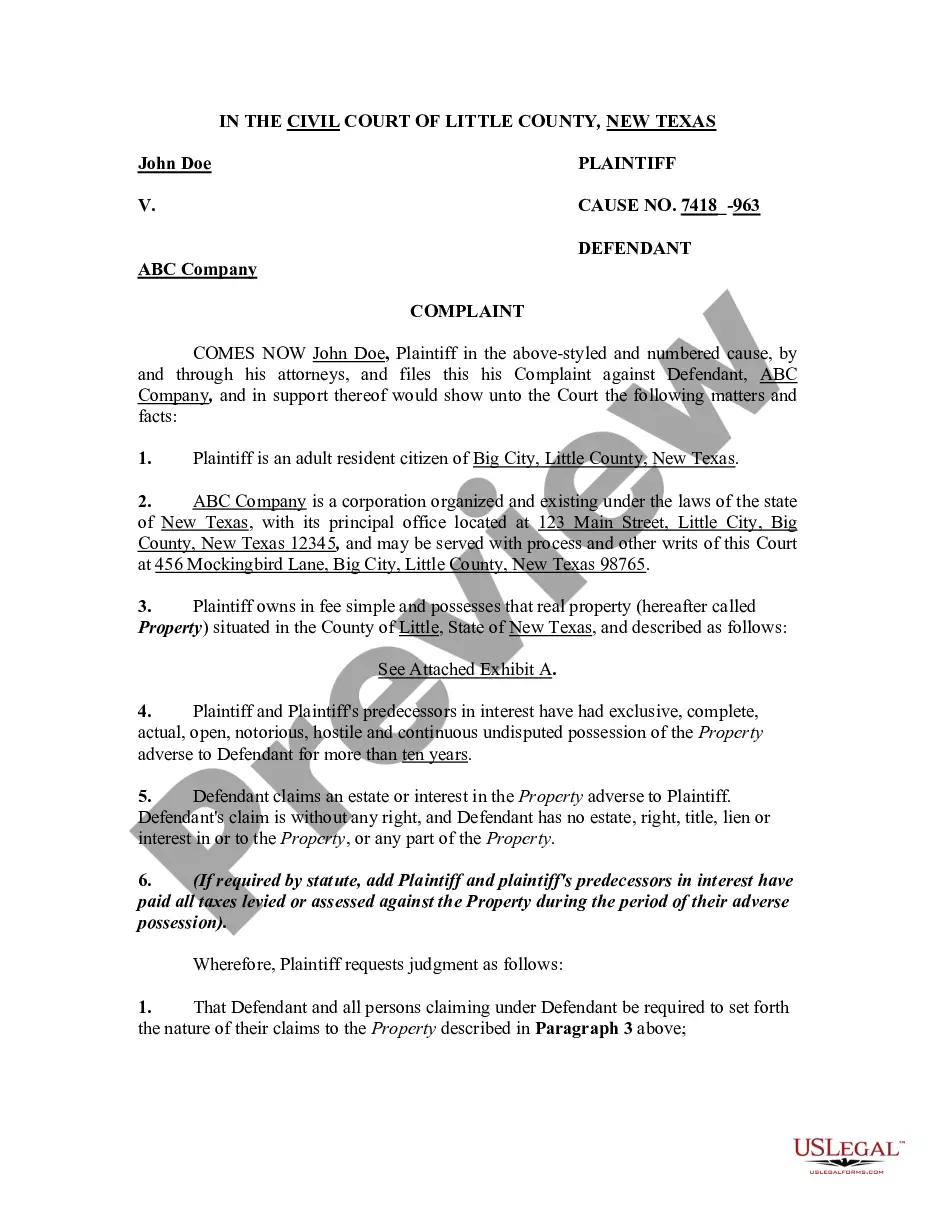
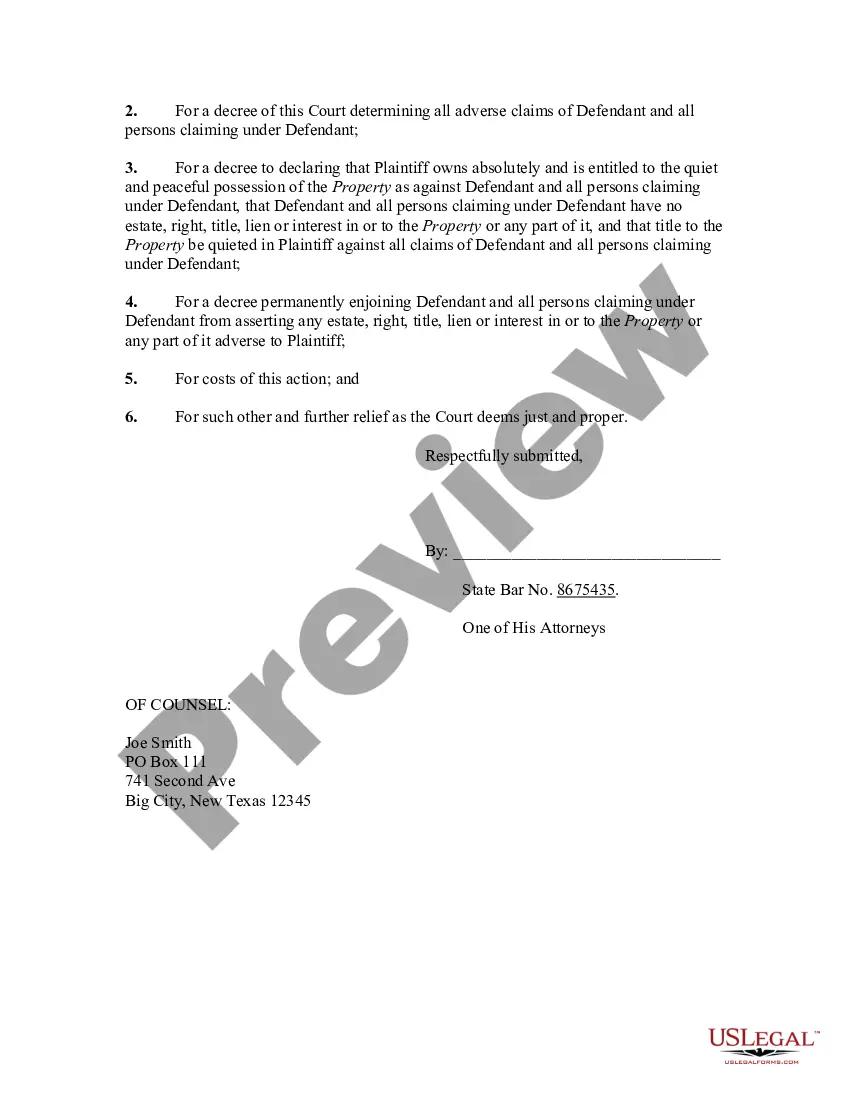
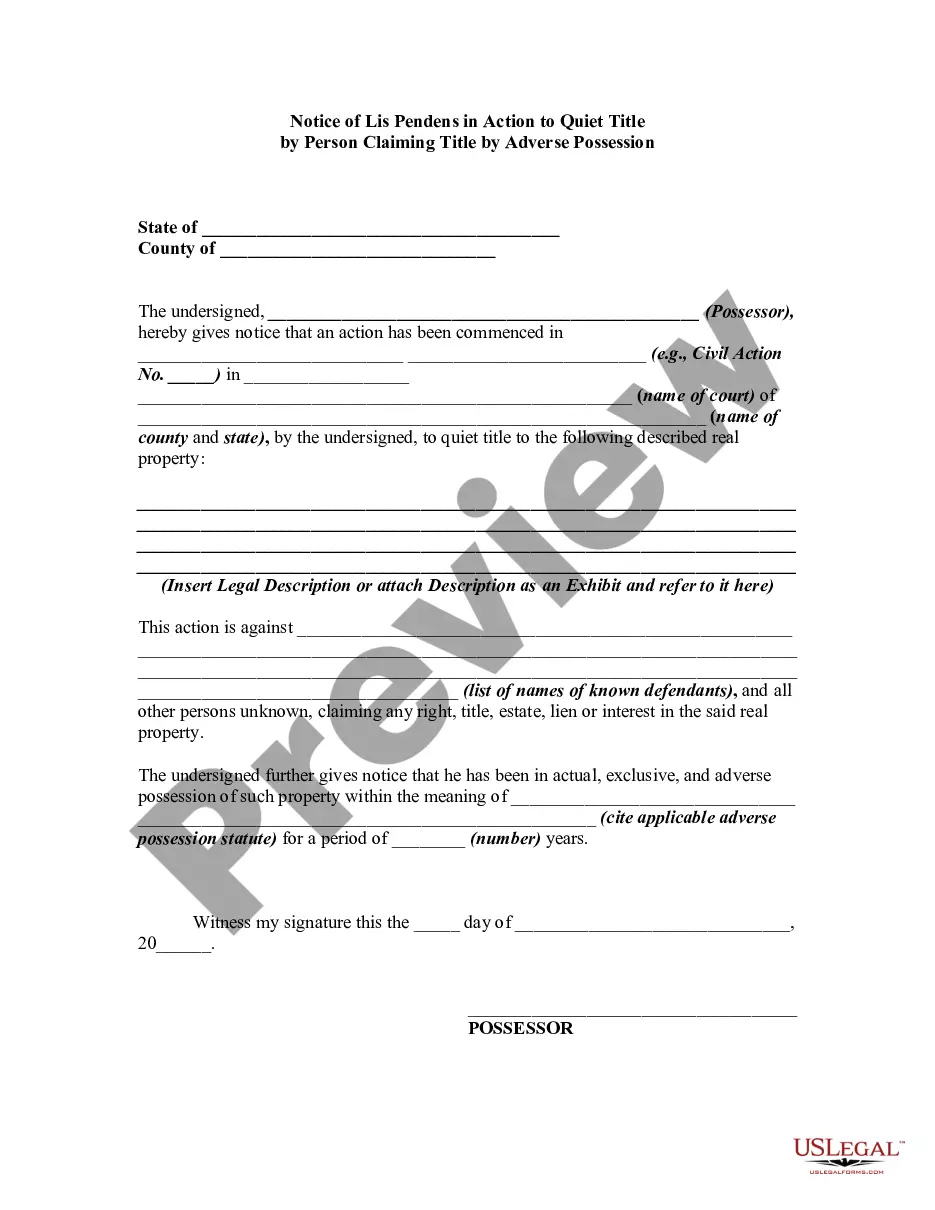
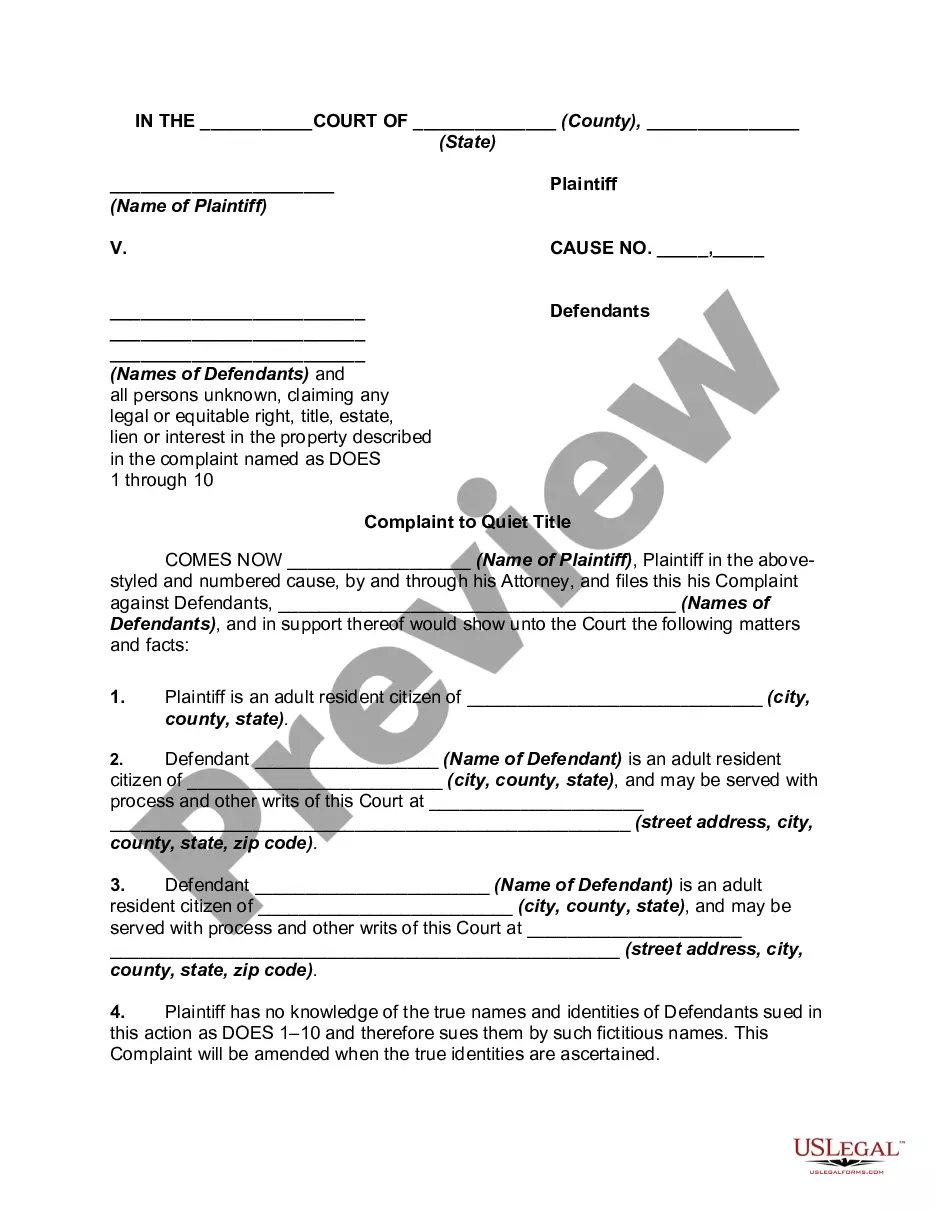
How to fill out Complaint To Quiet Title By Person Claiming Adverse Possession - Squatters Rights?
The Adverse Possession Criteria In California that you see on this page is a versatile legal template crafted by skilled lawyers in accordance with federal and state laws and regulations.
For over 25 years, US Legal Forms has offered individuals, companies, and lawyers with more than 85,000 validated, state-specific documents for any business and personal situation. It’s the quickest, easiest, and most reliable way to acquire the paperwork you require, as the service ensures bank-level data security and anti-malware protection.
Subscribe to US Legal Forms to have confirmed legal templates for all of life’s situations available to you.
- Search for the document you need and examine it.
- Select a pricing plan that fits you and create an account. Use PayPal or a credit card to make a quick payment. If you already have an account, Log In and check your subscription to move forward.
- Choose the format you desire for your Adverse Possession Criteria In California (PDF, Word, RTF) and download the document to your device.
- Print the template to complete it manually. Alternatively, use an online multifunctional PDF editor to quickly and accurately fill out and sign your form with a valid signature.
- Utilize the same document again whenever you need. Access the My documents tab in your profile to redownload any previously saved documents.
Form popularity
FAQ
In California, ownership by adverse possession can be gained through a legal process that requires you to meet specific criteria. You must show you have occupied the property for five continuous years, have been using it openly, and possess it without the owner's permission. Other factors, such as paying property taxes, are also considered essential. Researching the adverse possession requirements in California will guide you to ensure you fulfill all necessary criteria.
In California, a user of land may establish a prescriptive easement by proving that his or her use of another's land was: (1) continuous and uninterrupted for five years; (2) open and notorious; and (3) hostile. The first two requirements are relatively straightforward.
To prevent a claim of right through adverse possession, you can take some precautions to help protect your property, such as: Clearly marking the boundary lines. Walking your property lines to check for any signs of trespassing. Installing ?No Trespassing? signs to deter unwanted visitors.
Welcome to Adverse Possession! First, we'll introduce the basic concept of adverse possession, and then we'll survey the elements, using the (hopefully) helpful mnemonic CHOSE?you need possession that is Continuous; Hostile; Open and notorious; for the Statutory period; and Exclusive. See Jarvis v. Gillespie, 587 A.
Regular property inspections can alert the true owner to any unauthorized use and are always beneficial to ensure your property is unoccupied. Leasing the property can also effectively thwart any claims of adverse possession since it delineates a legal agreement between the owner and occupant.
The adverse possessor must either: Have a defective document which tries (but fails) to transfer title of the property to the possessor (?color of title?), or. The possessor must actually occupy the property with the intent to claim the title to the property (?claim of right?).