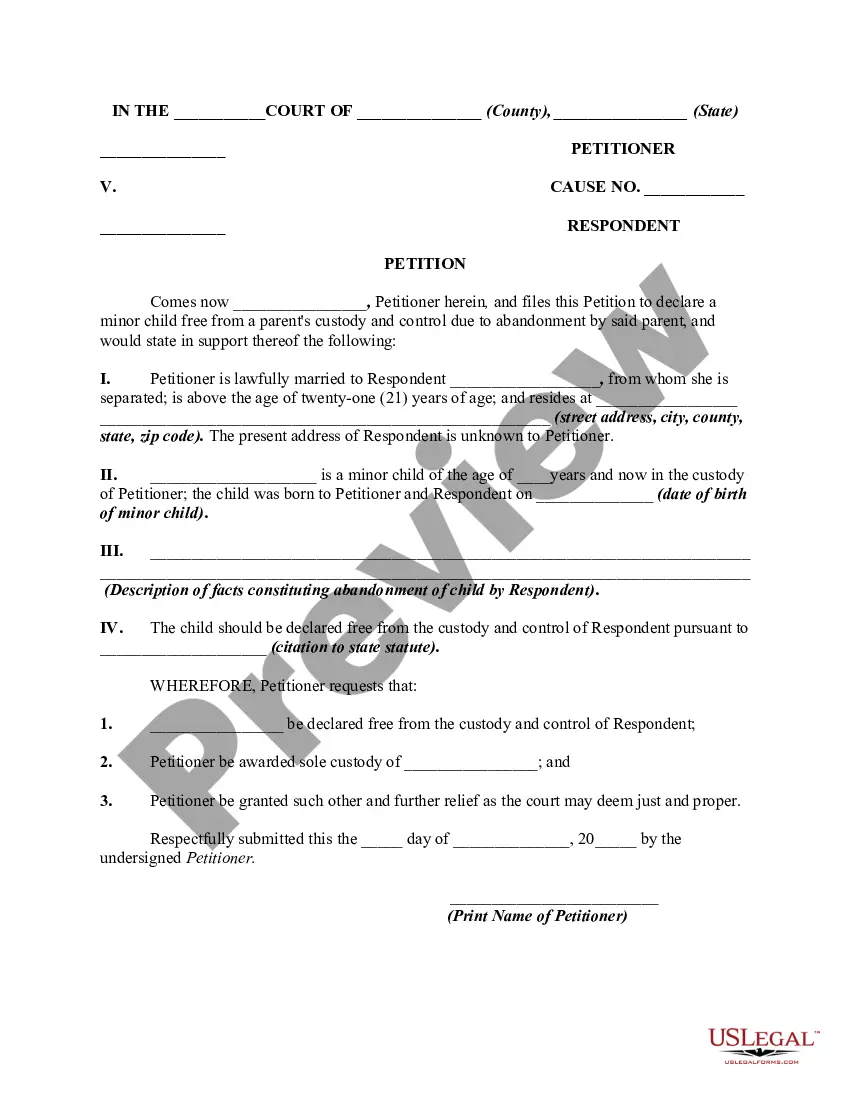
Petition For Child Custody
Description
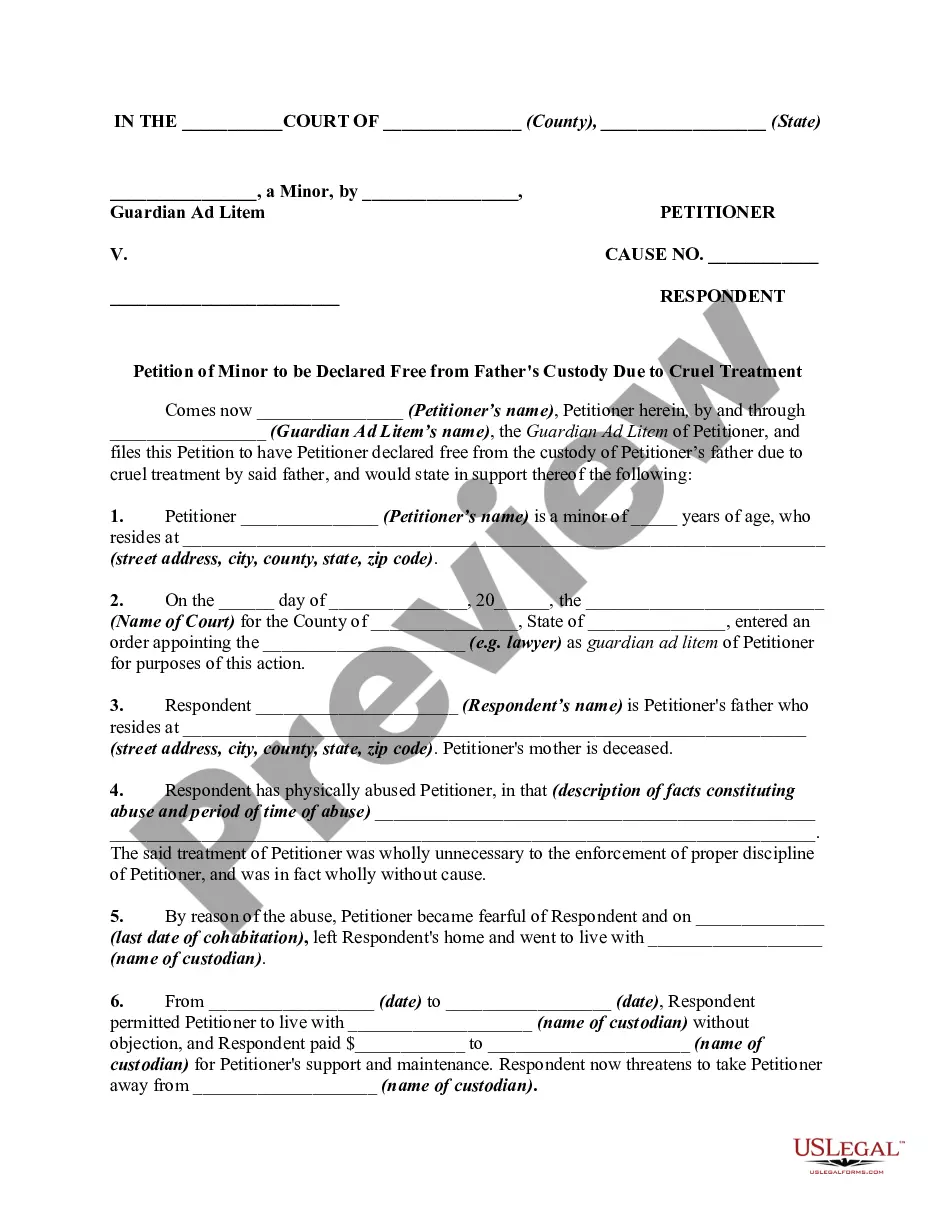
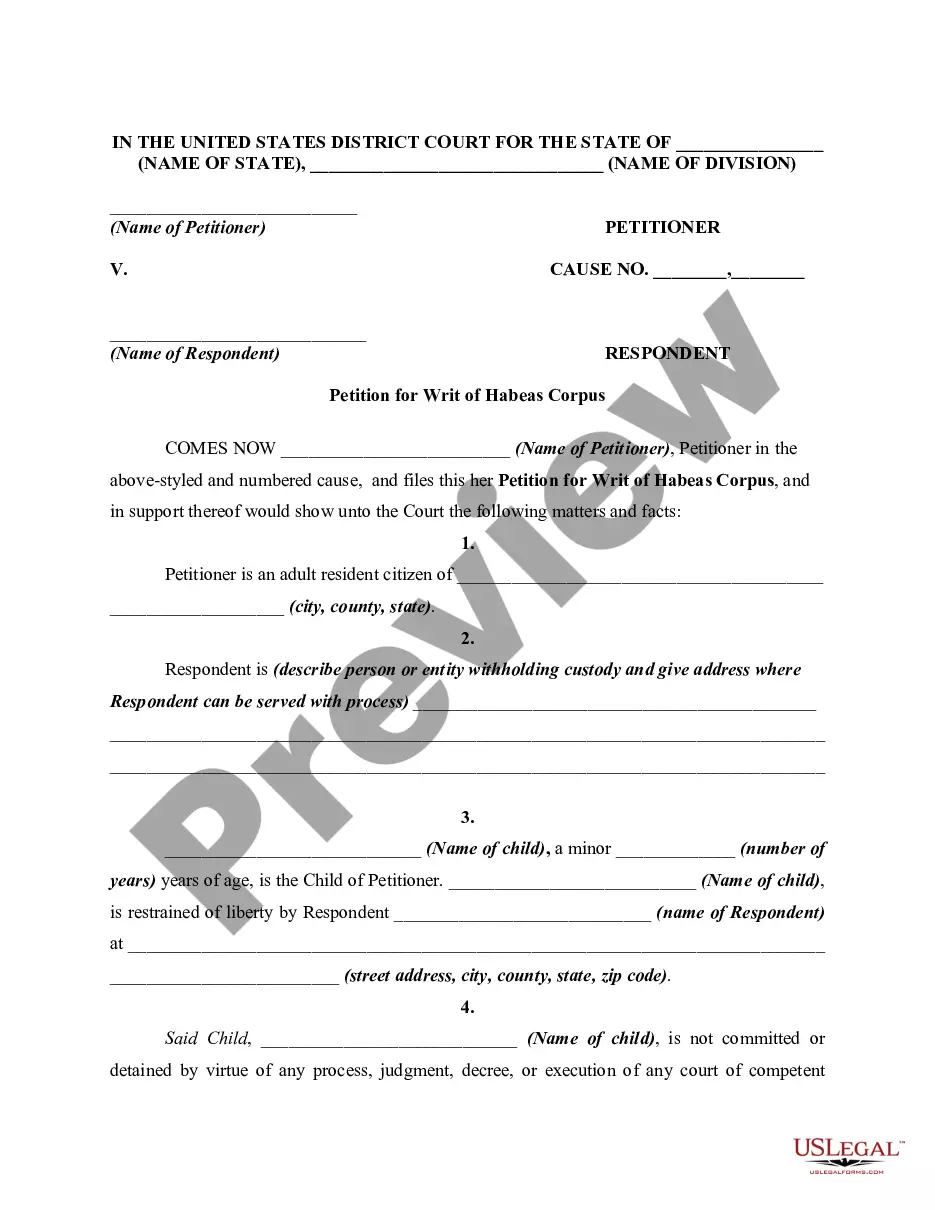
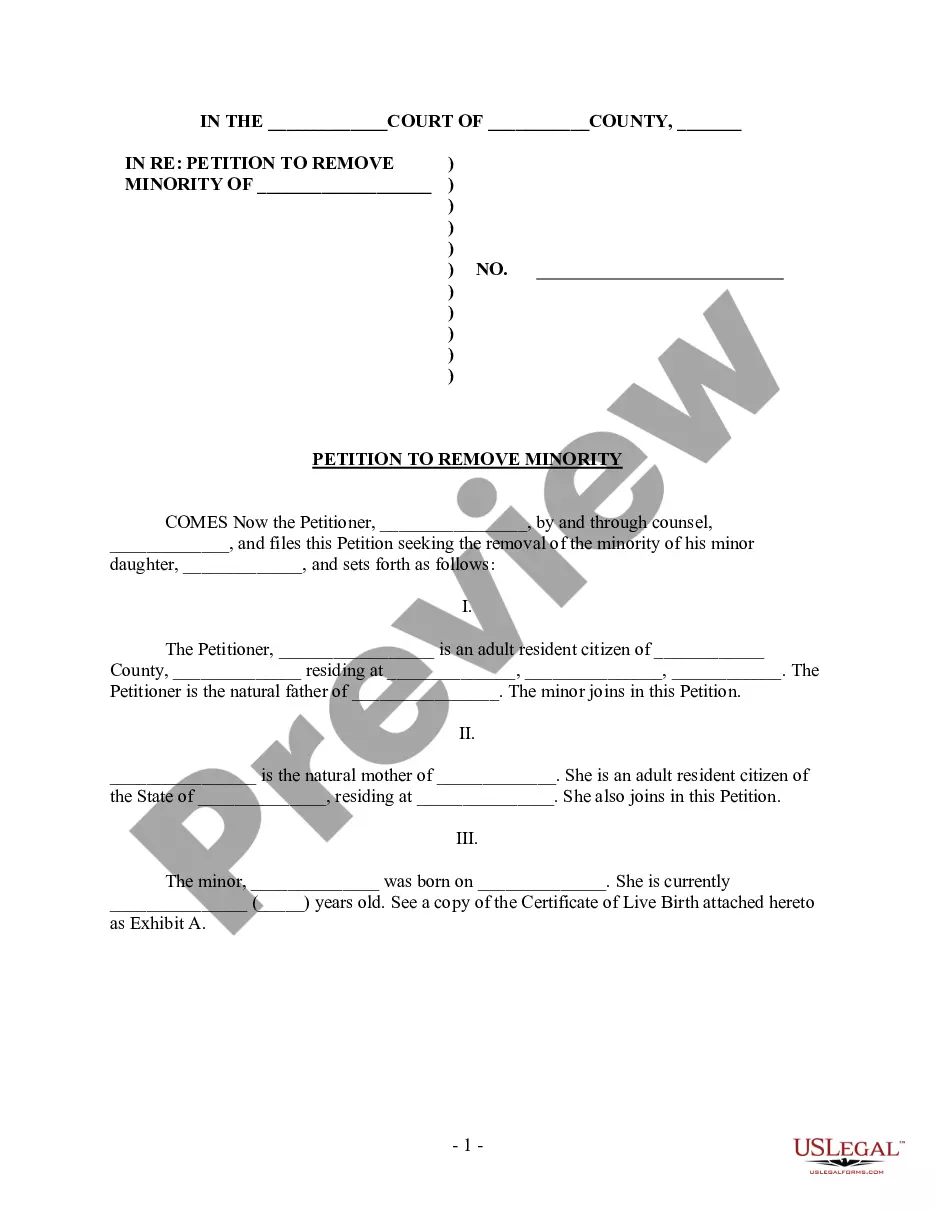
Get your form ready online
Our built-in tools help you complete, sign, share, and store your documents in one place.
Make edits, fill in missing information, and update formatting in US Legal Forms—just like you would in MS Word.
Download a copy, print it, send it by email, or mail it via USPS—whatever works best for your next step.
Sign and collect signatures with our SignNow integration. Send to multiple recipients, set reminders, and more. Go Premium to unlock E-Sign.
If this form requires notarization, complete it online through a secure video call—no need to meet a notary in person or wait for an appointment.
We protect your documents and personal data by following strict security and privacy standards.

Make edits, fill in missing information, and update formatting in US Legal Forms—just like you would in MS Word.

Download a copy, print it, send it by email, or mail it via USPS—whatever works best for your next step.

Sign and collect signatures with our SignNow integration. Send to multiple recipients, set reminders, and more. Go Premium to unlock E-Sign.

If this form requires notarization, complete it online through a secure video call—no need to meet a notary in person or wait for an appointment.

We protect your documents and personal data by following strict security and privacy standards.
Looking for another form?

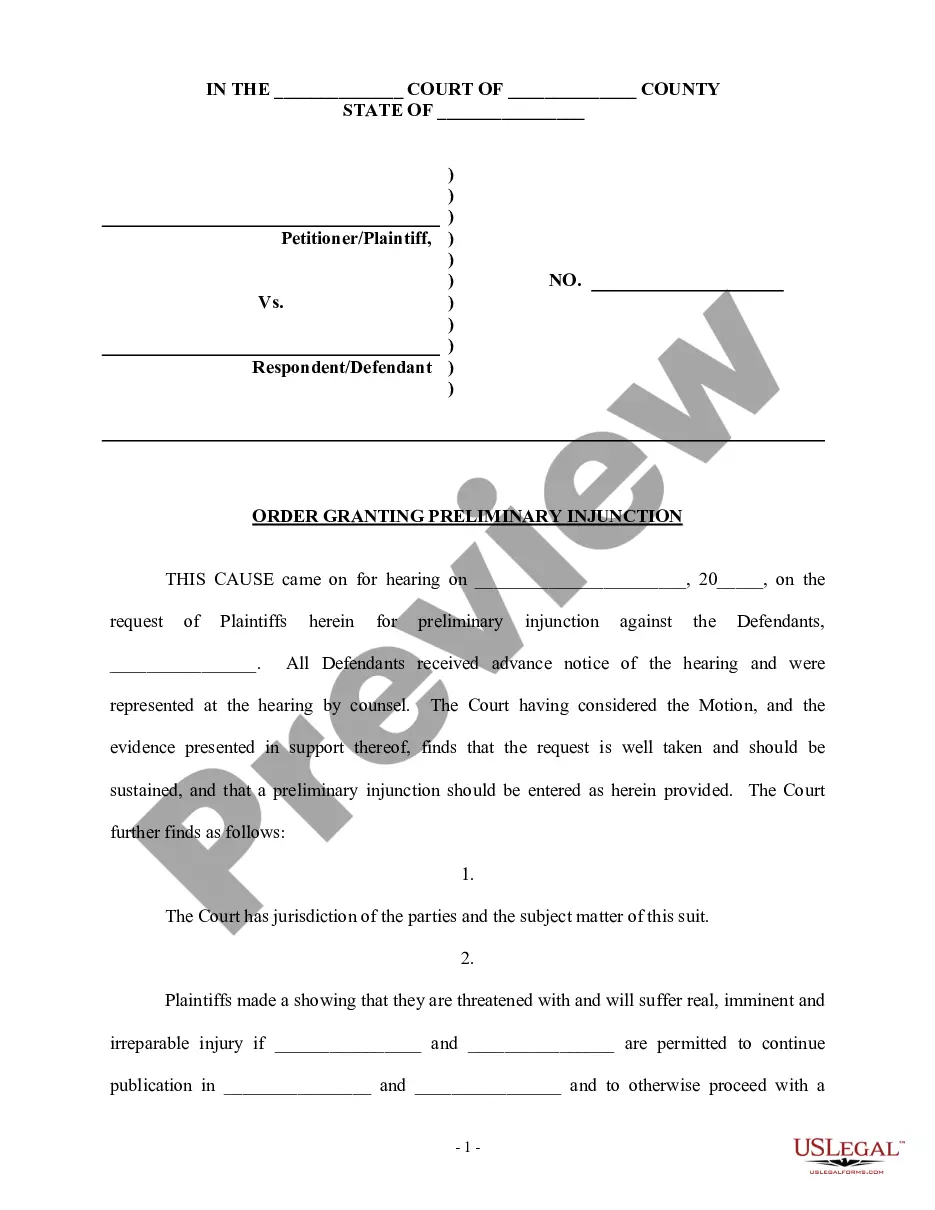




How to fill out Petition To Declare Child Free From Parent's Custody And Control For Abandonment - Release Of Parental Rights?
It’s widely known that you cannot transform into a legal expert in a single day, nor can you swiftly learn how to prepare a Petition For Child Custody without possessing a specialized skill set.
Compiling legal paperwork is a labor-intensive task that demands specific education and capabilities. So why not entrust the formulation of the Petition For Child Custody to the experts.
With US Legal Forms, one of the most extensive legal document libraries, you can discover everything from court documents to templates for in-office communications.
If you require a different template, restart your search.
Sign up for a free account and choose a subscription plan to purchase the template. Select Buy now. Once the transaction is completed, you can download the Petition For Child Custody, fill it out, print it, and send or mail it to the specified individuals or organizations.
- We understand how crucial compliance and adherence to federal and state laws and regulations are.
- That’s why, on our site, all forms are location-specific and up-to-date.
- Here’s how to get started with our platform and acquire the form you require in just minutes.
- Locate the form you need by utilizing the search bar at the top of the page.
- Preview it (if this option is available) and review the accompanying description to determine if the Petition For Child Custody is what you are looking for.
Form popularity
FAQ
One of the biggest mistakes in a custody battle is not adequately preparing a petition for child custody. Failing to gather essential documents and evidence can weaken your case. It's crucial to understand what the court looks for when making custody decisions. By preparing thoroughly, you can demonstrate your capability as a parent.
How do I ask the court for custody or visitation of my child? Anyone can file a custody or visitation petition in Family Court. The parent must name the other parent on the petition and explain the reasons why he/she should have custody. Either parent in a custody or visitation petition has the right to an attorney.
New Mexico courts may grant a parent sole custodial rights when clear and convincing evidence demonstrates: Incarceration; Abandonment; Domestic abuse; Drug or alcohol abuse; Relocation that makes joint legal custody impossible; CYFD has substantiated abuse or neglect charges against a parent;
To obtain sole legal and primary physical custody with limited or supervised visitation, a Connecticut parent would have to prove the other party is completely unfit to parent. Potential issues that may demonstrate an inability to raise a child include: Substance abuse problems. A history of violent criminal offenses.
A New York court can make orders about the child's custody only until the child is 18 years old. The Court gives custody based on what is best for the child, this is called the "best interest of the child." If there is no court order, then both parents have equal rights to physical and legal custody of the child.
Courts in New Mexico very rarely award full custody to one parent unless there is a compelling, proven, verified reason to do so. It is also up to the parent requesting full custody to convince the judge that the other parent is either unfit or a danger to the child.