Discovery In Criminal Case Without Evidence
Description
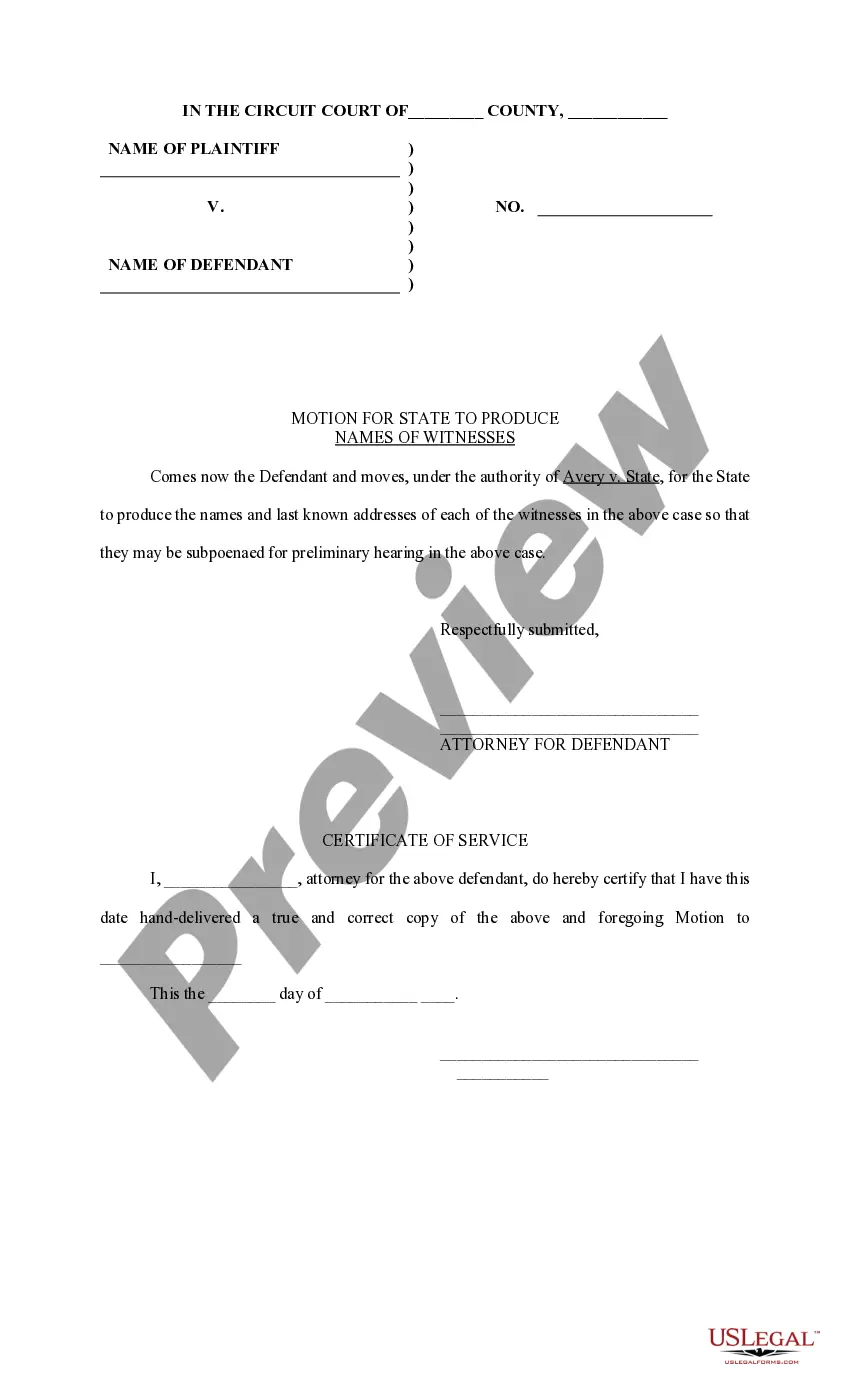
Get your form ready online
Our built-in tools help you complete, sign, share, and store your documents in one place.
Make edits, fill in missing information, and update formatting in US Legal Forms—just like you would in MS Word.
Download a copy, print it, send it by email, or mail it via USPS—whatever works best for your next step.
Sign and collect signatures with our SignNow integration. Send to multiple recipients, set reminders, and more. Go Premium to unlock E-Sign.
If this form requires notarization, complete it online through a secure video call—no need to meet a notary in person or wait for an appointment.
We protect your documents and personal data by following strict security and privacy standards.

Make edits, fill in missing information, and update formatting in US Legal Forms—just like you would in MS Word.

Download a copy, print it, send it by email, or mail it via USPS—whatever works best for your next step.

Sign and collect signatures with our SignNow integration. Send to multiple recipients, set reminders, and more. Go Premium to unlock E-Sign.

If this form requires notarization, complete it online through a secure video call—no need to meet a notary in person or wait for an appointment.

We protect your documents and personal data by following strict security and privacy standards.
Looking for another form?

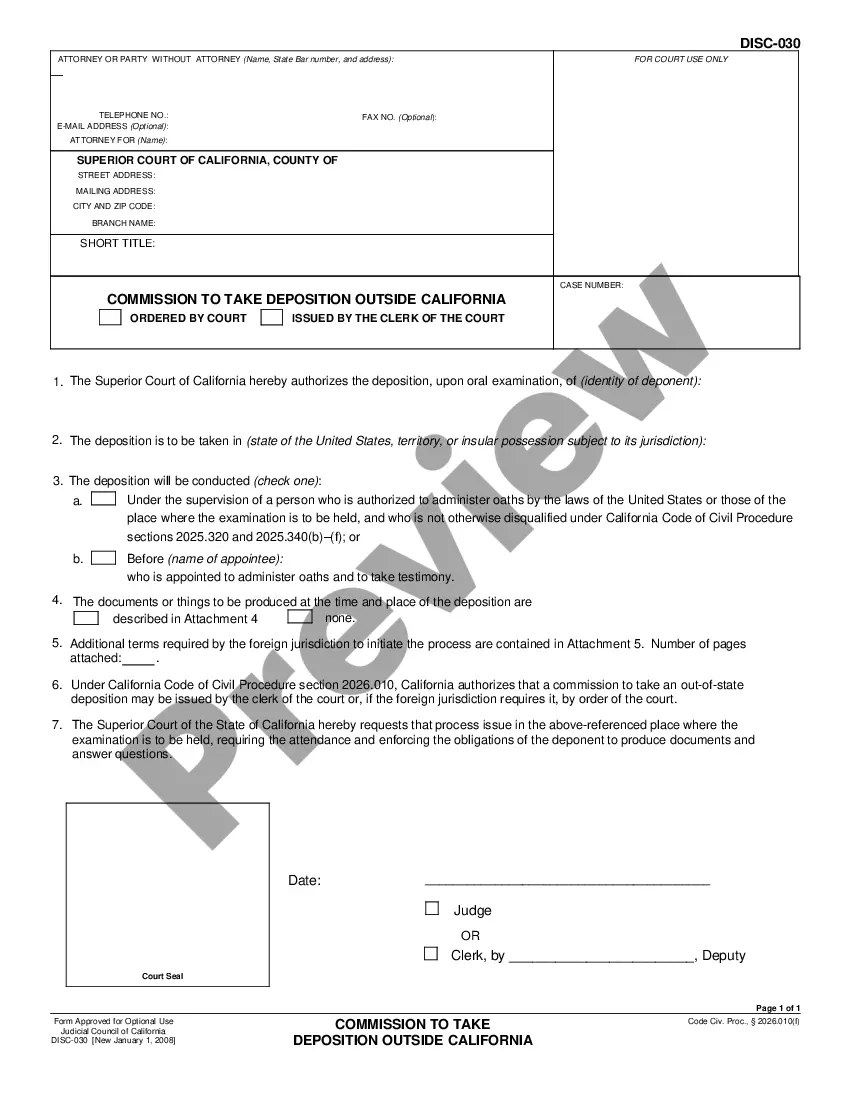






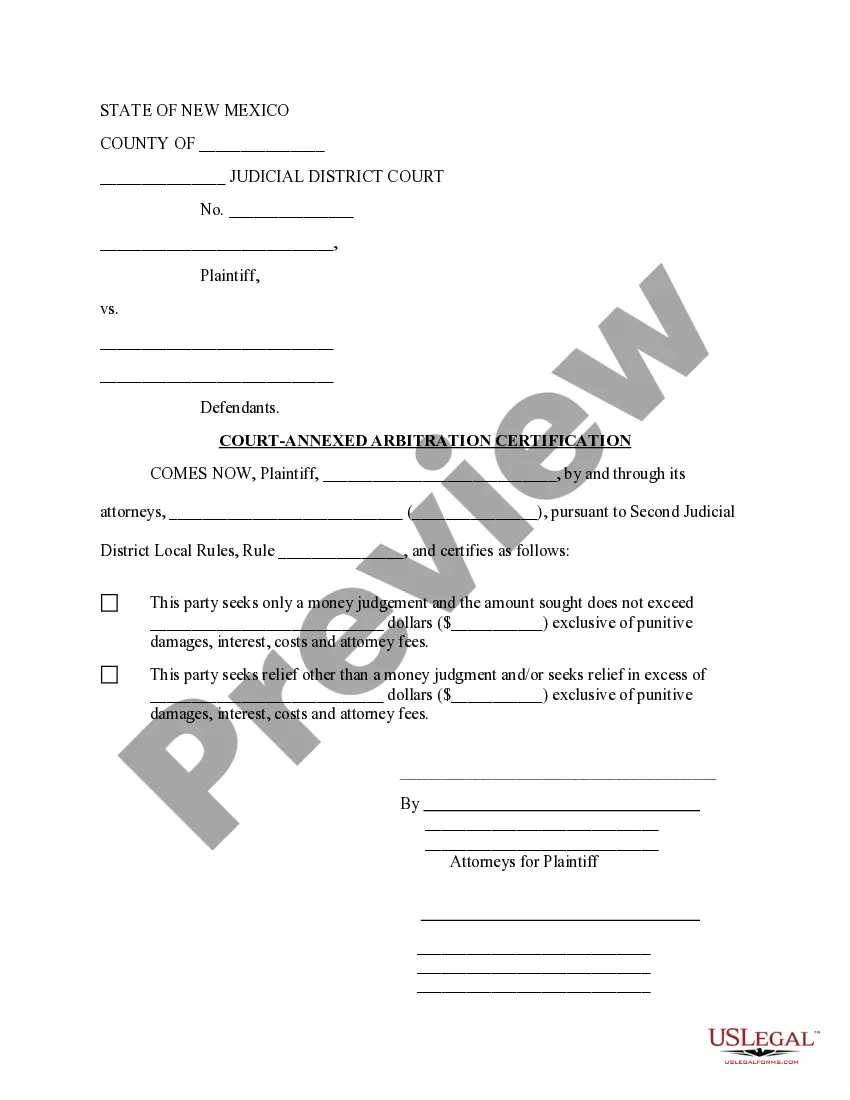
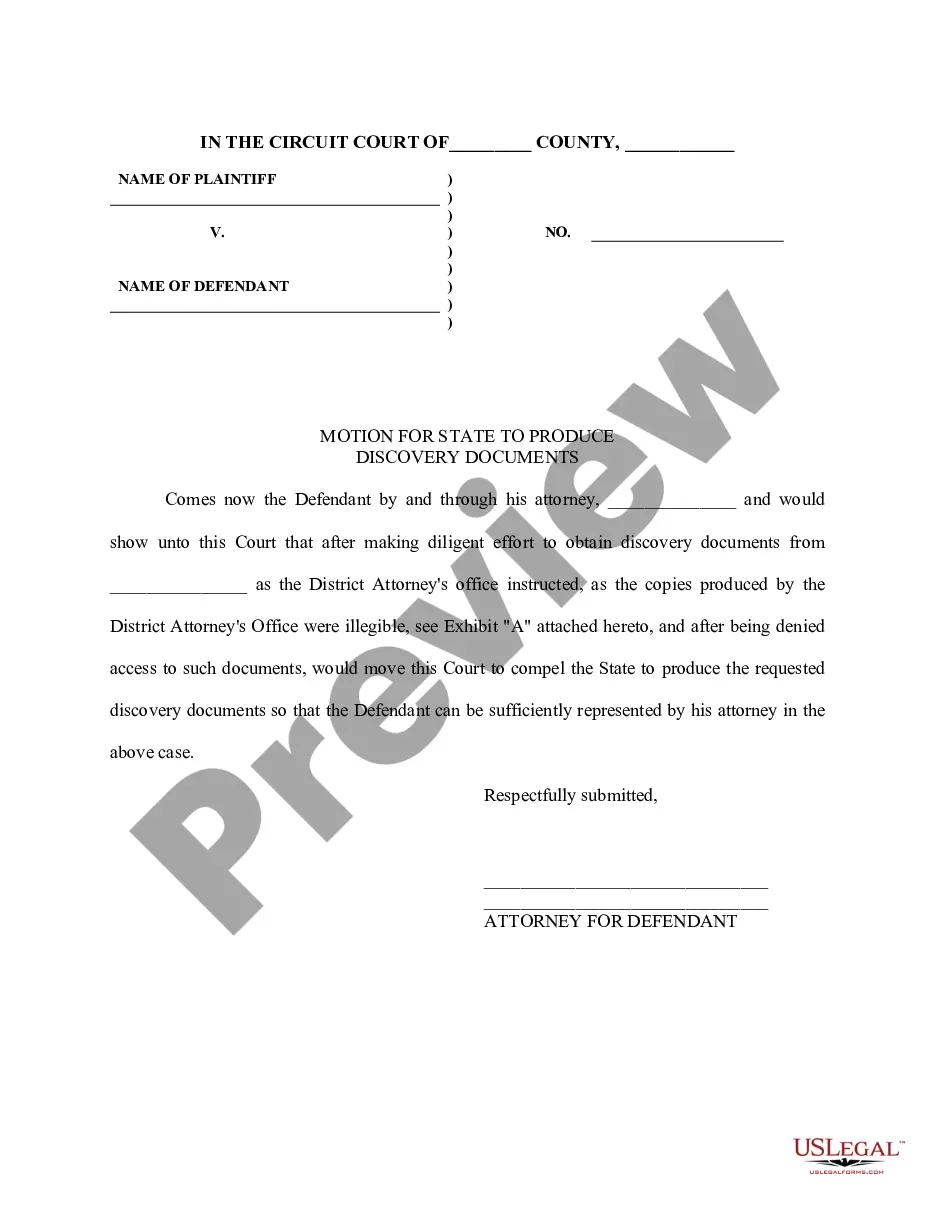
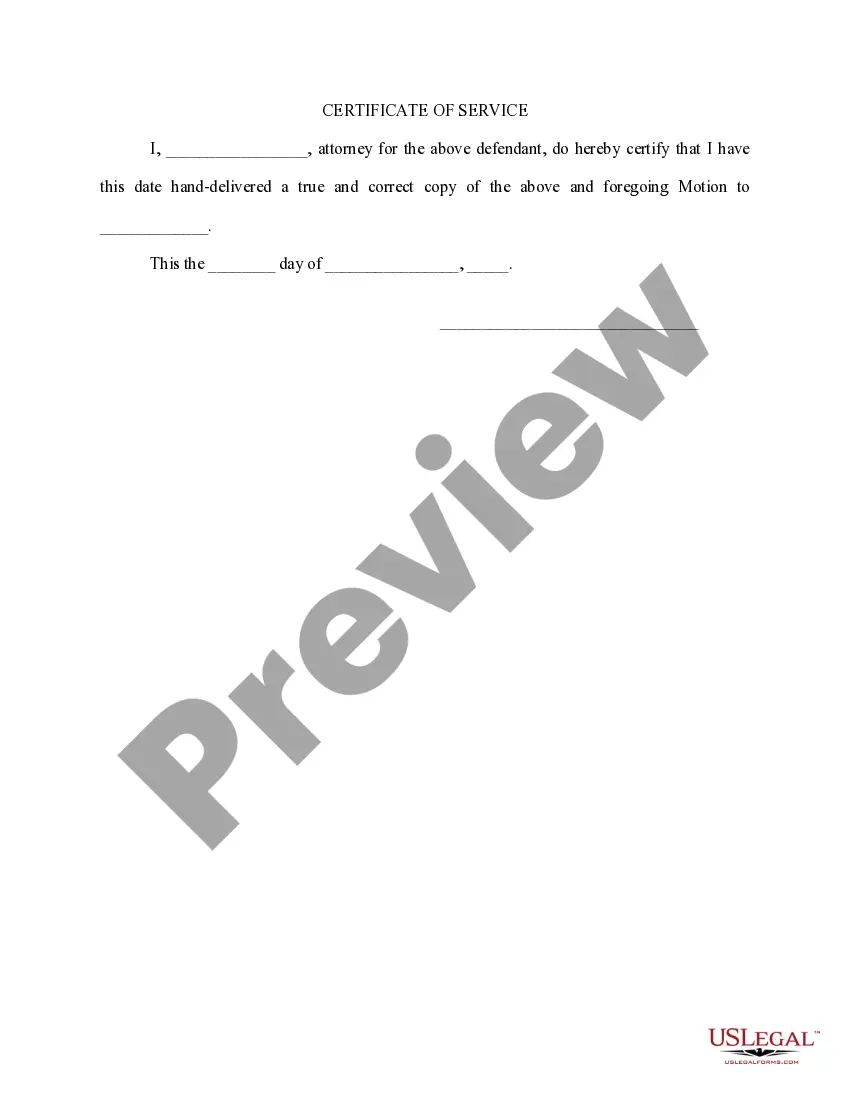
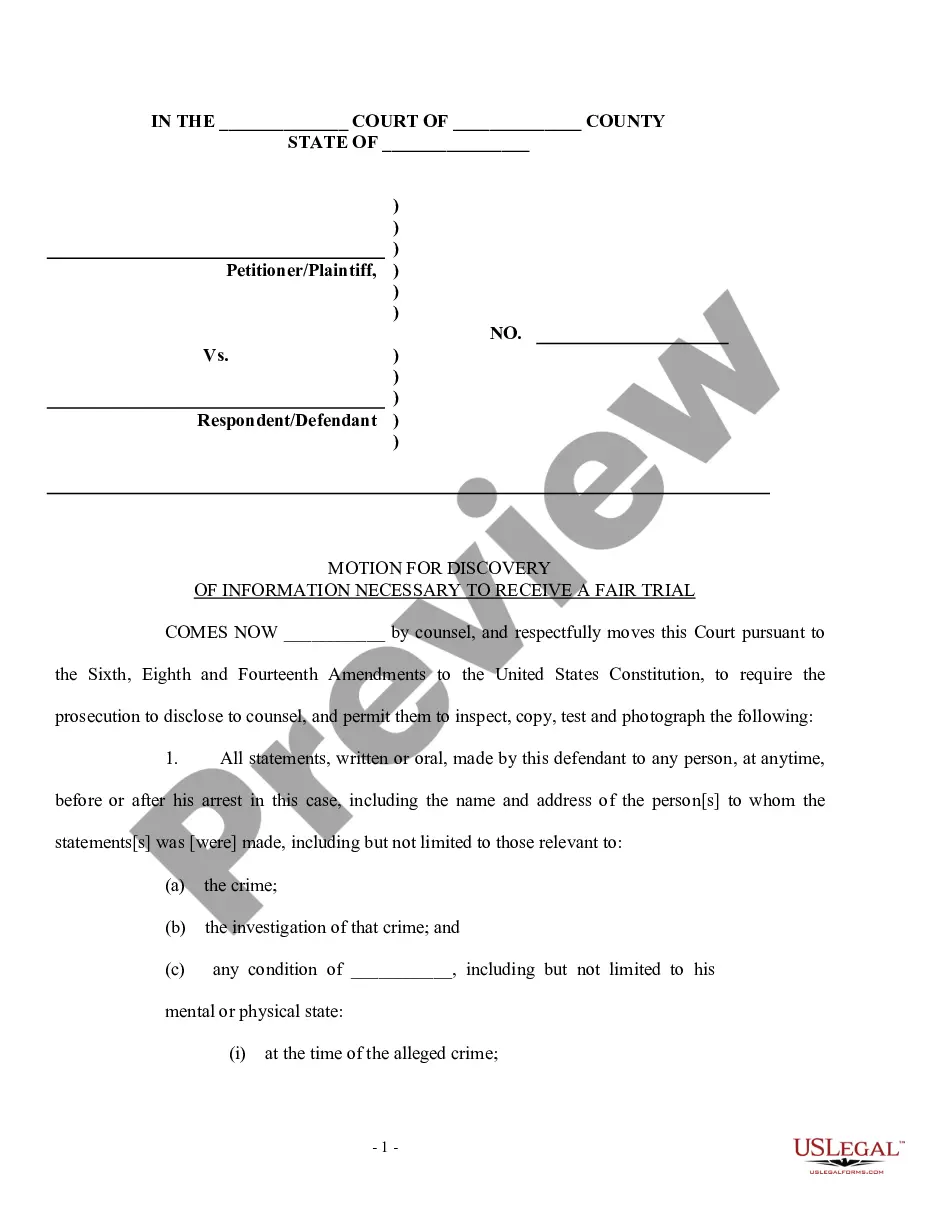
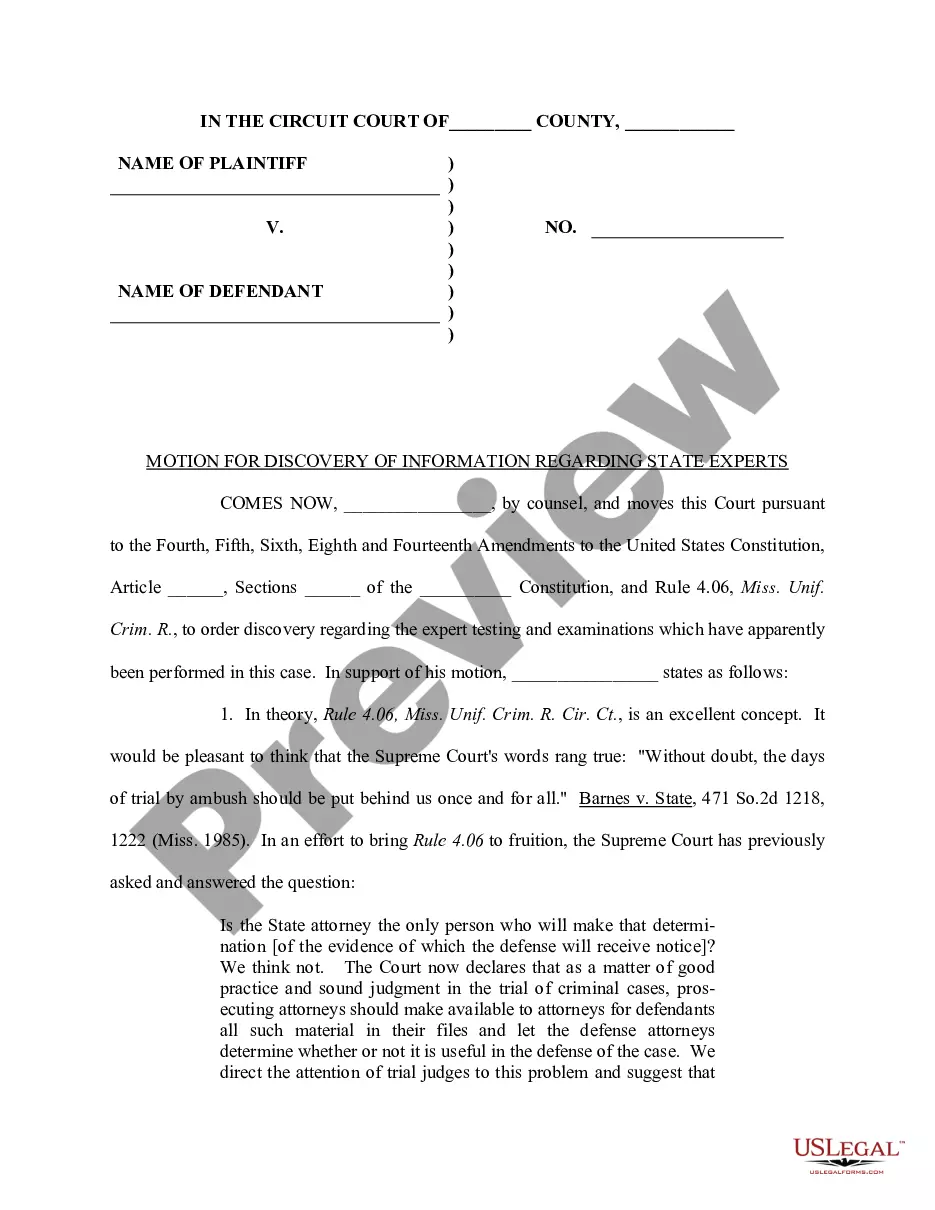
How to fill out Motion For State To Produce Discovery Document?
It’s clear that you cannot transform into a legal authority instantaneously, nor can you comprehend how to swiftly compose Discovery In Criminal Case Without Evidence without possessing a specialized skill set.
Drafting legal documents is a laborious task that necessitates particular training and expertise.
So why not entrust the creation of the Discovery In Criminal Case Without Evidence to the professionals.
You can regain access to your documents anytime from the My documents section. If you’re an existing client, you can effortlessly Log In and locate and download the template from the same section.
Regardless of the intent of your documents—be it financial, legal, or personal—our platform caters to all your needs. Explore US Legal Forms today!
- Utilize the search feature located at the top of the page to find the form you require.
- Review it (if this option is available) and consult the accompanying description to determine if Discovery In Criminal Case Without Evidence meets your needs.
- If you need a different template, begin your search anew.
- Create a free account and select a subscription plan to acquire the template.
- Click Buy now. Once the payment is completed, you can obtain the Discovery In Criminal Case Without Evidence, complete it, print it, and dispatch it to the designated individuals or organizations.
Form popularity
FAQ
The three types of discovery in a criminal case include interrogatories, requests for production, and depositions. Interrogatories involve written questions that one party sends to another, requiring answers under oath. Requests for production require the sharing of documents and evidence relevant to the case, while depositions involve sworn testimony from witnesses. Understanding these types of discovery can help you navigate situations involving discovery in a criminal case without evidence.
Yes, charges can be dropped during the discovery phase of a criminal case. This occurs when the prosecution realizes that the evidence is insufficient to support the charges, or if new information emerges that weakens the case. Discovery in a criminal case without evidence can lead to challenges for the prosecution, allowing defense attorneys to advocate for their clients effectively. Utilizing resources like US Legal Forms can help you navigate these complex legal waters.
In the US legal system, a conviction typically requires sufficient evidence to support the charges. The principle of 'innocent until proven guilty' means that the prosecution must present credible evidence. If there is a lack of evidence, such as in cases involving discovery in a criminal case without evidence, it becomes difficult for the prosecution to secure a guilty verdict. Therefore, understanding your rights and options in such situations is crucial.
Requesting discovery without a lawyer can be challenging, but it is possible. You can start by writing a formal request to the prosecutor's office, detailing the specific evidence you seek. Additionally, familiarize yourself with local laws and procedures regarding discovery in criminal cases. The US Legal Forms platform provides resources and templates to help you navigate this process effectively.
In some situations, a person can be found guilty even if there is no concrete evidence. This often occurs when circumstantial evidence, witness testimony, or the defendant's own admissions are used to build a case. The legal system relies on the principle that a jury can conclude guilt based on the totality of the circumstances. Understanding the implications of discovery in a criminal case without evidence is crucial for anyone facing legal challenges.
A) Most important factor in deciding whether to prosecute is not the prosecutor's belief in the guilt of the suspect, but whether there is sufficient evidence for conviction. If prosecutors have strong physical evidence and a number of reliable and believable witnesses, they are quite likely to prosecute.
Disclosure is accomplished through a methodical process called "discovery." Discovery takes three basic forms: written discovery, document production, and depositions.
Discovery reports help you identify categories that are highly-correlated to a defined audience, media, sites, or conversion (floodlight activities) events.
Steps Of The Discovery Process. There are four key actions in the discovery process which include interrogatories, request for documents, request for admissions, and depositions.
A criminal defendant's right to access witnesses and evidence is essentially the right to present a defense. The accused should expect to be heard, present evidence that is material to her defense, compel witness testimony, and counter the evidence presented by the prosecution.