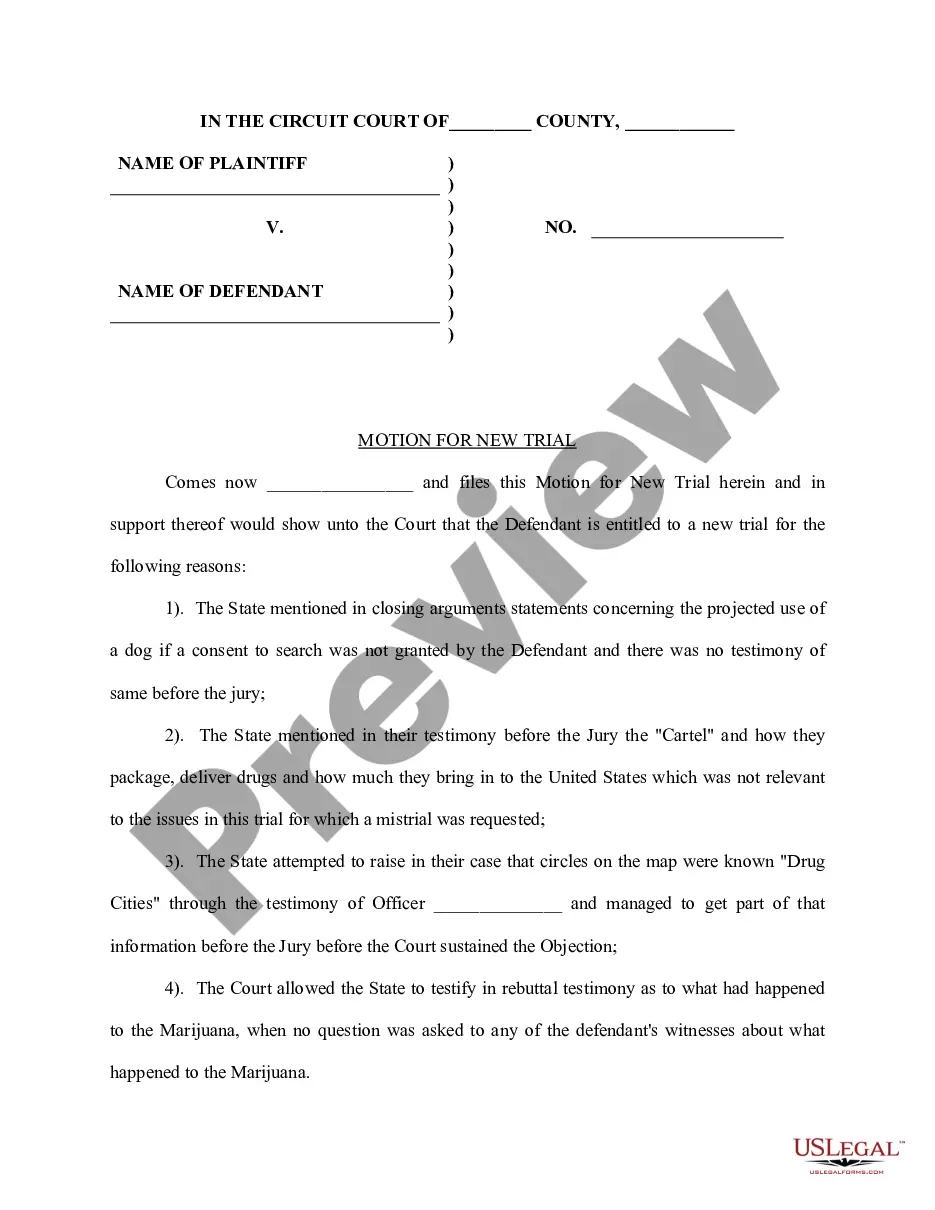
State Court Motion For Clarification
Description
Get your form ready online
Our built-in tools help you complete, sign, share, and store your documents in one place.
Make edits, fill in missing information, and update formatting in US Legal Forms—just like you would in MS Word.
Download a copy, print it, send it by email, or mail it via USPS—whatever works best for your next step.
Sign and collect signatures with our SignNow integration. Send to multiple recipients, set reminders, and more. Go Premium to unlock E-Sign.
If this form requires notarization, complete it online through a secure video call—no need to meet a notary in person or wait for an appointment.
We protect your documents and personal data by following strict security and privacy standards.

Make edits, fill in missing information, and update formatting in US Legal Forms—just like you would in MS Word.

Download a copy, print it, send it by email, or mail it via USPS—whatever works best for your next step.

Sign and collect signatures with our SignNow integration. Send to multiple recipients, set reminders, and more. Go Premium to unlock E-Sign.

If this form requires notarization, complete it online through a secure video call—no need to meet a notary in person or wait for an appointment.

We protect your documents and personal data by following strict security and privacy standards.
Looking for another form?
How to fill out Motion For New Trial?
Locating a reliable source for the most up-to-date and pertinent legal templates is a significant part of navigating bureaucracy.
Selecting the appropriate legal documents demands precision and mindfulness, which clarifies why it’s crucial to obtain samples of State Court Motion For Clarification solely from trustworthy providers, such as US Legal Forms.
Once the form is saved on your device, you can modify it using the editor or print it to fill out manually.
Eliminate the stress involved in your legal paperwork. Explore the extensive US Legal Forms repository to discover legal templates, evaluate their suitability for your situation, and download them instantly.
- Utilize the catalog navigation or search bar to find your template.
- Examine the form’s description to confirm its compliance with your state and county requirements.
- Review the form preview, if available, to verify it is indeed the document you need.
- Return to the search if the State Court Motion For Clarification does not satisfy your criteria and find the correct template.
- If you are confident about the document’s applicability, proceed to download it.
- If you are an existing client, click Log in to verify and access your selected templates in My documents.
- If you don’t possess an account yet, click Buy now to obtain the template.
- Select the pricing plan that best fits your needs.
- Continue to the registration to finalize your acquisition.
- Complete your transaction by choosing a payment method (credit card or PayPal).
- Select the file format for downloading State Court Motion For Clarification.
Form popularity
FAQ
To write a letter for filing a motion in court, start with a clear subject line that states the purpose of your request. Include your contact information, the court's address, and the case information. As you compose the body, succinctly explain why you are seeking a state court motion for clarification, ensuring you present your arguments logically and respectfully.
A motion for clarification in Arizona seeks to clear up vague or unclear aspects of a court order or judgment. This motion serves to eliminate confusion and outlines what the court intended, allowing all parties to understand their rights and responsibilities better. It plays a vital role in upholding the due process of law, making it a critical tool for litigants.
In Arizona, the typical timeframe to respond to a motion is usually 10 days from the date of service. However, it’s essential to check the specific local rules, as deadlines can vary based on the type of motion. When dealing with a state court motion for clarification, timely responses are key to maintaining momentum in your case.
Rule 7.2 in Arizona pertains to the requirements for filing motions and supporting documents in the state's courts. It outlines how parties should request additional clarification on court rulings, including the necessity of providing notice to others. Understanding this rule can be beneficial in navigating the process of submitting a state court motion for clarification.
To request a motion in court, you need to prepare and file a written document that clearly states the relief you seek. Be sure to include relevant facts, supporting law, and any prior orders related to the matter. When you file a state court motion for clarification, it’s crucial to follow the proper procedures, including serving the motion to all involved parties.
Typically, a judge has a reasonable time frame to make a decision on a motion, which can vary by jurisdiction. In most cases, you can expect a ruling within several weeks to a few months after the motion is filed. The state court motion for clarification often encourages a timely response, as parties rely on clarity to proceed with their cases.
A motion to clarify is a formal request made to the court seeking clarification on a specific point of a previous ruling or order. It helps ensure that all parties understand the court's intent and provides a clearer path for moving forward. This type of motion is often utilized when the original ruling leaves certain issues ambiguous or unresolved, making it essential for legal clarity.