Habeas Corpus Writ In Hindi
Description

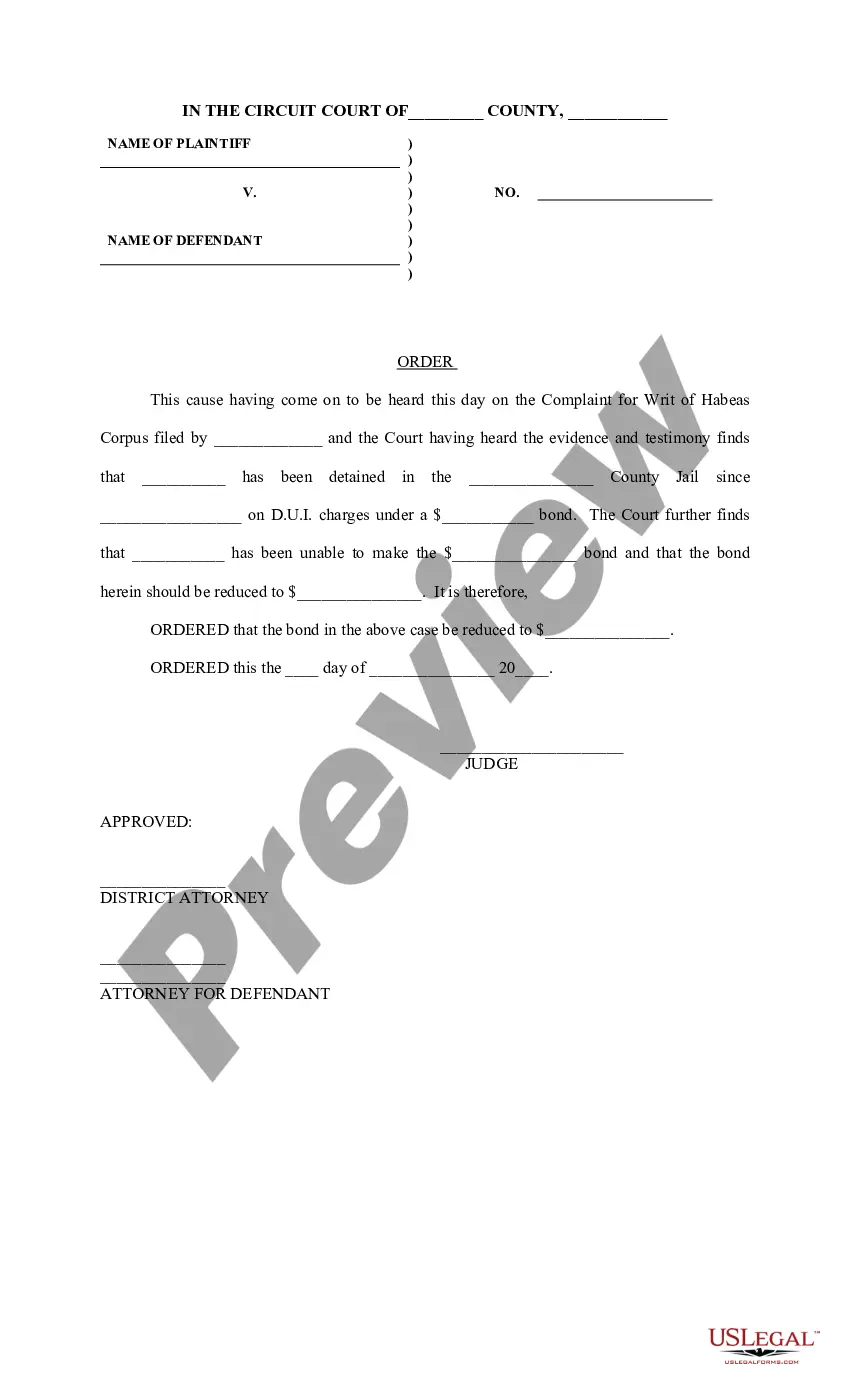
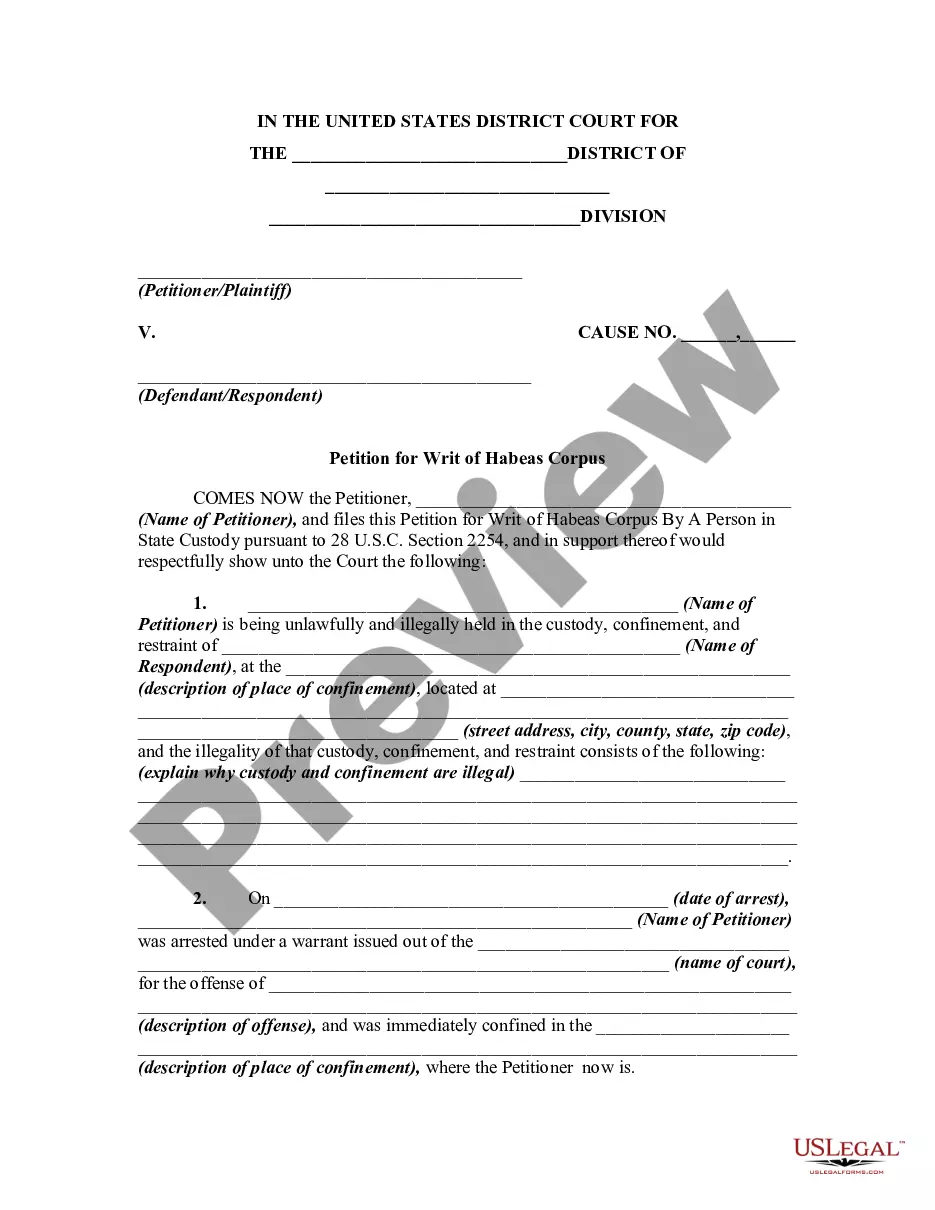







How to fill out Complaint For Writ Of Habeas Corpus?
It’s clear that you cannot transform into a legal authority instantaneously, nor can you comprehend how to swiftly create a Habeas Corpus Writ In Hindi without having a particular expertise.
Developing legal documents is a labor-intensive task that demands a distinct education and abilities. Therefore, why not entrust the creation of the Habeas Corpus Writ In Hindi to the professionals.
With US Legal Forms, one of the most comprehensive collections of legal documents, you can access anything from judicial papers to templates for internal company communication.
If you require any different template, restart your search.
Establish a free account and select a subscription plan to acquire the template. Hit Buy now. Once the payment is completed, you can retrieve the Habeas Corpus Writ In Hindi, fill it out, print it, and send it or post it to the designated individuals or organizations. You can re-access your documents from the My documents tab at any time. If you’re a current client, you can simply Log In, and locate and download the template from the same tab. Regardless of the reason for your paperwork, whether it’s financial and legal, or personal, our website has you covered. Try US Legal Forms today!
- We understand how crucial compliance and adherence to federal and state regulations are.
- That’s why all templates on our website are location-specific and current.
- Begin by visiting our website to obtain the document you require in just a few minutes.
- Find the form you need using the search bar at the top of the page.
- Preview it (if this option is available) and review the supporting details to see if Habeas Corpus Writ In Hindi matches your requirements.
Form popularity
FAQ
The writ of habeas corpus is essentially a legal safeguard against wrongful detention. It allows someone imprisoned to demand a court appearance to check if their detention is lawful. This writ ensures that everyone has the right to challenge their detention in a court. Knowing about the habeas corpus writ in hindi can help you understand and navigate your legal rights better.
The writ of habeas corpus means a court order that requires a person to be brought before the judge to determine the legality of their detention. In simple terms, it protects individuals from illegal imprisonment by ensuring they have their day in court. This writ is essential for ensuring that legal rights are upheld. Understanding this concept can empower you to act if you ever face unlawful detention.
In India, the habeas corpus writ ensures that no one can be detained without legal justification. It's a fundamental right enshrined in the Constitution, guaranteeing personal freedom. The writ can be invoked by anyone who believes they are being held unlawfully. Therefore, the habeas corpus writ in India is vital for maintaining justice and individual rights.
The habeas corpus writ in India is a powerful legal tool designed to protect individual freedom. It allows a person who is detained to seek relief from unlawful imprisonment. This writ can be filed in higher courts, enabling detainees to question the legality of their detention. In essence, this writ serves as a shield for personal liberty against arbitrary action.
One of the most famous habeas corpus cases in India is the Baidyanath case, where the Supreme Court decided on the unlawful detention of an individual by authorities. This landmark case highlighted the importance of personal liberty safeguarded by the habeas corpus writ in India. The ruling reaffirmed that every person has the right to challenge their detention. Such cases play a significant role in the evolution of legal protections for individuals.
Bandi Pratyakshikaran translates to 'habeas corpus' in English. This legal term refers to a court order that mandates a person under arrest to be brought before a judge. Essentially, it serves as a mechanism to prevent unlawful detention. Understanding this concept is crucial for anyone dealing with issues of personal liberty.
In India, any person who believes they are unlawfully detained can file a habeas corpus writ in Hindi. This includes not only the individual detained but also friends or relatives on their behalf. The process is meant to protect personal liberty, so having clear direction during your application is essential. Legal tools and services such as U.S. Legal Forms can assist in streamlining this process.
Winning a habeas corpus case can often be challenging, depending on the specifics of the situation. Courts require substantial evidence to overturn prior judgments or claims of unlawful confinement. Therefore, having a clear understanding of the law and a well-structured petition significantly aids your chances. Platforms like U.S. Legal Forms can provide guidance to simplify this process.
A writ of habeas corpus can be issued by various courts, including federal and state courts. Typically, it is a judge who reviews the petition and decides if the writ should be granted. Understanding the appropriate court to approach can enhance your chances, making resources like U.S. Legal Forms helpful for navigating these complexities.
The requirements for submitting a habeas corpus writ in Hindi typically include providing proof of unlawful detention. You must also show that you have exhausted all other legal remedies. Each jurisdiction may have specific forms and procedures, so consulting with a legal expert or utilizing platforms like U.S. Legal Forms can prove beneficial to help guide your submission.
