Custody Holiday Schedule With Joint Custody Nj
Description

Get your form ready online
Our built-in tools help you complete, sign, share, and store your documents in one place.
Make edits, fill in missing information, and update formatting in US Legal Forms—just like you would in MS Word.
Download a copy, print it, send it by email, or mail it via USPS—whatever works best for your next step.
Sign and collect signatures with our SignNow integration. Send to multiple recipients, set reminders, and more. Go Premium to unlock E-Sign.
If this form requires notarization, complete it online through a secure video call—no need to meet a notary in person or wait for an appointment.
We protect your documents and personal data by following strict security and privacy standards.

Make edits, fill in missing information, and update formatting in US Legal Forms—just like you would in MS Word.

Download a copy, print it, send it by email, or mail it via USPS—whatever works best for your next step.

Sign and collect signatures with our SignNow integration. Send to multiple recipients, set reminders, and more. Go Premium to unlock E-Sign.

If this form requires notarization, complete it online through a secure video call—no need to meet a notary in person or wait for an appointment.

We protect your documents and personal data by following strict security and privacy standards.
Looking for another form?

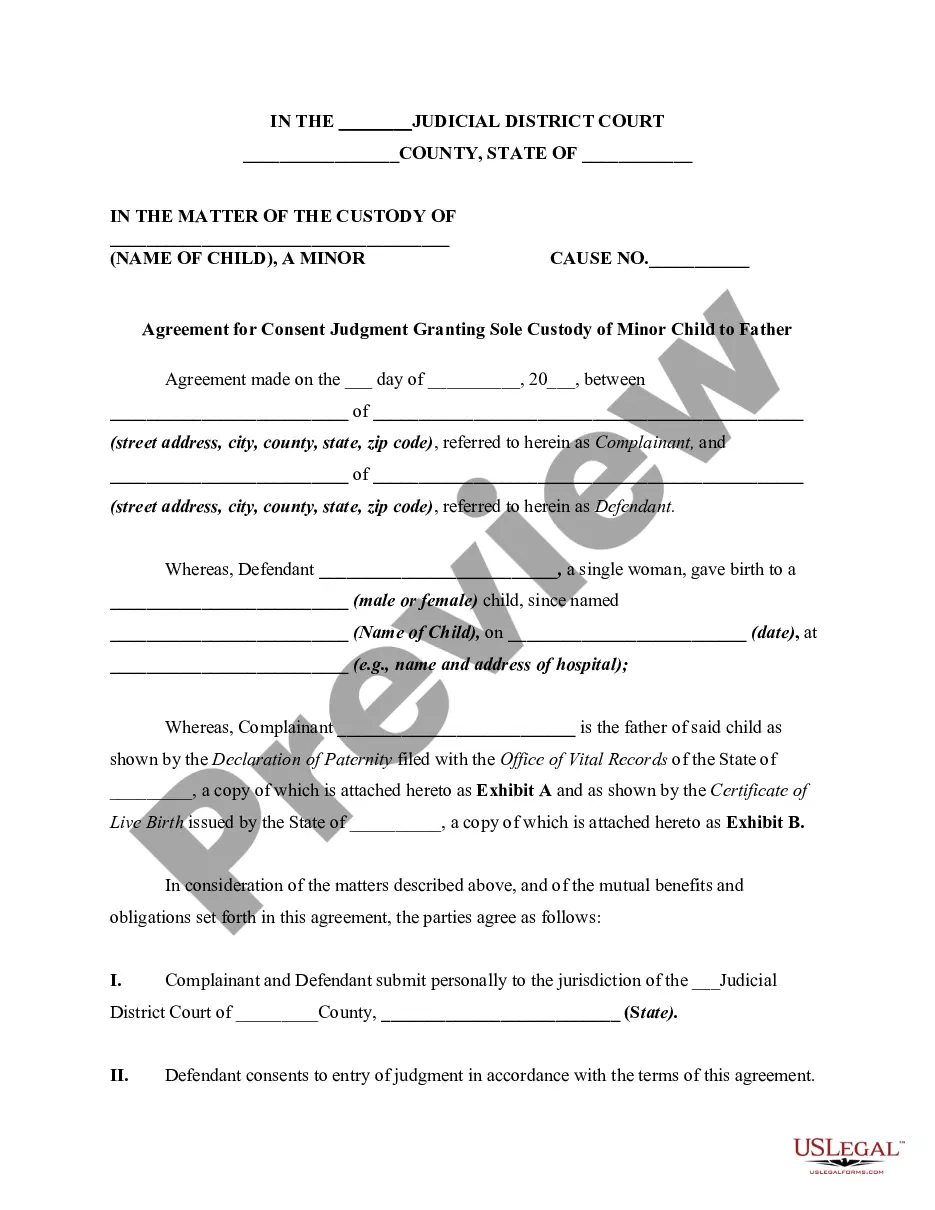
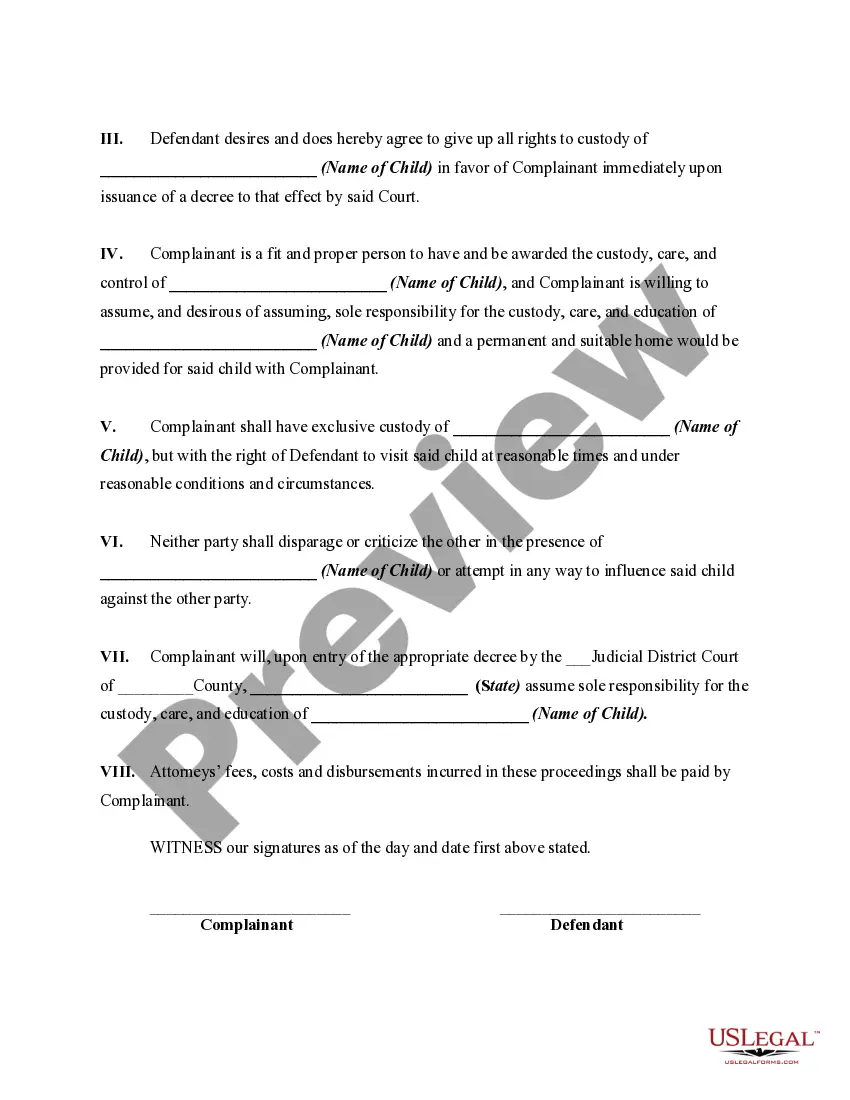
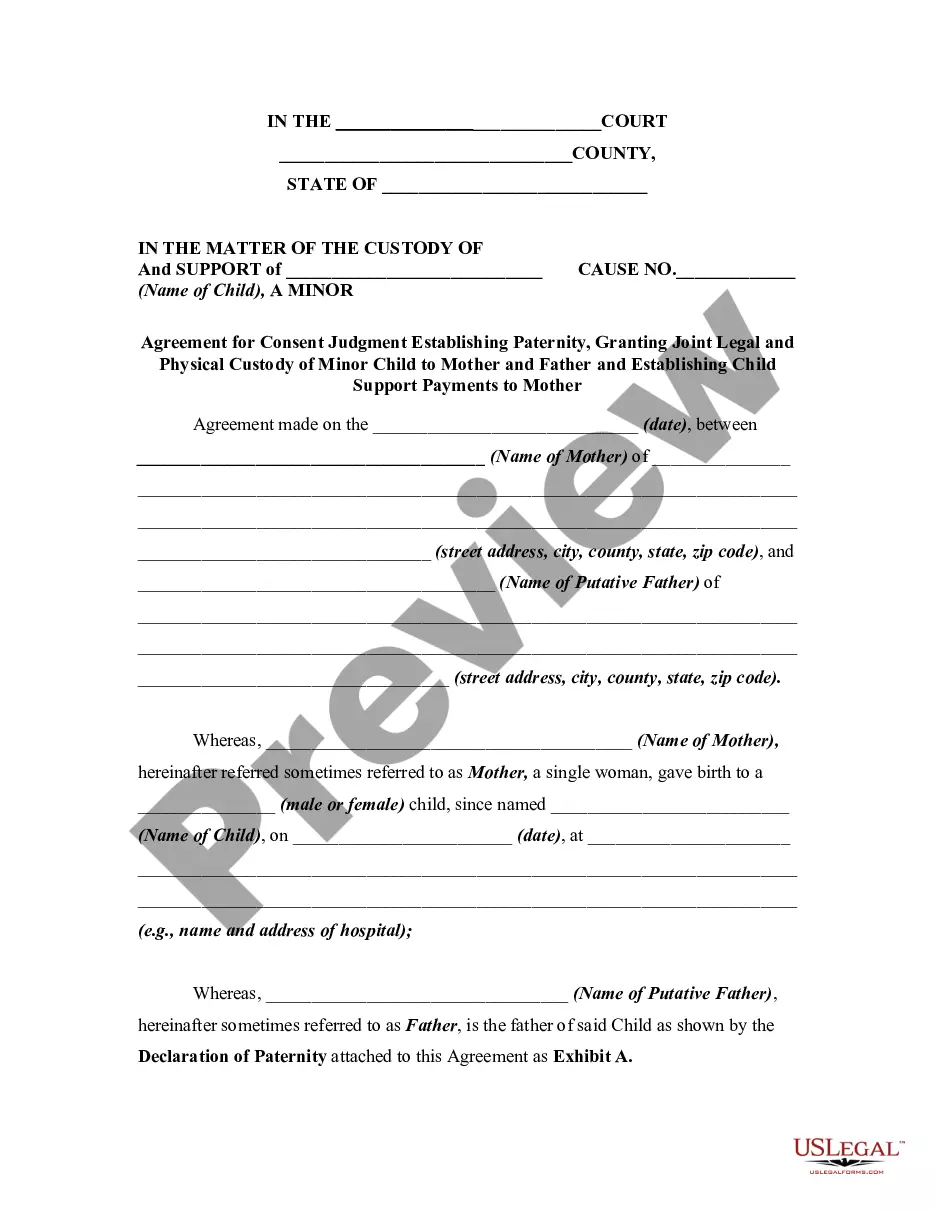
How to fill out Agreement For Consent Judgment Granting Sole Custody Of Minor Child To Father?
Managing legal papers and tasks can be a lengthy addition to your overall day.
Custody Holiday Schedule With Joint Custody Nj and similar documents typically require you to search for them and comprehend the most effective way to fill them out correctly.
Thus, whether you are addressing financial, legal, or personal issues, having a comprehensive and user-friendly online library of forms readily available will significantly benefit you.
US Legal Forms is the premier online platform for legal templates, featuring over 85,000 state-specific documents along with numerous tools to assist you in completing your paperwork efficiently.
Is this your first experience using US Legal Forms? Register and create an account in just a few minutes to gain access to the form library and Custody Holiday Schedule With Joint Custody Nj. After that, follow the steps below to complete your form.
- Explore the library of relevant documents accessible to you with just one click.
- US Legal Forms provides state- and county-specific documents that can be downloaded at any time.
- Secure your document management processes with a high-quality service that allows you to prepare any form within minutes without any extra or undisclosed fees.
- Simply Log In to your account, locate Custody Holiday Schedule With Joint Custody Nj and obtain it right away from the My documents section.
- You can also retrieve forms you have previously saved.
Form popularity
FAQ
The 7-7-7 rule for parenting refers to a parenting schedule where children spend seven days with one parent, then seven days with the other. This arrangement can provide children with extended time in each household, fostering strong attachments while minimizing transitions. When considering a custody holiday schedule with joint custody NJ, it's important to assess whether this format fits your family's lifestyle and needs. Open communication between parents ensures that everyone is aligned and focused on the best interests of the children.
Successful co-parenting often relies on clear communication, mutual respect, and consistent strategies. Establishing a custody holiday schedule with joint custody NJ is crucial for planning family time effectively. Both parents should agree on rules and boundaries to provide stability for their child. Regular check-ins to discuss any changes or concerns can greatly enhance the co-parenting experience.
In New Jersey, relocation within the state does not normally require court or parental approval. However, if you move far enough away, that could impact your ability to fulfill a parenting time arrangement, which may allow your spouse to obtain a modification of the custody and visitation order.
4-3-3-4 schedule: As the title suggests, the 4-3-3-4 is the inverse of 3-4-4-3. Instead of the first parent in the rotation starting with three days, he/she starts with four. Then, the other parent gets the children for three days.
Under joint custody, parents typically work out a co-parenting plan based upon work schedules, housing arrangements and the needs of their children to try and reach a near equal amount of time with each parent. An experienced New Jersey child custody attorney can provide assistance in working out a co-parenting plan.
The 3-4-4-3 schedule splits up each week. As there are 7 days in a week, the child(ren) spends, 3 days with the first parent, then 4 days with the other. The following week, the child(ren) spends 4 days with the first parent and 3 days with the other. This alternating pattern continues each week.
For example, some families may choose to alternate custody every two weeks. Also, some co-parents add a midweek overnight to a 4-3 schedule. The most common co-parenting 50/50 plans include 2-2-3, 3-4-4-3, 2-2-5-5, and alternating weeks.