Web Site Agreement With Company
Description
Get your form ready online
Our built-in tools help you complete, sign, share, and store your documents in one place.
Make edits, fill in missing information, and update formatting in US Legal Forms—just like you would in MS Word.
Download a copy, print it, send it by email, or mail it via USPS—whatever works best for your next step.
Sign and collect signatures with our SignNow integration. Send to multiple recipients, set reminders, and more. Go Premium to unlock E-Sign.
If this form requires notarization, complete it online through a secure video call—no need to meet a notary in person or wait for an appointment.
We protect your documents and personal data by following strict security and privacy standards.

Make edits, fill in missing information, and update formatting in US Legal Forms—just like you would in MS Word.

Download a copy, print it, send it by email, or mail it via USPS—whatever works best for your next step.

Sign and collect signatures with our SignNow integration. Send to multiple recipients, set reminders, and more. Go Premium to unlock E-Sign.

If this form requires notarization, complete it online through a secure video call—no need to meet a notary in person or wait for an appointment.

We protect your documents and personal data by following strict security and privacy standards.
Looking for another form?


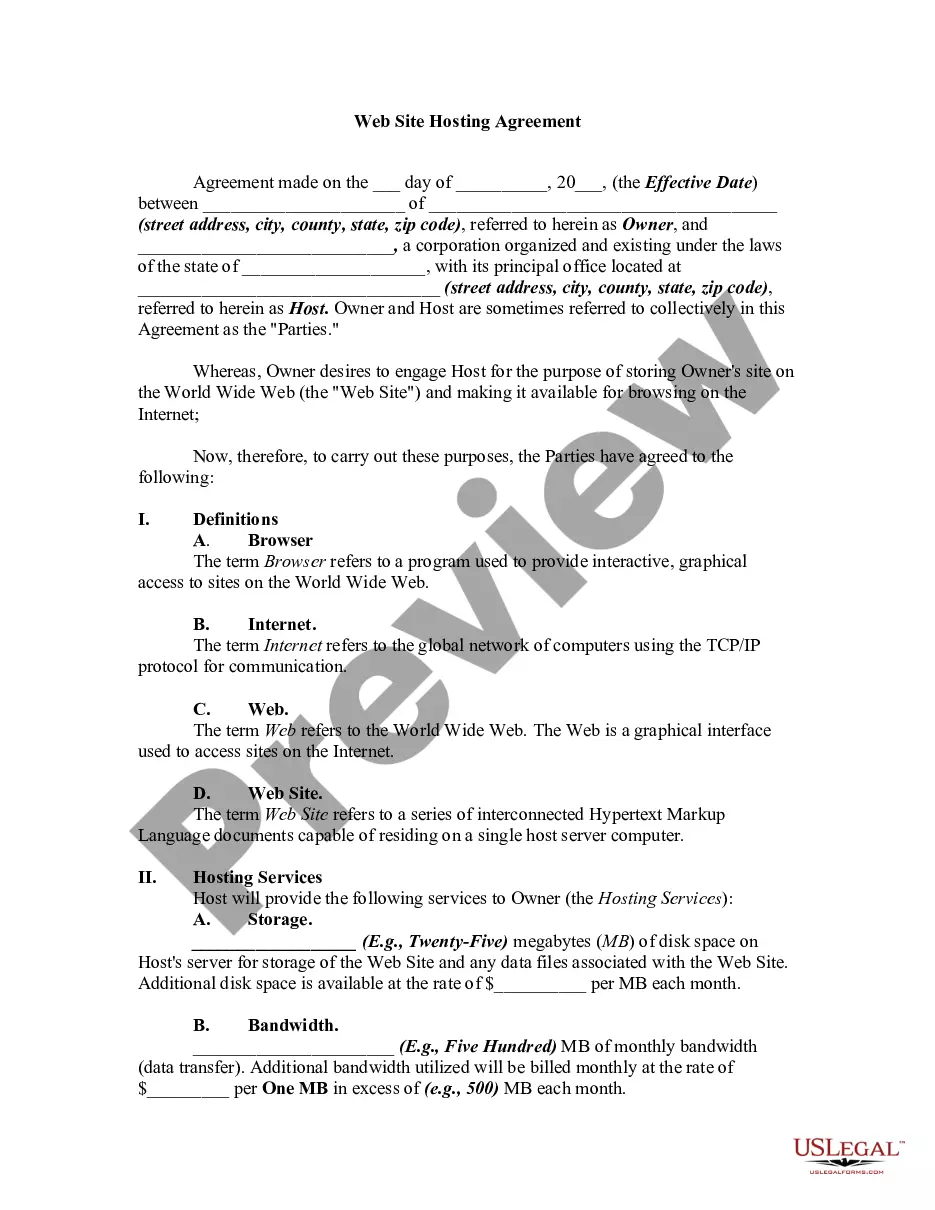
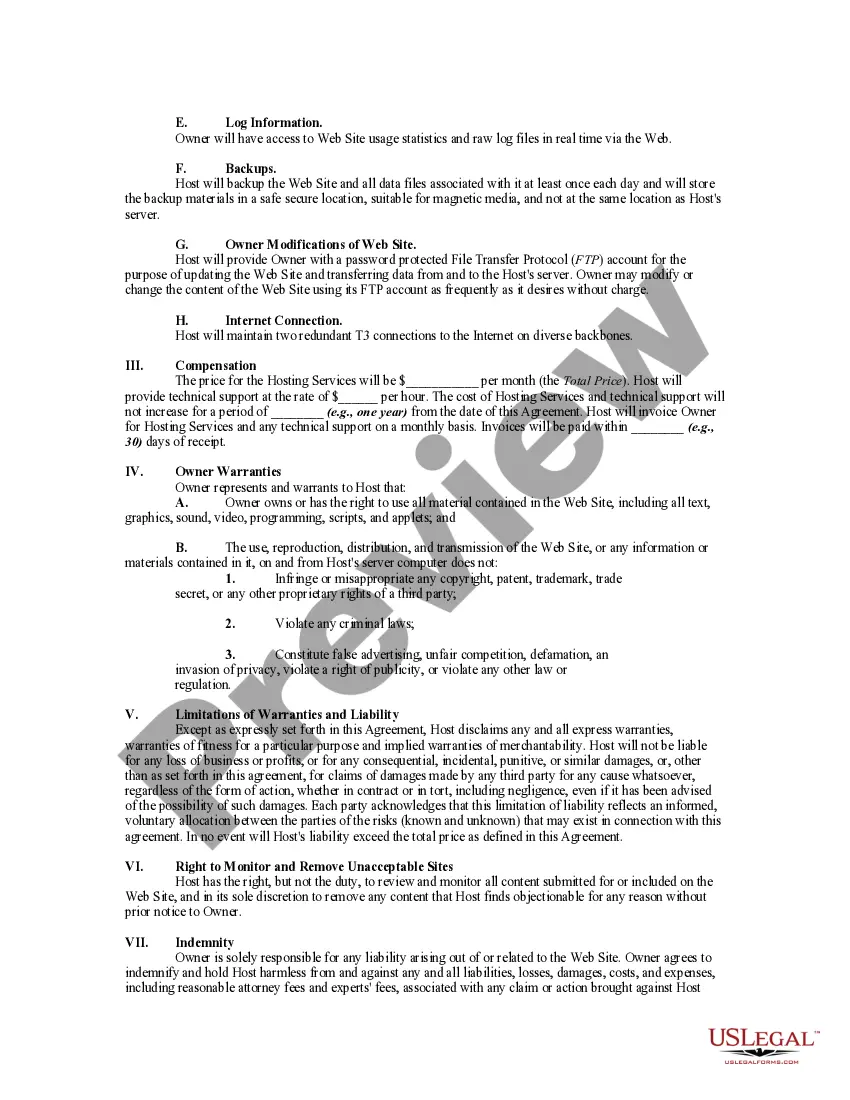
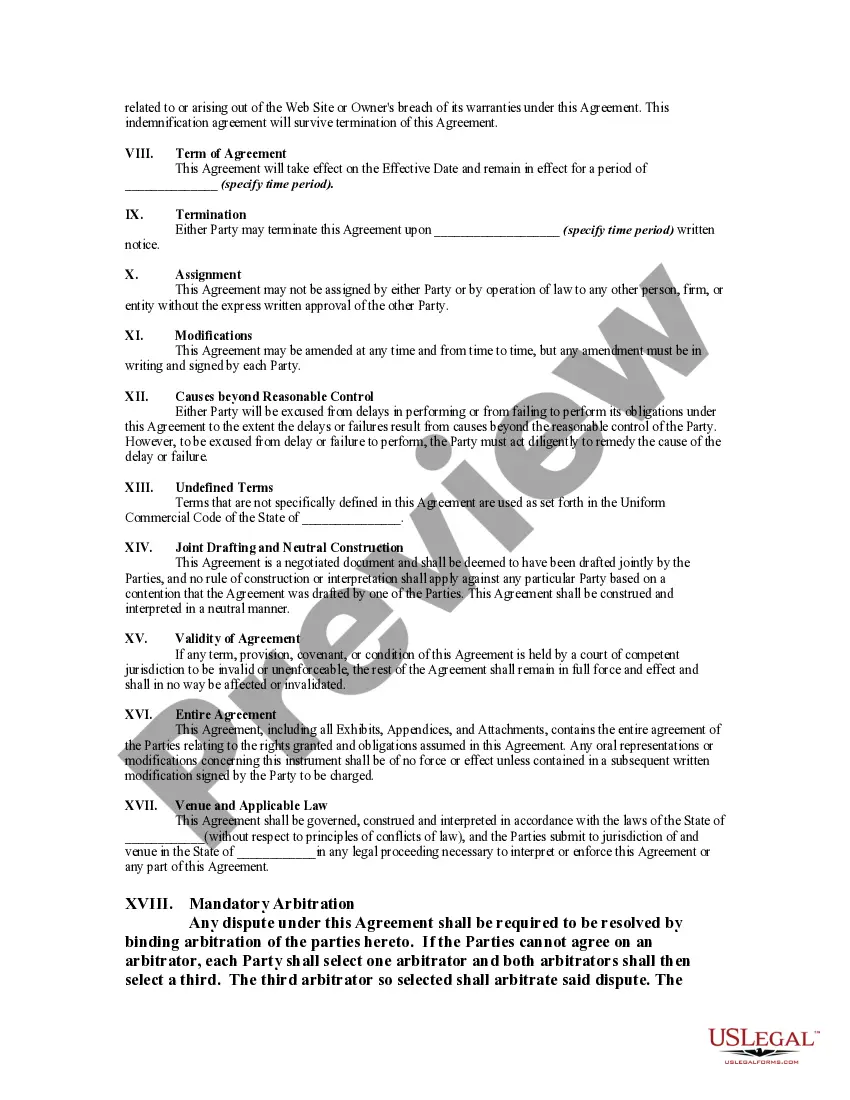
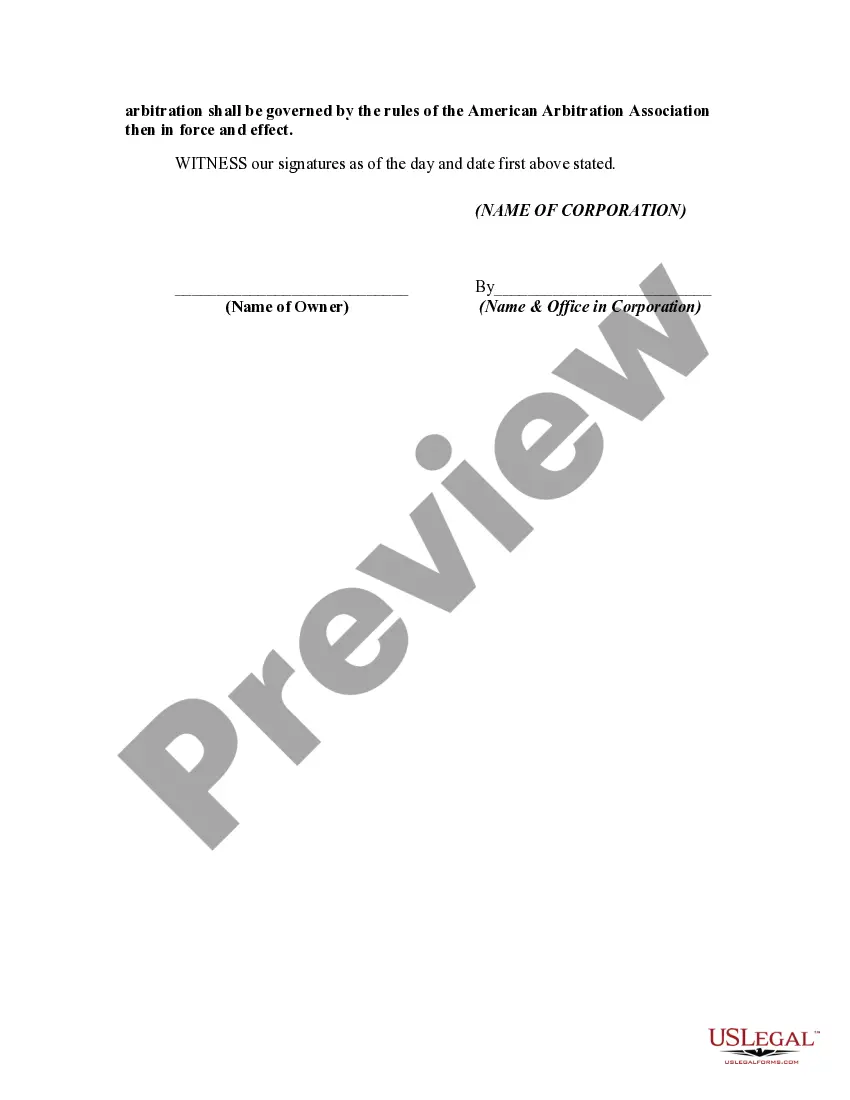
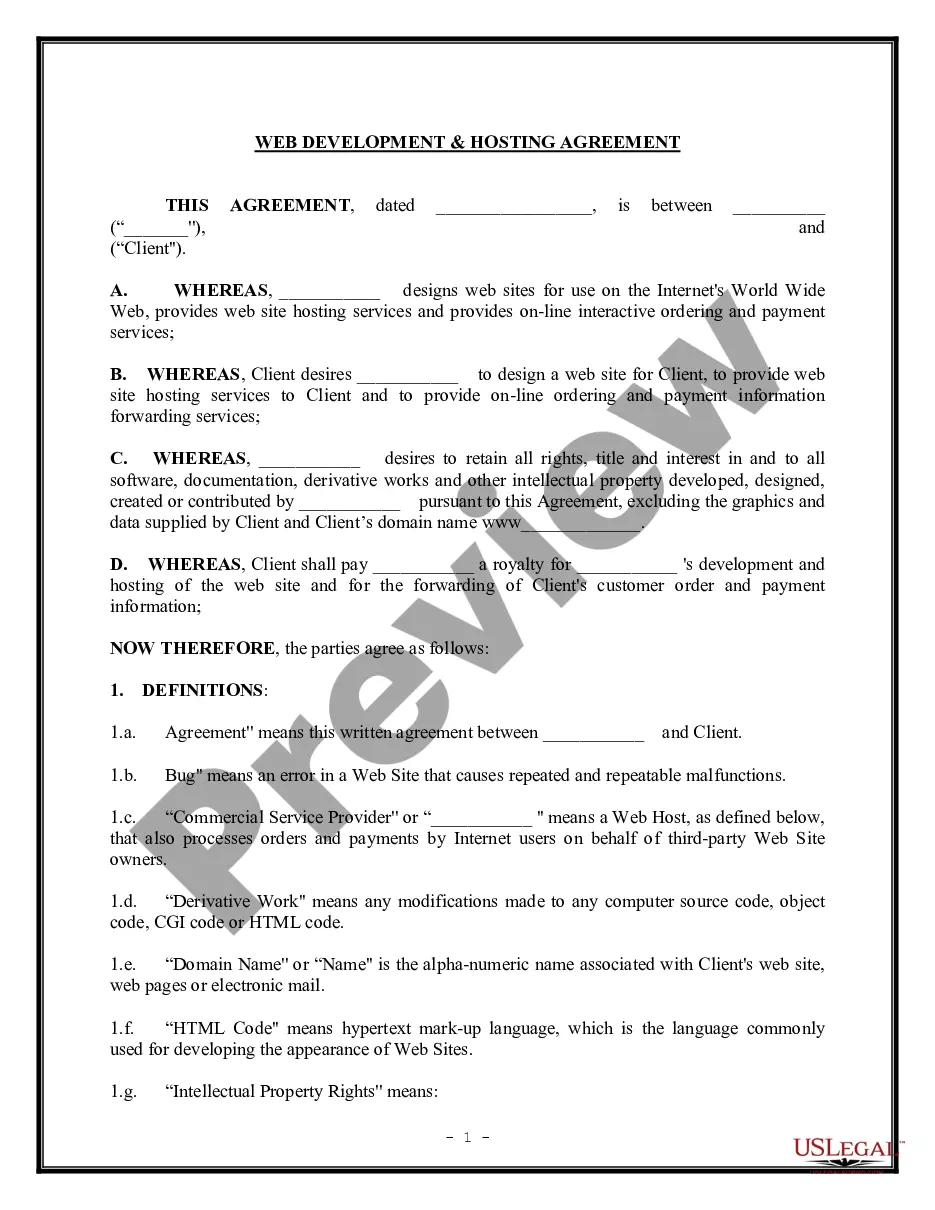
How to fill out Web Site Hosting Agreement?
The Website Agreement With Company displayed on this page is a versatile legal template created by expert attorneys in accordance with national and local laws.
For over 25 years, US Legal Forms has equipped individuals, businesses, and lawyers with more than 85,000 validated, state-specific documents for any business and personal situation. It’s the fastest, most direct, and most reliable method to acquire the forms you require, as the service ensures the highest level of data safety and anti-virus protection.
Pick the format you desire for your Website Agreement With Company (PDF, DOCX, RTF) and download the document onto your device. Fill out and sign the paperwork. Print the template to finish it manually. Alternatively, employ an online versatile PDF editor to efficiently and accurately complete and sign your form electronically.
- Search for the document you require and review it.
- Browse the sample you have found and preview it or check the form description to make sure it meets your needs. If it doesn’t, utilize the search function to find the correct one. Hit Buy Now after you have identified the template you want.
- Register and Log Into your account.
- Select the pricing plan that best fits you and set up an account. Use PayPal or a credit card to make a swift payment. If you already possess an account, Log In and verify your subscription to proceed.
- Acquire the editable template.
Form popularity
FAQ
Procedure for Subpoenaing Bank Records: Filing: The party or their attorney files a subpoena with the court clerk in the county where the case is being heard. The subpoena must specify the desired bank records and include the necessary information to identify the accounts and institutions involved.
With over 100 years of service to the citizens of Texas, the Department of Banking mission is to ensure that Texas has a safe, sound and competitive financial services system. Established in 1905, the Department's statutory duties have evolved over the years.
Ing to banking regulations, reasonable periods of time include an extension of up to five business days for most checks. Under certain circumstances, the bank may be able to impose a longer hold if it can establish that the longer hold is reasonable.
Yes. Your bank may hold the funds ing to its funds availability policy.
Wells Fargo is probably the most common bank in Texas, because it has the most branches in the most cities.
Refer to your deposit account agreement for the bank's funds availability policy. If your bank is a national bank or federal savings association, and you believe it is holding your funds longer than allowed, file a written complaint with the Office of the Comptroller of the Currency's (OCC) Customer Assistance Group.
Yes, contrary to what you might think, a bank can take money out of your checking account, even if you don't authorize it. It's called a "right to offset" and it typically happens in one situation: When you owe your bank money on a loan.
File banking and credit complaints with the Consumer Financial Protection Bureau. If contacting your bank directly does not help, visit the Consumer Financial Protection Bureau (CFPB) complaint page to: See which specific banking and credit services and products you can complain about through the CFPB.