Special Needs Trust Information For Minor Child
Description
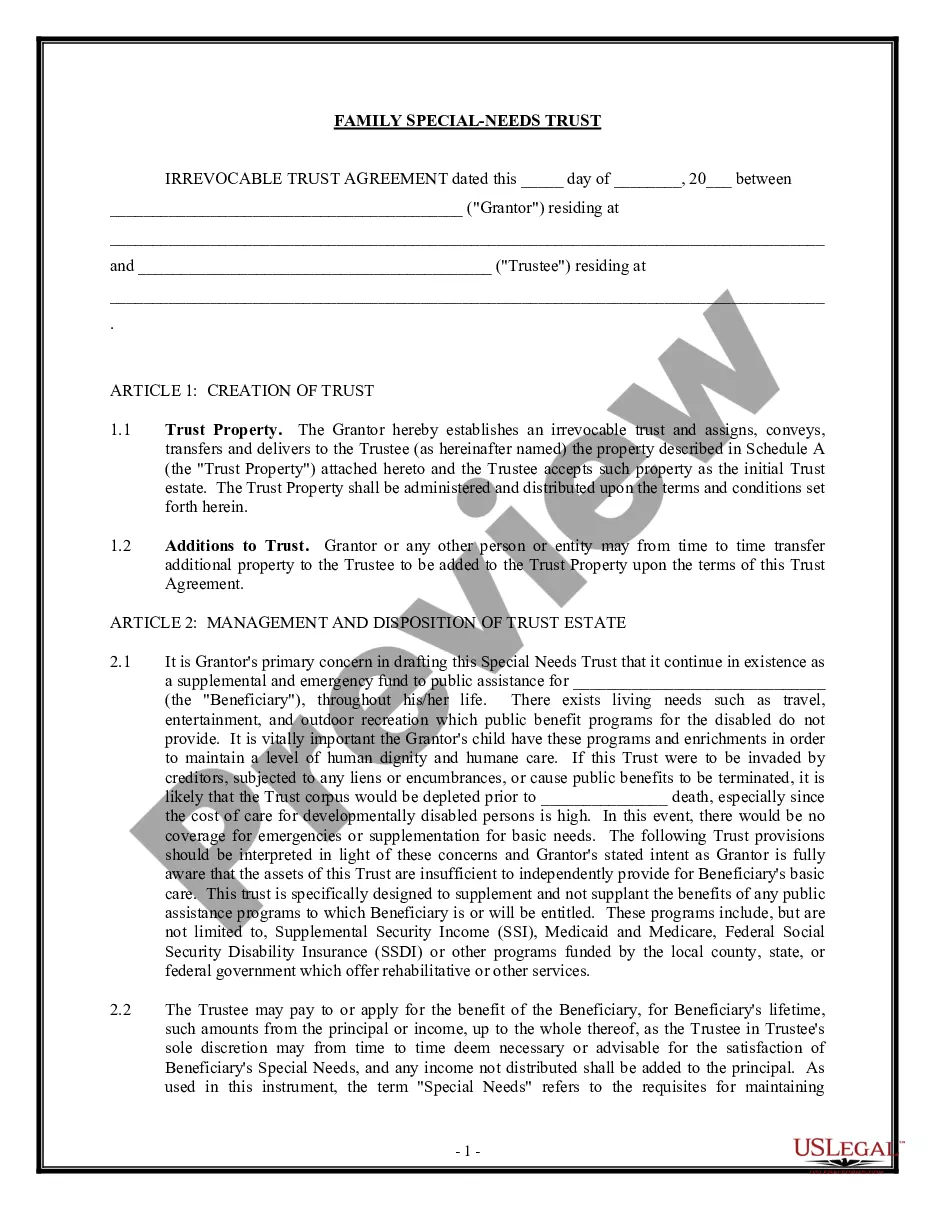
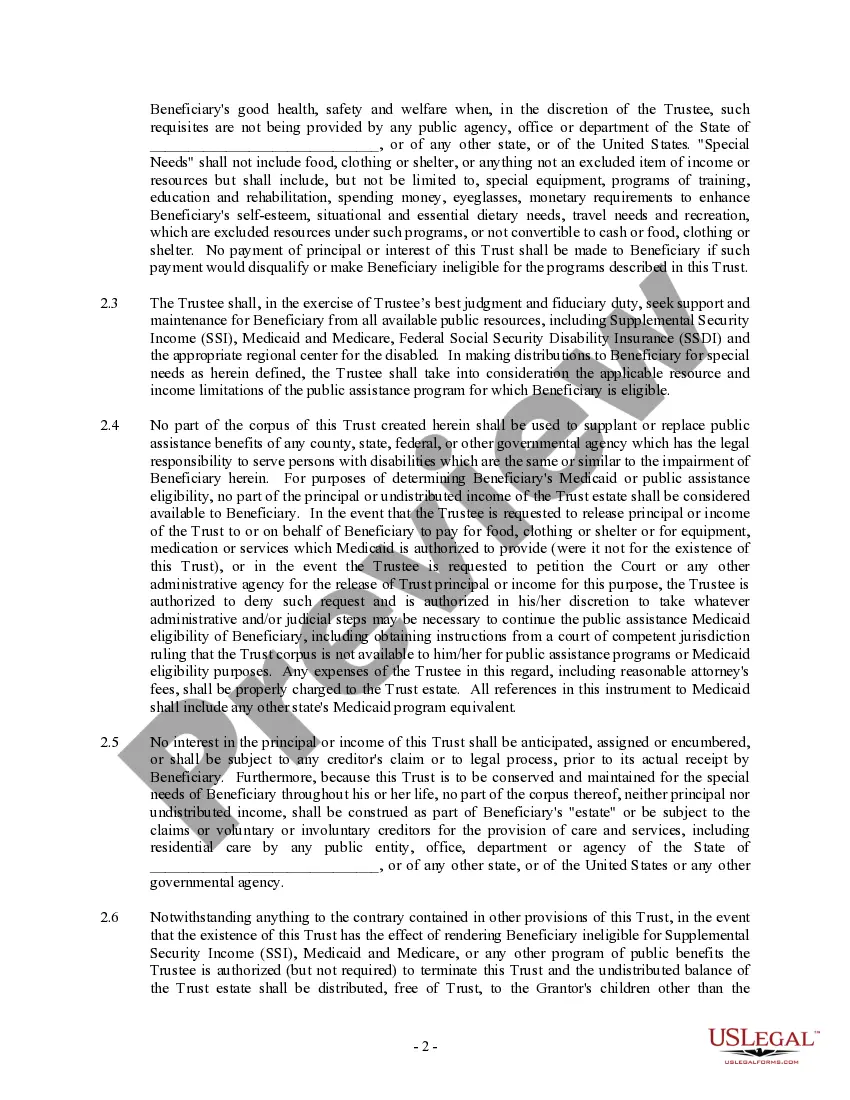
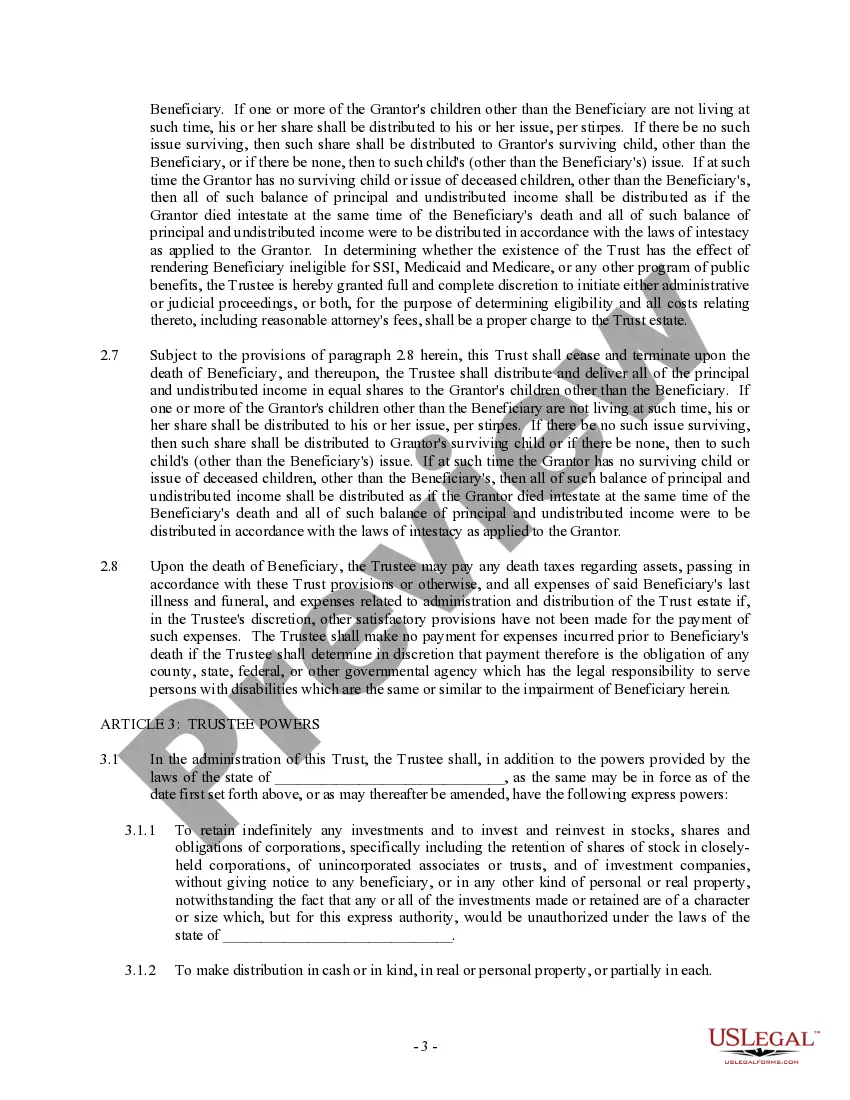
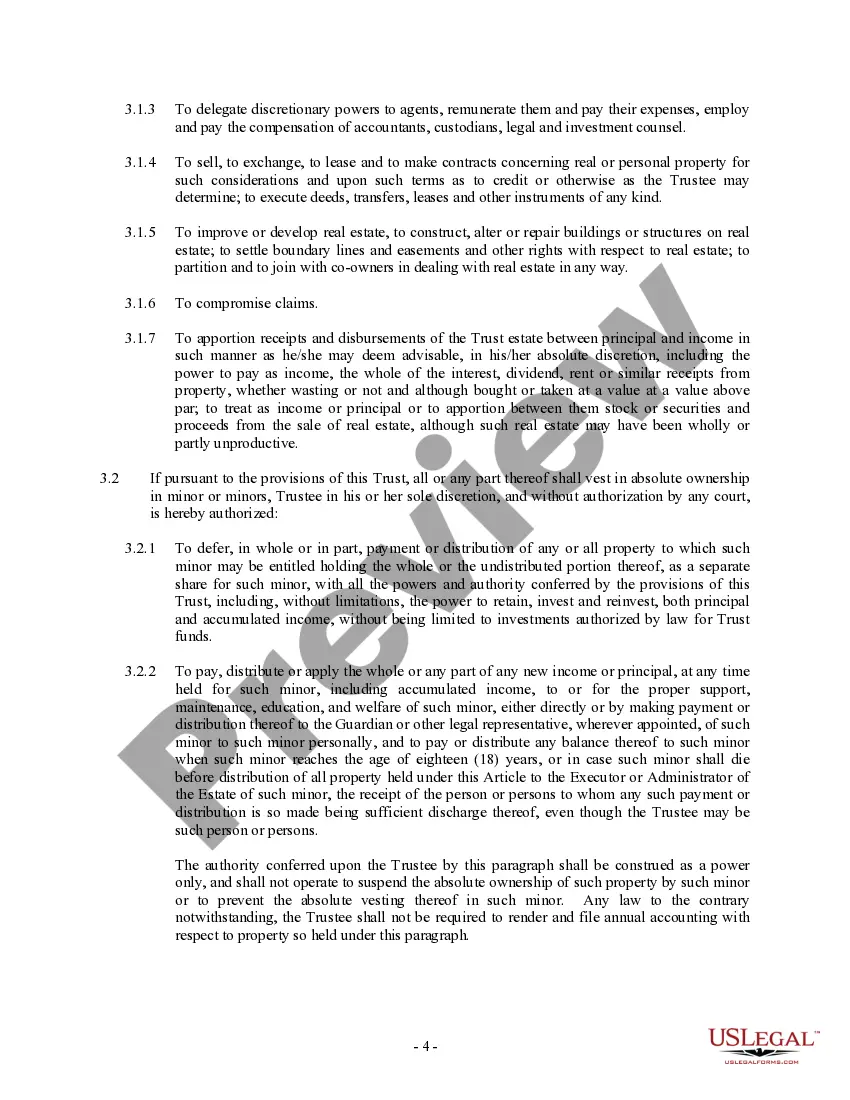
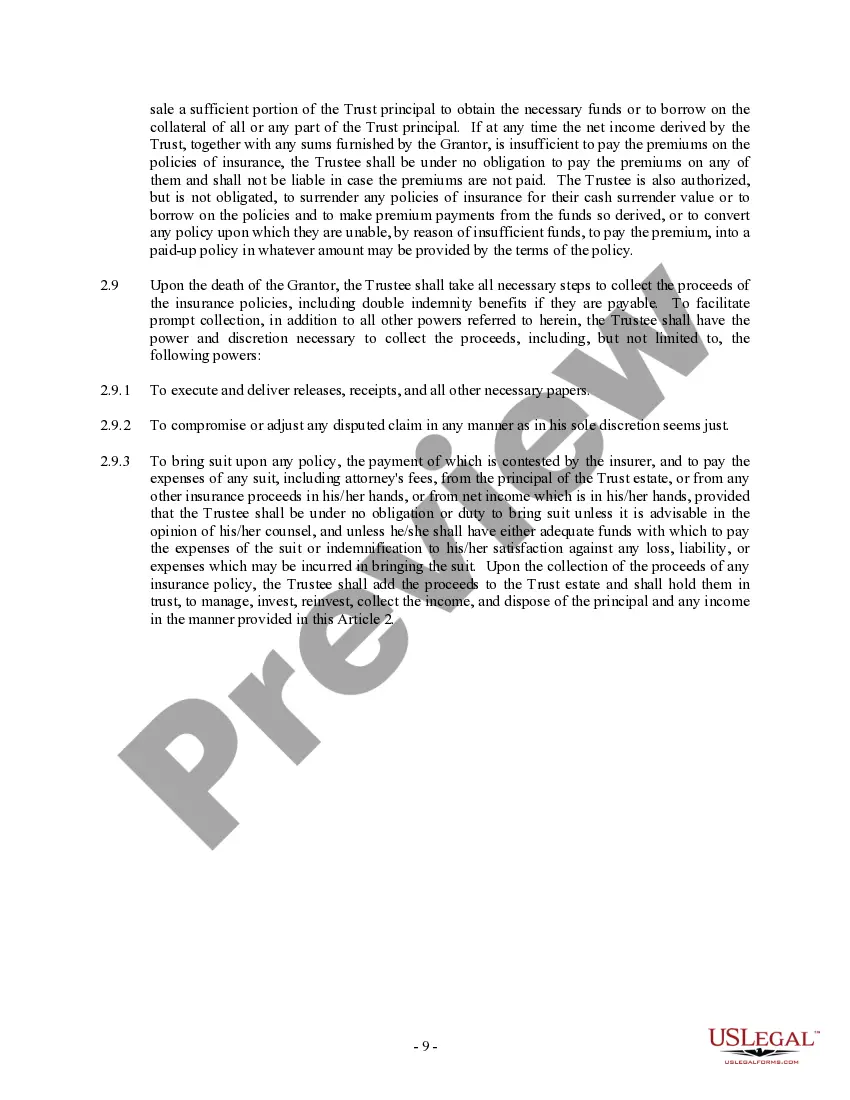
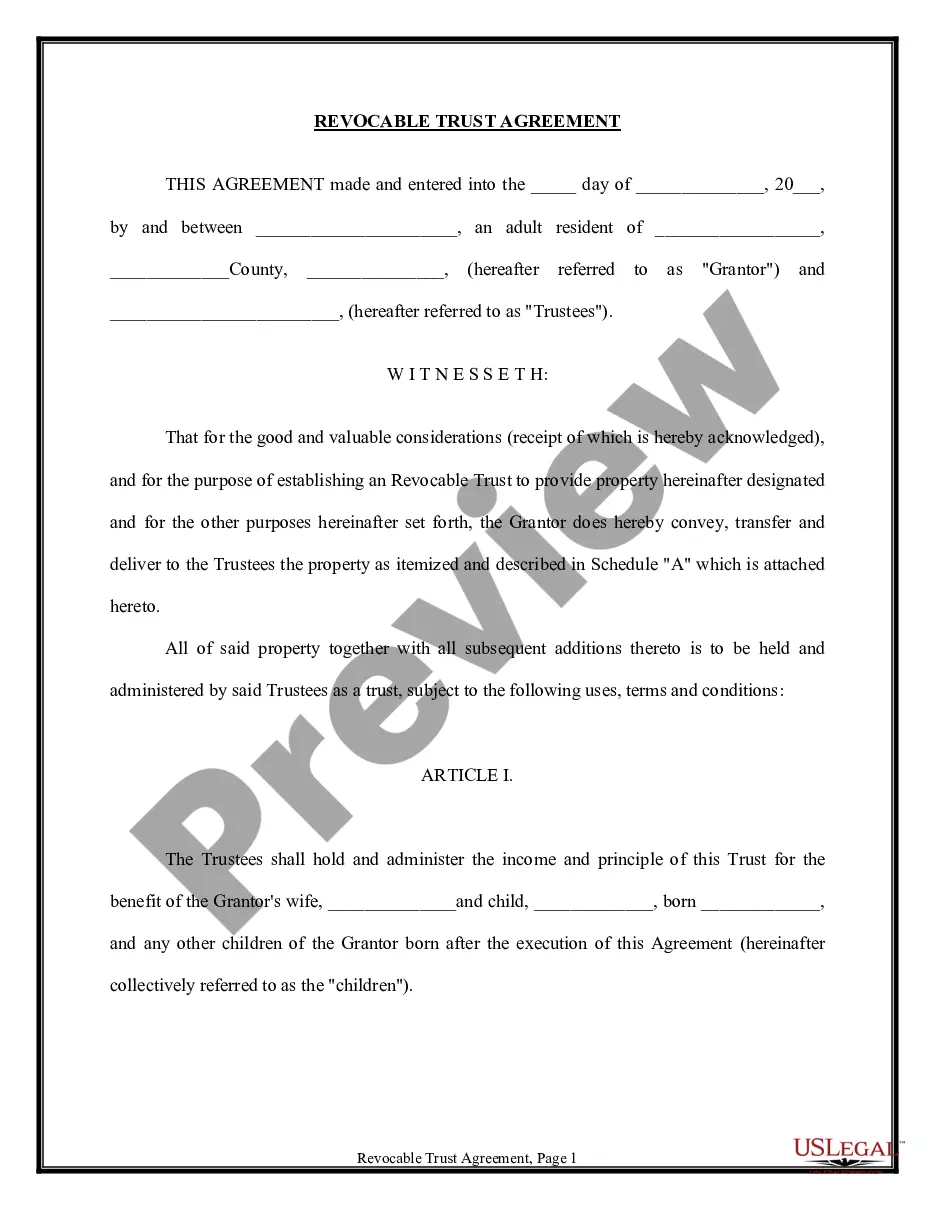
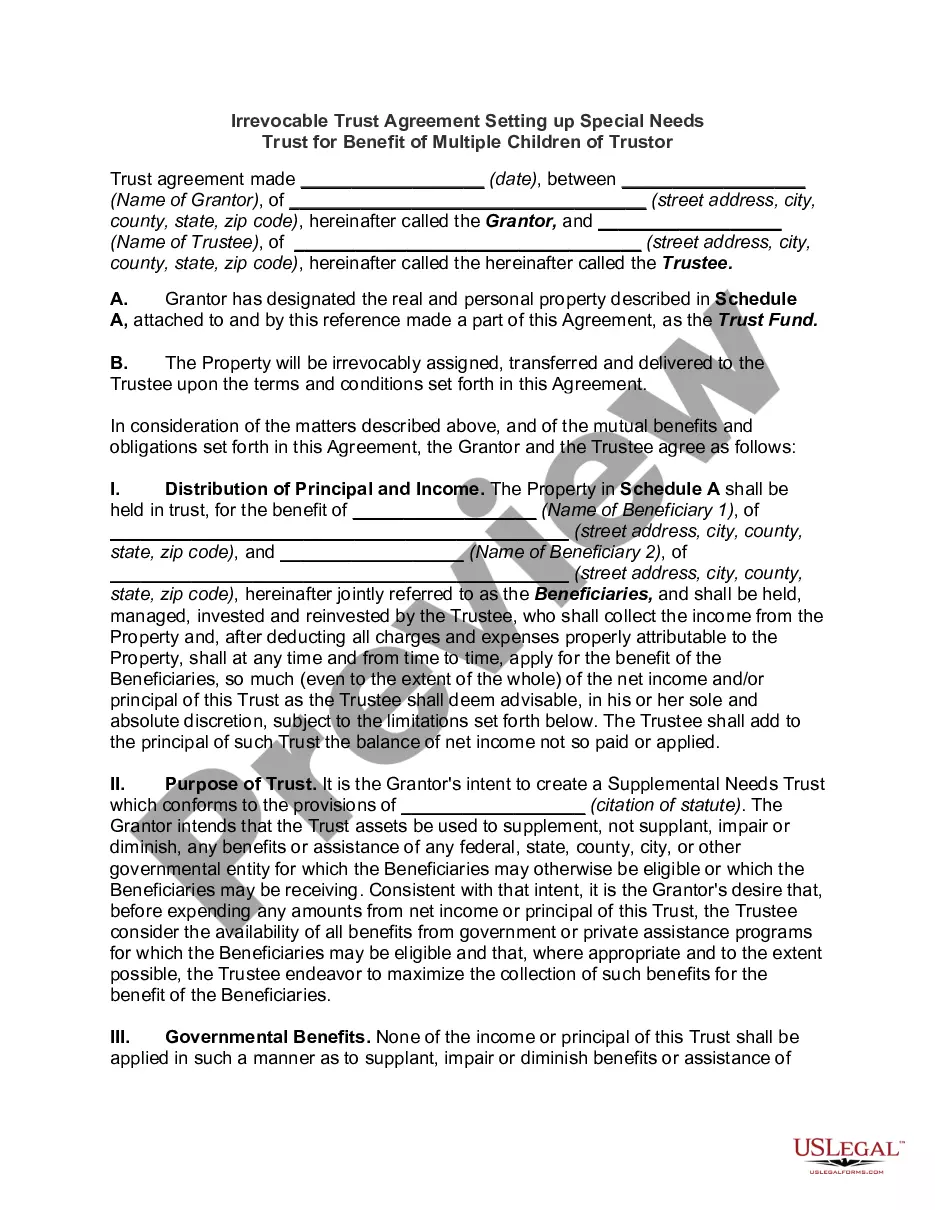
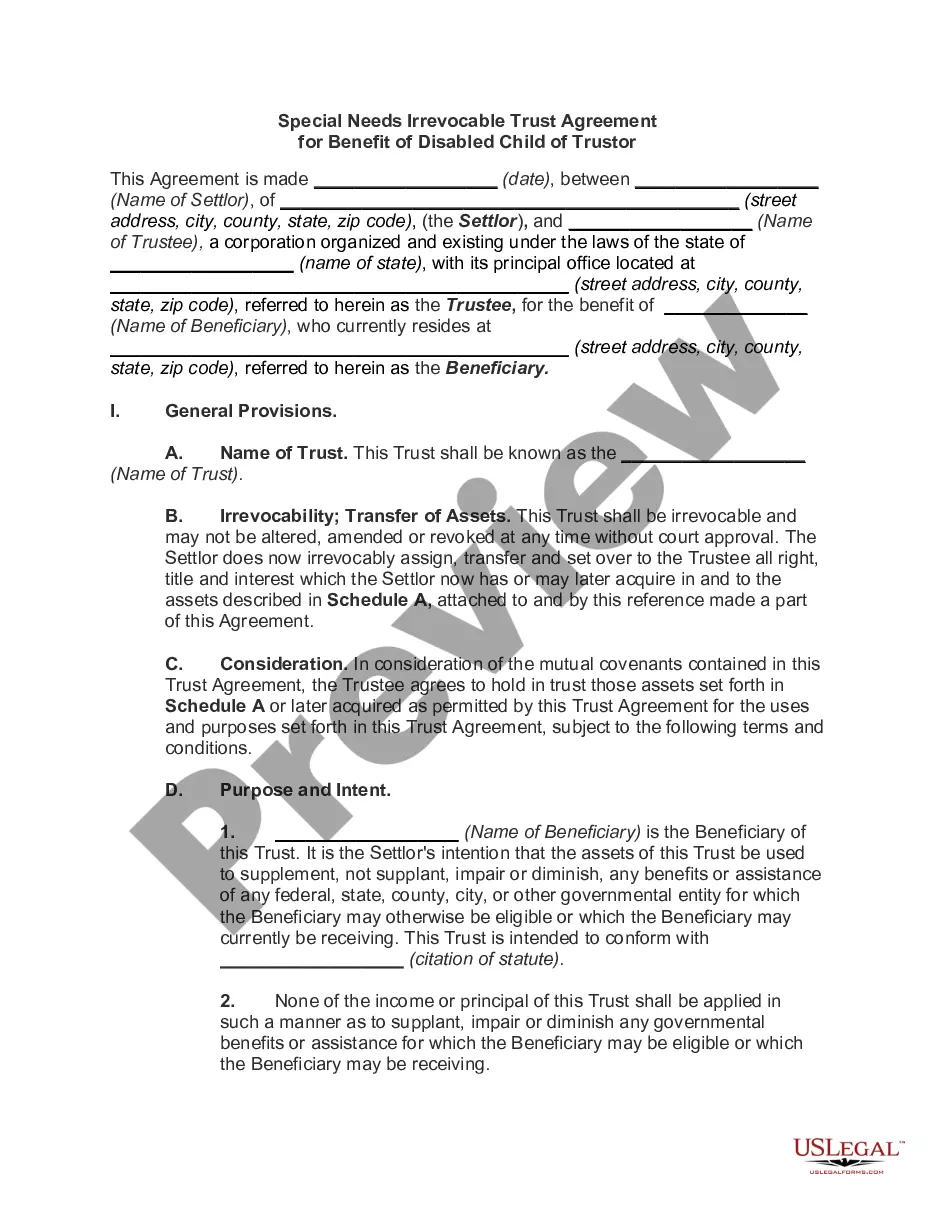
Get your form ready online
Our built-in tools help you complete, sign, share, and store your documents in one place.
Make edits, fill in missing information, and update formatting in US Legal Forms—just like you would in MS Word.
Download a copy, print it, send it by email, or mail it via USPS—whatever works best for your next step.
Sign and collect signatures with our SignNow integration. Send to multiple recipients, set reminders, and more. Go Premium to unlock E-Sign.
If this form requires notarization, complete it online through a secure video call—no need to meet a notary in person or wait for an appointment.
We protect your documents and personal data by following strict security and privacy standards.

Make edits, fill in missing information, and update formatting in US Legal Forms—just like you would in MS Word.

Download a copy, print it, send it by email, or mail it via USPS—whatever works best for your next step.

Sign and collect signatures with our SignNow integration. Send to multiple recipients, set reminders, and more. Go Premium to unlock E-Sign.

If this form requires notarization, complete it online through a secure video call—no need to meet a notary in person or wait for an appointment.

We protect your documents and personal data by following strict security and privacy standards.
Looking for another form?
How to fill out Trust Agreement - Family Special Needs?
Acquiring legal forms that adhere to federal and state regulations is vital, and the web provides numerous choices to choose from.
However, why squander time hunting for the appropriate Special Needs Trust Information For Minor Child example online if the US Legal Forms digital library already compiles such documents in one location.
US Legal Forms is the largest online legal repository featuring over 85,000 editable templates created by lawyers for any professional and personal situation.
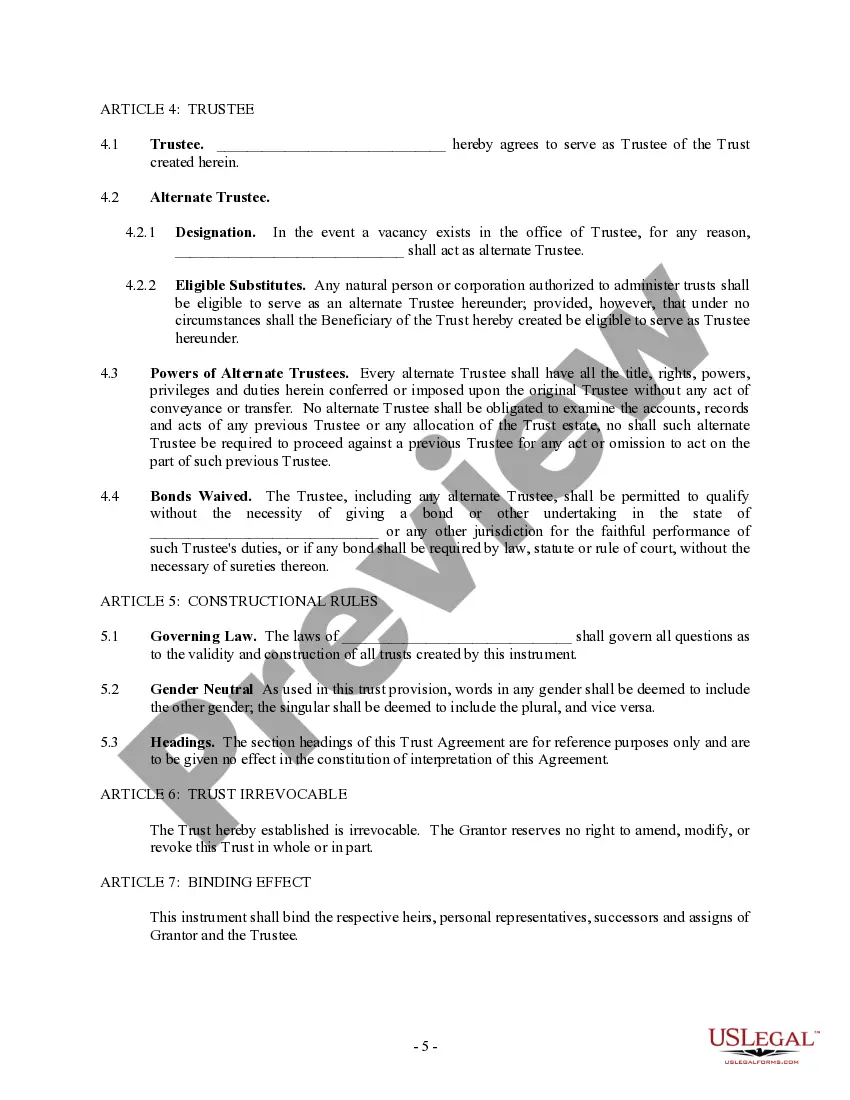
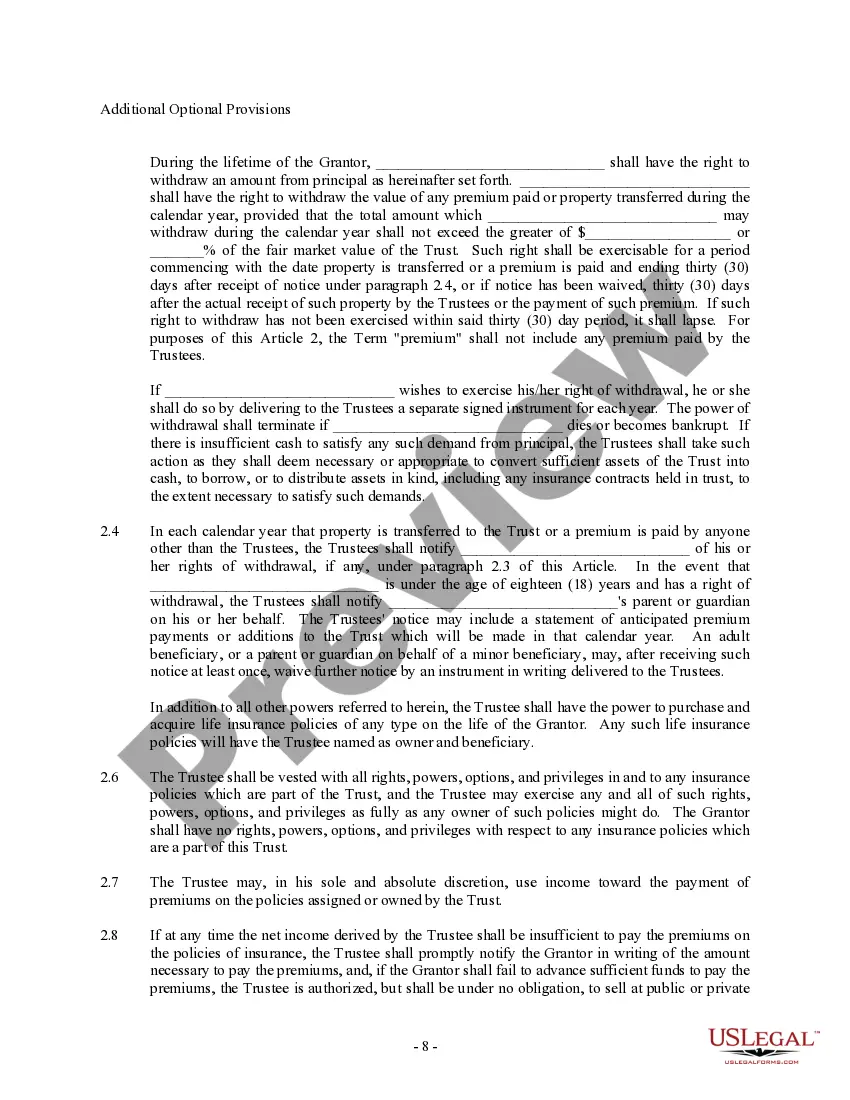
Review the template using the Preview feature or through the text outline to ensure it satisfies your requirements.
- They are straightforward to navigate with all documents categorized by state and intended use.
- Our experts remain informed about legislative changes, ensuring your documents are up to date and compliant when acquiring a Special Needs Trust Information For Minor Child from our site.
- Obtaining a Special Needs Trust Information For Minor Child is fast and straightforward for both existing and new users.
- If you already possess an account with a valid subscription, Log In and download the document sample you require in your chosen format.
- If you are new to our platform, adhere to the instructions below.
Form popularity
FAQ
Different names for first-party special needs trusts you may hear include: Payback special needs trust. Litigation special needs trust. Miller trust. (d)(4)(A) SNT. (d)(4)(C) SNT.
party special needs trust (SNT) is the most common trust used in special needs planning. It is often established by parents, grandparents or other people wishing to gift money or leave an inheritance to the beneficiary (your child) without disqualifying them for government benefits.
Instead of "my child with special needs," consider substituting "my child," or "my child with," or even just your child's name. When speaking with others, the term "disabled" is widely preferred, but it never hurts to ask about someone's personal preference when it comes to language.
A Memorandum (or Letter) of Intent communicates and documents your preferences regarding the care of John Doe as beneficiary of the special needs trust you created. It provides a guideline for those people who may become responsible for decisions about John as beneficiary of the special needs trust.
Cons of Special Needs Trusts The trust must be maintained, and yearly management costs can be high. Depending on who manages the fund, there may be a minimum amount required to set up the trust. It may be financially difficult for the settlor to actually establish the trust, depending upon their circumstances.