Oregon Shared Well Agreement With The Government

Description
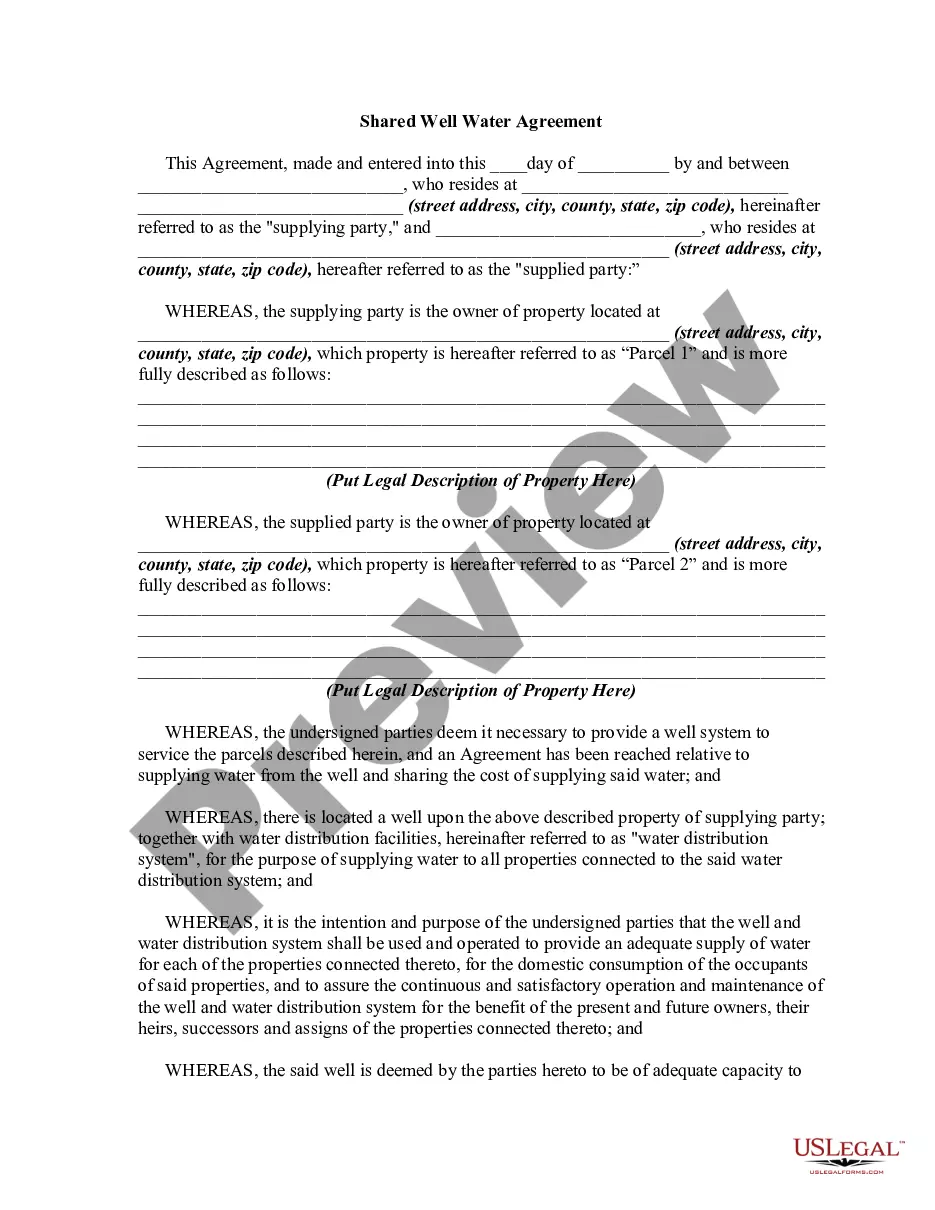
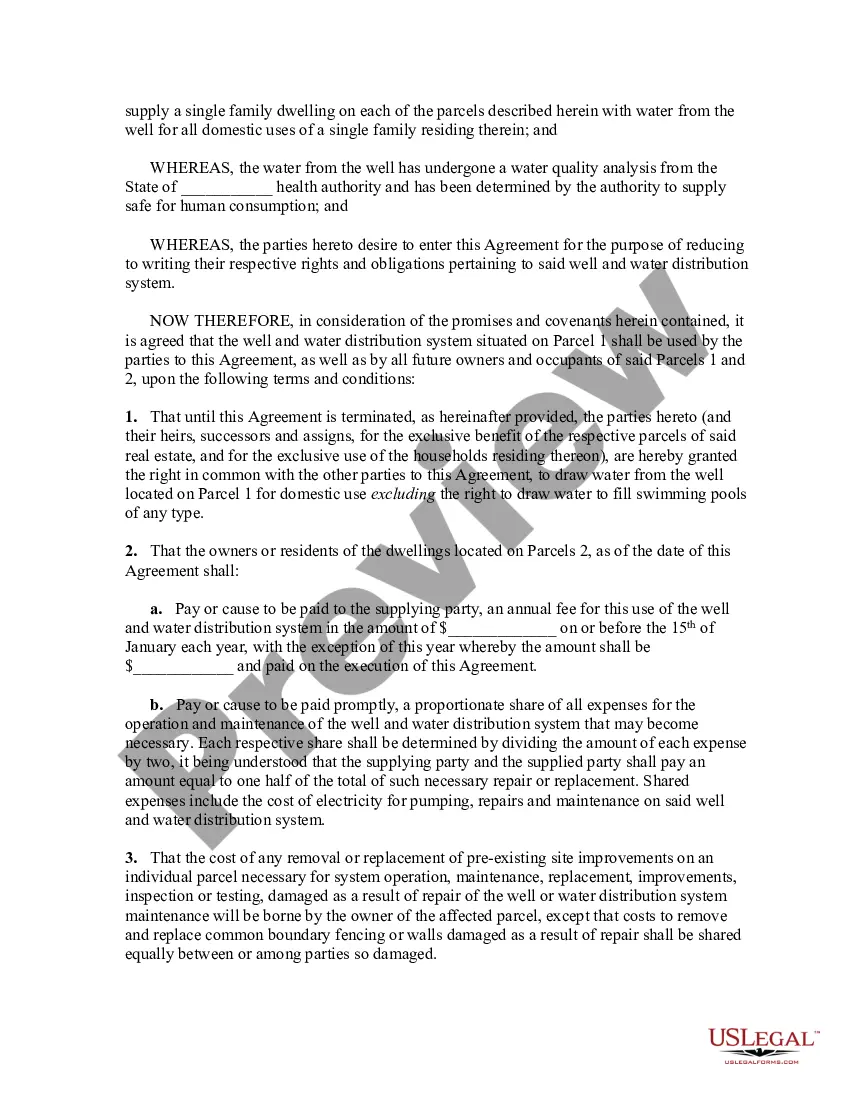
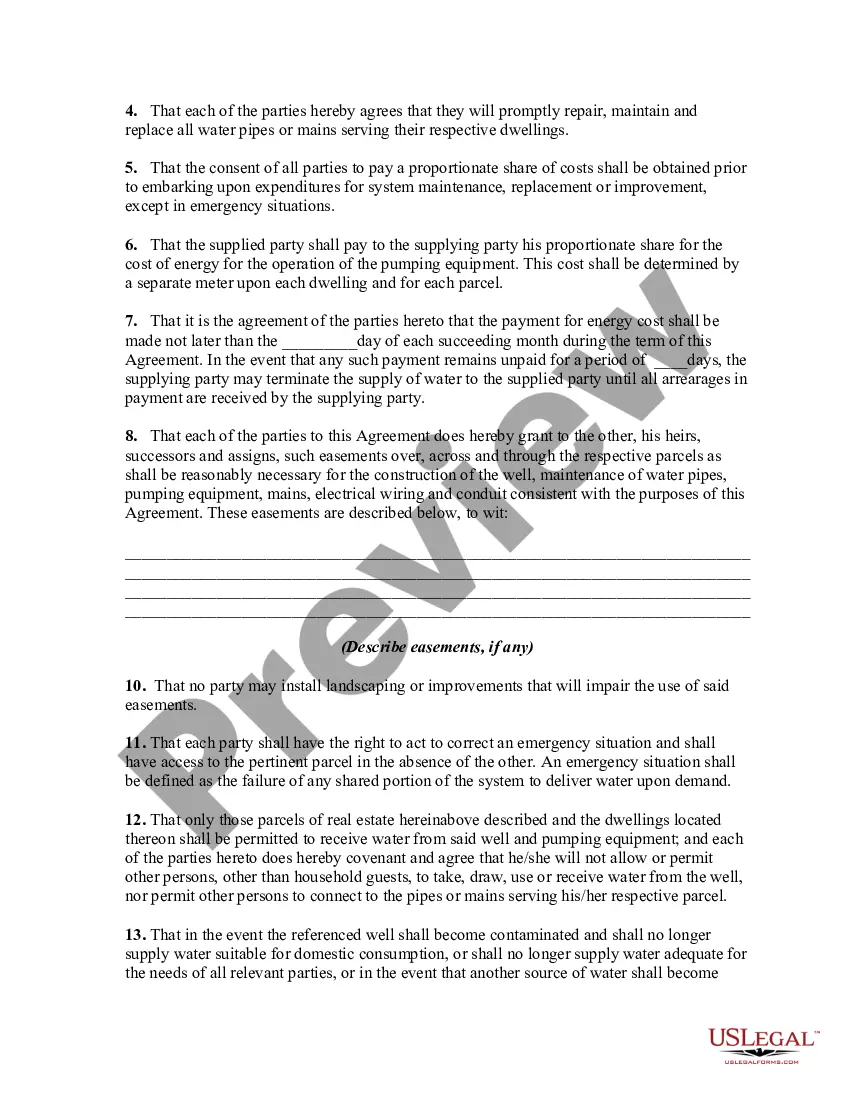
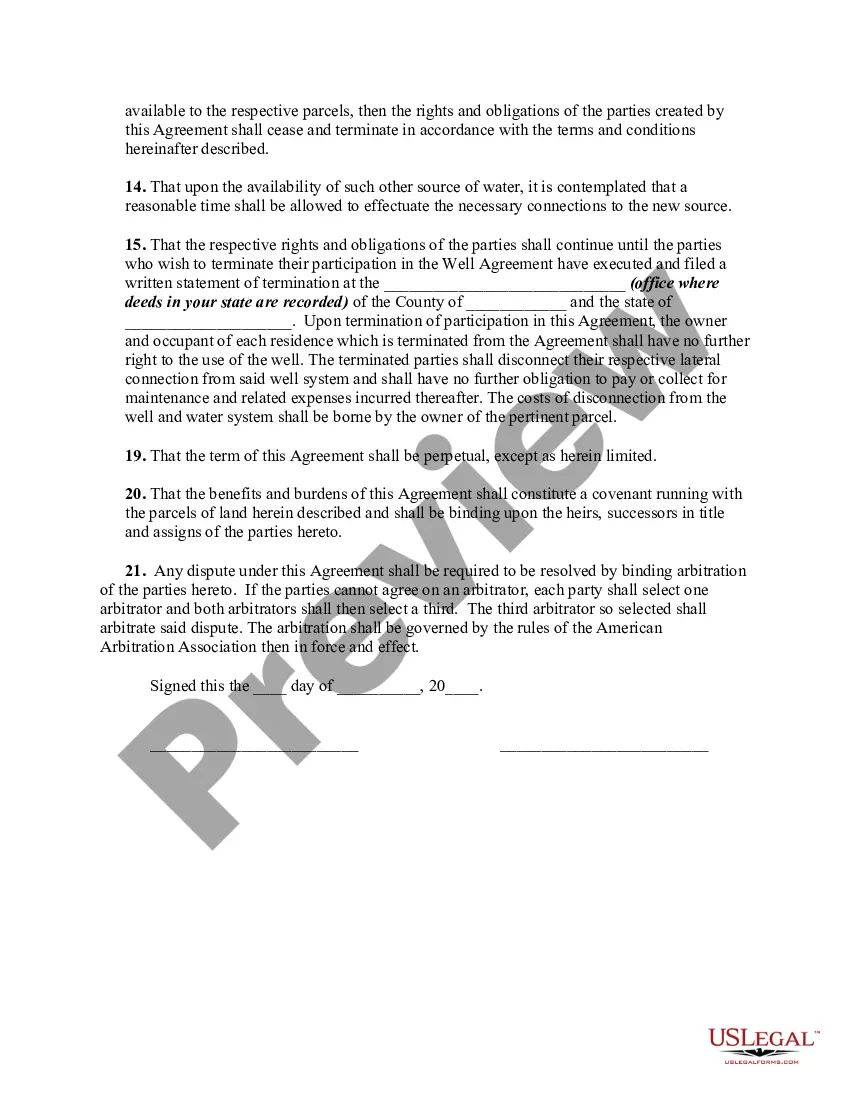
Get your form ready online
Our built-in tools help you complete, sign, share, and store your documents in one place.
Make edits, fill in missing information, and update formatting in US Legal Forms—just like you would in MS Word.
Download a copy, print it, send it by email, or mail it via USPS—whatever works best for your next step.
Sign and collect signatures with our SignNow integration. Send to multiple recipients, set reminders, and more. Go Premium to unlock E-Sign.
If this form requires notarization, complete it online through a secure video call—no need to meet a notary in person or wait for an appointment.
We protect your documents and personal data by following strict security and privacy standards.

Make edits, fill in missing information, and update formatting in US Legal Forms—just like you would in MS Word.

Download a copy, print it, send it by email, or mail it via USPS—whatever works best for your next step.

Sign and collect signatures with our SignNow integration. Send to multiple recipients, set reminders, and more. Go Premium to unlock E-Sign.

If this form requires notarization, complete it online through a secure video call—no need to meet a notary in person or wait for an appointment.

We protect your documents and personal data by following strict security and privacy standards.
Looking for another form?
How to fill out Shared Well Water Agreement?
The Oregon Collaborative Well Agreement With The Authorities displayed on this page is a reusable official template created by experienced attorneys in accordance with federal and local laws.
For over 25 years, US Legal Forms has supplied individuals, companies, and lawyers with more than 85,000 authenticated, state-specific documents for any business and personal situation. It’s the quickest, easiest, and most dependable method to acquire the paperwork you require, as the service promises bank-level data security and antivirus protection.
Subscribe to US Legal Forms to have validated legal templates available for all of life’s situations.
- Search for the document you require and verify it.
- Browse the sample you searched and view it or examine the document description to confirm it meets your needs. If it doesn’t, use the search feature to find the suitable one. Click Buy Now when you have found the template you seek.
- Subscribe and Log In.
- Choose the pricing plan that fits you and register for an account. Use PayPal or a credit card to quickly complete your payment. If you already have an account, Log In and verify your subscription to continue.
- Get the editable template.
- Select the format you prefer for your Oregon Collaborative Well Agreement With The Authorities (PDF, DOCX, RTF) and download the sample onto your device.
- Fill out and sign the document.
- Print the template to complete it manually. Alternatively, use an online multifunctional PDF editor to quickly and accurately fill out and sign your form with a legally-binding electronic signature.
- Download your documents again.
- Utilize the same document repeatedly whenever required. Access the My documents tab in your profile to re-download any previously saved forms.
Form popularity
FAQ
A shared well agreement outlines the terms and conditions for how water from a shared well is accessed and used by multiple property owners. This agreement typically includes details about maintenance responsibilities, costs, and usage rights. Having a solid Oregon shared well agreement with the government helps prevent disputes and ensures fair resource distribution among users.
Yes, you need a permit to drill a well in Oregon. The Oregon Water Resources Department regulates well drilling to ensure sustainable water use. If you're considering a shared well, the Oregon shared well agreement with the government might also require compliance with specific guidelines during the permitting process.
To find out who shares a shared well on your property, you can review your property deed and any existing shared well agreement. Additionally, contacting your local water authority may provide insights into the other users of the well. Understanding the Oregon shared well agreement with the government can clarify how water usage is managed among neighbors.
Yes, you can sell a house with a shared well, but it is essential to disclose the shared well agreement to potential buyers. The buyer must understand their rights and responsibilities concerning the shared well. This information is crucial because the Oregon shared well agreement with the government outlines how the water is shared among property owners.
Enforcing an Oregon shared well agreement with the government begins with clearly outlining the terms in your written contract. Make sure both parties acknowledge and sign the agreement to enhance its enforceability. If disputes arise, mediation can help resolve issues, promoting a collaborative approach to compliance. If necessary, legal action may be pursued, ensuring adherence to the Oregon shared well agreement with the government.
In Oregon, groundwater ownership is subject to state regulation, meaning that individuals do not own groundwater in the traditional sense. Instead, the state controls groundwater rights through permits, which are also a key aspect of the Oregon shared well agreement with the government. As a property owner, you may access groundwater through a well permit, but you must comply with state laws and regulations to ensure sustainable use. For those looking to navigate these complexities, USLegalForms provides solutions to create clear agreements and understand water rights.
A shared well agreement is a legal document that outlines the terms under which multiple parties can collectively use a single well for their water supply. In Oregon, these agreements are especially important when dealing with the allocation of groundwater and ensuring that all parties have legal access to the water. The Oregon shared well agreement with the government stipulates the rights, responsibilities, and maintenance responsibilities of each party involved. This type of agreement helps prevent disputes and promotes fair use of water resources among neighbors.
Exiting a shared well agreement typically requires a negotiation process with all parties involved. You may need to discuss your intentions openly, review the terms outlined in the agreement, and seek an amicable resolution. If necessary, you can consult legal assistance through platforms like uslegalforms to help navigate the complexities of an Oregon shared well agreement with the government and ensure compliance with local regulations.
Shared well agreements are not always required to be formally recorded, but it is highly recommended to prevent disputes and establish legal clarity. Keeping a copy of the agreement accessible to all parties can provide peace of mind. Ideally, an Oregon shared well agreement with the government that is recorded gives added protection for all involved, ensuring everyone adheres to the agreed terms.
The Federal Housing Administration (FHA) has specific guidelines regarding shared wells, primarily ensuring that they meet safety and quality standards. Shared wells must provide sufficient water quantity and quality to support all users adequately. Furthermore, having a documented Oregon shared well agreement with the government is essential to comply with FHA regulations. If you're considering financing your property, understanding these guidelines will help navigate potential issues.