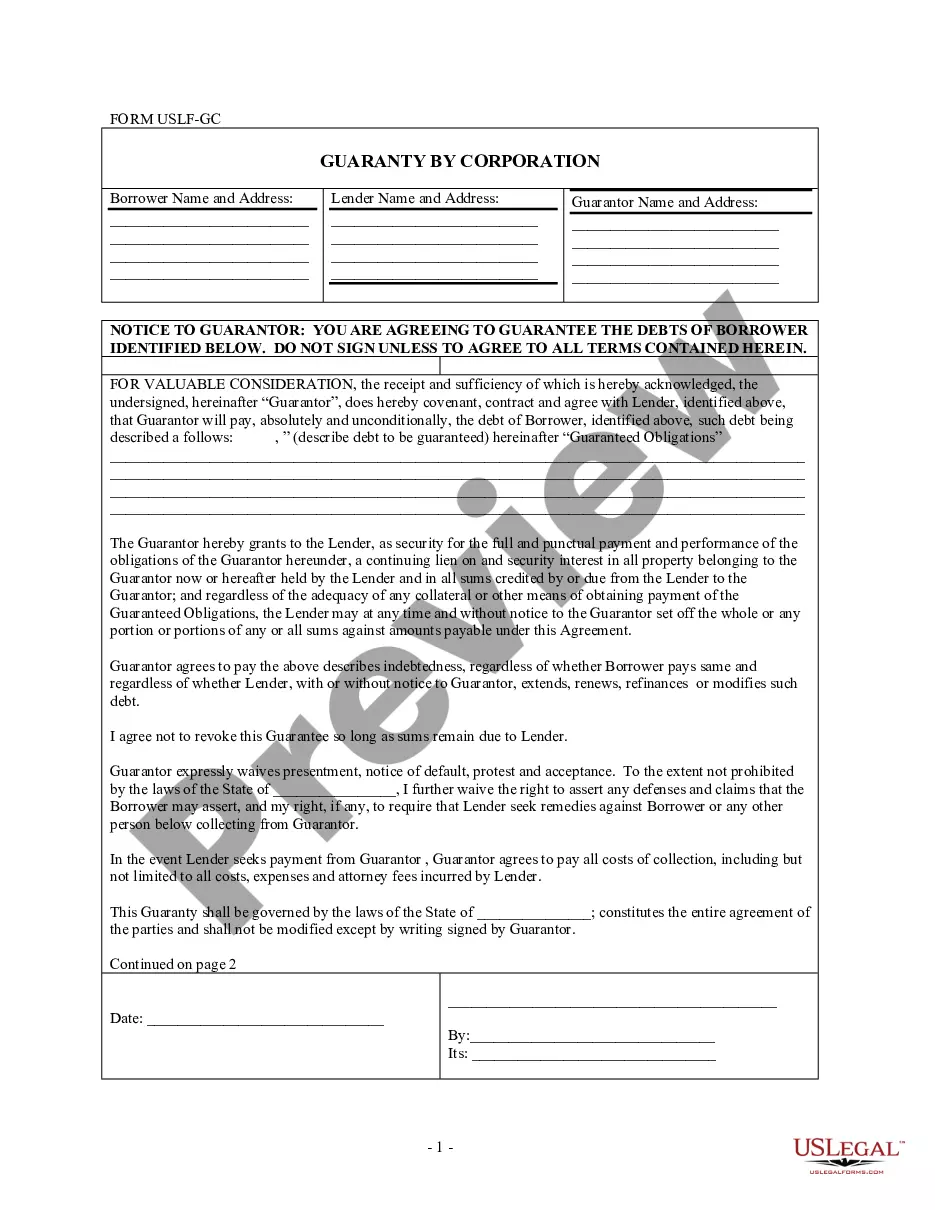
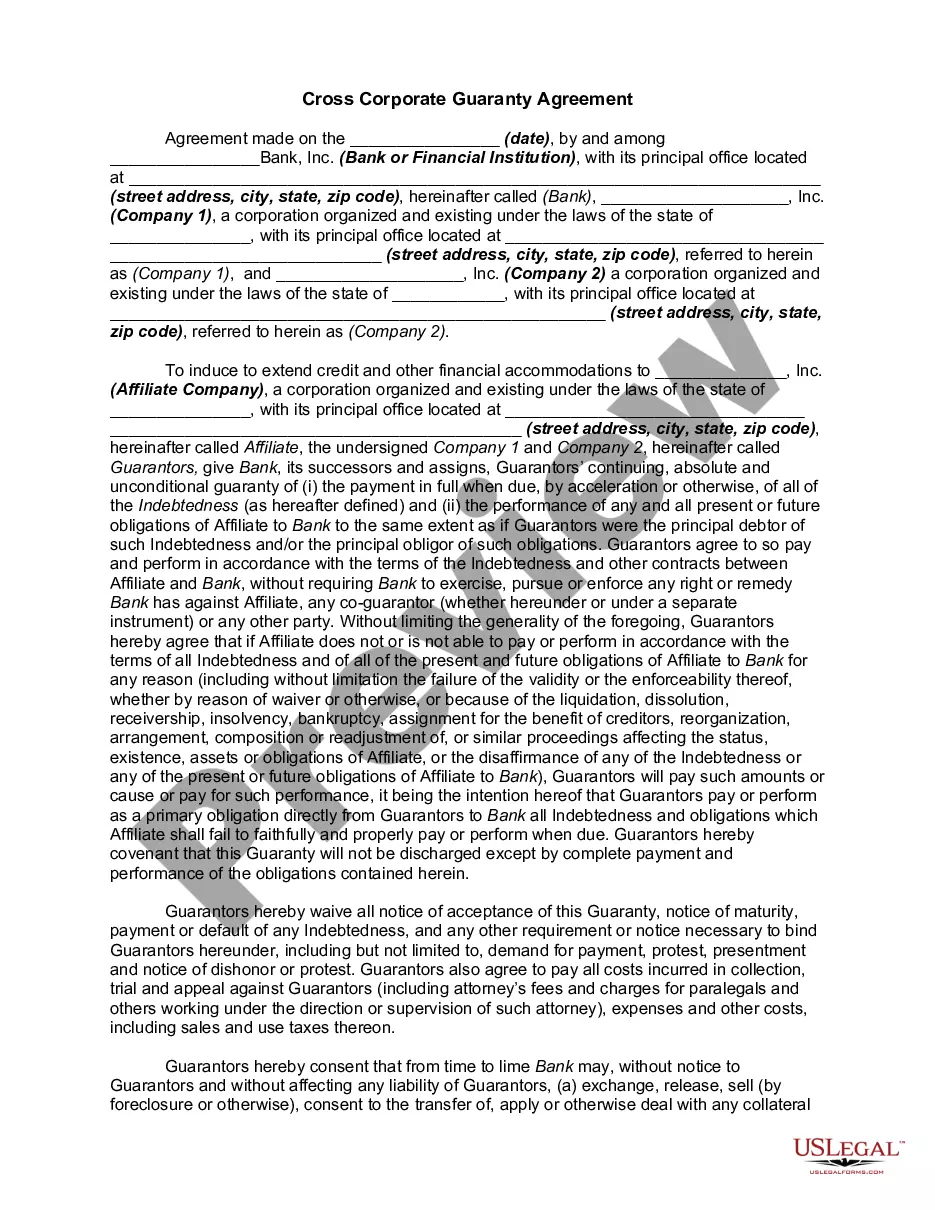
Simple Corporate Guarantee For The Construction Industry
Description
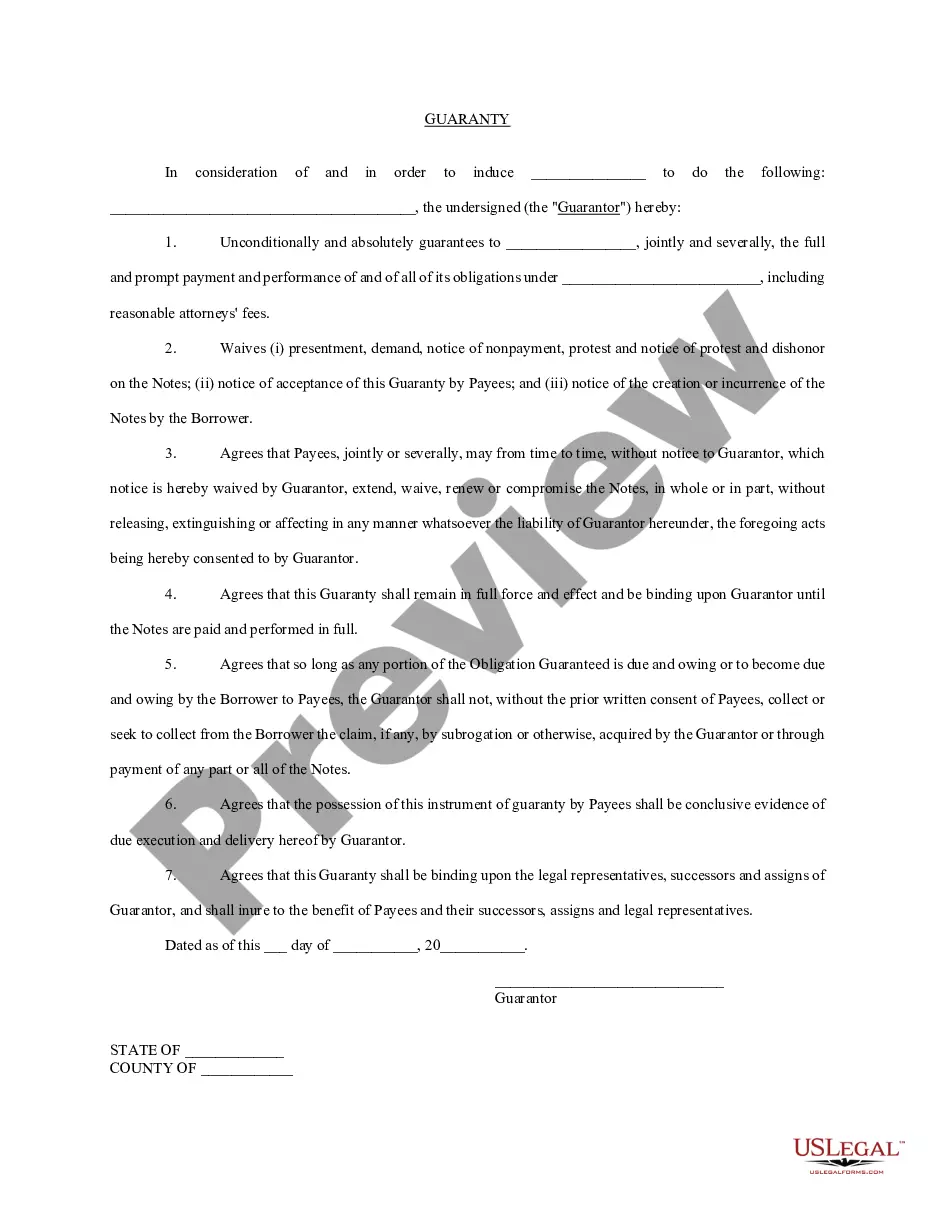
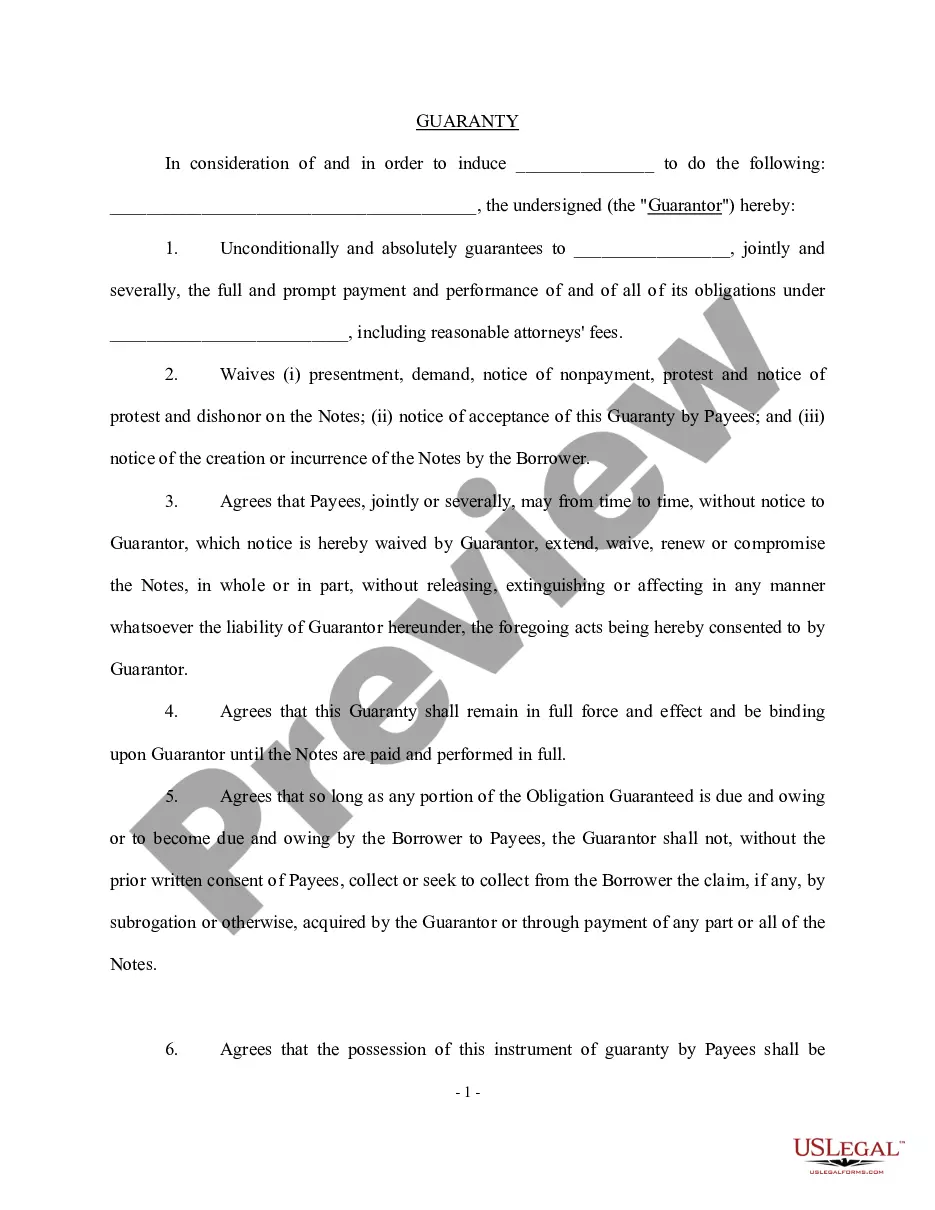
Get your form ready online
Our built-in tools help you complete, sign, share, and store your documents in one place.
Make edits, fill in missing information, and update formatting in US Legal Forms—just like you would in MS Word.
Download a copy, print it, send it by email, or mail it via USPS—whatever works best for your next step.
Sign and collect signatures with our SignNow integration. Send to multiple recipients, set reminders, and more. Go Premium to unlock E-Sign.
If this form requires notarization, complete it online through a secure video call—no need to meet a notary in person or wait for an appointment.
We protect your documents and personal data by following strict security and privacy standards.

Make edits, fill in missing information, and update formatting in US Legal Forms—just like you would in MS Word.

Download a copy, print it, send it by email, or mail it via USPS—whatever works best for your next step.

Sign and collect signatures with our SignNow integration. Send to multiple recipients, set reminders, and more. Go Premium to unlock E-Sign.

If this form requires notarization, complete it online through a secure video call—no need to meet a notary in person or wait for an appointment.

We protect your documents and personal data by following strict security and privacy standards.
Looking for another form?
How to fill out Corporate Guaranty - General?
- Log in to your US Legal Forms account to download your required document. Ensure your subscription is active, or renew it as necessary.
- Preview the form and its description carefully to confirm it meets your needs and complies with local jurisdiction requirements.
- If the form isn't suitable, utilize the Search feature to explore other templates that may better fit your project.
- Purchase the document by clicking the Buy Now button, selecting your preferred subscription plan, and creating an account for library access.
- Complete your purchase by entering your payment details through credit card or PayPal.
- Download the form to your device, enabling you to fill it out and access it anytime through the My Forms section in your profile.
US Legal Forms offers an extensive library of over 85,000 fillable legal forms, ensuring you find exactly what you need.
Empower yourself today—take advantage of the US Legal Forms service and streamline your legal documentation process!
Form popularity
FAQ
A corporate guarantee is issued by a business entity to back a commitment made by another party, while a personal guarantee involves an individual pledging their personal assets to secure an obligation. This distinction is vital for those in the construction industry to understand, as each type carries different levels of liability. Choosing a simple corporate guarantee for the construction industry can help companies limit personal exposure and appropriately distribute risk among stakeholders.
Guarantees in construction serve as a promise that the work will adhere to specific standards or be completed on time. They provide security for both clients and contractors, ensuring accountability throughout the project lifecycle. Utilizing a simple corporate guarantee for the construction industry enhances trust between parties and helps protect against financial setbacks. By leveraging such guarantees, construction professionals can navigate projects with greater peace of mind.
A corporate guarantee specifically promises to fulfill a contractual obligation if the primary party fails to do so. In contrast, an indemnity provides a broader protection against financial loss that may arise from third-party claims. For those in the construction industry, knowing the difference is essential for determining the right legal protections required for projects. A simple corporate guarantee for the construction industry can shield companies from potential default by project partners.
A company by guarantee is an organization set up to support a specific cause or service, rather than generate profit. For instance, a nonprofit construction organization might function as a company by guarantee, allowing it to operate while ensuring members' liabilities are limited. This structure is beneficial in the construction industry as it facilitates responsible project management without exposing individuals to excessive risk. Understanding how a simple corporate guarantee for the construction industry works can help these companies operate with confidence.
To create a simple construction contract, start by detailing the project scope, including timelines and payment schedules. Specify the roles of each party involved, along with their respective responsibilities. Incorporating a simple corporate guarantee for the construction industry can bolster the contract's terms, providing added security and reassurance for all stakeholders.
Writing a guarantee agreement involves outlining the parties involved and specifying the obligations that are being guaranteed. Clearly define terms such as the nature of the guarantee, timelines, and the amount committed. A well-structured simple corporate guarantee for the construction industry ensures all aspects are covered to protect both the guarantor and the guaranteed party, minimizing misunderstandings.
A guarantor clause in a contract may read, 'The undersigned guarantor agrees to fulfill obligations under this agreement in the event the principal fails to do so.' This clause clearly outlines the role of the guarantor and their responsibility. In the context of a simple corporate guarantee for the construction industry, it protects contractors by ensuring that a credible entity stands behind the financial commitments made.
To write a guarantee statement, start by clearly identifying the parties involved, including the guarantor, the recipient, and the obligation being guaranteed. State the conditions under which the guarantee applies and be specific about the amount of coverage. A simple corporate guarantee for the construction industry should be concise yet comprehensive, outlining any timelines and requirements to ensure clarity for all parties.
When discussing the simple corporate guarantee for the construction industry, you should consider three main types: absolute guarantees, conditional guarantees, and limited guarantees. Absolute guarantees hold the guarantor fully responsible for the obligation, regardless of circumstances. Conditional guarantees require specific conditions to be met before the guarantor is liable, while limited guarantees restrict liability to a specified amount or timeframe. Understanding these types can help you choose the most suitable option for your construction projects.
The main difference between a guarantee and a corporate guarantee lies in the parties involved. A traditional guarantee often involves an individual, while a corporate guarantee signifies a commitment made by a business entity. In the construction industry, a simple corporate guarantee gives clients peace of mind that a company is standing behind their commitments, thereby reducing risk.