Domestic Employee
Description
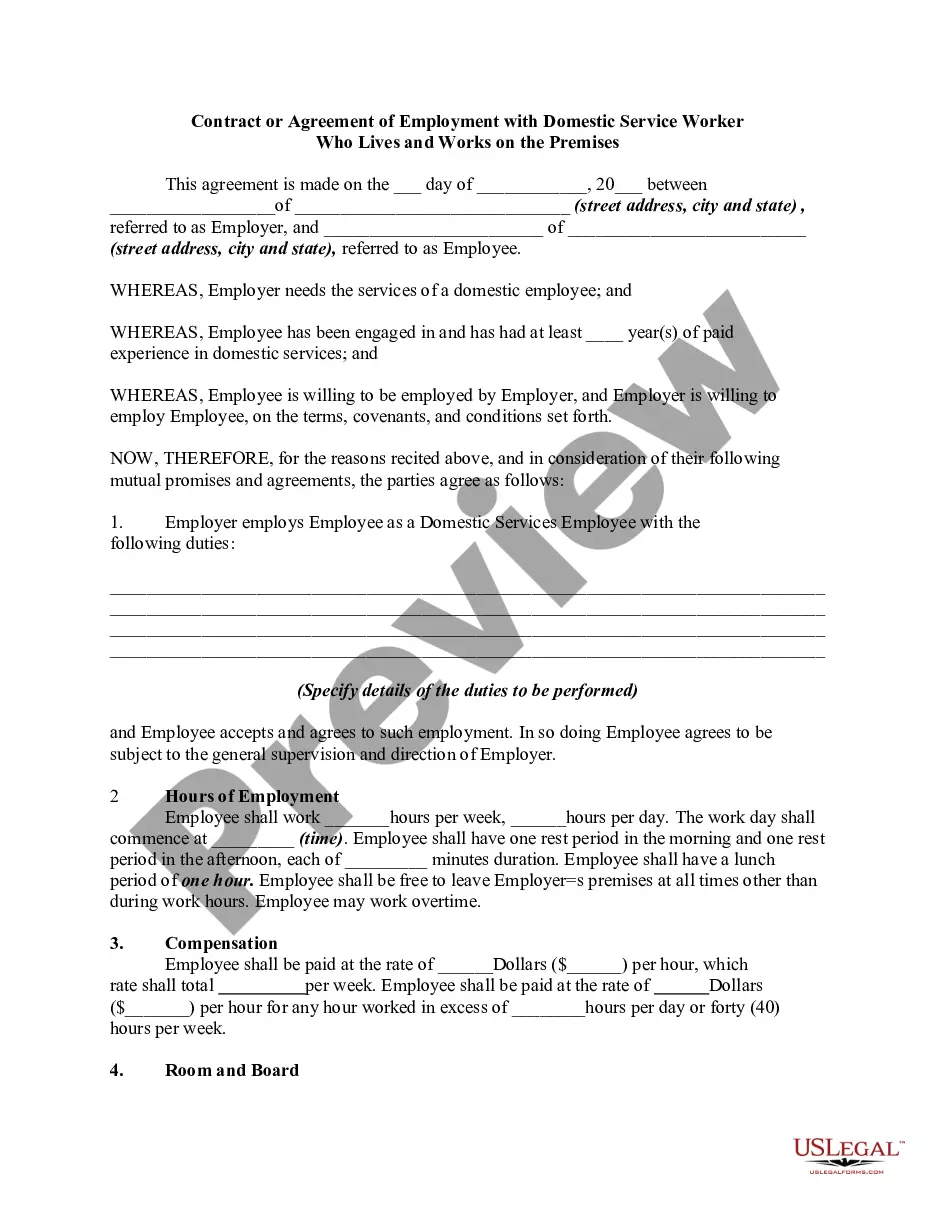
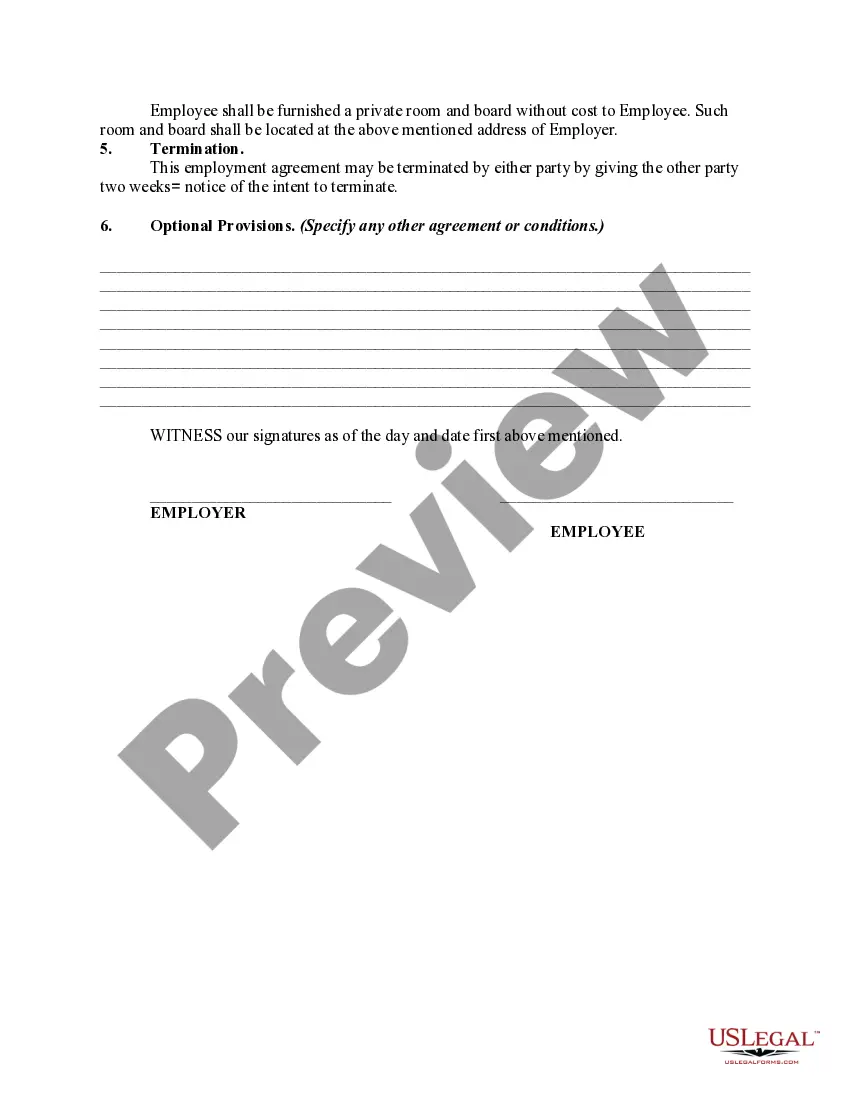
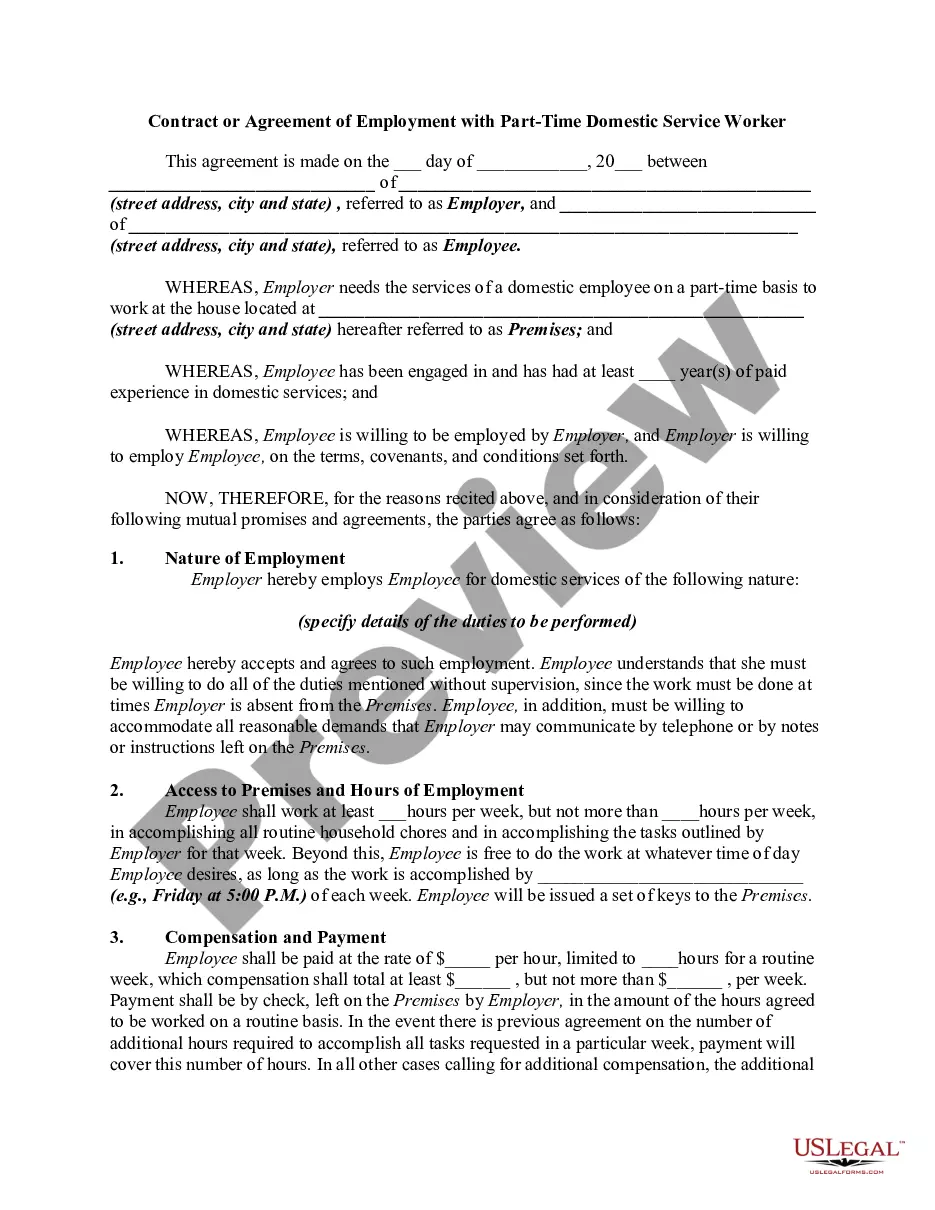
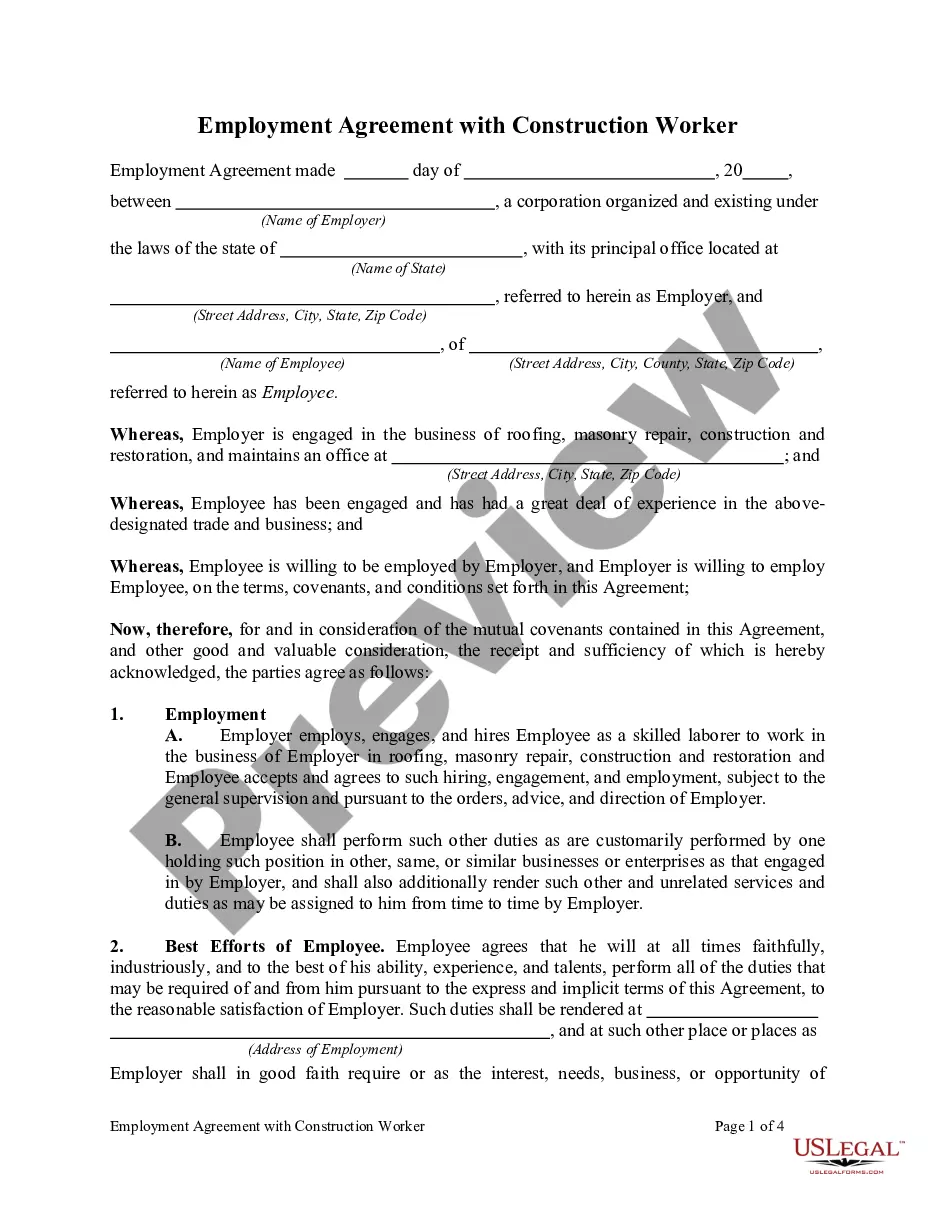
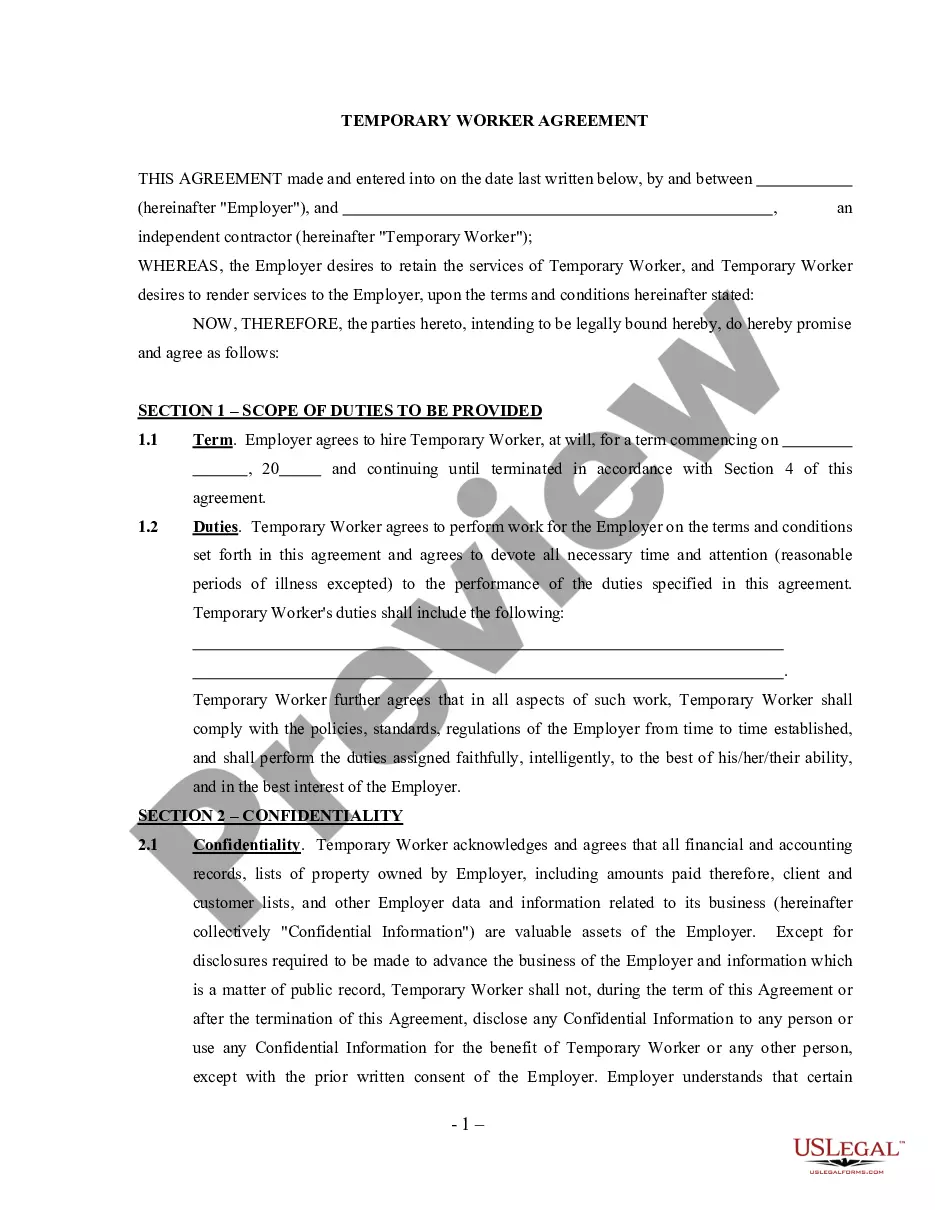



How to fill out Contract Or Agreement Of Employment With Domestic Service Worker Who Lives And Works On The Premises?
- Log in to your US Legal Forms account if you have used the service before, and navigate to the form you require.
- If you are a new user, begin by exploring the extensive legal library. Use the Preview mode to review the forms and make sure they fit your specific needs and jurisdiction requirements.
- Search for alternative templates if needed, ensuring you find the most suitable document for your situation by using the Search function.
- Once you finalize the correct form, select the Buy Now option and choose a suitable subscription plan for your needs.
- Complete your purchase by entering your payment details or opting for a PayPal transaction.
- Finally, download your completed form and save it for easy access via the My Forms section of your account for future use.
With US Legal Forms, you can ensure that your documentation is not only precise but also legally sound, thanks to access to premium expert assistance. Their collection of over 85,000 editable forms makes it easy to find exactly what you need.
Take the stress out of managing your domestic employee’s documentation today—visit US Legal Forms to get started on your legal forms now!
Form popularity
FAQ
A domestic employee is someone you hire to perform household services, and they may include nannies, cleaners, or caregivers. These employees usually work in your home and can be either part-time or full-time. Understanding the responsibilities of employing a domestic employee can help you manage your household efficiently. If you need resources or forms, platforms like US Legal Forms can assist you.
The IRS defines a household employee as someone you hire to perform work in your home on a regular basis. This includes nannies, housekeepers, and caregivers. If you control what will be done and how it will be done, this individual is likely a domestic employee. Clarifying their status can help you navigate tax requirements seamlessly.
Household workers are not generally exempt from receiving a 1099 if they meet the income threshold of $600 or more. However, some household employees may be classified differently for tax purposes. Always verify their employment status to ensure proper tax reporting. Understanding your obligations can simplify the reporting process.
As a domestic employee, you typically fill out Form W-4 when starting a new job, which determines your tax withholding. This form is essential for accurate payroll processing. If you earn a sufficient amount, your employer might issue you a 1099 at the year’s end. Stay informed about your tax obligations to ensure compliance.
A domestic employee is an individual hired to perform household work for a family or individual. This role can include a wide variety of tasks, such as cleaning, cooking, and caring for children or the elderly. Understanding the meaning of a domestic employee is essential for fostering respectful working relationships. If you are hiring a domestic employee, consider using platforms like US Legal Forms to access the necessary agreements and resources for a smooth employment process.
An employer of a domestic refers to an individual or family that hires someone to perform work in their home. This relationship typically involves a direct agreement between the employer and the domestic employee. It is important for the employer to understand their responsibilities, such as providing fair compensation and ensuring a safe working environment. By being a responsible employer, households not only support their domestic workers but also foster a positive work atmosphere.
A domestic worker is anyone hired to perform work in a private household. This classification includes various roles, from personal assistants to cleaning professionals. In essence, a domestic employee takes on responsibilities that directly support the everyday functions of a home. Understanding this classification is vital for both employers and employees to ensure proper treatment and compliance with regulations.
Domestic staff refers to individuals employed to manage household tasks and support family needs. This term encompasses various domestic employees, such as maids, butlers, and gardeners. Having a domestic staff can significantly ease day-to-day burdens for families, allowing for more leisure time and less stress. In today's busy world, investing in domestic staff can improve overall home life.
Domestic workers engage in various tasks that help maintain a household. This type of work can encompass cleaning, cooking, childcare, and elder care, among other responsibilities. A domestic employee often adapts to the specific needs of the family they serve. Whether full-time or part-time, these workers play a crucial role in everyday living.
Domestic workers include a range of individuals employed in private homes. Common examples are housekeepers, nannies, caregivers, and personal chefs. These domestic employees perform essential tasks that support the functioning of households. By employing domestic workers, families can enhance their quality of life and balance their personal and professional commitments.