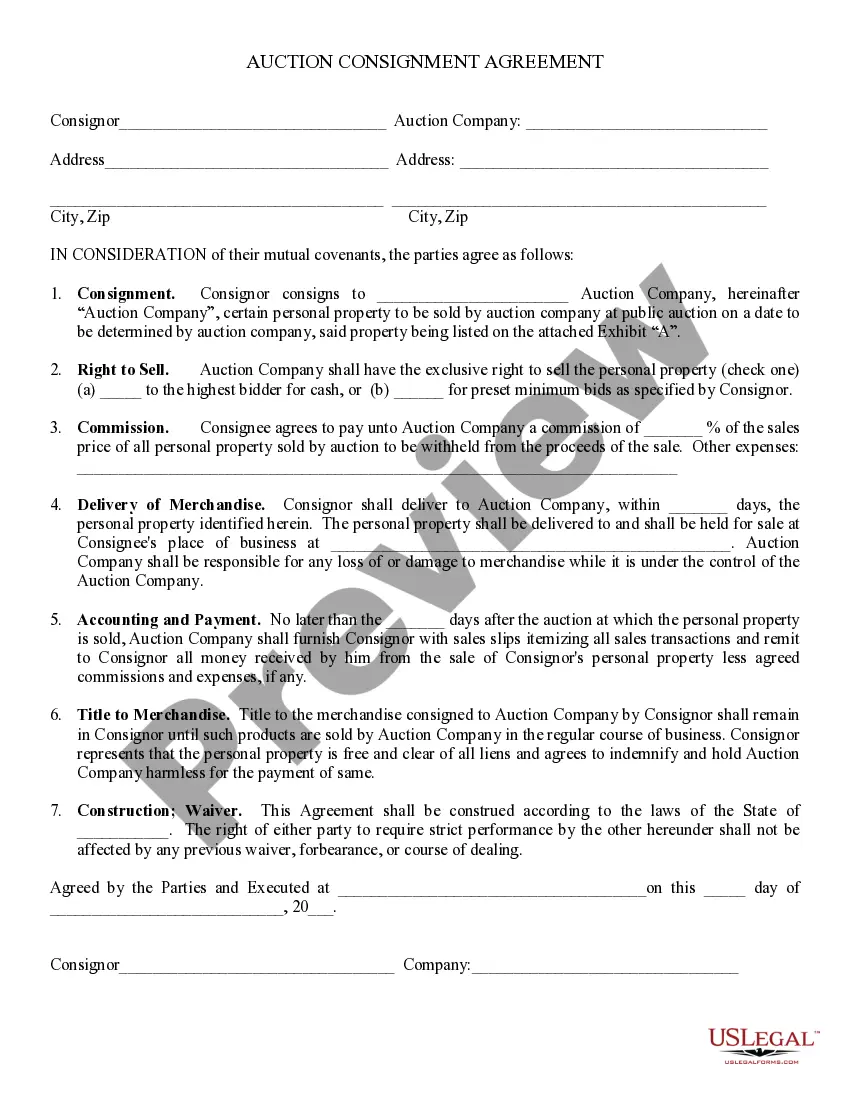
Template For Consignment Agreement
Description

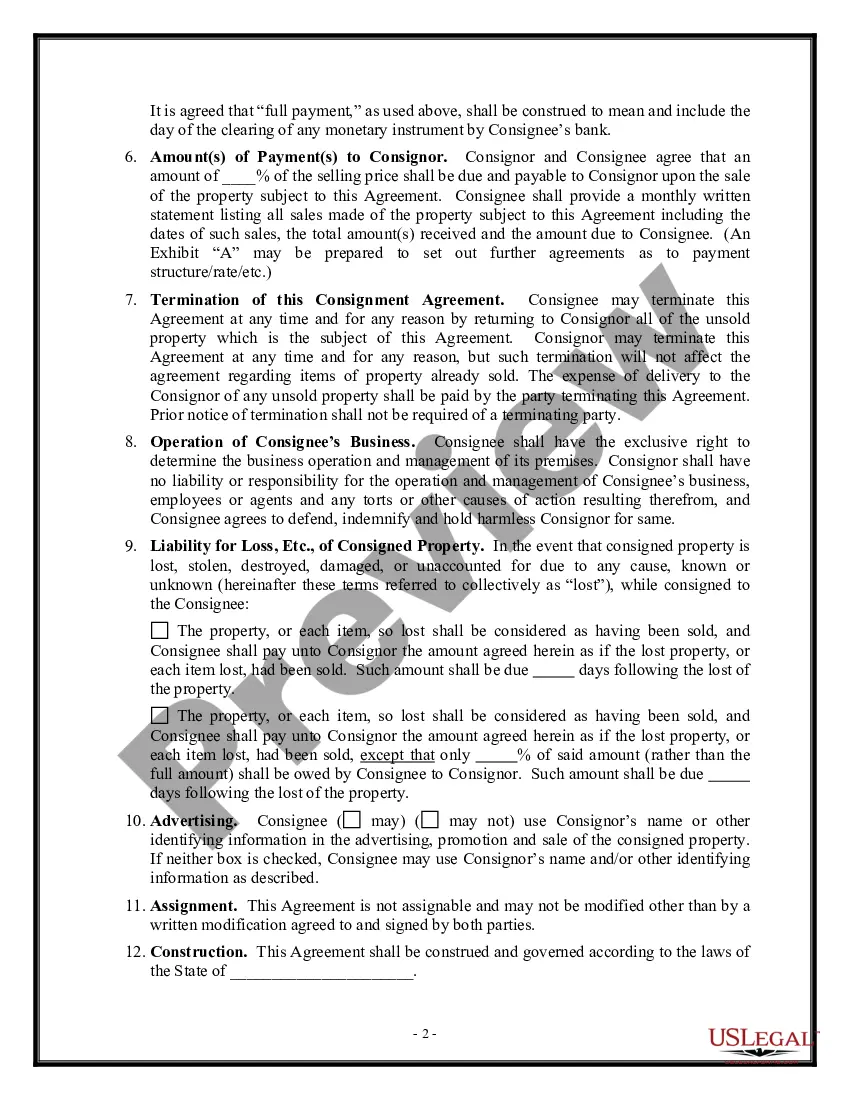
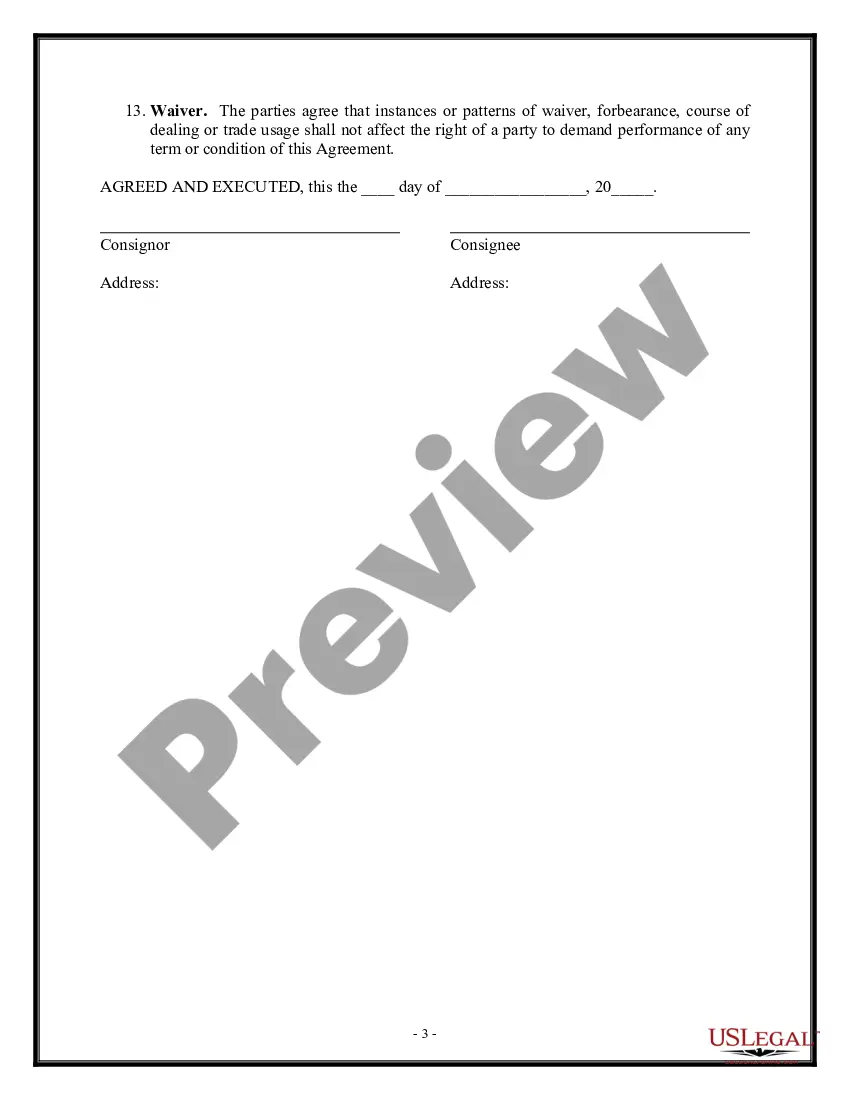
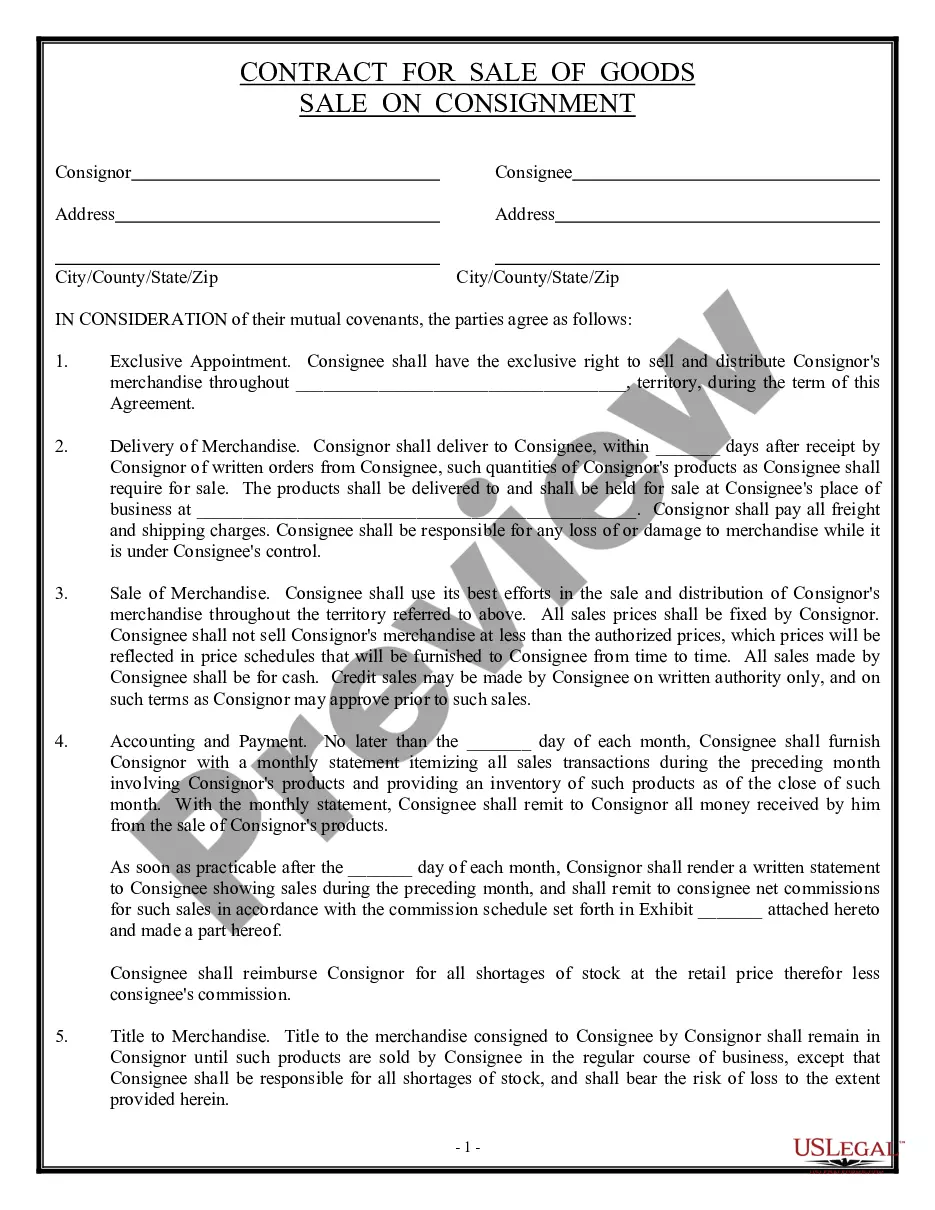
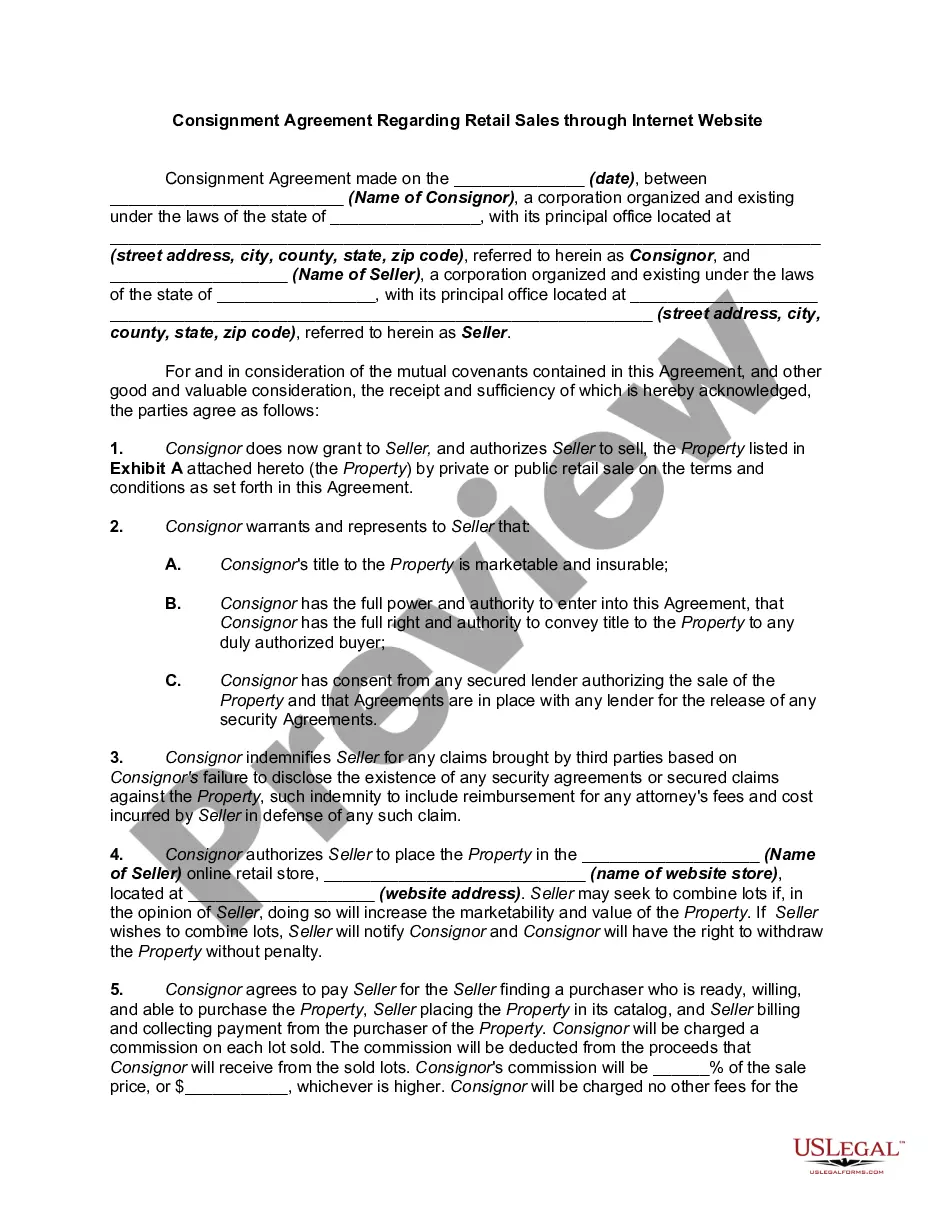
Get your form ready online
Our built-in tools help you complete, sign, share, and store your documents in one place.
Make edits, fill in missing information, and update formatting in US Legal Forms—just like you would in MS Word.
Download a copy, print it, send it by email, or mail it via USPS—whatever works best for your next step.
Sign and collect signatures with our SignNow integration. Send to multiple recipients, set reminders, and more. Go Premium to unlock E-Sign.
If this form requires notarization, complete it online through a secure video call—no need to meet a notary in person or wait for an appointment.
We protect your documents and personal data by following strict security and privacy standards.

Make edits, fill in missing information, and update formatting in US Legal Forms—just like you would in MS Word.

Download a copy, print it, send it by email, or mail it via USPS—whatever works best for your next step.

Sign and collect signatures with our SignNow integration. Send to multiple recipients, set reminders, and more. Go Premium to unlock E-Sign.

If this form requires notarization, complete it online through a secure video call—no need to meet a notary in person or wait for an appointment.

We protect your documents and personal data by following strict security and privacy standards.
Looking for another form?
How to fill out Consignment Agreement?
It’s well-known that you cannot transform into a legal expert instantly, nor can you swiftly master how to prepare a Template For Consignment Agreement without a specialized education.
Drafting legal documents is a lengthy process that demands particular training and expertise.
So why not entrust the creation of the Template For Consignment Agreement to the professionals.
Preview it (if this option is available) and read the accompanying description to see if the Template For Consignment Agreement meets your needs.
Set up a free account and select a subscription option to buy the template. Click Buy now. Once the payment is processed, you can access the Template For Consignment Agreement, fill it out, print it, and deliver it to the relevant individuals or organizations.
- With US Legal Forms, one of the most comprehensive legal document repositories, you can find everything from court documents to templates for in-office correspondence.
- We understand how important it is to comply with federal and local laws and regulations.
- That’s why, on our platform, all forms are tailored to specific locations and are current.
- Here’s how to begin on our website and obtain the document you require in just a few minutes.
- Locate the form you need using the search bar at the top of the page.
Form popularity
FAQ
There are two types of consignment: Outward consignment. Inward consignment.
A consignment agreement is a legal document in which a third party sells the goods. The party that sells the goods on consignment (the Consignee) receives a portion of the profits, either as a flat rate fee or commission for selling the goods on behalf of the Consignor who owns right and title to the goods.
The dealer has no risk and you have your merchandise before the public. Examples of goods often sold on consignment include light bulbs, produce, eggs, poultry, magazines, newspapers, Christmas decorations, garden seeds, batteries for flashlights and potted plants such as those found in supermarkets.
3. Consignment agreement instructions Introduction of Parties. Identifies the parties and the date of the agreement. ... Recitals. ... Section 1: Consigned property. ... Section 2: Delivery of goods. ... Section 3: Consignment period. ... Section 4: Efforts to sell. ... Section 5: Title to products. ... Section 6: Payment; commission.
A consignment agreement is a legally binding document between a consignee and a consignor for the sale, storage, transfer, resale and use of a commodity. The consignee accepts goods from sellers to sell to potential buyers. The consignee will not receive commissions till the goods are sold.