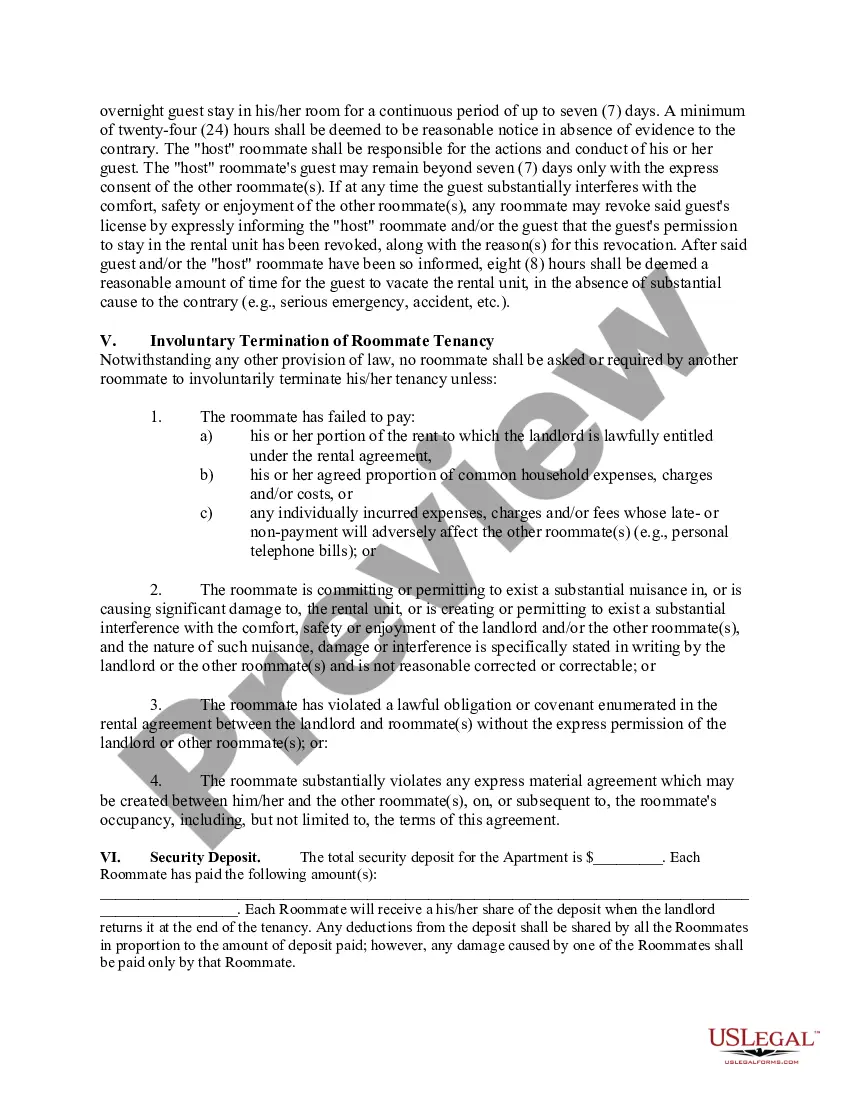
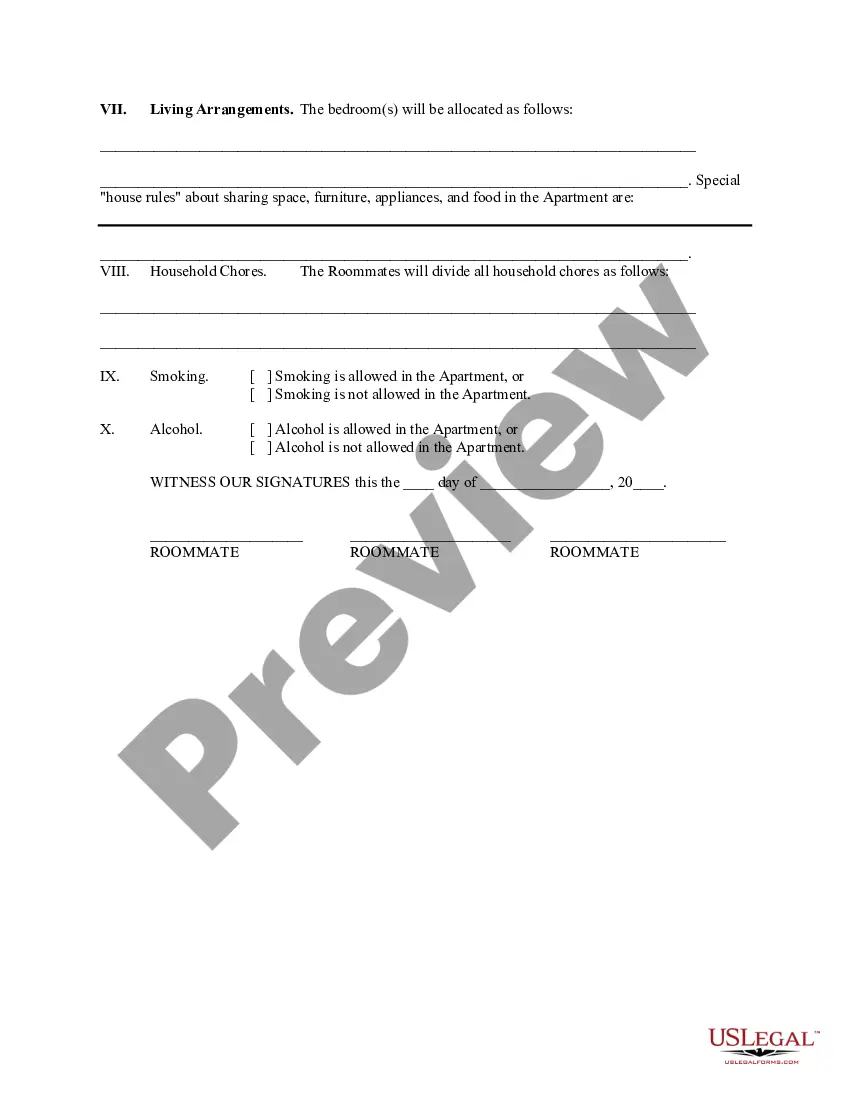
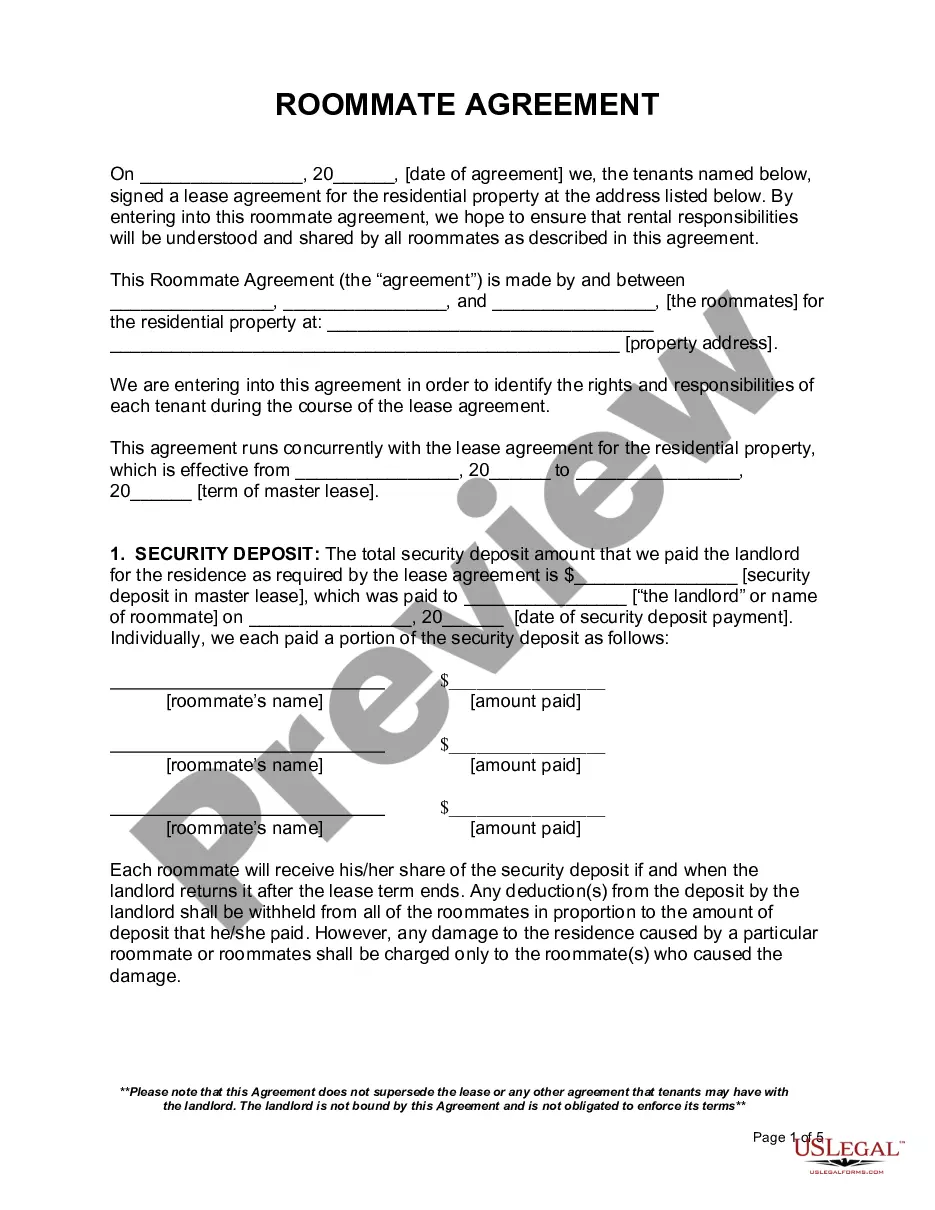
Roommate Agreement In Michigan In Queens
Description

Get your form ready online
Our built-in tools help you complete, sign, share, and store your documents in one place.
Make edits, fill in missing information, and update formatting in US Legal Forms—just like you would in MS Word.
Download a copy, print it, send it by email, or mail it via USPS—whatever works best for your next step.
Sign and collect signatures with our SignNow integration. Send to multiple recipients, set reminders, and more. Go Premium to unlock E-Sign.
If this form requires notarization, complete it online through a secure video call—no need to meet a notary in person or wait for an appointment.
We protect your documents and personal data by following strict security and privacy standards.

Make edits, fill in missing information, and update formatting in US Legal Forms—just like you would in MS Word.

Download a copy, print it, send it by email, or mail it via USPS—whatever works best for your next step.

Sign and collect signatures with our SignNow integration. Send to multiple recipients, set reminders, and more. Go Premium to unlock E-Sign.

If this form requires notarization, complete it online through a secure video call—no need to meet a notary in person or wait for an appointment.

We protect your documents and personal data by following strict security and privacy standards.
Looking for another form?




Form popularity
FAQ
Starting in March, you have the option to search for a roommate in the housing portal. If you don't want to choose a roommate, you will receive a random roommate (about half of our residents choose to live with a random roommate).
Roommates cannot evict one another. The eviction process is only available in landlord-tenant relationships. This means you cannot force your roommate to leave the home, and your roommate cannot force you to leave the home. This is true even if your roommate stopped paying for their portion of rent and utilities.
Incoming first-years do not choose their roommates.
You may search for a roommate via our roommate finder in the housing application. This service allows you to search for a roommate; if you find a potential roommate and successfully form a roommate group, we will do our best to assign you together.
A Roommate Agreement is a written contract between roommates that outlines their rights and obligations while living together. This agreement includes house rules, maintenance duties, restricted behaviors, and more. For a Roommate Agreement to be useful, everyone sharing the household must agree to it.
Many colleges have a matching system to pair you with your future roommate. If they do not, they might do it manually within their housing department. If you are going to an in-state college or going to a college with someone you know, you have the opportunity to choose your future roommate if you so wish.
You may search for a roommate via our roommate finder in the housing application. This service allows you to search for a roommate; if you find a potential roommate and successfully form a roommate group, we will do our best to assign you together. Roommates should make sure their room preferences closely align.
A tenancy agreement may end when someone goes against one of its material terms Residential Tenancy Act: Section 45.3. If a landlord or tenant breaches a material term and the other party wants to end the tenancy, they must send a written warning to the party who breached the term.
You can also narrow the results by topic by entering the kind of lawyer you need (divorce, estate, etc.) at the top of the page. Roommates cannot evict one another. The eviction process is only available in landlord-tenant relationships.
New York State law protects the right of tenants in privately-owned buildings to have a roommate under certain conditions. If those conditions are met, tenants do not need the permission of the landlord to have an additional occupant, and are legally allowed to have a roommate even if their lease prohibits it.
