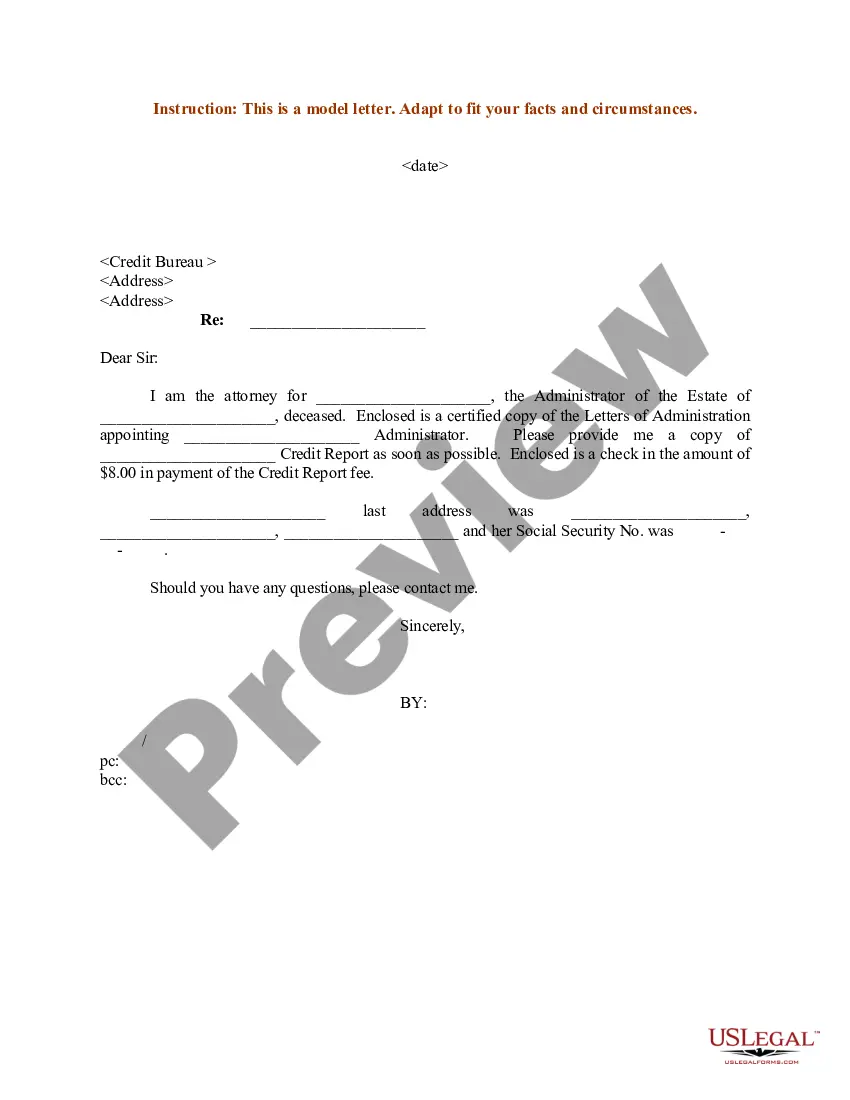
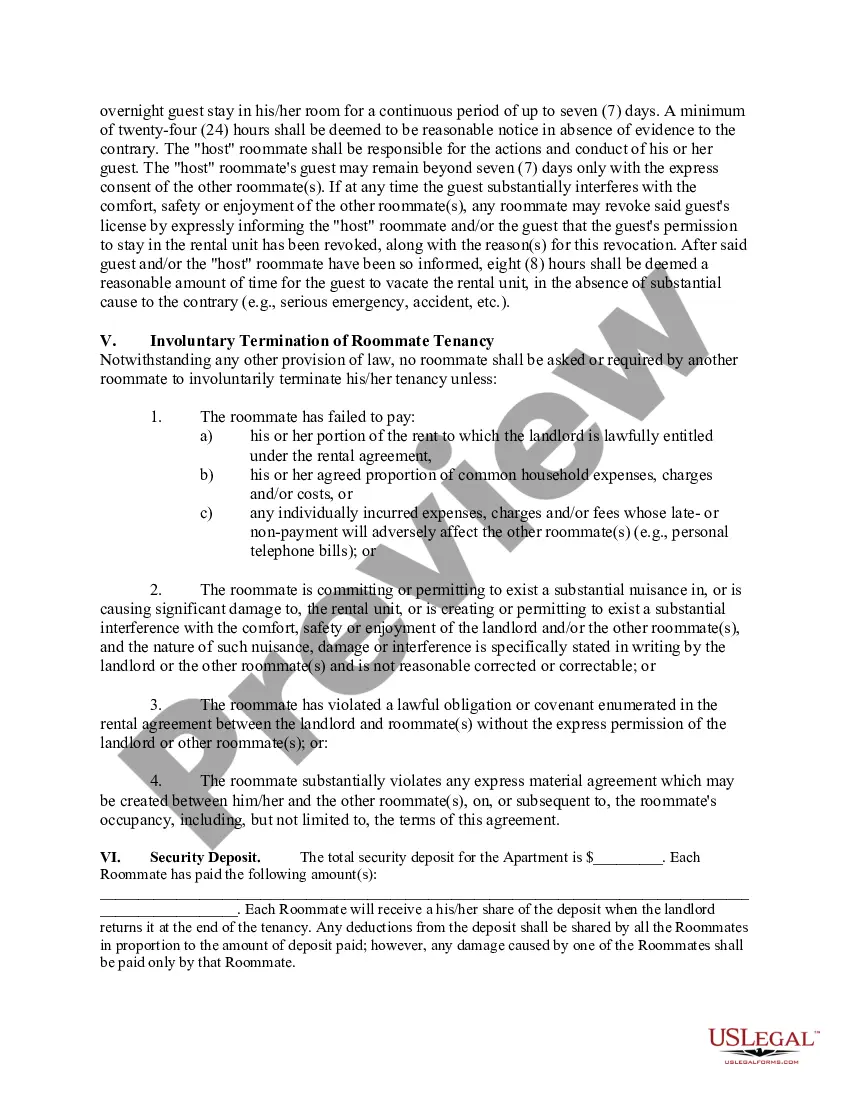
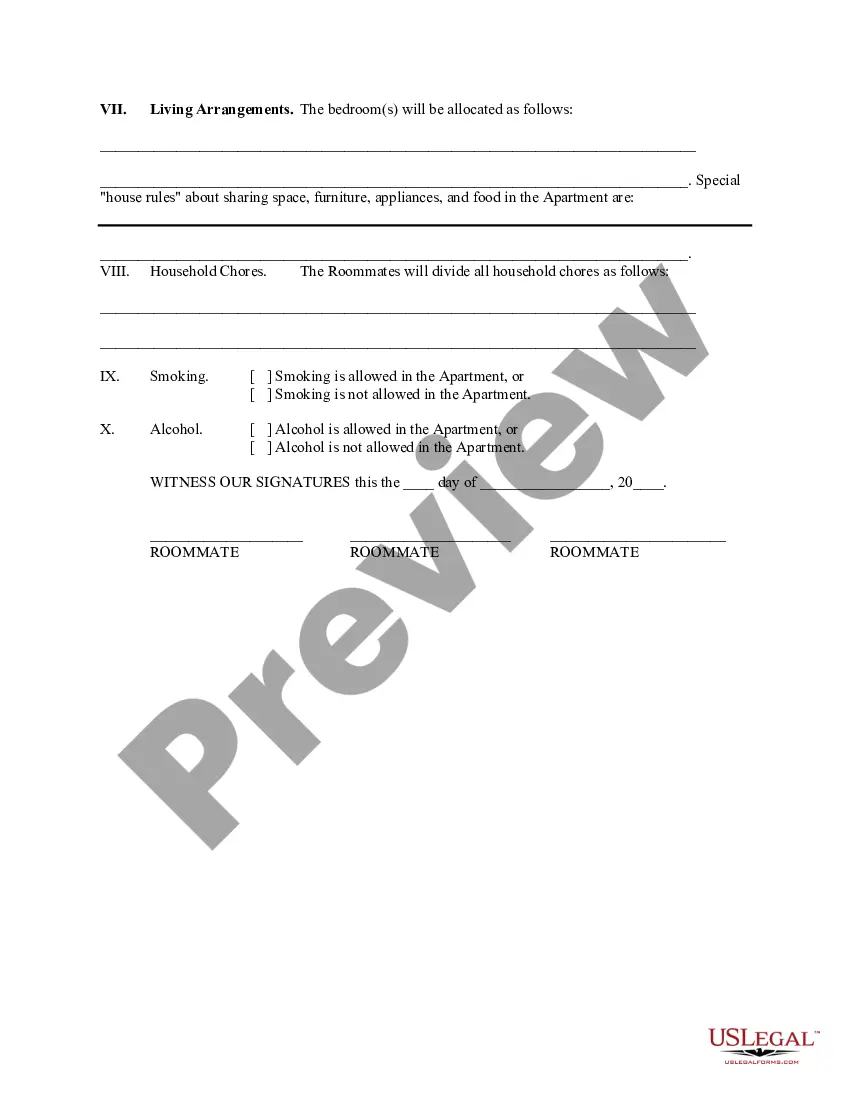
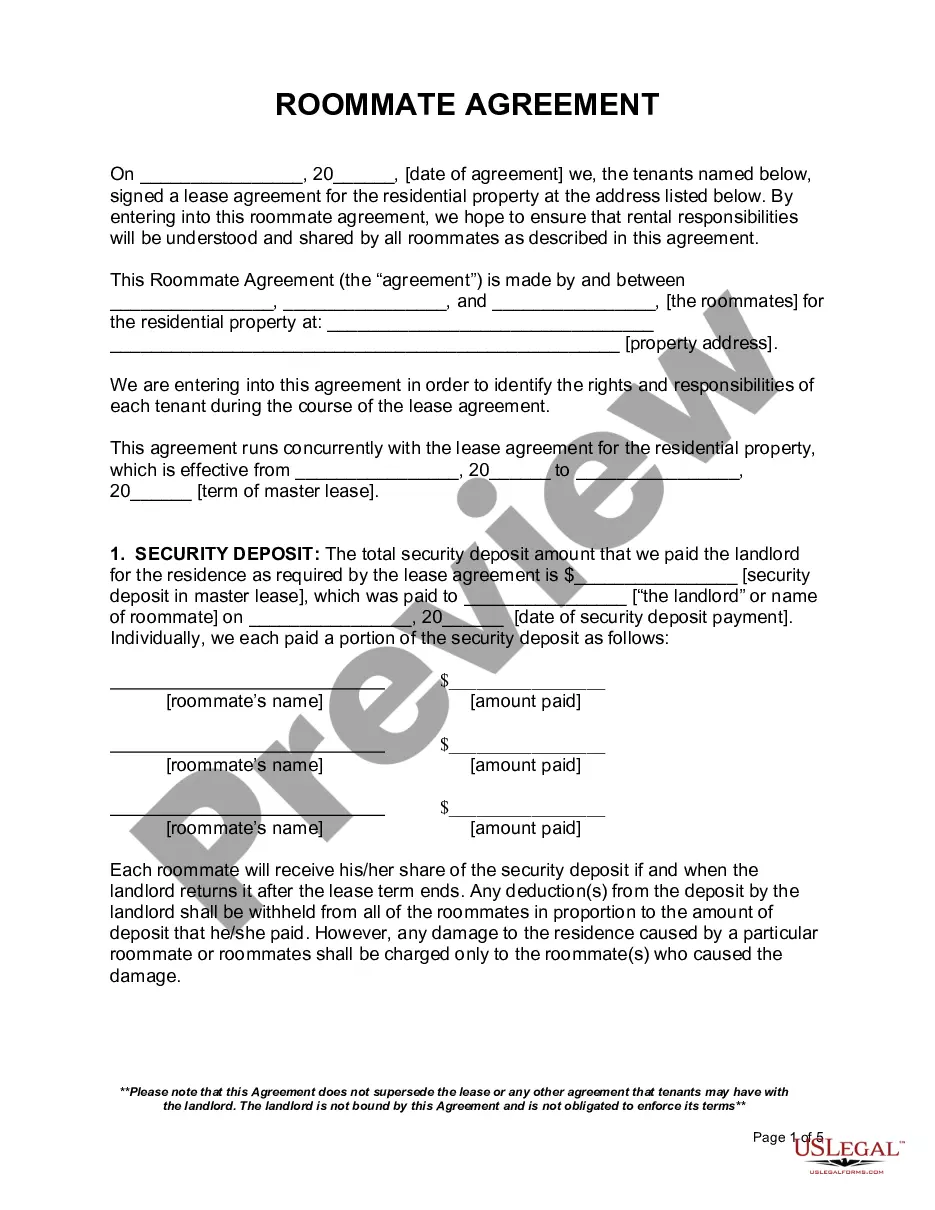
Roommate Agreement With Landlord In Pima
Description

Get your form ready online
Our built-in tools help you complete, sign, share, and store your documents in one place.
Make edits, fill in missing information, and update formatting in US Legal Forms—just like you would in MS Word.
Download a copy, print it, send it by email, or mail it via USPS—whatever works best for your next step.
Sign and collect signatures with our SignNow integration. Send to multiple recipients, set reminders, and more. Go Premium to unlock E-Sign.
If this form requires notarization, complete it online through a secure video call—no need to meet a notary in person or wait for an appointment.
We protect your documents and personal data by following strict security and privacy standards.

Make edits, fill in missing information, and update formatting in US Legal Forms—just like you would in MS Word.

Download a copy, print it, send it by email, or mail it via USPS—whatever works best for your next step.

Sign and collect signatures with our SignNow integration. Send to multiple recipients, set reminders, and more. Go Premium to unlock E-Sign.

If this form requires notarization, complete it online through a secure video call—no need to meet a notary in person or wait for an appointment.

We protect your documents and personal data by following strict security and privacy standards.
Looking for another form?


Form popularity
FAQ
But the landlord can't just kick out the tenant, change the locks, or turn off the utilities. The landlord must follow all the steps the law says must be taken. And the tenant should not just stop paying the rent unless the tenant first follows all the steps the law says must be taken.
Arizona law states that a two person per bedroom occupancy limit is presumed to be reasonable. Depending upon the circumstances, however, such a limit may be challenged, and anything less than two persons per bedroom may violate fair housing laws by having an adverse impact against families with children.
Eviction Process in Arizona Landlord Serves a Zero- to Ten-Day Eviction Notice. Landlord Files an Eviction Lawsuit with the Court. Court Serves the Tenant the Summons. Tenant Files an Answer. Landlord and Tenant Attend Court Hearing and Receive Judgment. Tenant Gets a Final Notice Period to Move Out.
State Laws: When a Guest Legally Becomes a Tenant StateRules on Guests Becoming Tenants Alabama Guests can stay for up to 30 days Alaska No official cutoff. Landlord must specify in lease Arizona Guests can stay for up to 29 days Arkansas No official cutoff. Landlord must specify in lease46 more rows •
Even in the absence of a written lease, a tenant at will is entitled to a fair and formal eviction process. This protection makes sure that landlords follow proper legal procedures. Here are the key components of this right: Proper notice: Landlords must give tenants a formal notice of eviction in advance.
Arizona law (ARS § 33-1378) indicates that: “A person who is a guest of a tenant who is not named on a written lease and who remains on the premises without the permission of the tenant or the landlord is not a lawful tenant and that person's presence in or on the premises does not constitute residency or tenancy.
Arizona: Guests can stay for up to 29 days. California: Guests become tenants when they stay for over 14 days within six months, or seven nights in a row. Colorado: Guests become tenants after staying for over 14 days within six months.
Thank you. Yes, if someone is living there who is not on the lease and without the permission of the management or landlord, you would be in breach of the lease and they could evict you, if this person does not move out.
A. § 33-1324. All electrical, plumbing, sanitary, heating, ventilating, air-conditioning and other facilities and appliances must be maintained in good and safe working order and condition.