Contingent Contract With Example In Suffolk
Description











Form popularity
FAQ
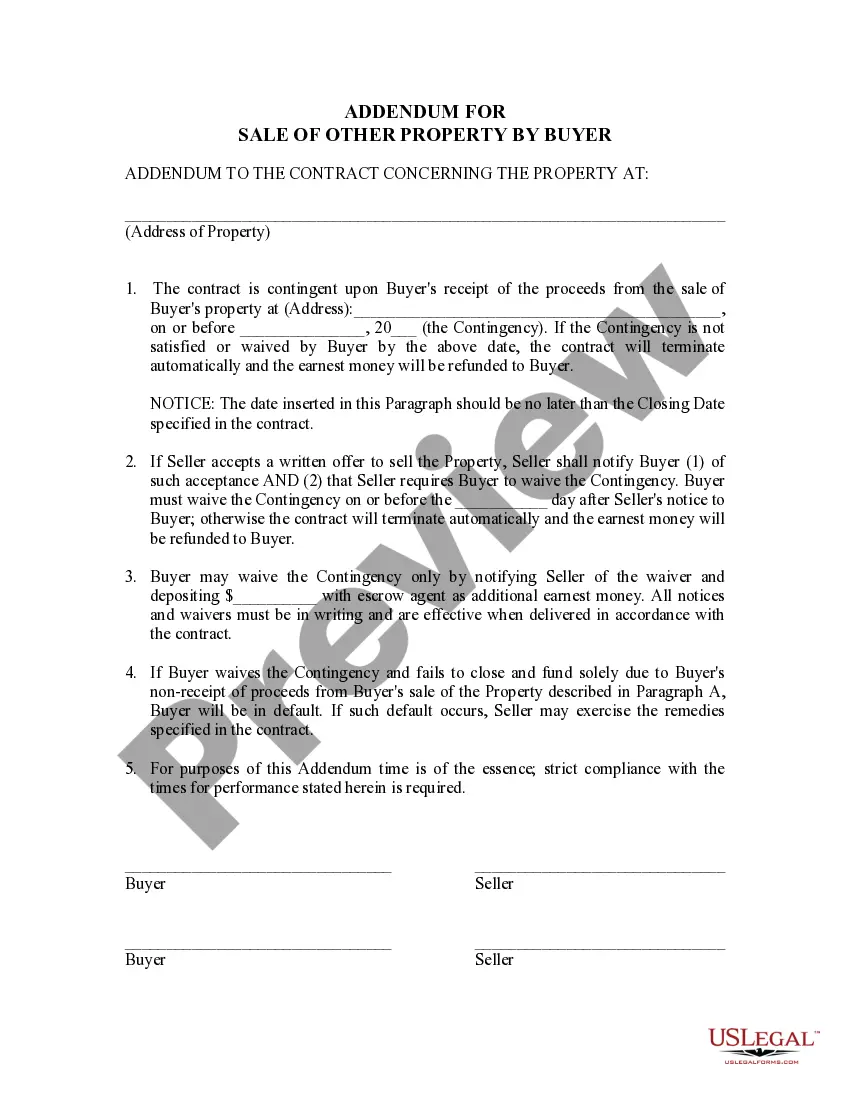
Contingent contracts, like contingencies themselves, cannot occur unless a certain condition is met. For instance, the sale of a home cannot take place without a prior home inspection, and an aircraft cannot leave the hangar without a thorough walk-around inspection by the pilot.
Companies hire contingent employees and contract employees for a specific project or pre-determined amount of time. A contingent worker does not earn a salary from the employer. Instead, they receive payment per hour worked or commissions for the work they complete.
Disadvantages of Contingent Contracts: Parties may need to seek legal advice or engage in lengthy negotiations to establish clear terms. Increased Costs: The inclusion of contingencies in contracts may result in additional costs or financial implications.
In a quasi contract, the obligation is imposed by the law to prevent unjust enrichment. On the other hand, a contingent contract is a formal agreement where the performance depends on the occurrence or non-occurrence of a future uncertain event.
A contingent contract can also be viewed as protection against a future change of plans. Contingent contracts can also lead to effective agreement when each party has different time preferences. For example, one party may desire immediate payoffs, while the other party may be interested in more long-term payoffs.
Parts of a Contingency Contract A contingency contract has three major parts: the task, the reward and the task record.
There must be a valid contract to do or not to do something. The performance of the contract must be conditional. The said event must be collateral to such contracts and the event should not be at the discretion of the promisor. These are some rules that have to be followed for a contingent contract to be enforceable.
Lesson Summary. A contract is a legal agreement between two or more parties in which they agree to each other's rights and responsibilities. Offer, acceptance, awareness, consideration, and capacity are the five elements of an enforceable contract.
India Code: Section Details. Contingent contracts to do or not to do anything if an uncertain future event happens cannot be enforced by law unless and until that event has happened. If the event becomes impossible, such contracts become void.
What are the essential components of a contingent contract? The performance of the contract is based on conditions. The conditions must be collateral in nature. Based on the occurrence or non-occurrence of an event.
