Here Denied Claim For Insurance
Description
Get your form ready online
Our built-in tools help you complete, sign, share, and store your documents in one place.
Make edits, fill in missing information, and update formatting in US Legal Forms—just like you would in MS Word.
Download a copy, print it, send it by email, or mail it via USPS—whatever works best for your next step.
Sign and collect signatures with our SignNow integration. Send to multiple recipients, set reminders, and more. Go Premium to unlock E-Sign.
If this form requires notarization, complete it online through a secure video call—no need to meet a notary in person or wait for an appointment.
We protect your documents and personal data by following strict security and privacy standards.

Make edits, fill in missing information, and update formatting in US Legal Forms—just like you would in MS Word.

Download a copy, print it, send it by email, or mail it via USPS—whatever works best for your next step.

Sign and collect signatures with our SignNow integration. Send to multiple recipients, set reminders, and more. Go Premium to unlock E-Sign.

If this form requires notarization, complete it online through a secure video call—no need to meet a notary in person or wait for an appointment.

We protect your documents and personal data by following strict security and privacy standards.
Looking for another form?


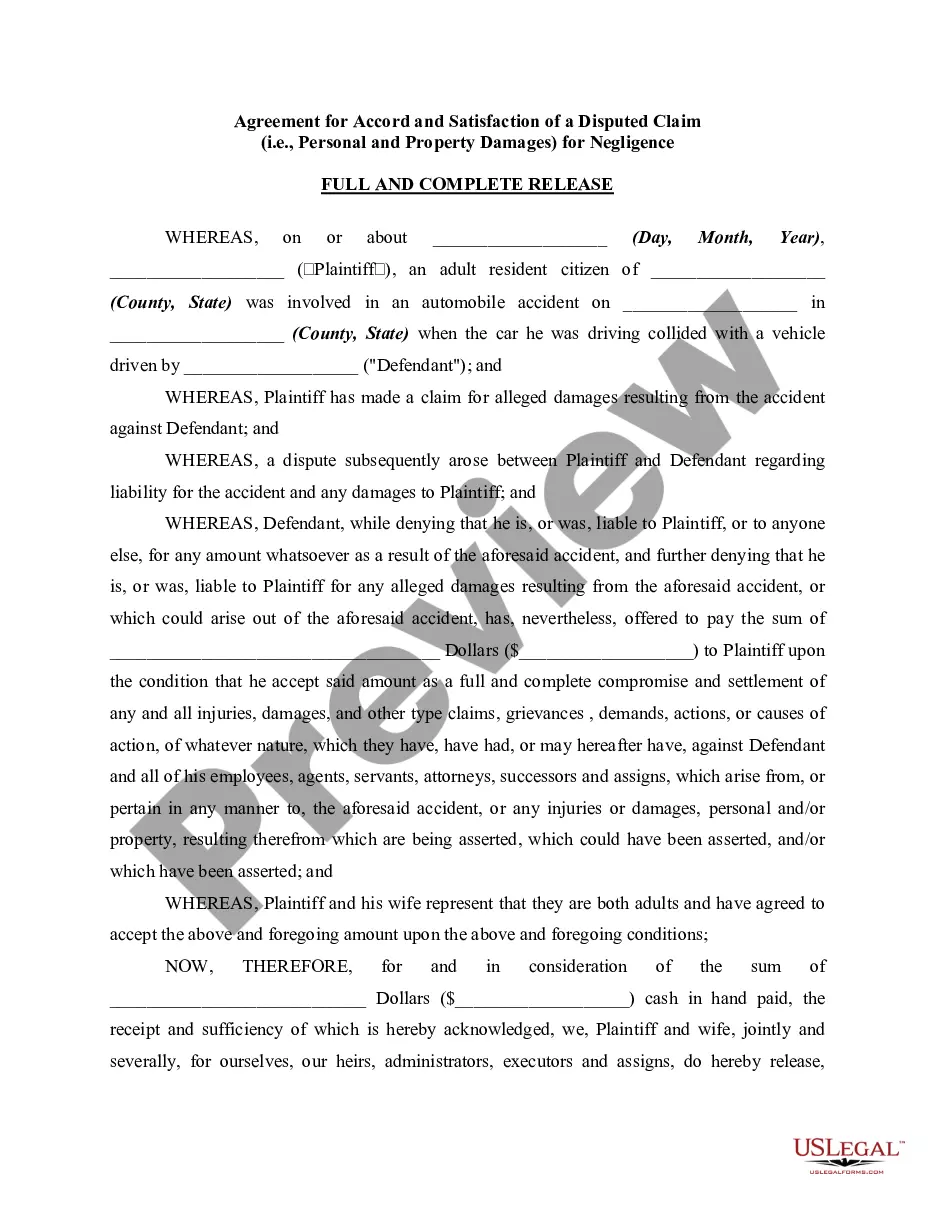
How to fill out Agreement For Accord And Satisfaction Of A Disputed Claim?
It’s clear that you cannot transform into a legal professional instantly, nor can you swiftly master how to prepare Here Denied Claim For Insurance without a specialized background.
Assembling legal documents is a lengthy process that necessitates specific training and expertise.
So why not entrust the preparation of the Here Denied Claim For Insurance to the experts.
You can access your documents from the My documents section at any time.
If you’re a current client, you can simply Log In, and find and download the template from the same section.
- Explore the document you seek using the search feature at the top of the page.
- View it (if this feature is available) and review the accompanying description to assess whether Here Denied Claim For Insurance matches your needs.
- Initiate your search again if you require a different document.
- Sign up for a complimentary account and select a subscription plan to acquire the form.
- Select Buy now. Once the payment has been completed, you can download the Here Denied Claim For Insurance, fill it out, print it, and send or mail it to the appropriate individuals or entities.
Form popularity
FAQ
Challenging a home insurance claim denial requires a strategic approach. Start by collecting all relevant documentation that supports your position. Then, craft a clear and concise appeal letter outlining why your claim should be reconsidered. Engaging with platforms like US Legal Forms may provide you with the necessary templates and support to strengthen your challenge.
If a claim is denied, the first step is to read the denial letter carefully to understand the reasoning. Next, you may want to contact your insurance agent for clarification and guidance. After that, consider gathering evidence and filing an appeal if you believe the denial was unjust. Resources on US Legal Forms can help you navigate through this process efficiently.
The odds of winning an insurance appeal vary based on the specifics of your case and the reasons for the denial. Generally, if you present a well-supported case, your chances improve significantly. Data shows that many claims are reversed on appeal when people seek further clarification or provide additional documentation. Utilizing platforms like US Legal Forms can assist you in preparing your appeal effectively.
Yes, you can dispute a rejected insurance claim. It's important to start this process promptly, as each insurer has specific timelines for appealing denials. Gather all relevant documentation, including your policy and any correspondence with your insurer, to support your case. The US Legal Forms platform can provide you with the necessary forms and guidance to facilitate your dispute.
To respond to a denied claim for insurance effectively, begin by reading the denial letter thoroughly. Identify any errors, or gaps in the information provided. Next, collect supporting documentation to build your case before reaching out to your insurer. A well-organized response can significantly improve your chances of overturning the denial.
If your claim is rejected, start by understanding the specific reasons for the rejection mentioned in the insurer's communication. This knowledge is crucial as it guides your next steps. You may want to request an explanation or a detailed account of what led to the decision. Remember, you can seek help from platforms like US Legal Forms, which provide resources to guide you through the process of challenging a rejection.
When writing an appeal for a denied claim for insurance, begin by clearly stating your claim details and the reason for the denial. Include all supporting documents, such as medical records, bills, or receipts, to strengthen your case. Be concise but thorough in explaining why you believe the claim should be approved. Additionally, keep a copy of everything you send for your records.
If you find yourself facing a denied claim for insurance, the first step is to carefully review the denial letter. It usually includes important information about the reasons for the denial. Next, gather all relevant documents and evidence to support your case. Finally, consider contacting your insurance company for clarification or guidance on the next steps.
The 80% rule in insurance refers to the requirement that policyholders must insure their property to at least 80% of its full value. If the value of your claim is less than this threshold, your coverage might be limited in a loss situation. It's vital to understand this rule, especially when filing claims. Consider reviewing your policy to ensure adequate protection and prevent issues with future denied claims for insurance.
The technical term for when a claim is denied is a 'claim denial.' This situation occurs when the insurer decides that the claim does not meet policy obligations. Understanding this terminology can help you better navigate discussions with your insurance provider. It’s also important to gather insights on how to effectively appeal such denials.
