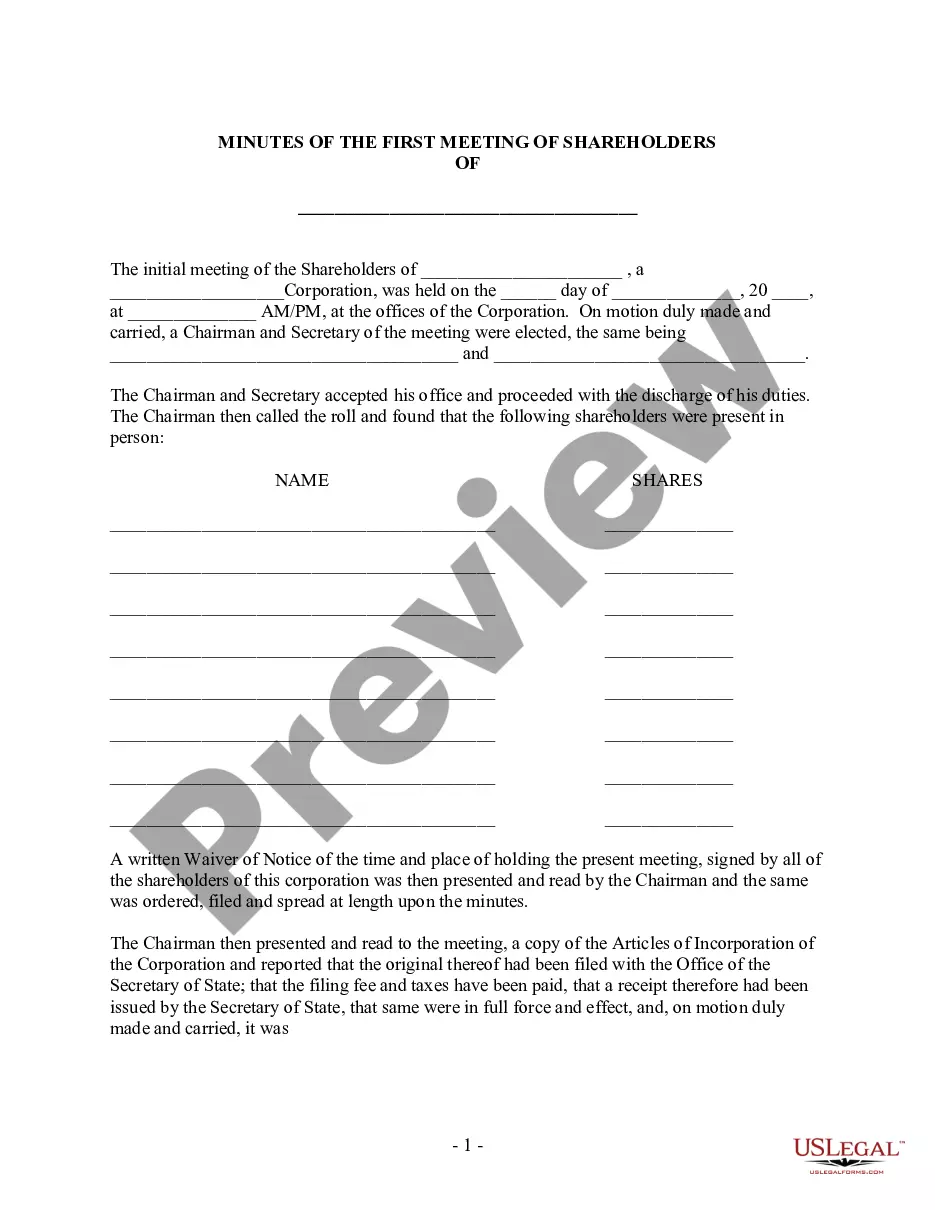
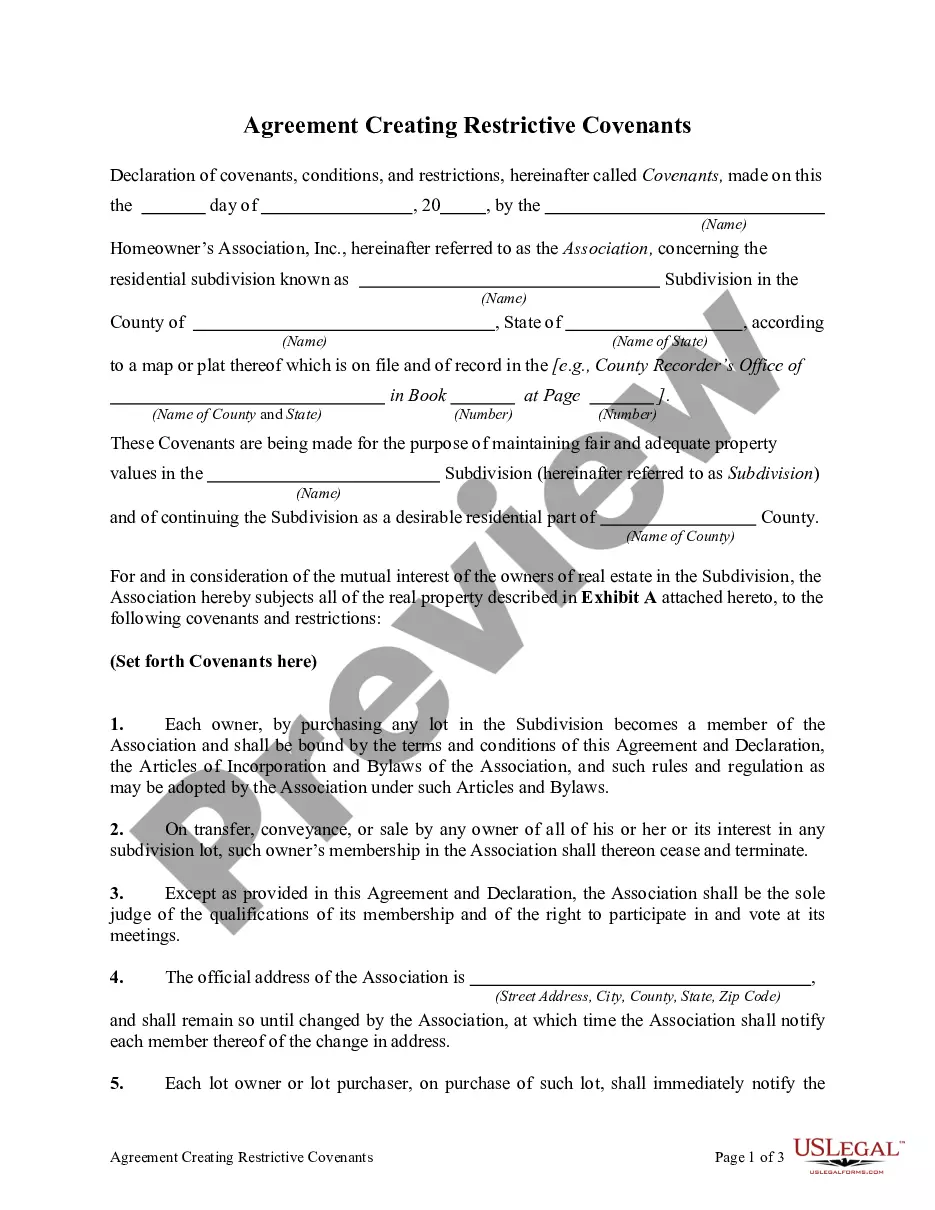
Covenant And Agreement In North Carolina
Description

Get your form ready online
Our built-in tools help you complete, sign, share, and store your documents in one place.
Make edits, fill in missing information, and update formatting in US Legal Forms—just like you would in MS Word.
Download a copy, print it, send it by email, or mail it via USPS—whatever works best for your next step.
Sign and collect signatures with our SignNow integration. Send to multiple recipients, set reminders, and more. Go Premium to unlock E-Sign.
If this form requires notarization, complete it online through a secure video call—no need to meet a notary in person or wait for an appointment.
We protect your documents and personal data by following strict security and privacy standards.
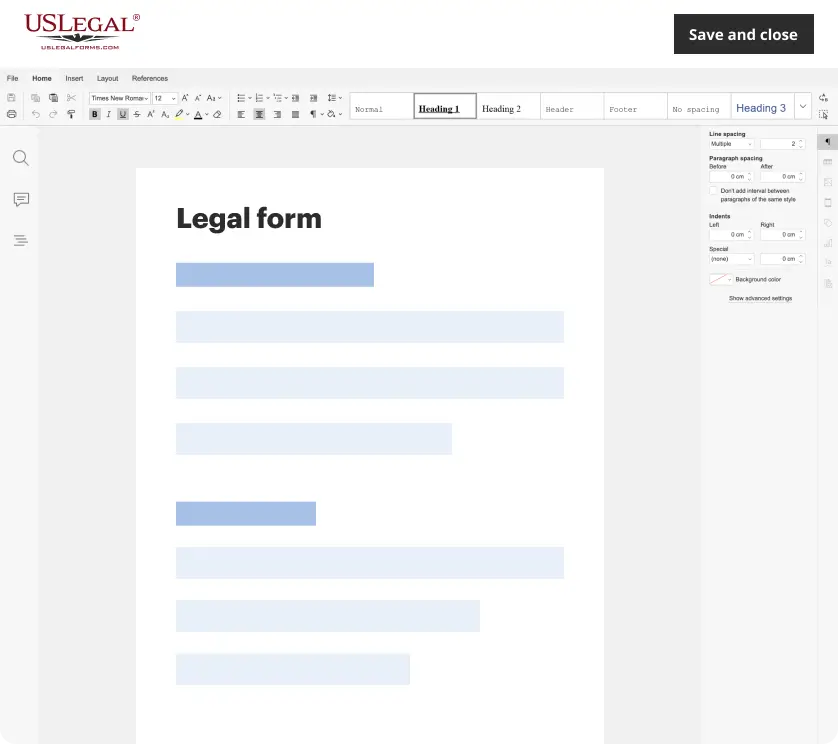
Make edits, fill in missing information, and update formatting in US Legal Forms—just like you would in MS Word.
Download a copy, print it, send it by email, or mail it via USPS—whatever works best for your next step.
Sign and collect signatures with our SignNow integration. Send to multiple recipients, set reminders, and more. Go Premium to unlock E-Sign.
If this form requires notarization, complete it online through a secure video call—no need to meet a notary in person or wait for an appointment.
We protect your documents and personal data by following strict security and privacy standards.
Looking for another form?


Form popularity
FAQ
A contract will only be legally binding upon the contracting parties if the following requirements are complied with: consensus, contractual capacity, certainty, possibility, legality and formalities. 39 The above requirements will be discussed next. 39Para 1 1 above.
The covenant agreement is recorded at the county Register of Deeds and runs in perpetuity with the deed to the property, thus protecting the historic resource for future generations.
- Whenever a party has the right to do some act or take some proceedings within a prescribed period after the service of a notice or other paper upon him and the notice or paper is served upon him by mail, three days shall be added to the prescribed period.
§ 75B-6. Contracts void. Any provision of any contract or other document or other agreement which violates G.S. 75B-2 or which, if complied with by the person intended to be bound by the provision, would cause a violation of G.S. 75B-2 shall be null and void as being against the public policy of the State.
A contract is an agreement between parties , creating mutual obligations that are enforceable by law . The basic elements required for the agreement to be a legally enforceable contract are: mutual assent , expressed by a valid offer and acceptance ; adequate consideration ; capacity ; and legality .
A covenant not to compete is enforceable if it is: (1) in writing, (2) made part of a contract of employment; (3) based on valuable consideration; (4) reasonable both as to time and territory; and (5) not against public policy.
A covenant agreement is akin to a contractual agreement between parties. It often outlines terms and conditions where a party will perform a certain action or refrain from performing a certain action. Covenants are legally binding and enforceable.
In order to have a valid contract in North Carolina, there must be an offer, an acceptance, along with consideration. The parties must also have the capacity to enter into the contract.
In many states, covenants only last 30 years, becoming unenforceable after they expire. However, North Carolina isn't one of these states.
Where can I learn more about HOA law in NC? The HOA or planned community law is in Chapter 47F of the General Statutes. of the General Statutes. You can also learn more about HOAs at the NC Attorney General's website at .