Vehicle Agreement With Employee In Clark
Description

Get your form ready online
Our built-in tools help you complete, sign, share, and store your documents in one place.
Make edits, fill in missing information, and update formatting in US Legal Forms—just like you would in MS Word.
Download a copy, print it, send it by email, or mail it via USPS—whatever works best for your next step.
Sign and collect signatures with our SignNow integration. Send to multiple recipients, set reminders, and more. Go Premium to unlock E-Sign.
If this form requires notarization, complete it online through a secure video call—no need to meet a notary in person or wait for an appointment.
We protect your documents and personal data by following strict security and privacy standards.

Make edits, fill in missing information, and update formatting in US Legal Forms—just like you would in MS Word.

Download a copy, print it, send it by email, or mail it via USPS—whatever works best for your next step.

Sign and collect signatures with our SignNow integration. Send to multiple recipients, set reminders, and more. Go Premium to unlock E-Sign.

If this form requires notarization, complete it online through a secure video call—no need to meet a notary in person or wait for an appointment.

We protect your documents and personal data by following strict security and privacy standards.
Looking for another form?







Form popularity
FAQ
Report the value of the personal use of the company vehicle on the employee's Form W-2. Include the amounts in Boxes 1, 3, and 5. Also, report the amounts you withheld in Boxes 2, 4, and 6. If you choose not to withhold federal income tax, you must still include the fair market value of the benefit in Box 1.
To use the lease value rule, multiply the annual lease value of the car (via the IRS Annual Lease Value table) by the percentage of personal mileage driven. This will give you the Fair Market Value (FMV) of the employee's personal use of a company-provided vehicle.
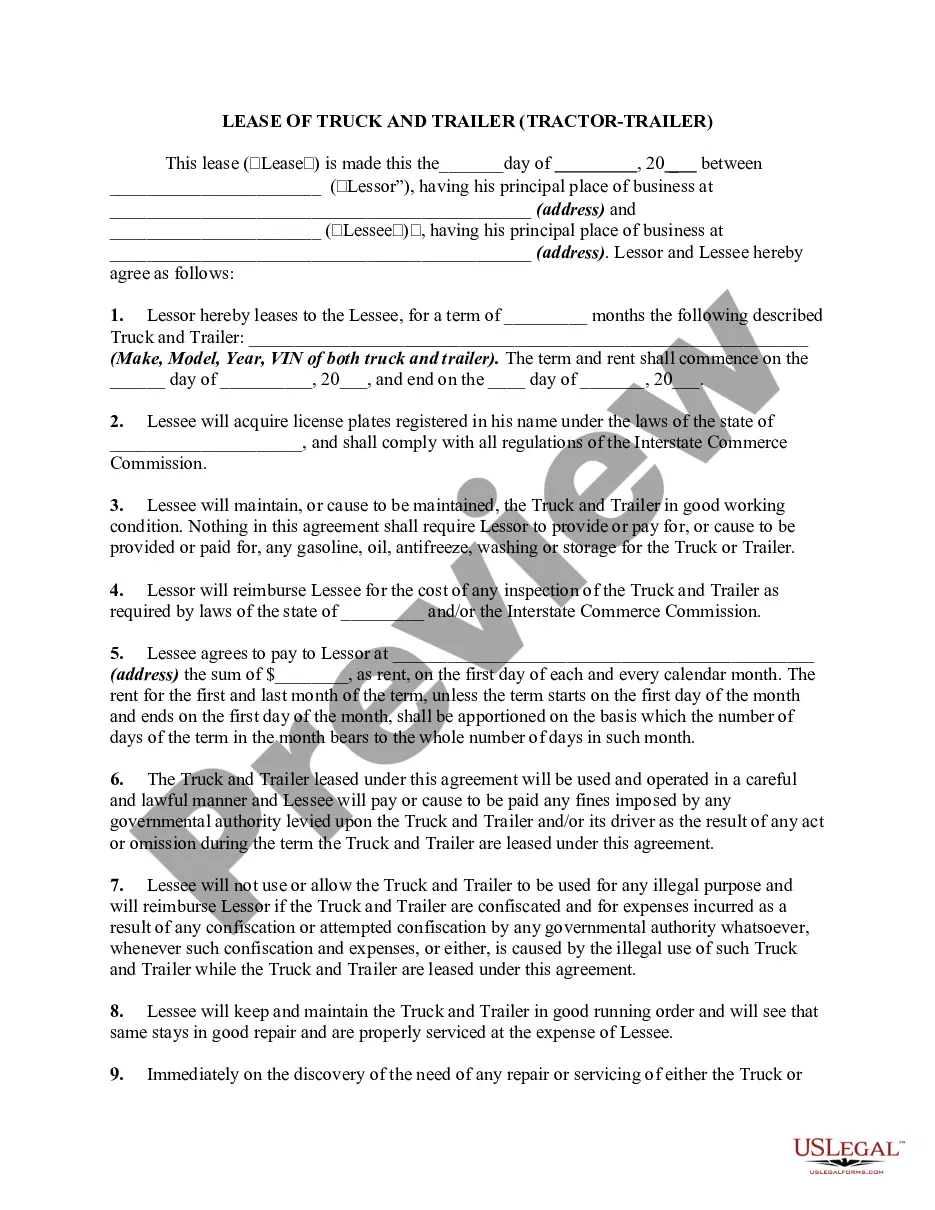
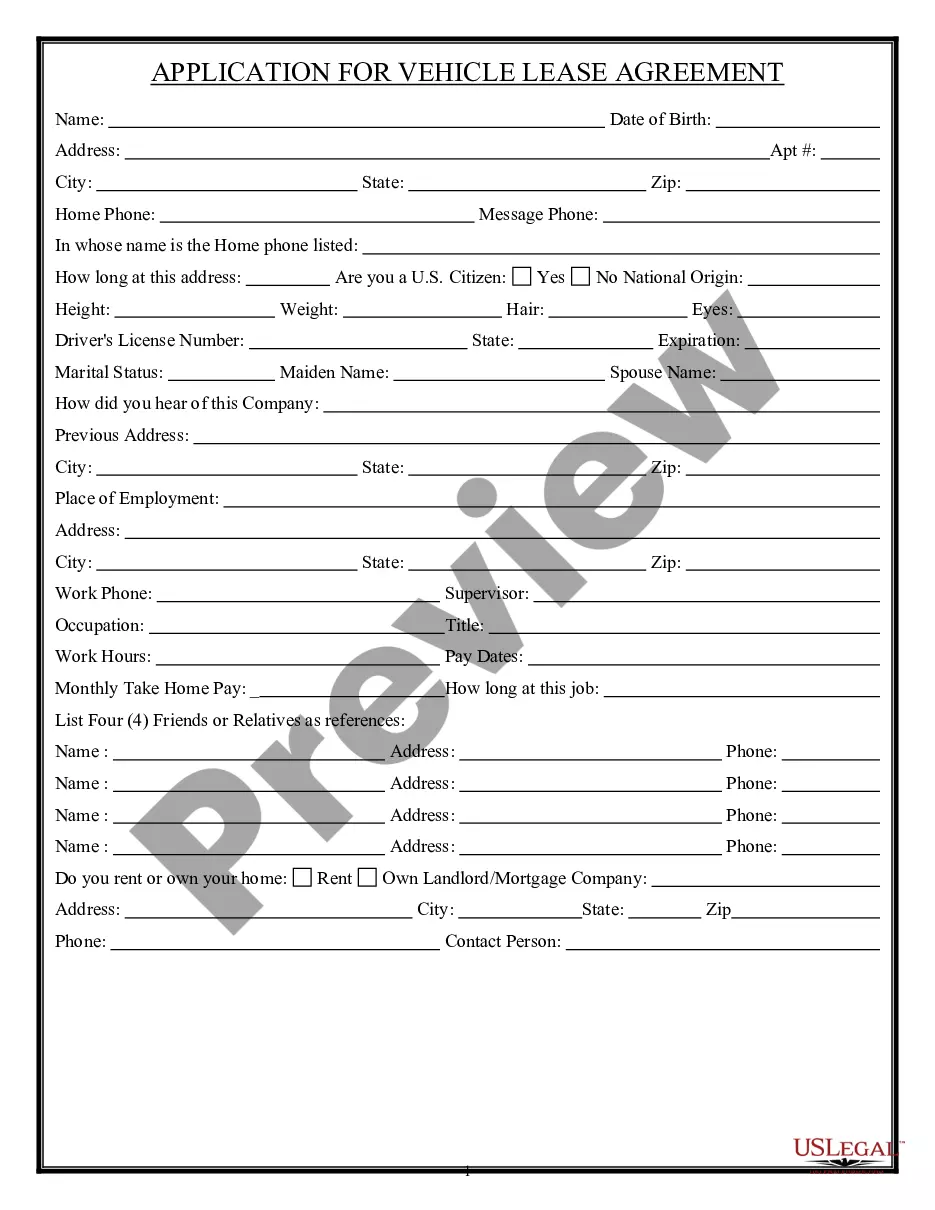
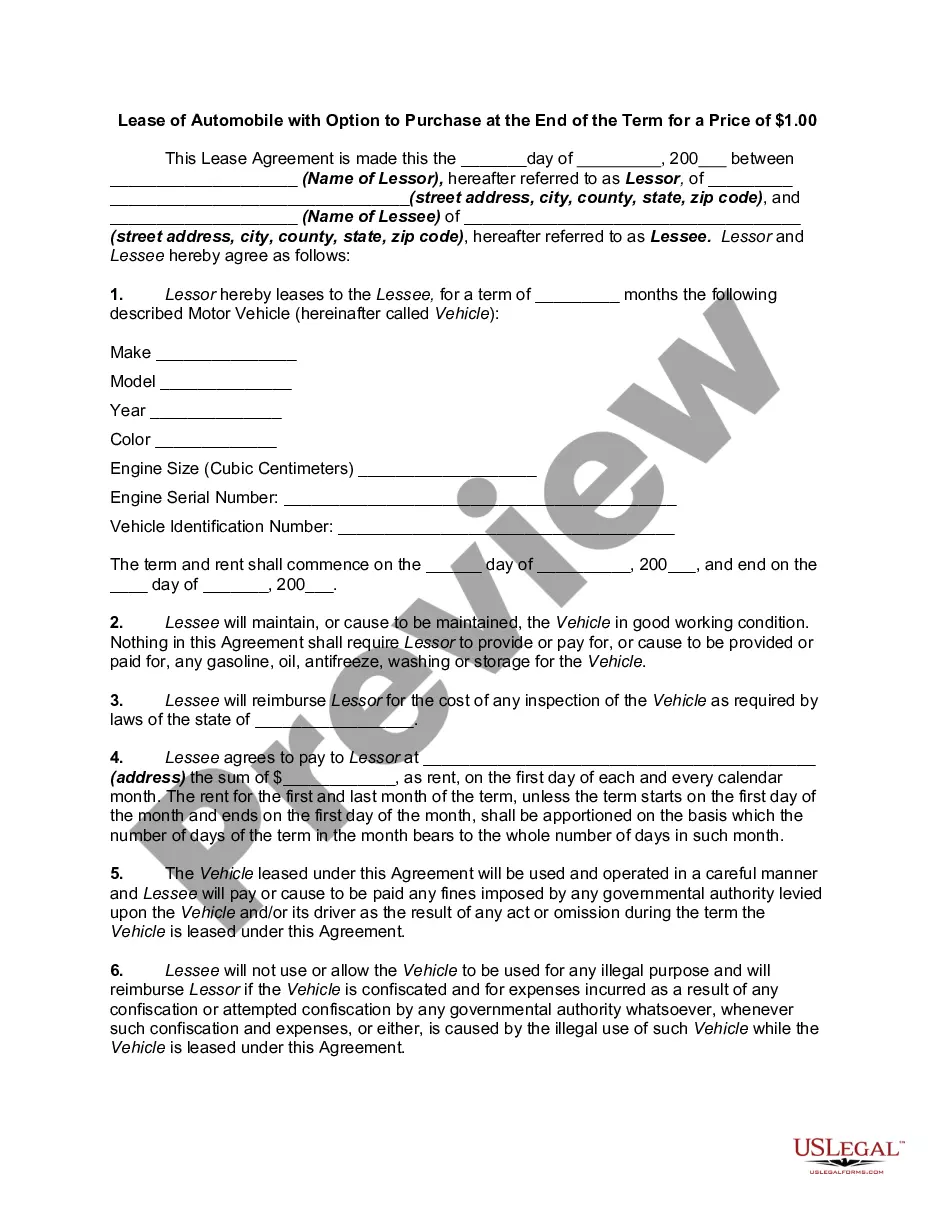
A vehicle use agreement is a contract between a vehicle owner and a third party that procures the vehicle's use for a specific purpose. The contract includes important vehicle details as well as what the authorized use or uses are for the vehicle.
Under the vehicle cents-per-mile rule, determine the employee use of company vehicle value by using the standard mileage reimbursement rate. To find an employee's PUCC value under the cents-per-mile rule, multiply their personal miles driven by the IRS standard mileage rate.
Can you keep a company car at home? If your employer permits, you can keep your company car at home. However, any non-business use, such as commuting to and from work or using the car on weekends, is personal use, and the value of this use of the vehicle will be taxed.
Annual Lease Value Method To use the lease value rule, multiply the annual lease value of the car (via the IRS Annual Lease Value table) by the percentage of personal mileage driven. This will give you the Fair Market Value (FMV) of the employee's personal use of a company-provided vehicle.
One of the most appreciated fringe benefits for owners and employees of small businesses is the use of a company car. This perk results in tax deductions for the employer as well as tax breaks for the owners and employees driving the cars. (And of course, they enjoy the nontax benefit of using a company car.)