1031 Exchange Agreement Form With United States In Los Angeles
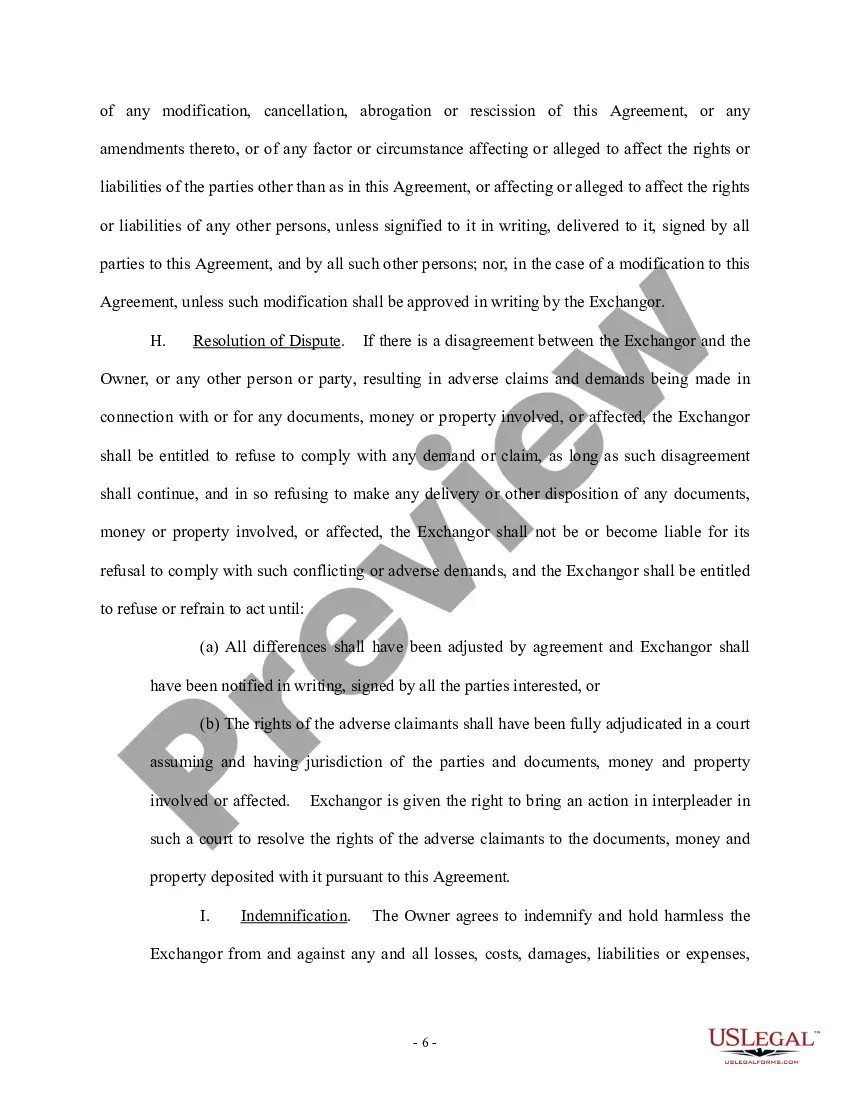
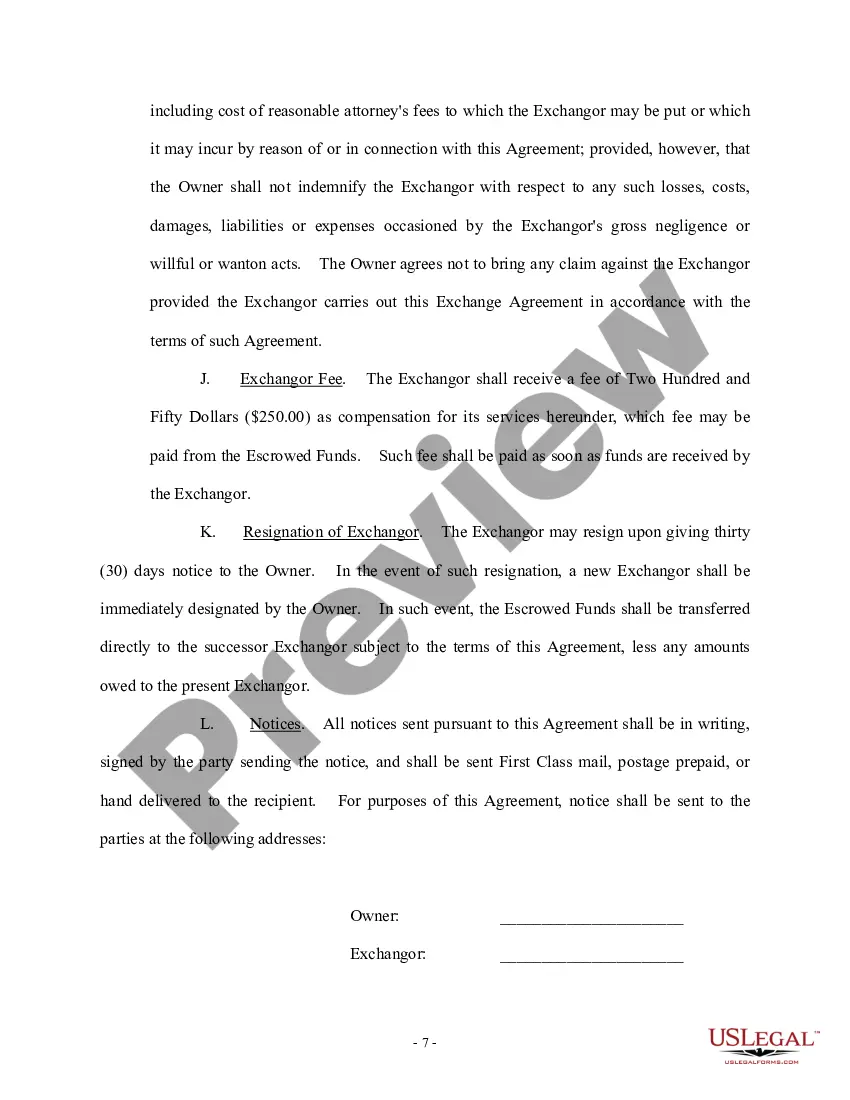
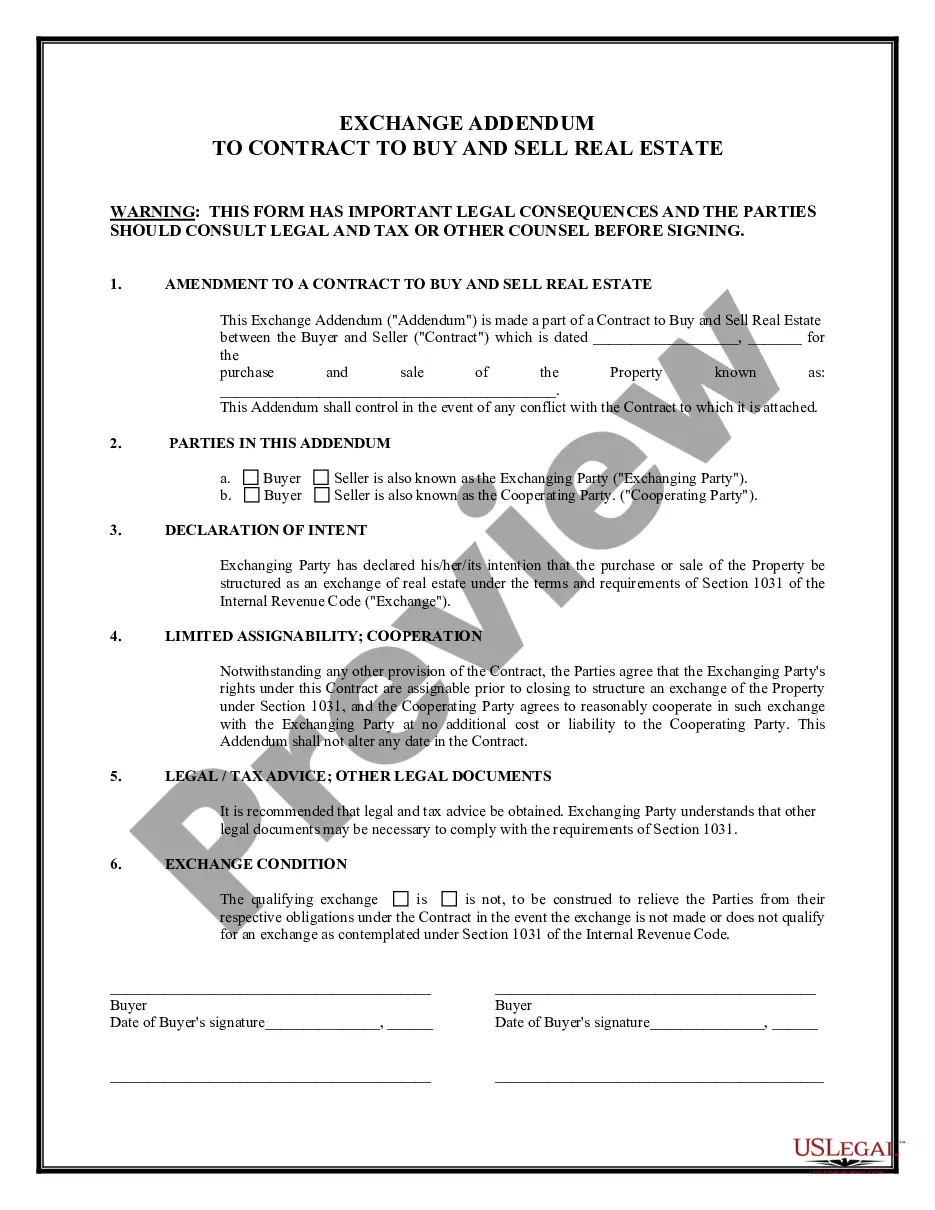
Description

Get your form ready online
Our built-in tools help you complete, sign, share, and store your documents in one place.
Make edits, fill in missing information, and update formatting in US Legal Forms—just like you would in MS Word.
Download a copy, print it, send it by email, or mail it via USPS—whatever works best for your next step.
Sign and collect signatures with our SignNow integration. Send to multiple recipients, set reminders, and more. Go Premium to unlock E-Sign.
If this form requires notarization, complete it online through a secure video call—no need to meet a notary in person or wait for an appointment.
We protect your documents and personal data by following strict security and privacy standards.

Make edits, fill in missing information, and update formatting in US Legal Forms—just like you would in MS Word.

Download a copy, print it, send it by email, or mail it via USPS—whatever works best for your next step.

Sign and collect signatures with our SignNow integration. Send to multiple recipients, set reminders, and more. Go Premium to unlock E-Sign.

If this form requires notarization, complete it online through a secure video call—no need to meet a notary in person or wait for an appointment.

We protect your documents and personal data by following strict security and privacy standards.
Looking for another form?



Form popularity
FAQ
A primary residence usually does not qualify for an exchange because it is not used in trade or business or investment. That said, that portion of the primary residence that is used in a trade or business or for investment may qualify for a 1031 Exchange.
Puerto Rico is a Protectorate of the U.S. but not a “coordinated territory,” therefore real estate in Puerto Rico is not considered “U.S. real estate” for purposes of Section 1031.
While foreign property is not of a like kind with domestic property, foreign properties are considered like-kind with one another. You can perform a 1031 exchange with foreign properties, so long as your relinquished and replacement properties are both located outside the United States.
You can perform a 1031 exchange with foreign properties, so long as your relinquished and replacement properties are both located outside the United States.
This rule helps prevent investors from avoiding capital gains taxes on the sale of investment property. The 2 Year Holding Period Rule is essential in the 1031 Exchange. This rule stipulates that you must hold onto your new property for at least 2 years after the exchange.
States like Florida, Texas, and Nevada are great options for 1031 exchanges due to their lack of state income tax and strong real estate markets. On the other hand, states like California, New York, and Oregon can be less attractive due to their high state income tax rates and strict real estate laws.
There is no way to avoid this situation unless one stays out of CA entirely or performs the final sale there. Being taxed in CA would of course be undesirable because it has some of the highest income tax rates, 9.55% and 10.55% for earnings over $47,055 and $1,000,000 respectively.
While foreign property is not of a like kind with domestic property, foreign properties are considered like-kind with one another. You can perform a 1031 exchange with foreign properties, so long as your relinquished and replacement properties are both located outside the United States.
To qualify for a 1031 Exchange, Relinquished and Replacement Properties must be qualified as “like-kind,” and the transaction must be structured properly. “Like-kind” properties must be real property held for productive use in the investor's trade or business or for investment.
