Work State Law For Car Seats In San Jose
Description
















Get your form ready online
Our built-in tools help you complete, sign, share, and store your documents in one place.
Make edits, fill in missing information, and update formatting in US Legal Forms—just like you would in MS Word.
Download a copy, print it, send it by email, or mail it via USPS—whatever works best for your next step.
Sign and collect signatures with our SignNow integration. Send to multiple recipients, set reminders, and more. Go Premium to unlock E-Sign.
If this form requires notarization, complete it online through a secure video call—no need to meet a notary in person or wait for an appointment.
We protect your documents and personal data by following strict security and privacy standards.
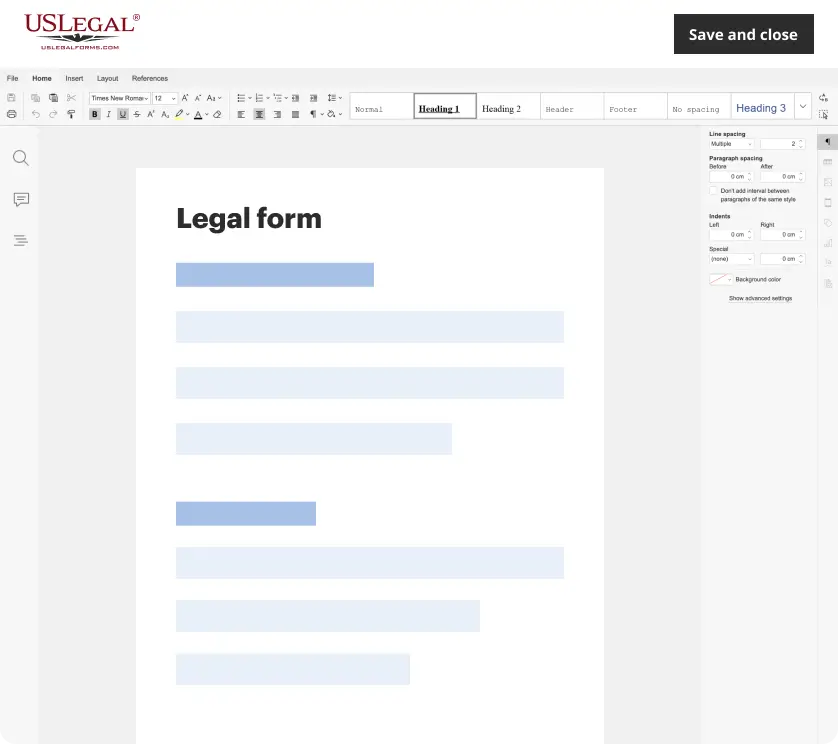
Make edits, fill in missing information, and update formatting in US Legal Forms—just like you would in MS Word.
Download a copy, print it, send it by email, or mail it via USPS—whatever works best for your next step.
Sign and collect signatures with our SignNow integration. Send to multiple recipients, set reminders, and more. Go Premium to unlock E-Sign.
If this form requires notarization, complete it online through a secure video call—no need to meet a notary in person or wait for an appointment.
We protect your documents and personal data by following strict security and privacy standards.
Looking for another form?



Form popularity
FAQ
StateSummary of State's Law California State law requires children to be at least 8 years old and more than 57 inches tall to legally sit in the front seat. Colorado State Law requires children to be at least 2 years old and more than 20 pounds to sit in front seat but recommends children be at least age 13.49 more rows
A child under eight (8) years of age may ride properly secured in an appropriate child passenger restraint system in the front seat under any of the following circumstances: • There is no rear seat. The rear seats are side-facing seats. The rear seats are rear-facing seats.
California law requires all children under two years old to ride in a rear-facing car seat, unless the child weighs 40 or more pounds OR is 40 or more inches tall. Children under the age of 8 are required to be secured in a car or booster seat.
Children who are 8 years old or have reached 4 feet, 9 inches tall can be secured by a booster seat, but it is not a requirement. They must at least be secured by a seat belt. Once the child has reached 8 years old, they can legally move up to the front passenger seat.
To answer the question when can a child sit in the front seat, in California, children are permitted to sit in the front seat of a vehicle if they are at least 8 years old, or 4'9″ in height, and always secured by a safety belt.
How Much Does a Child Have to Weight to Sit in the Front Seat in California? The child must be at least nine years old with a 4'9 height and 80 lbs. ing to some laws, all children under the age of eight must be securely tied into a safety seat or booster in the rear seat.
Children under 2 years and under 30 pounds must be seated in a rear-facing seat with a 5-point harness. Children under 4 years and under 40 pounds must be seated in either a rear-facing or forward-facing seat with a 5-point harness to the upper weight/height limits of the restraint.
Children should stay in a belt positioning booster seat until the vehicle lap and shoulder seat belt fits properly, typically when they have reached four foot nine inches tall and are between eight and 12 years of age. Boosters require a vehicle seat with both a lap and shoulder seat belt to work correctly.
In the United States, the general guideline is that a child can stop using a booster seat when they reach: Age: Typically around 8 to 12 years old, depending on the state laws and the child's size. Height: At least 4 feet 9 inches (57 inches) tall. Weight: Generally, children should weigh at least 80 pounds.
(b) Every policy of automobile liability insurance, as described in Section 16054 of the Vehicle Code, shall provide liability coverage for replacement of a child passenger restraint system that was damaged or was in use by a child during an accident for which liability coverage under the policy is applicable due to ...