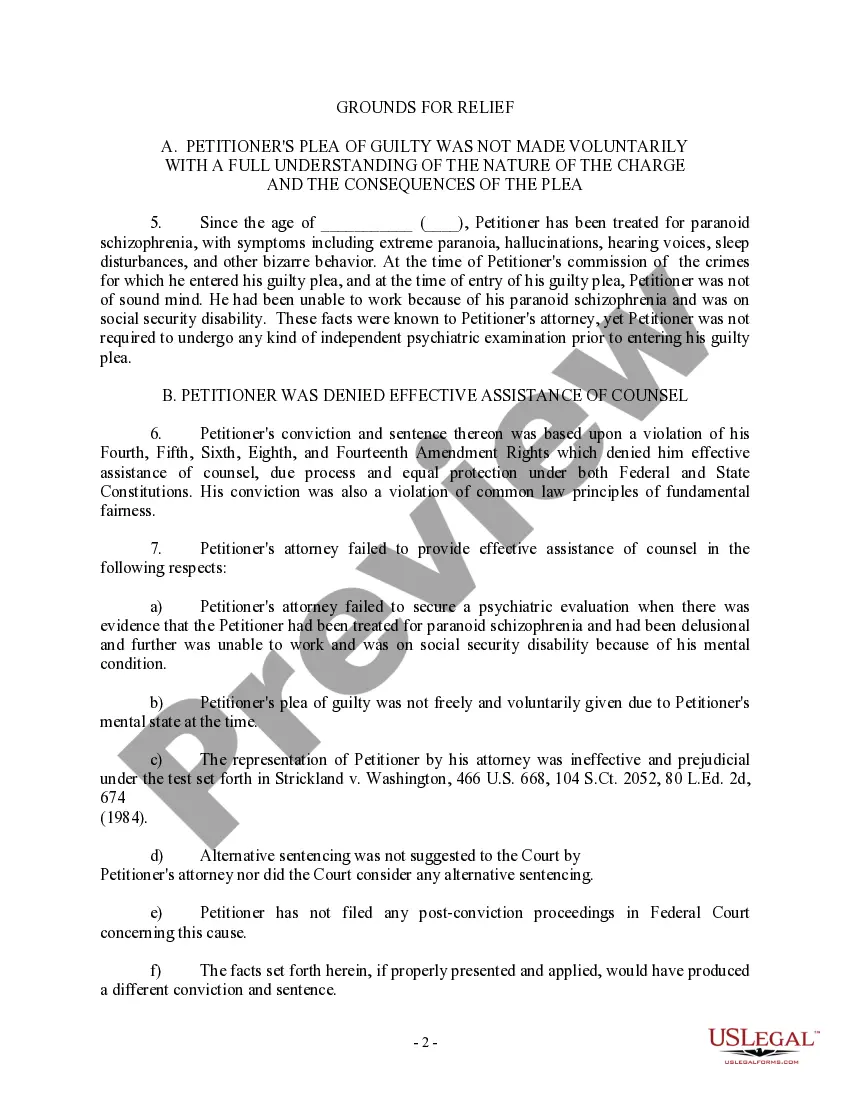
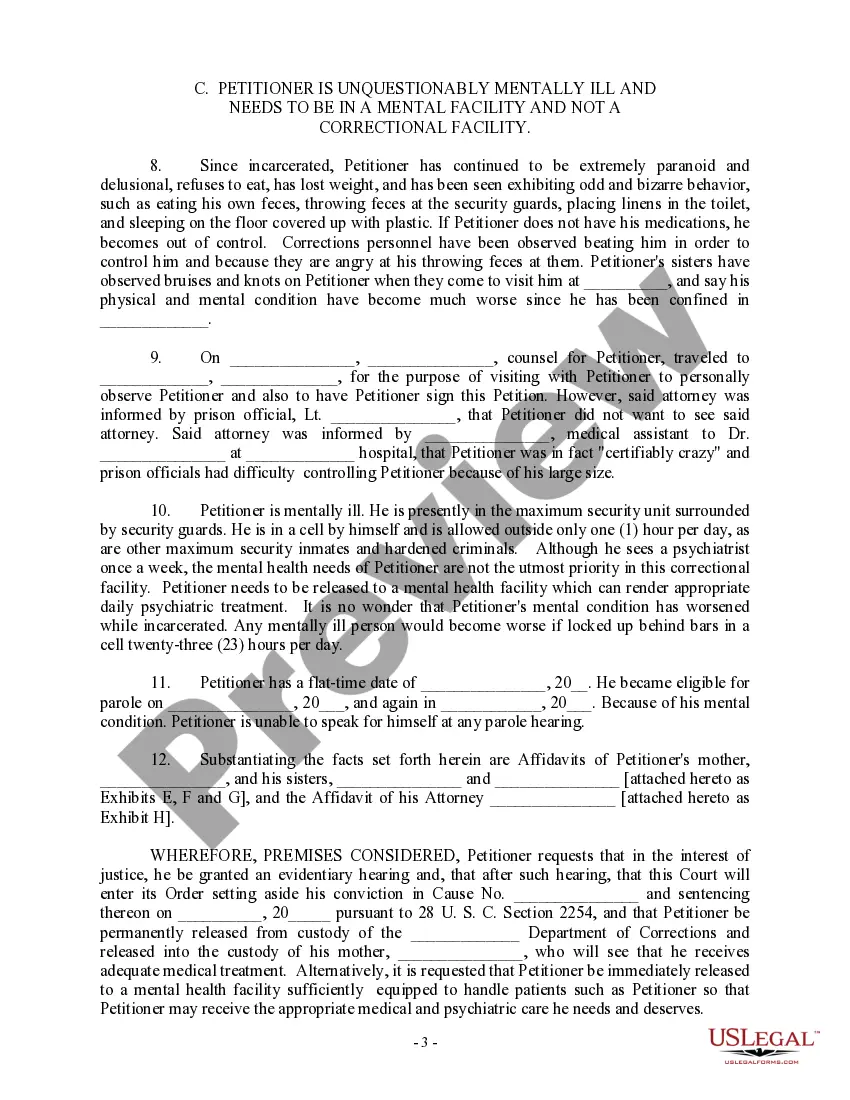
Federal Habeas Corpus Form 2254 In Fulton
Description


Get your form ready online
Our built-in tools help you complete, sign, share, and store your documents in one place.
Make edits, fill in missing information, and update formatting in US Legal Forms—just like you would in MS Word.
Download a copy, print it, send it by email, or mail it via USPS—whatever works best for your next step.
Sign and collect signatures with our SignNow integration. Send to multiple recipients, set reminders, and more. Go Premium to unlock E-Sign.
If this form requires notarization, complete it online through a secure video call—no need to meet a notary in person or wait for an appointment.
We protect your documents and personal data by following strict security and privacy standards.

Make edits, fill in missing information, and update formatting in US Legal Forms—just like you would in MS Word.

Download a copy, print it, send it by email, or mail it via USPS—whatever works best for your next step.

Sign and collect signatures with our SignNow integration. Send to multiple recipients, set reminders, and more. Go Premium to unlock E-Sign.

If this form requires notarization, complete it online through a secure video call—no need to meet a notary in person or wait for an appointment.

We protect your documents and personal data by following strict security and privacy standards.
Looking for another form?




Form popularity
FAQ
A federal petition for writ of habeas corpus under 28 U.S.C. § 2254 is used by a (1) state prisoner (2) being held in state custody (3) to challenge the validity of a state criminal conviction or sentence (4) for the purpose of obtaining release from custody.
A 2255 petition may be filed by a person in federal custody to challenge a federal criminal conviction and/or sentence. Unlike a 2254 petition, which challenges a state-court conviction and/or sentence, a 2255 petition is not limited to federal constitutional claims.
A 2255 petition may be filed by a person in federal custody to challenge a federal criminal conviction and/or sentence. Unlike a 2254 petition, which challenges a state-court conviction and/or sentence, a 2255 petition is not limited to federal constitutional claims.
With almost ten thousand petitions filed per year, and a paltry 3.2% success rate, federal habeas petitions occupy a unique role in the criminal justice system. 2 Federal habeas is one of my favorite areas of the law because it offers a fascinating crossroads of criminal law and constitutional law.
A Writ of Habeas Corpus is usually filed by submitting a Petition, a Memorandum of Points and Authorities, a Declaration from the defendant, and other evidence which supports the Writ of Habeas Corpus.
Due process has come to mean the conduct of legal proceedings ing to established principles and procedures, designed to ensure a fair trial. This is also referred to as natural justice or procedural fairness. Federalism.
New York State Writ of Habeas Corpus For example, a writ of habeas corpus may be filed if a defendant's sentence has ended, but the correctional facility refuses to release him, or if the defendant was denied bail or unjustly denied release on a criminal case.
Federal habeas corpus is a procedure under which a federal court may review the legality of an individual's incarceration. It is most often the stage of the criminal appellate process that follows direct appeal and any available state collateral review. The law in the area is an intricate weave of statute and case law.
Habeas Corpus is a Latin word meaning which literally means 'to have the body of'. It is an order issued by the court to a person who has detained another person, to produce the body of the latter before it. The court then examines the cause and legality of detention.
Habeas corpus ('produce the person') is the name of the writ, or legal order, that requires a prisoner to be brought before a court, for the court to determine whether the prisoner is being legally detained and, if not, to order the prisoner's release.