Wisconsin Agreement To Donate Real Estate To City Form In Riverside
Description
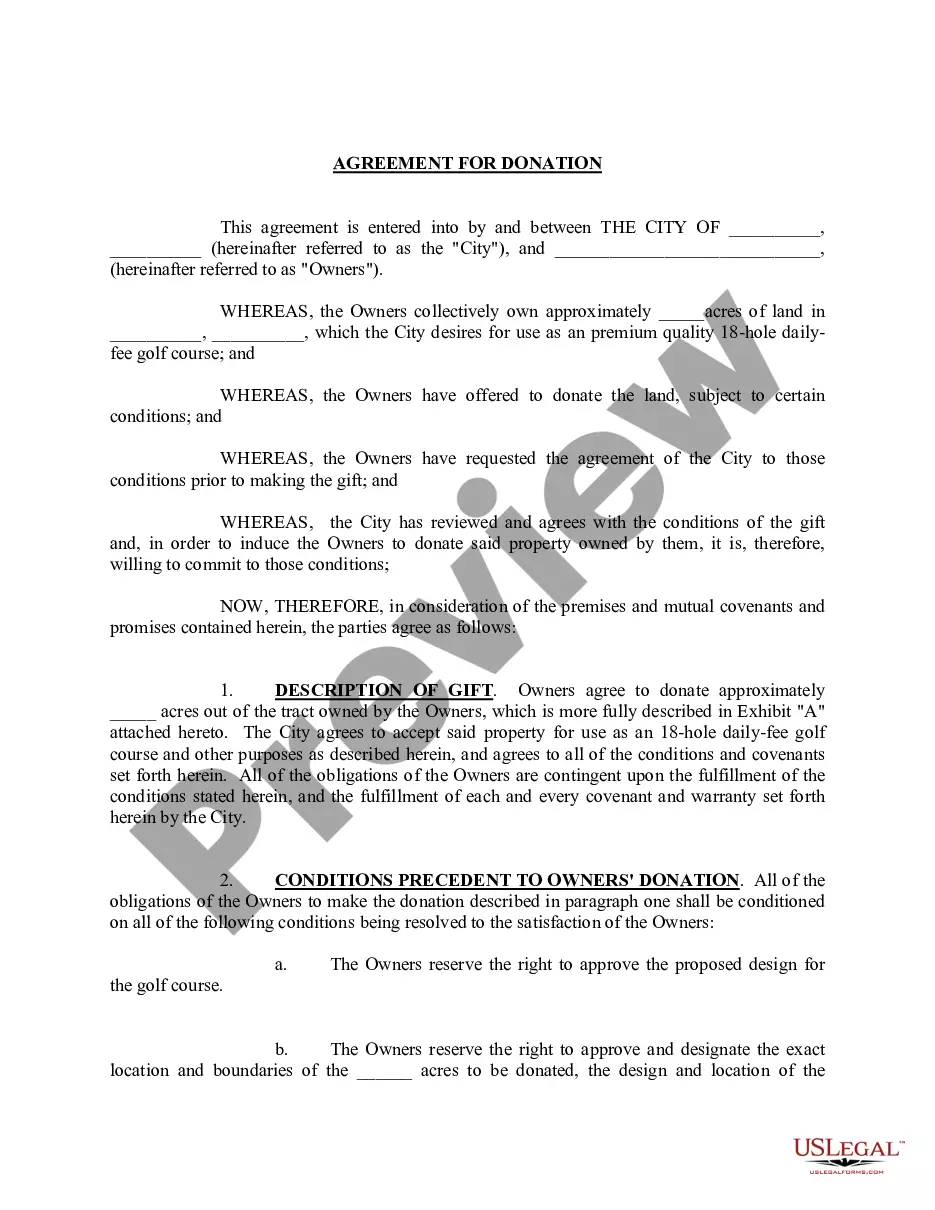
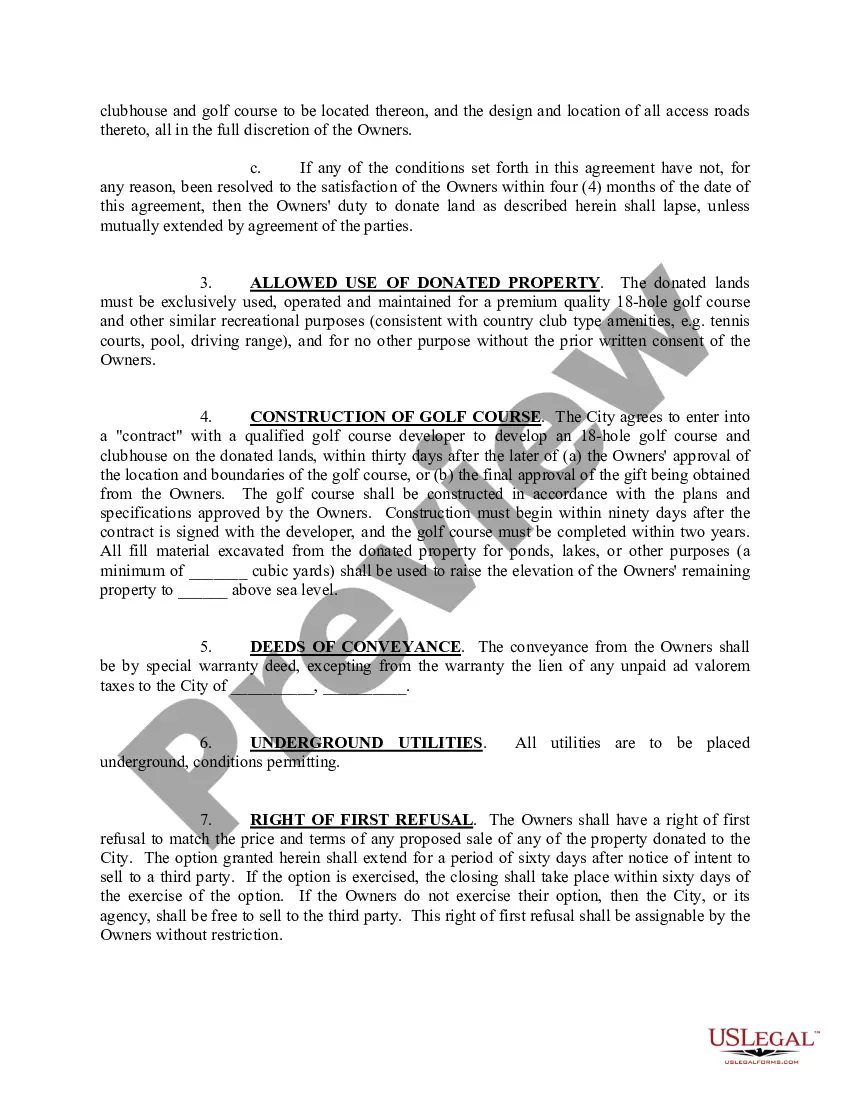
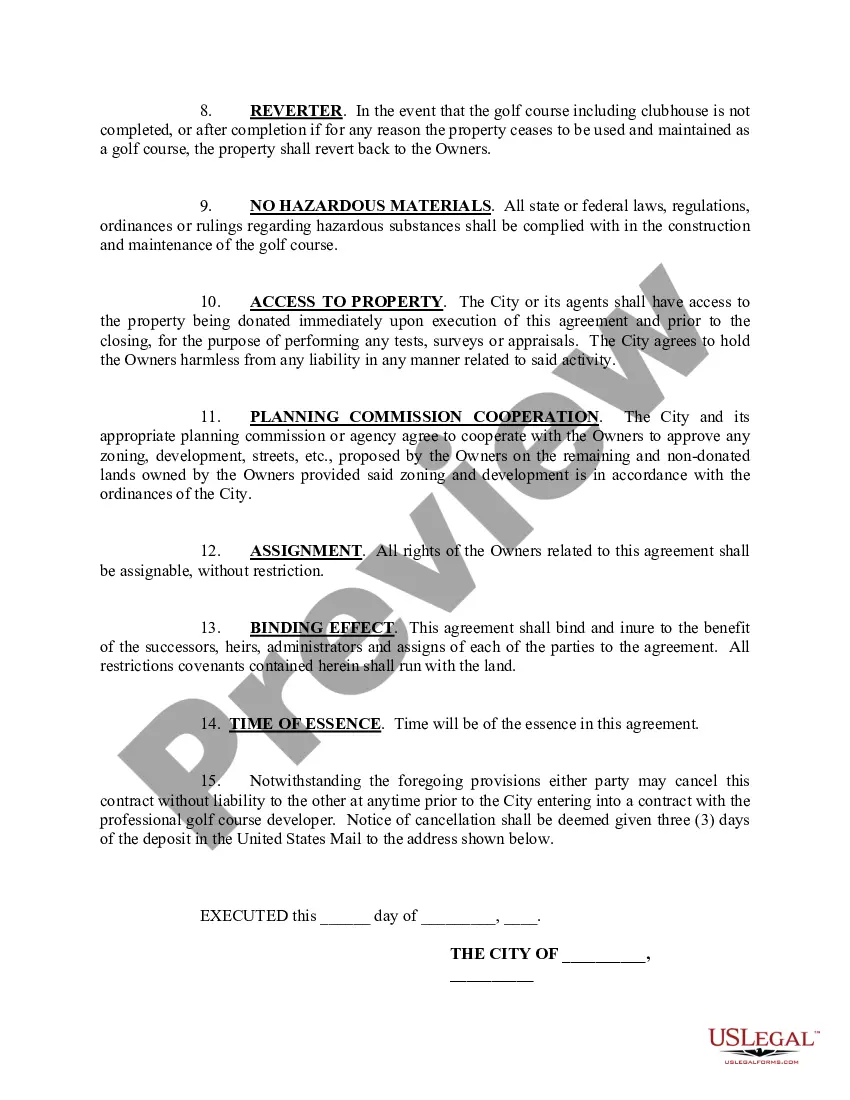
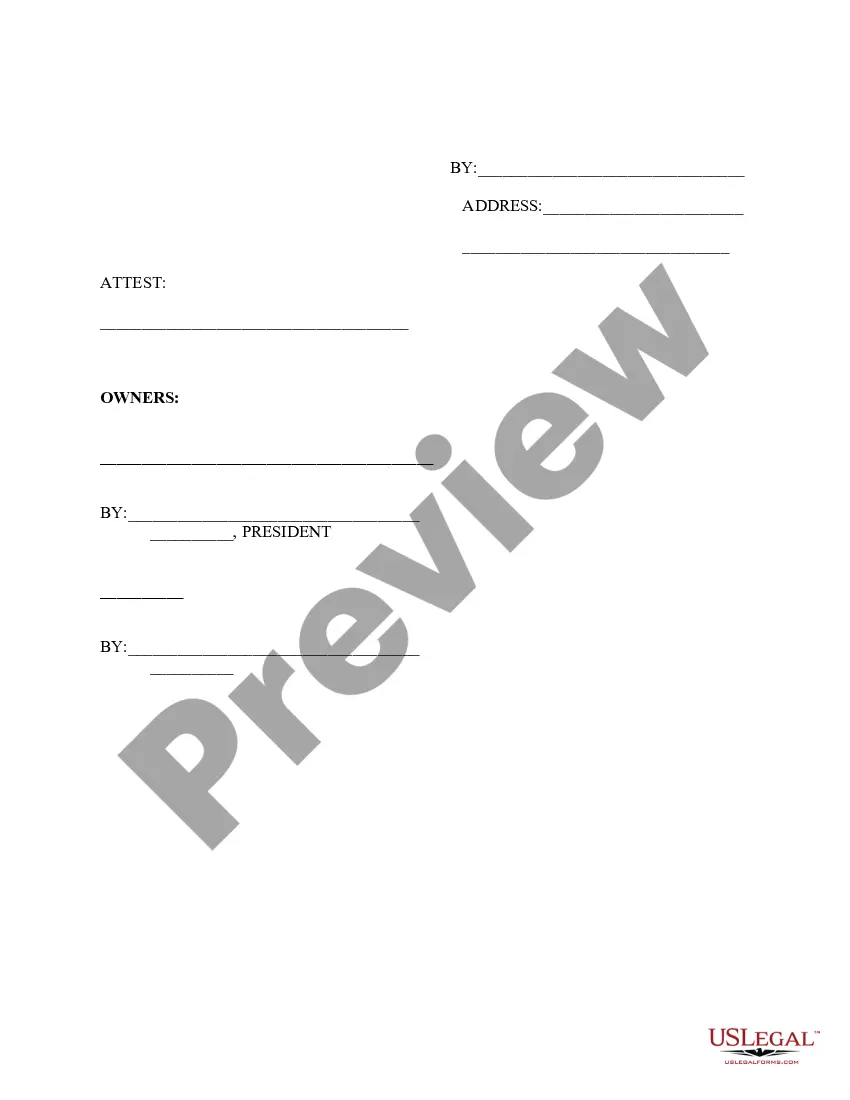
Get your form ready online
Our built-in tools help you complete, sign, share, and store your documents in one place.
Make edits, fill in missing information, and update formatting in US Legal Forms—just like you would in MS Word.
Download a copy, print it, send it by email, or mail it via USPS—whatever works best for your next step.
Sign and collect signatures with our SignNow integration. Send to multiple recipients, set reminders, and more. Go Premium to unlock E-Sign.
If this form requires notarization, complete it online through a secure video call—no need to meet a notary in person or wait for an appointment.
We protect your documents and personal data by following strict security and privacy standards.
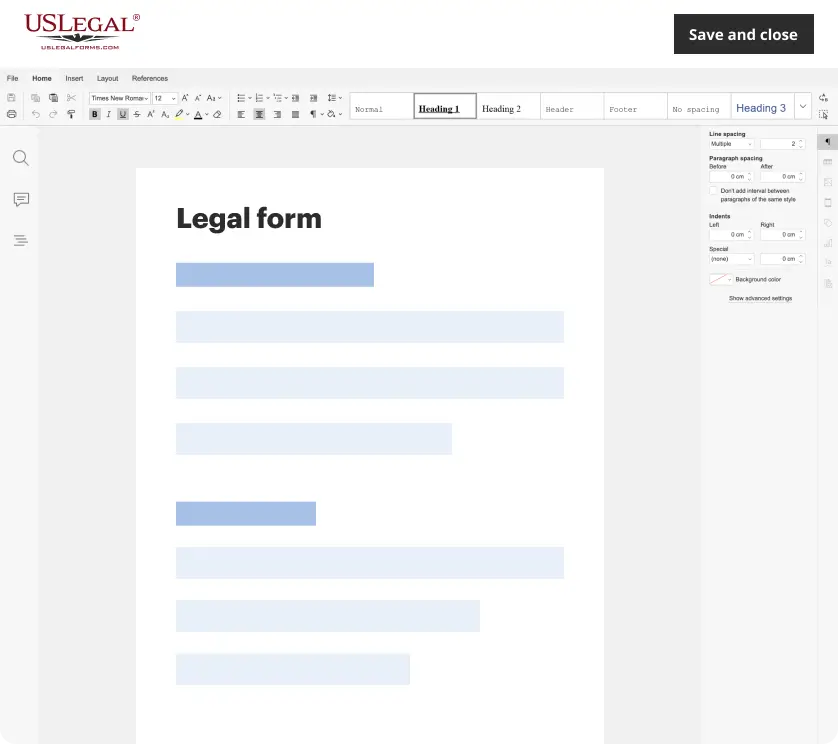
Make edits, fill in missing information, and update formatting in US Legal Forms—just like you would in MS Word.
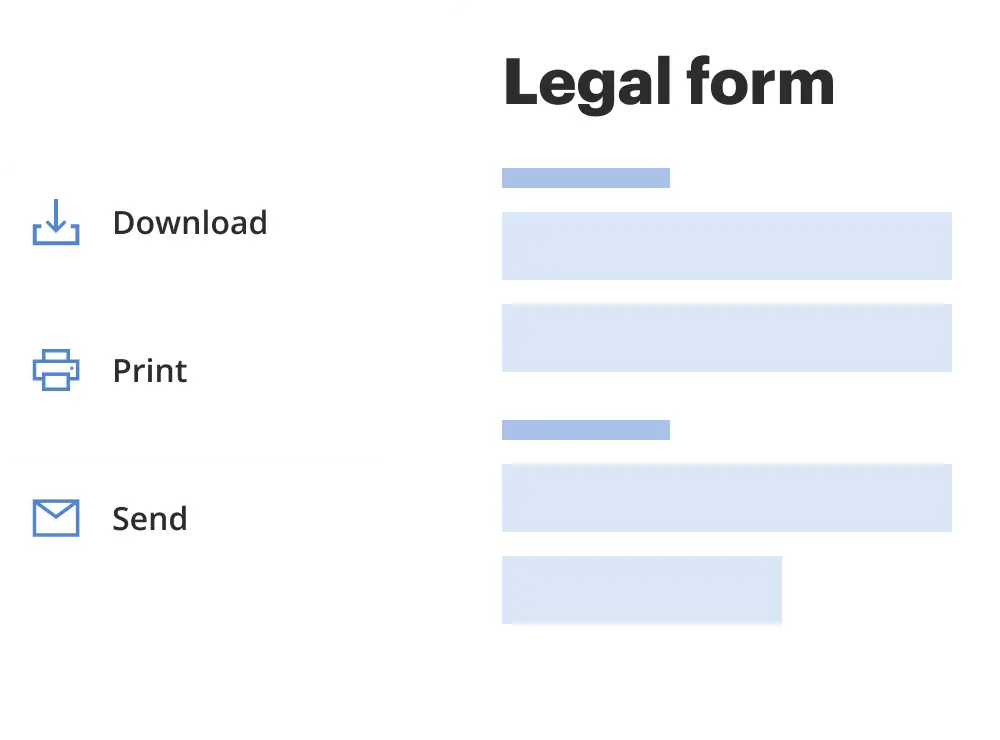
Download a copy, print it, send it by email, or mail it via USPS—whatever works best for your next step.
Sign and collect signatures with our SignNow integration. Send to multiple recipients, set reminders, and more. Go Premium to unlock E-Sign.

If this form requires notarization, complete it online through a secure video call—no need to meet a notary in person or wait for an appointment.
We protect your documents and personal data by following strict security and privacy standards.
Looking for another form?


Form popularity
FAQ
However, no matter if you do or don't hire an estate planning lawyer, you should know about the option the state of Wisconsin provides to name a transfer-on-death (TOD) beneficiary to your home. This is also called a transfer-on-death deed, and may be completed without an attorney, if desired.
A deed and an Electronic Wisconsin Real Estate Transfer Return (eRETR) must be completed to convey title to real estate. If you need additional information in regards to your inquiry you will have to consult with a title company or an attorney. You can also contact the Register of Deeds at (608) 266-4141.
When recording a property conveyance deed and other instruments, a seller of real estate is required to file a Real Estate Transfer Return (RETR) with the county Register of Deeds. Since July 1, 2009, a seller must electronically file (e-file) a return under state law.
You must sign the TOD designation and get your signature notarized, and then record (file) the designation with the county register of deeds before your death. Otherwise, it won't be valid. You can make a Wisconsin designation of transfer on death beneficiary with WillMaker.
The seller might pull out if the buyer fails to meet all of the conditions of the agreement or if they decide they can get more for the property elsewhere. It is important to know that a party that pulls out of a real estate deal could ultimately be sued for damages.
Complete the deed form on your computer or print it and complete it in all black ink. The Grantors (current owners) must sign the deed before a notary public. 2. Go to the Wisconsin Department of Revenue's E-Return website at and complete an E-Return (eRETR).
Wisconsin Real Estate Transfer Taxes: An In-Depth Guide (2025 Update) Wisconsin's current transfer tax rate is $0.30 per $100.
It is a formal request for funding that outlines the organization's mission, goals, and objectives. A donation proposal is typically used when seeking financial support from individuals, foundations, or corporations.
How do you write a fundraising letter? Key steps Start with a personalized greeting. Explain your mission. Describe your current initiative. Outline your project's needs and what you hope to accomplish. Add meaningful photographs or infographics. Show the tangible impact associated with specific donation amounts.
Definition of contracts of donation A contract of donation refers to a contract whereby the donator pres- ents gratis its property to the donee, and the donee expresses its intention to accept the donation.
