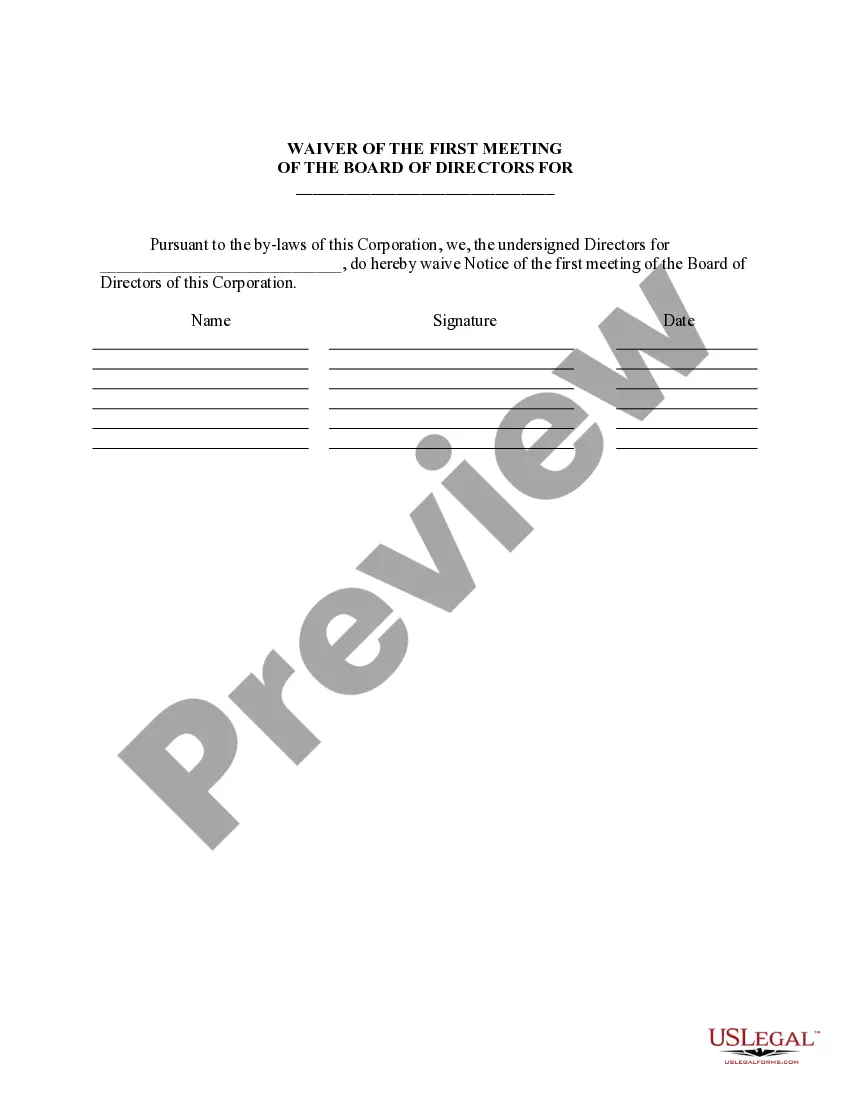
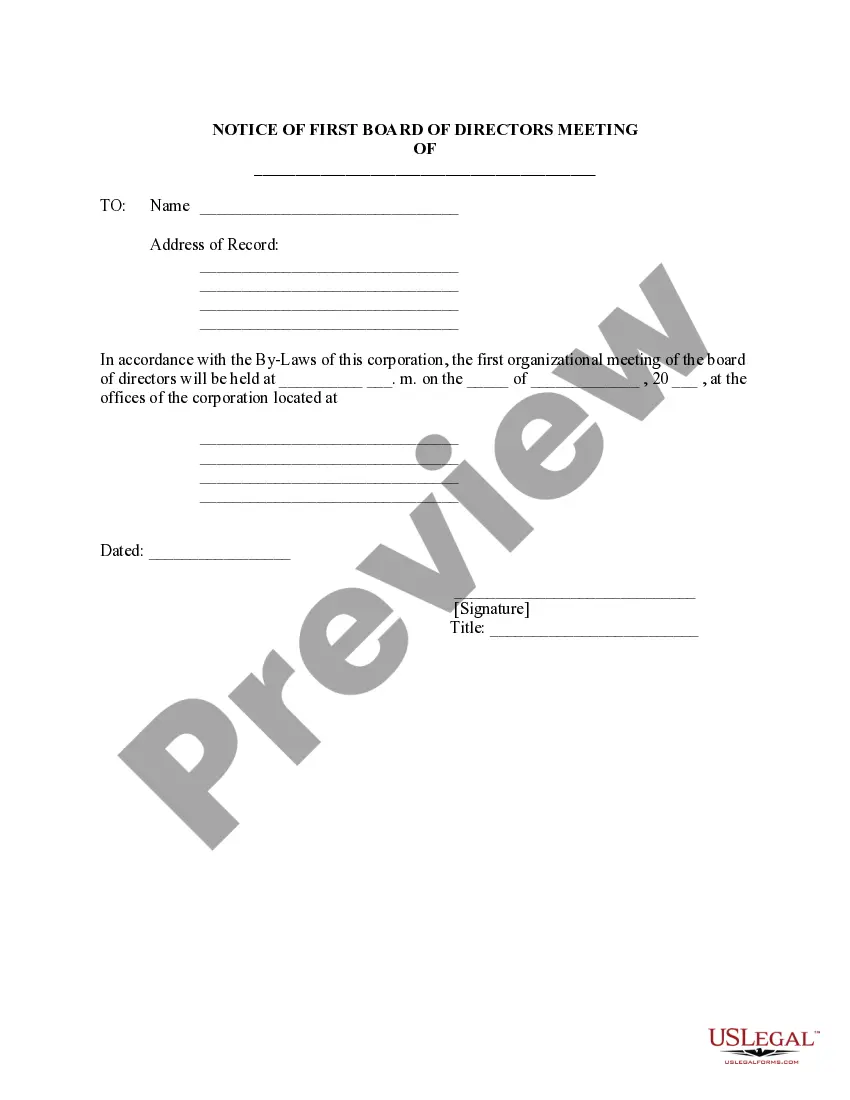
Board Directors Corporate Without Ceo In Contra Costa
Description


Get your form ready online
Our built-in tools help you complete, sign, share, and store your documents in one place.
Make edits, fill in missing information, and update formatting in US Legal Forms—just like you would in MS Word.
Download a copy, print it, send it by email, or mail it via USPS—whatever works best for your next step.
Sign and collect signatures with our SignNow integration. Send to multiple recipients, set reminders, and more. Go Premium to unlock E-Sign.
If this form requires notarization, complete it online through a secure video call—no need to meet a notary in person or wait for an appointment.
We protect your documents and personal data by following strict security and privacy standards.

Make edits, fill in missing information, and update formatting in US Legal Forms—just like you would in MS Word.

Download a copy, print it, send it by email, or mail it via USPS—whatever works best for your next step.

Sign and collect signatures with our SignNow integration. Send to multiple recipients, set reminders, and more. Go Premium to unlock E-Sign.

If this form requires notarization, complete it online through a secure video call—no need to meet a notary in person or wait for an appointment.

We protect your documents and personal data by following strict security and privacy standards.
Looking for another form?
Form popularity
FAQ
There is no one definitive answer to this question. It depends on the organization's bylaws and governing structure. The CEO may or may not be a member of the board of directors, and the board of directors may or may not have veto power over the CEO's decisions.
They report to the Board of Directors, which is a group of individuals that provides oversight for the company. So, while the CEO is not technically a member of the Board of Directors, they do report to the Board and are responsible for the day-to-day operations of the company.
Unless the issue has to do with the CEO's job, many foundations agree: There is no good reason why a CEO could not or should not serve on the board.
In some cases, the CEO may be able to effectively control the board of directors and use it to further his own interests rather than those of the shareholders. This can lead to a situation where the CEO is effectively above the board of directors.
If your business is a corporation, then you are required by law to have a board of directors. Depending on your particular corporate structure and your state, one or two directors may be all that's legally required.
Those Who Lack Objectivity If you can't take a step back and look at the big picture, you're not going to be an effective board member. You need to be able to objectively assess a company's performance and make decisions that are in the best interests of the company, not just yourself or your friends on the board.
For example, if you work for a public company, company directors are above the CEO. If you work for a private company, it could be owners or board members who rank above the CEO. In most organizations, the positions above the CEO include Chairman of the Board, President and Vice President.
However, to avoid actual or perceived conflicts of interest, questions concerning accountability, or blurring the line between oversight and execution, chief executives should be non-voting members of the board, unless not permitted by law.” See Recommended Governance Practices from BoardSource,“LP7”.
It depends on the organization's bylaws and governing structure. The CEO may or may not be a member of the board of directors, and the board of directors may or may not have veto power over the CEO's decisions.
Again, the CEO is responsible for the day-to-day operations and strategic direction of the company, while the Board of Directors provides oversight, governance, and strategic guidance to ensure the company's long-term success.