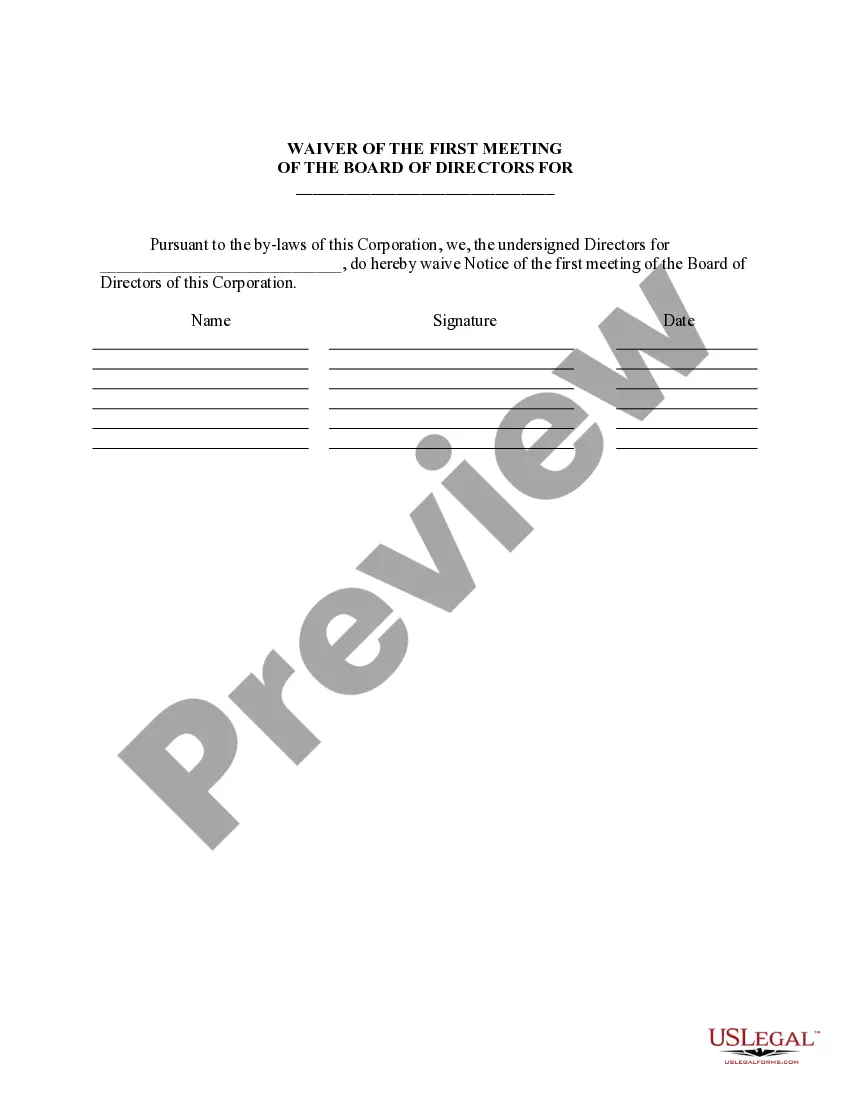
Board Directors Corporate Without Ceo In California
Description



Get your form ready online
Our built-in tools help you complete, sign, share, and store your documents in one place.
Make edits, fill in missing information, and update formatting in US Legal Forms—just like you would in MS Word.
Download a copy, print it, send it by email, or mail it via USPS—whatever works best for your next step.
Sign and collect signatures with our SignNow integration. Send to multiple recipients, set reminders, and more. Go Premium to unlock E-Sign.
If this form requires notarization, complete it online through a secure video call—no need to meet a notary in person or wait for an appointment.
We protect your documents and personal data by following strict security and privacy standards.

Make edits, fill in missing information, and update formatting in US Legal Forms—just like you would in MS Word.

Download a copy, print it, send it by email, or mail it via USPS—whatever works best for your next step.

Sign and collect signatures with our SignNow integration. Send to multiple recipients, set reminders, and more. Go Premium to unlock E-Sign.

If this form requires notarization, complete it online through a secure video call—no need to meet a notary in person or wait for an appointment.

We protect your documents and personal data by following strict security and privacy standards.
Looking for another form?


Form popularity
FAQ
What is a C Corp? A C corporation has the same status that Fortune 500 businesses hold—they are corporate entities separate from their owners. In the case of an individually owned C corp, you are not just the owner of your company, but the majority shareholder as well.
Whether your business needs a CEO depends on many factors, including its size, organizational goals, and ownership structure. Many founders designate themselves as the CEO of their business, but a time comes when they have to appoint an external candidate to this post.
A C corporation is a business structure that allows the owners of a business to become legally separate from the business itself. This allows a company to issue shares and pass on profits while limiting the liability of the shareholders and directors. U.S. Small Business Administration.
Minimum number. Corporations are required to have not less than three directors unless (1) shares have not been issued, then the number can be one or two, (2) the corporation has one shareholder, then the number can be one or two, or (3) the corporation has two shareholders, then the number can be two.
Unlike most other states, California doesn't require corporations to include a business entity identifier like “Inc” or “Corp” in their legal business name. However, there are still some rules you must follow when naming a California corporation.
How to form a C corp Register a unique business name. Appoint officers to the corporation (CEO, board of directors). Draft and file articles of incorporation with the secretary of state in your state. Designate a registered agent to receive legal notices and documentation on behalf of the corporation.
It depends on the organization's bylaws and governing structure. The CEO may or may not be a member of the board of directors, and the board of directors may or may not have veto power over the CEO's decisions.
Start by looking at: Start with your dedicated and active volunteers. Consider your donors. Ask your current board and staff for nominations or recommendations. Reach out to those beyond your nonprofit, like youth, or people in business or from other organizations.
Websites like BoardnetUSA, Bridgespan, Idealist, and LinkedIn Board Connect are all places where your nonprofit can find potential board members. LinkedIn also has numerous nonprofit communities and nonprofit network groups.
For a smaller board, the process often involves being interviewed, whereas larger organizations tend to have a more formalized review before nominating someone for a seat. In publicly traded companies, board members are approved by shareholders at the recommendation of management.