Personal Property For Renters Insurance In Utah
Description

Get your form ready online
Our built-in tools help you complete, sign, share, and store your documents in one place.
Make edits, fill in missing information, and update formatting in US Legal Forms—just like you would in MS Word.
Download a copy, print it, send it by email, or mail it via USPS—whatever works best for your next step.
Sign and collect signatures with our SignNow integration. Send to multiple recipients, set reminders, and more. Go Premium to unlock E-Sign.
If this form requires notarization, complete it online through a secure video call—no need to meet a notary in person or wait for an appointment.
We protect your documents and personal data by following strict security and privacy standards.
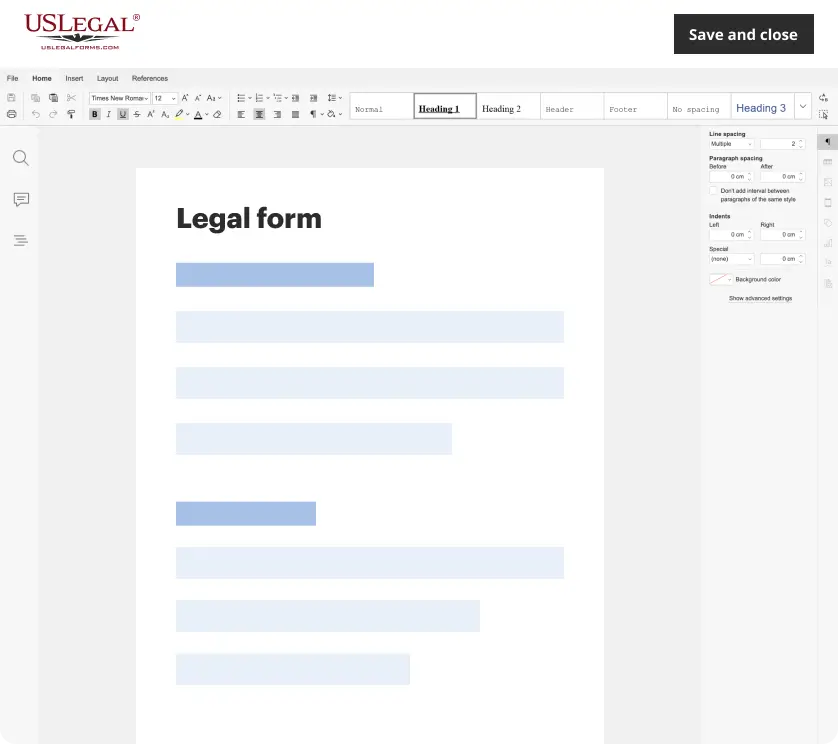
Make edits, fill in missing information, and update formatting in US Legal Forms—just like you would in MS Word.
Download a copy, print it, send it by email, or mail it via USPS—whatever works best for your next step.
Sign and collect signatures with our SignNow integration. Send to multiple recipients, set reminders, and more. Go Premium to unlock E-Sign.
If this form requires notarization, complete it online through a secure video call—no need to meet a notary in person or wait for an appointment.
We protect your documents and personal data by following strict security and privacy standards.
Looking for another form?



Form popularity
FAQ
Personal property simply means “the stuff you own”—from bikes to laptops, TVs, and jewelry. The relevant coverage for all this stuff is known as Coverage C on renters insurance policies. Personal property coverage protects things like electronics, clothing, and furniture.
What is renters insurance? Property protected by renters insuranceProperty not protected by renters insurance Appliances and electronics you own Your car Art and jewelry (subject to coverage limits) Anything you keep outside your home Sporting goods (e.g., bicycles) Anything not owned by you (e.g., your roommates or landlord)3 more rows •
Personal property is any movable property that is not permanently attached to real estate. This includes furniture, appliances, and vehicles. For landlords, it's essential to understand personal property so you can adequately protect your real estate investment.
Personal property simply means “the stuff you own”—from bikes to laptops, TVs, and jewelry. The relevant coverage for all this stuff is known as Coverage C on renters insurance policies. TL;DR. Personal property coverage protects things like electronics, clothing, and furniture.
The sum of the value of all your items is how much coverage you need. Often, the amount of personal property coverage is determined by using 50% of your dwelling coverage limit. For example, if your dwelling coverage is $400,000, you'll have $200,000 in personal property coverage.
Personal property refers to movable items that are not permanently attached to land or structures. Unlike real property, which is immovable, personal property includes everything from household goods like furniture and appliances to vehicles, jewelry, and even intangible assets such as stocks or patents.
You can request a quote for these coverages here. In conclusion, home insurance is required in Utah when buying a home with a mortgage, renting out your property, living in a community with an HOA, or when there's a higher risk of a natural disaster.
Compulsory insurance is insurance that must be legally owned to do an activity, such as auto insurance and driving a car. Other types of compulsory insurance include workers' compensation and professional liability insurance.
While homeowner's or renter's insurance isn't required in Utah, it is definitely a good idea. These types of policies protect your personal property and can help you get back to normal after a loss.
Employer health insurance laws in Utah Surprisingly, no state law requires employers to provide group health insurance to employees. (But an overwhelming number of employers in Utah do.) If you offer group health insurance, federal laws kick in that require you to cover certain essential benefits.