Personal Belongings With 7 Letters In Illinois
Description

Get your form ready online
Our built-in tools help you complete, sign, share, and store your documents in one place.
Make edits, fill in missing information, and update formatting in US Legal Forms—just like you would in MS Word.
Download a copy, print it, send it by email, or mail it via USPS—whatever works best for your next step.
Sign and collect signatures with our SignNow integration. Send to multiple recipients, set reminders, and more. Go Premium to unlock E-Sign.
If this form requires notarization, complete it online through a secure video call—no need to meet a notary in person or wait for an appointment.
We protect your documents and personal data by following strict security and privacy standards.
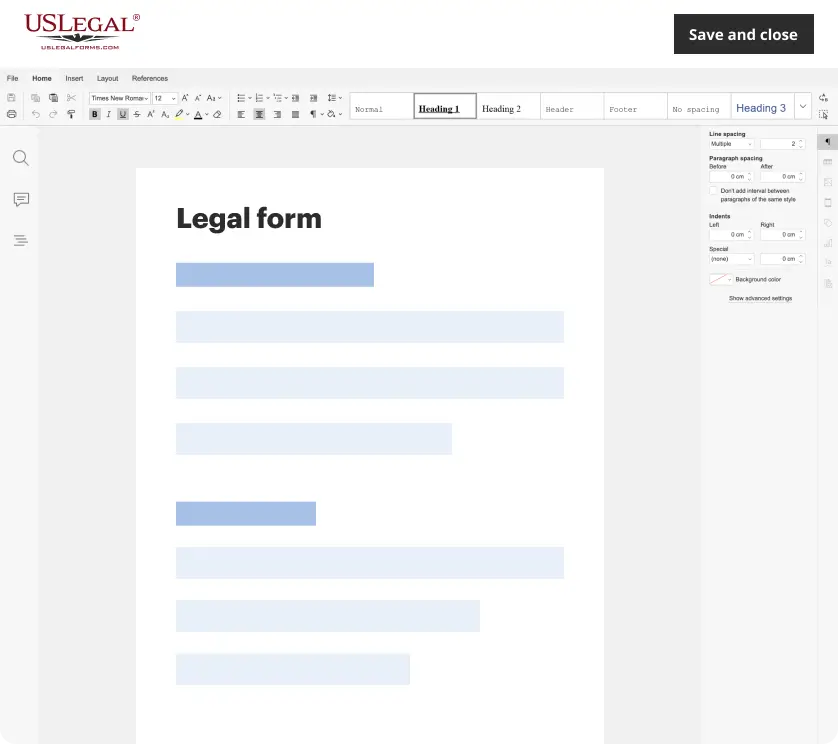
Make edits, fill in missing information, and update formatting in US Legal Forms—just like you would in MS Word.
Download a copy, print it, send it by email, or mail it via USPS—whatever works best for your next step.
Sign and collect signatures with our SignNow integration. Send to multiple recipients, set reminders, and more. Go Premium to unlock E-Sign.
If this form requires notarization, complete it online through a secure video call—no need to meet a notary in person or wait for an appointment.
We protect your documents and personal data by following strict security and privacy standards.
Looking for another form?


Form popularity
FAQ
A small estate affidavit is a sworn statement used to collect and distribute a deceased person's assets when the total estate value falls below the statutory threshold, currently $100,000 in Illinois.
“Tangible personal property” exists physically (i.e., you can touch it) and can be used or consumed. Clothing, vehicles, jewelry, and business equipment are examples of tangible personal property.
"I am writing to formally demand the immediate return of the following personal property: List the items. These items belong to me, and I expect their prompt return." Specify a reasonable deadline by which you expect the property to be returned. Clearly state the date and time.
Writing a Personal Property Demand Letter Step 1: Use a Professional Letterhead. Step 2: Address the Recipient. Step 3: Start with a Clear Introduction. Step 4: Clearly State Your Demand. Step 5: Specify a Deadline. Step 6: Explain Consequences of Non-Compliance. Step 7: Offer a Contact Point and Closing. Step 8: Keep Copies.
Demand Letter Components Facts of the case. An outline of what happened. Statement of the issue. A brief description of the problem. Demand. The dollar amount or action necessary to resolve the case. Response deadline. The date by which the recipient must respond. Noncompliance consequences.
If you are trying to resolve a dispute, you may want to send a demand letter. You can write one yourself, but hiring an attorney will help you navigate legalities and show the recipient the seriousness of the matter.
A personal property demand letter is a document that asks an individual or entity to return a piece of personal property to its rightful owner. These letters are official, which means you can use them to mention you are considering legal action.
Response: You need to go to your local Courthouse and file lawsuit against him to return your property and at the same time ask the Court to order him to pick his belongings within a set period of time. Otherwise, you can dispose of the items.
If the house is in your name (or in both of your names), you should be able to enter the house to retrieve your things, assuming that he hasn't changed the locks. Otherwise, the only legal way is to ask a judge for permission to get your belongings.
The primary purpose of a demand letter is to provide a clear and concise statement of the problem and the desired resolution, with the goal of avoiding legal action. Demand letters are commonly used in pre-legal actions, such as debt collection, contract breaches, and other disputes.