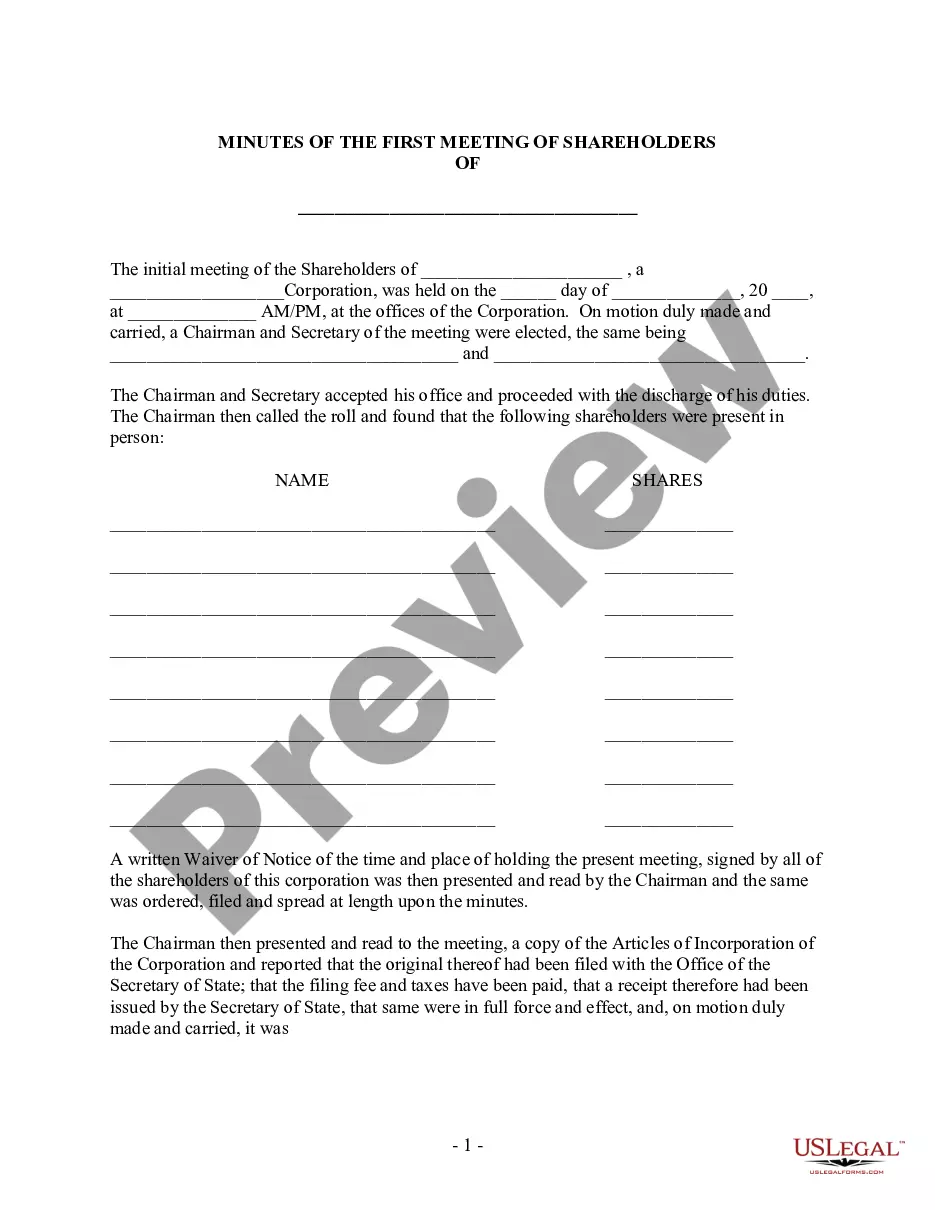
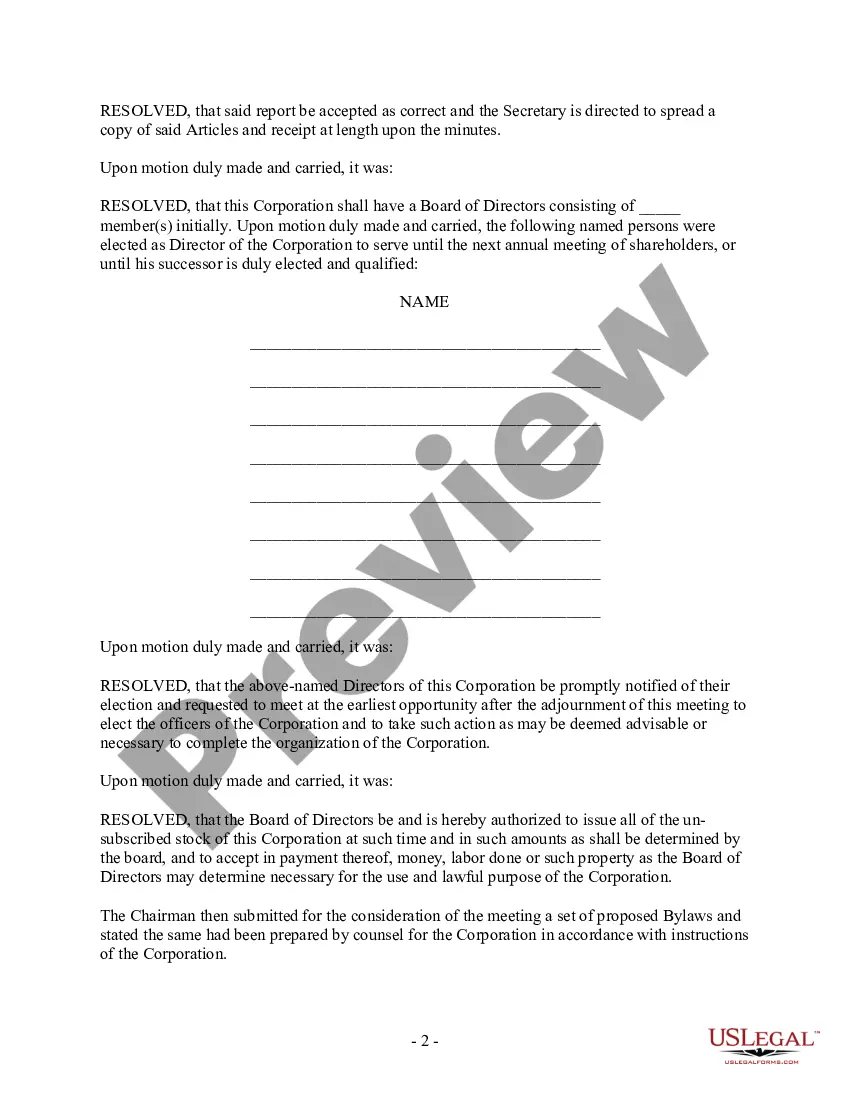
Meeting Minutes Corporate Without Quorum In Florida
Description



Get your form ready online
Our built-in tools help you complete, sign, share, and store your documents in one place.
Make edits, fill in missing information, and update formatting in US Legal Forms—just like you would in MS Word.
Download a copy, print it, send it by email, or mail it via USPS—whatever works best for your next step.
Sign and collect signatures with our SignNow integration. Send to multiple recipients, set reminders, and more. Go Premium to unlock E-Sign.
If this form requires notarization, complete it online through a secure video call—no need to meet a notary in person or wait for an appointment.
We protect your documents and personal data by following strict security and privacy standards.

Make edits, fill in missing information, and update formatting in US Legal Forms—just like you would in MS Word.

Download a copy, print it, send it by email, or mail it via USPS—whatever works best for your next step.

Sign and collect signatures with our SignNow integration. Send to multiple recipients, set reminders, and more. Go Premium to unlock E-Sign.

If this form requires notarization, complete it online through a secure video call—no need to meet a notary in person or wait for an appointment.

We protect your documents and personal data by following strict security and privacy standards.
Looking for another form?
Form popularity
FAQ
Corporate meeting minutes typically include: The meeting's date, time and location. A list of attendees and absentees, including any present board members or officers. Agenda items. Summaries of all discussion points. Details of all activities completed or agreed upon. Results of any votes or motions.
Elections shall be decided by a plurality of ballots cast. There is no quorum requirement; however, at least 20 percent of the eligible voters must cast a ballot in order to have a valid election.
Chapter 720 of the Florida Statutes governs homeowners' associations (HOAs) in Florida. Unlike condominiums or cooperatives, homeowners' associations typically govern single-family homes in a specific development or community.
Fla. Stat. §718.3027(1) now provides that a rebuttable presumption of a conflict of interest exists if any of the following occurs without prior notice: A director or an officer, or a relative2 of a director or an officer, enters into a contract for goods or services with the association.
