Agreement Arbitrate Sample With Replacement In Nevada
Description





Form popularity
FAQ
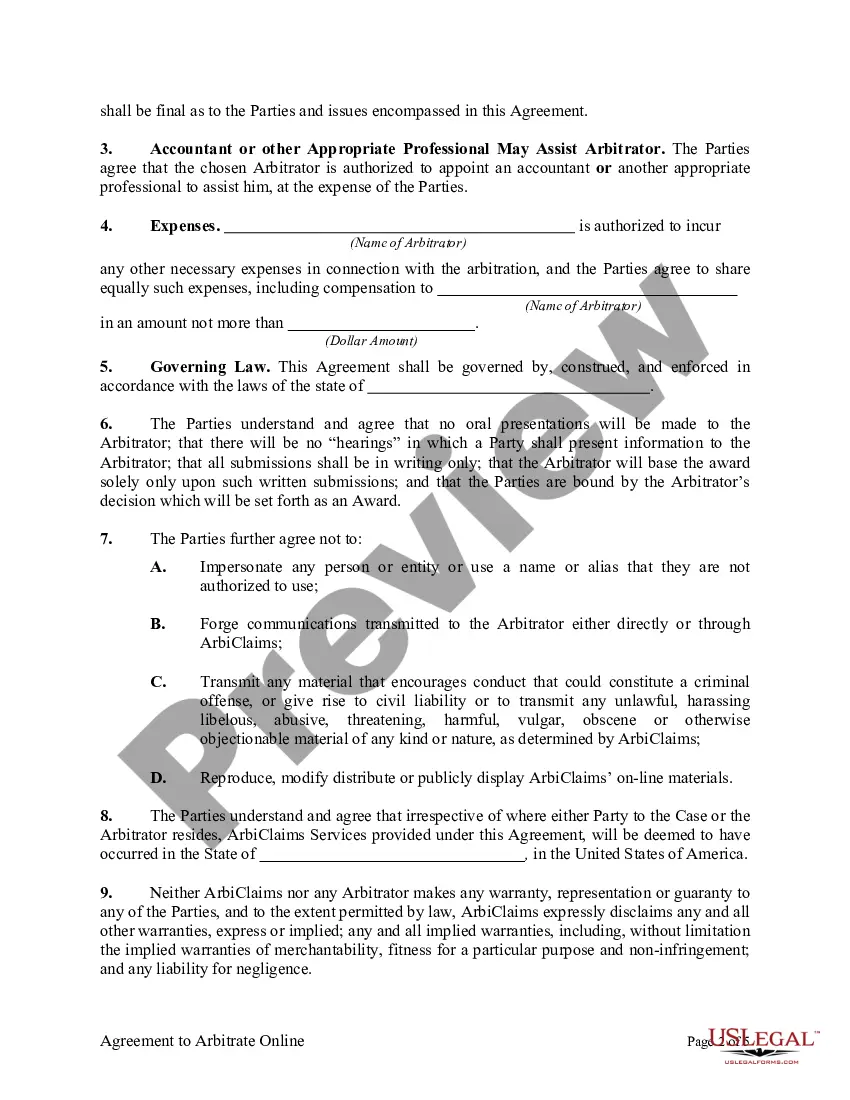
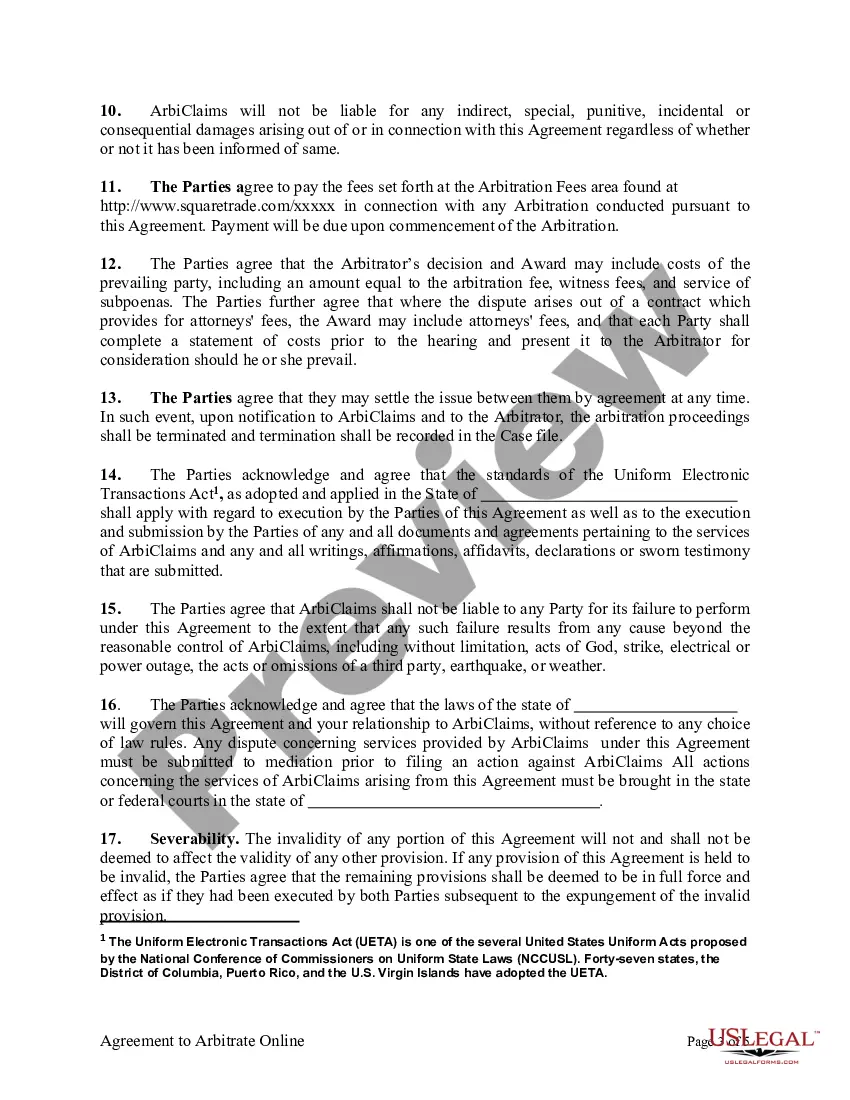
Arbitration is an adjudicative process in which an arbitrator or panel of arbitrators issues a decision on the merits after a hearing. In general, before the arbitration the parties should agree that the decision by the arbitrator(s) is binding or non-binding.
LCCP 2 We, the undersigned parties, hereby agree to submit to arbitration administered by the American Arbitration Association under its applicable Procedures for Large, Complex Commercial Disputes the following controversy describe briefly. Judgment of any court having jurisdiction may be entered on the award.
“Any dispute, controversy or claim arising out of or relating to this contract, or the breach, termination or invalidity thereof, shall be settled by arbitration in ance with the UNCITRAL Arbitration Rules as at present in force.”
Drafting the “perfect” arbitration agreement Clear and precise language. Clarity and brevity are key to avoiding an unenforceable arbitration clause and the costs and delays that follow. Scope. Seat of arbitration. Governing law. Arbitral Rules. Language. Arbitrators. Other common issues.
"A dispute having arisen between the parties concerning , the parties hereby agree that the dispute shall be referred to and finally resolved by arbitration under the LCIA Rules. The number of arbitrators shall be one/three. The seat, or legal place, of arbitration shall be City and/or Country.
The Scope of the Clause. This section of the clause is critical; it sets the boundaries for which disputes the tribunal is authorised to determine. Choice of Rules. The Number of Arbitrators. Appointing Authority. Choice of Venue. The language of the proceedings. Finality. Exclusion of the right of appeal.
1. An agreement contained in a record to submit to arbitration any existing or subsequent controversy arising between the parties to the agreement is valid, enforceable and irrevocable except as otherwise provided in NRS 597.995 or upon a ground that exists at law or in equity for the revocation of a contract. 2.
The Scope of the Clause. This section of the clause is critical; it sets the boundaries for which disputes the tribunal is authorised to determine. Choice of Rules. The Number of Arbitrators. Appointing Authority. Choice of Venue. The language of the proceedings. Finality. Exclusion of the right of appeal.
