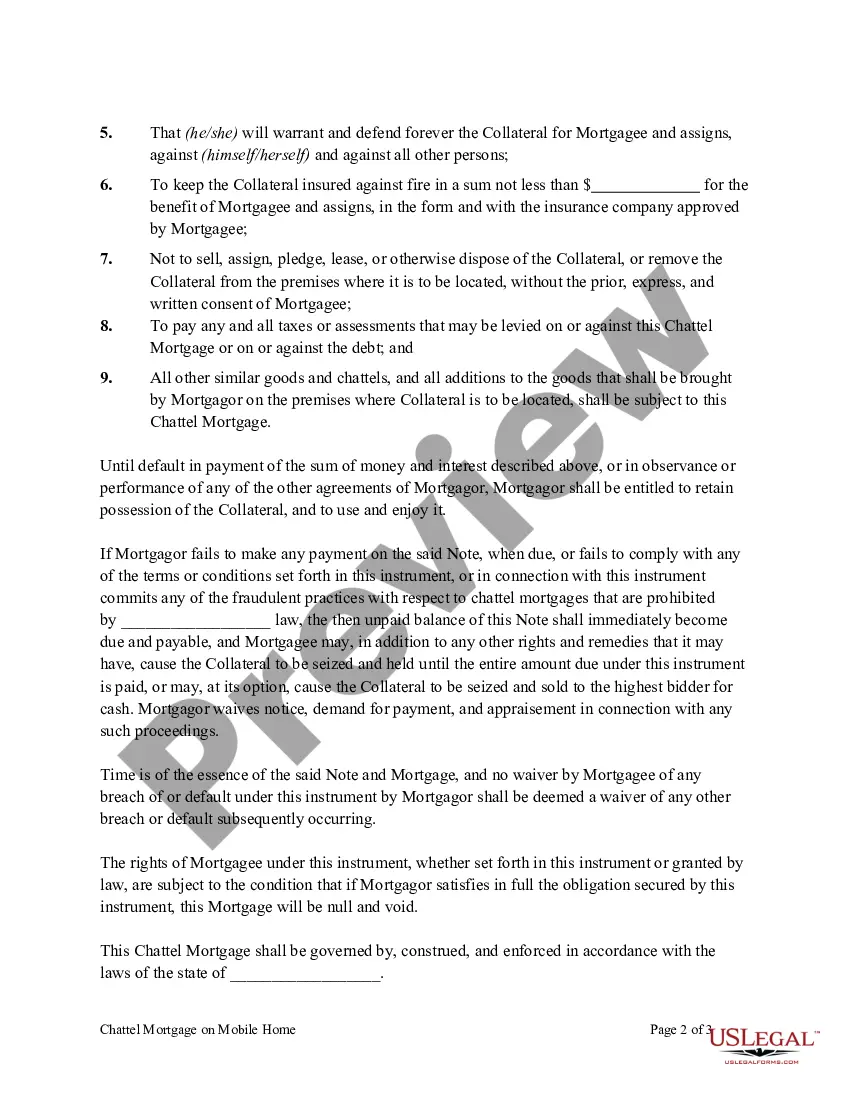
Chattel Mortgage Form Foreclose In Nassau
Description

Get your form ready online
Our built-in tools help you complete, sign, share, and store your documents in one place.
Make edits, fill in missing information, and update formatting in US Legal Forms—just like you would in MS Word.
Download a copy, print it, send it by email, or mail it via USPS—whatever works best for your next step.
Sign and collect signatures with our SignNow integration. Send to multiple recipients, set reminders, and more. Go Premium to unlock E-Sign.
If this form requires notarization, complete it online through a secure video call—no need to meet a notary in person or wait for an appointment.
We protect your documents and personal data by following strict security and privacy standards.

Make edits, fill in missing information, and update formatting in US Legal Forms—just like you would in MS Word.

Download a copy, print it, send it by email, or mail it via USPS—whatever works best for your next step.

Sign and collect signatures with our SignNow integration. Send to multiple recipients, set reminders, and more. Go Premium to unlock E-Sign.

If this form requires notarization, complete it online through a secure video call—no need to meet a notary in person or wait for an appointment.

We protect your documents and personal data by following strict security and privacy standards.
Looking for another form?






Form popularity
FAQ
In nonjudicial pre-foreclosure situations, the pre-foreclosure process is usually quick. For example, the pre-foreclosure process can be as short as 111 days in California. This includes a 90-day default notice period and a 21-day foreclosure sale notice.
In California, the pre-foreclosure process is governed by specific laws designed to protect homeowners. The California Homeowner Bill of Rights mandates that lenders must contact homeowners to explore options to avoid foreclosure, 30 days before filing a notice of default.
Even if you don't contest the foreclosure action, the sale usually won't occur until around a month after the judge issues a foreclosure order. So you'll probably have a couple of months from the first notice of the case to the date the court orders the sale.
It takes at least 6 to 8 months for a fore- closure lawsuit to go from summons and complaint to auction — even if you ignore the court case. In reality, however, the process is taking much longer. If you file an Answer and appear at the mandatory settlement conference, it is taking lenders 1 to 3 years to foreclose.
In nonjudicial pre-foreclosure situations, the pre-foreclosure process is usually quick. For example, the pre-foreclosure process can be as short as 111 days in California. This includes a 90-day default notice period and a 21-day foreclosure sale notice.
For Residential Cases. Lender must mail you information on getting help at least 90 days before starting a court case. Lender asks court for a judgment on default and to appoint a Referee to decide the amount you owe and write a report. Lender asks court to accept the Referee's findings. Judge orders sale of your home.
Loss in Ownership, Title, and Equity: The most obvious drawback of a deed in lieu is the loss of ownership, title, and equity in the property. A borrower will also lose any improvements that were done on the property, rental income, and other profits related to the property.
Deed in Lieu of Foreclosure Potential for Relocation Assistance: Sometimes, lenders may offer relocation assistance or additional time to stay in the home as part of the deal. Faster Resolution: The deed in lieu process is generally quicker than foreclosure, providing faster relief from mortgage obligations.
Unfortunately New York State does NOT have a right of redemption period post foreclosure sale. Once the property is sold at the public auction to the highest bidder, the original foreclosed owner has no right to satisfy the entire amount owed the lender.
