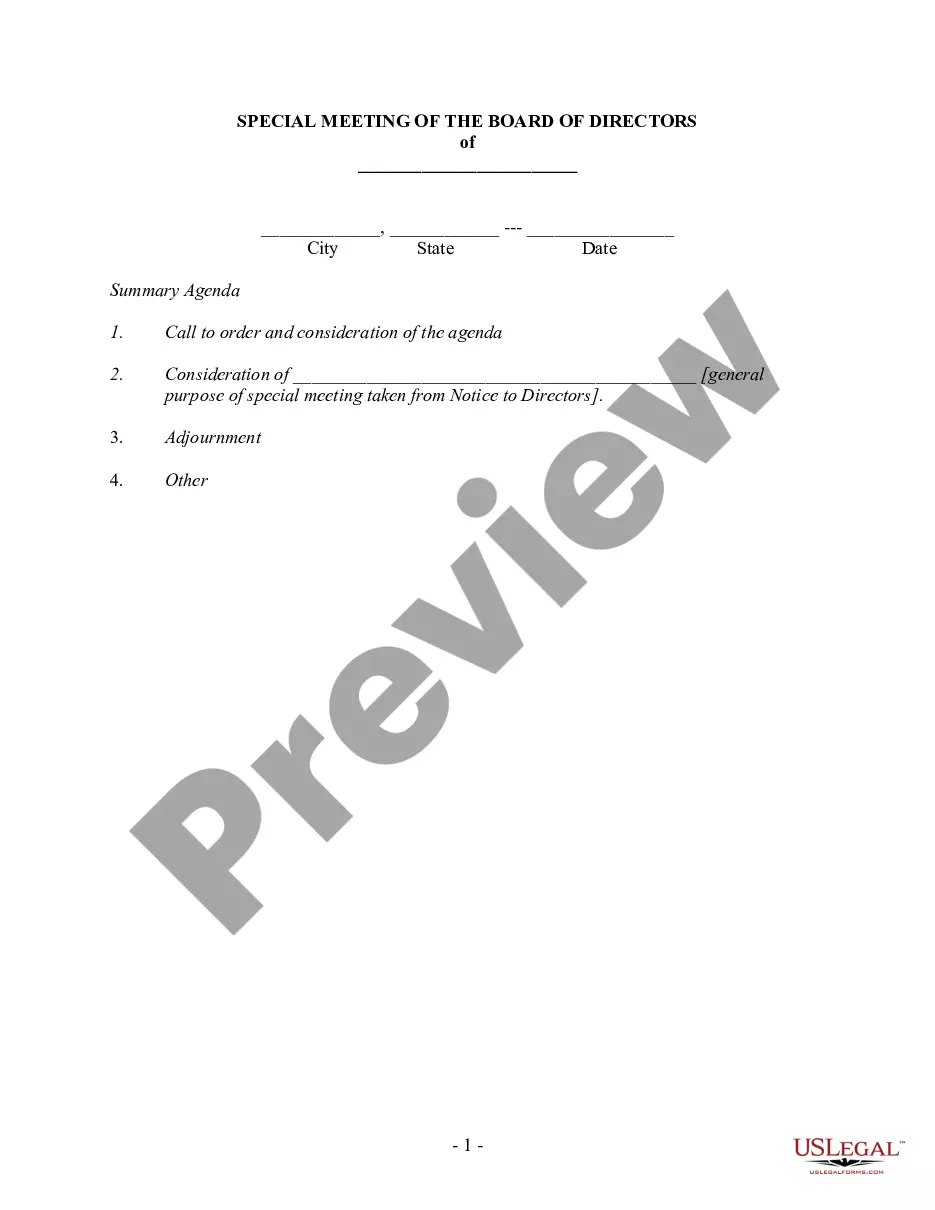
Board Meeting For Directors In Utah
Description



Get your form ready online
Our built-in tools help you complete, sign, share, and store your documents in one place.
Make edits, fill in missing information, and update formatting in US Legal Forms—just like you would in MS Word.
Download a copy, print it, send it by email, or mail it via USPS—whatever works best for your next step.
Sign and collect signatures with our SignNow integration. Send to multiple recipients, set reminders, and more. Go Premium to unlock E-Sign.
If this form requires notarization, complete it online through a secure video call—no need to meet a notary in person or wait for an appointment.
We protect your documents and personal data by following strict security and privacy standards.

Make edits, fill in missing information, and update formatting in US Legal Forms—just like you would in MS Word.

Download a copy, print it, send it by email, or mail it via USPS—whatever works best for your next step.

Sign and collect signatures with our SignNow integration. Send to multiple recipients, set reminders, and more. Go Premium to unlock E-Sign.

If this form requires notarization, complete it online through a secure video call—no need to meet a notary in person or wait for an appointment.

We protect your documents and personal data by following strict security and privacy standards.
Looking for another form?




Form popularity
FAQ
A board of directors is the governing body of an organization (called the board ) of an incorporated firm. The board is a group of elected individuals (its members, also known as directors) acting as fiduciaries on behalf of the organization, its shareholders, and other interested stakeholders.
A typical board of directors has nine members, but some have three, and others have 31. Typically, private companies have between three and seven directors on their boards. To avoid voting ties, boards are usually an odd number.
When addressing the board, always use the title Mr. Chairman” or Madam Chairwoman.” If you are unsure of the proper title, Board of Directors” is always acceptable. When speaking to the board, always refer to them as sir” or ma'am.”
“Good morning/evening, everyone! It's state the date and time, and I'd like to call the meeting of organization name to order.” The officer then addresses any items of personal or perfunctory nature. This could include welcoming new members, thanking retiring members, and welcoming visitors.
Most board meeting agendas follow a classic meeting structure: Calling meeting to order – ensure you have quorum. Approve the agenda and prior board meeting minutes. Executive and committee reports – allow 25% of time here for key topic discussion. Old/new/other business. Close the meeting and adjourn.
Board Meeting Etiquette Tips Good timekeeping is essential for the meeting to run as it should. Do not use electronic devices for any other purpose than for referencing meeting items. Refrain from interrupting other members as they speak. Do not try and chat with other members secretly.
Every nonprofit has its own board recruitment process. After learning about the organization, consider reaching out to the chief executive, chair or board governance committee chair to indicate your interest in joining their board. It's important to understand their board member expectations and commitment.
Here's a look at the procedure for calling an emergency board meeting: Review Board Bylaws. Submit a Written Notice. Specify the Meeting Agenda, Location, and Time. Capture Board Meeting Minutes. Leverage Board Meeting Technology.
Most board meeting agendas follow a classic meeting structure: Calling meeting to order – ensure you have quorum. Approve the agenda and prior board meeting minutes. Executive and committee reports – allow 25% of time here for key topic discussion. Old/new/other business. Close the meeting and adjourn.
They should say something along the lines of: “Good morning/evening, everyone! It's state the date and time, and I'd like to call the meeting of organization name to order.” The officer then addresses any items of personal or perfunctory nature.

