Ownership Agreement For Property In New York
Description






Get your form ready online
Our built-in tools help you complete, sign, share, and store your documents in one place.
Make edits, fill in missing information, and update formatting in US Legal Forms—just like you would in MS Word.
Download a copy, print it, send it by email, or mail it via USPS—whatever works best for your next step.
Sign and collect signatures with our SignNow integration. Send to multiple recipients, set reminders, and more. Go Premium to unlock E-Sign.
If this form requires notarization, complete it online through a secure video call—no need to meet a notary in person or wait for an appointment.
We protect your documents and personal data by following strict security and privacy standards.

Make edits, fill in missing information, and update formatting in US Legal Forms—just like you would in MS Word.

Download a copy, print it, send it by email, or mail it via USPS—whatever works best for your next step.

Sign and collect signatures with our SignNow integration. Send to multiple recipients, set reminders, and more. Go Premium to unlock E-Sign.

If this form requires notarization, complete it online through a secure video call—no need to meet a notary in person or wait for an appointment.

We protect your documents and personal data by following strict security and privacy standards.
Looking for another form?

Form popularity
FAQ
Transferring property ownership in New York involves several important legal steps, from preparing the deed to filing it with the county clerk, paying transfer taxes, reviewing the title, and finalizing the transfer.
Can I write my own contract? Yes, you can write your own contract. However, including all necessary elements is crucial to make it legally binding.
Contents Researching the relevant laws and regulations. Establishing the purpose of the agreement. Identifying the parties involved in the agreement. Determining the co-owners' rights and responsibilities. Drafting the agreement. Outlining the financial contributions and distributions of the co-owners.
The three fundamental types of property are real property, personal property, and intellectual property, and they are as follows: The real property comprises land or immovable property, improvements on land that may be legally owned and utilized, such as harvests, houses, equipment, and roadways.
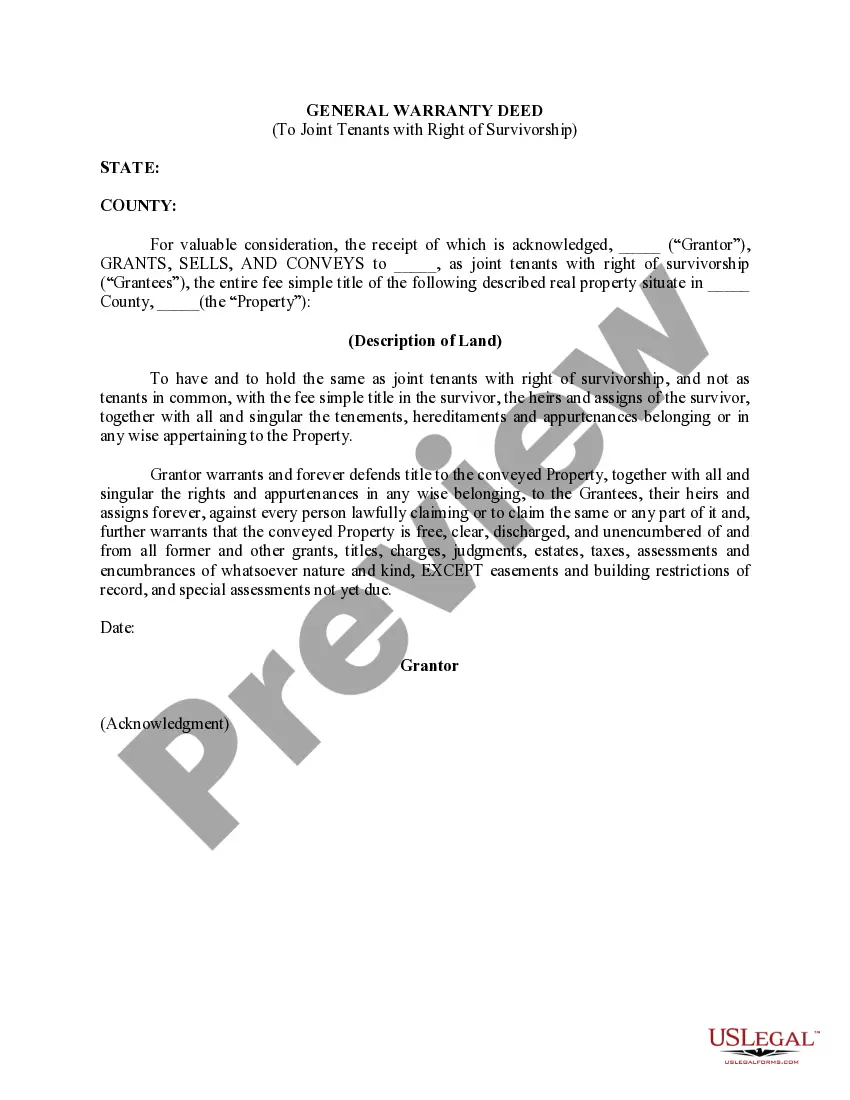
Joint tenants – each owner owns an undivided interest in the whole property, but if the interest is sold, the joint tenancy ends and the owners become tenants in common. If one of the joint tenants dies, the deceased person's interest automatically goes to the other joint tenant.
Choosing the Right Type of Co-Ownership While joint tenancy and tenancy in common are widely recognised as the most common types of co-ownership, the increasing popularity of fractional ownership, made possible at August, shows that there is a growing diversity in how people approach property ownership.
Although the forms of ownership available are controlled by state law, real estate may be held in one of three basic ways. They include ownership in severalty (one owner), co-ownership (more than one owner), and ownership by a trust (property held for the benefit of another).
Outlining the rights and obligations of each party Agree on what rights and responsibilities each party will have. Ensure that each party understands and agrees to the duties and obligations assigned to them. Identify what each party is responsible for, including any financial contributions.
In New York, there are three ways to hold property with a co-owner: tenancy by the entirety, joint tenancy, and tenants in common. However, only two of these can have a right of survivorship. The others must go through probate to pass the property to another owner.
You can search for property records and property ownership information online, in person, or over the phone with a 311 representative. Property owners of all boroughs except Staten Island can visit ACRIS. To search documents for Staten Island property, visit the Richmond County Clerk's website.