Title Vii Rights With Child Protective Services In Cook
Description




Get your form ready online
Our built-in tools help you complete, sign, share, and store your documents in one place.
Make edits, fill in missing information, and update formatting in US Legal Forms—just like you would in MS Word.
Download a copy, print it, send it by email, or mail it via USPS—whatever works best for your next step.
Sign and collect signatures with our SignNow integration. Send to multiple recipients, set reminders, and more. Go Premium to unlock E-Sign.
If this form requires notarization, complete it online through a secure video call—no need to meet a notary in person or wait for an appointment.
We protect your documents and personal data by following strict security and privacy standards.
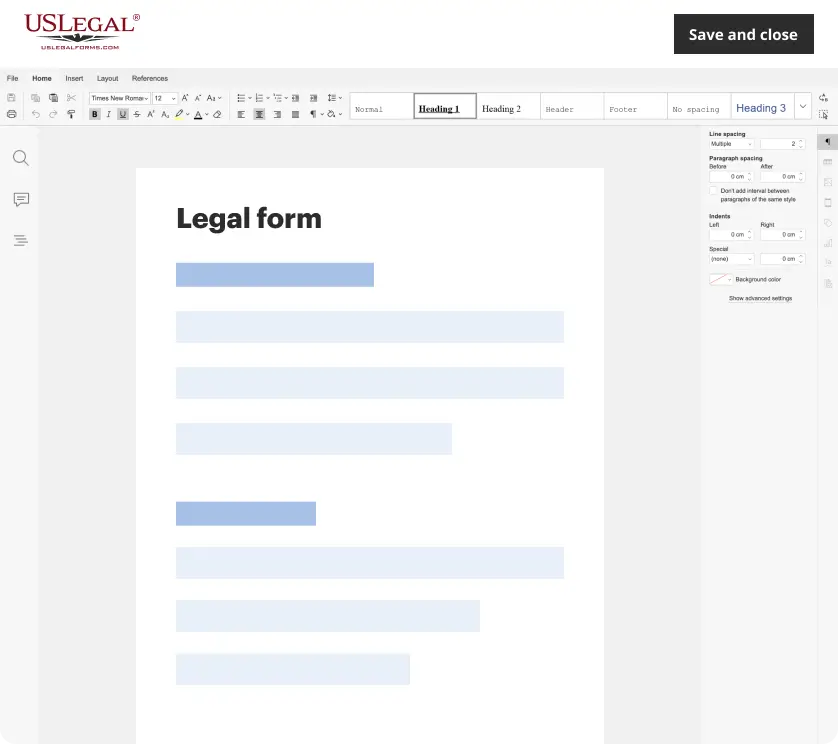
Make edits, fill in missing information, and update formatting in US Legal Forms—just like you would in MS Word.
Download a copy, print it, send it by email, or mail it via USPS—whatever works best for your next step.
Sign and collect signatures with our SignNow integration. Send to multiple recipients, set reminders, and more. Go Premium to unlock E-Sign.
If this form requires notarization, complete it online through a secure video call—no need to meet a notary in person or wait for an appointment.
We protect your documents and personal data by following strict security and privacy standards.
Looking for another form?


Form popularity
FAQ
The short answer is no. CPS cases and Juvenile dependency cases are not open to the public in California. This is because of the confidential nature of the proceedings.
The reporting individual's identity will be confidential unless they choose to tell you.
This was a 4th Amendment (unlawful seizure) and 14th Amendments violation (due process). 3. CPS keeping a parent away from the child undergoing a sexual assault examination, without parental consent, a legitimate reason to exclude her, or a medical emergency.
The reporting individual's identity will be confidential unless they choose to tell you. However, there are steps you can take to help your CPS caseworker close your case fast. The bottom line is to cooperate with CPS and show that you have nothing to hide.
Yes, you can sue the parent for slander if they have made false statements to CPS about you and your childcare business that have damaged your reputation. Slander is a type of defamation, which is the act of making false statements about someone that damage their reputation.
Both Texas and California are switching to a system of “confidential reporting” which requires CPS screeners to ask all callers for information such as their name and phone number. These agencies, in turn, will keep the callers' identity confidential.
The law states that CPS will inform the reporter “what action, if any, was taken to protect the health and welfare of the child.” This includes advising the reporter if the report was screened out.
Here are six steps to becoming a CPS worker: Learn your state and district's licensing requirements. Earn a degree. Gain entry-level employment at a CPS agency. Earn an MSW. Become licensed. Continuous training and education.
The Home's Cleanliness – A clean, safe environment is essential for a child's health and development. CPS workers will check for clutter, dirt, mold, and other sanitary issues that might pose health risks. While every home has its messy moments, persistent neglect could be a sign of a problem.
CPS investigators knock on the door (usually unannounced), look in every room of the house, open kitchen cabinets, sometimes inspect children's bodies, and generally look for any evidence of child maltreatment. Yet CPS agencies rarely seek a warrant, and typically act as if that is unnecessary.