Motion To Strike Form For Motion In Michigan
Description

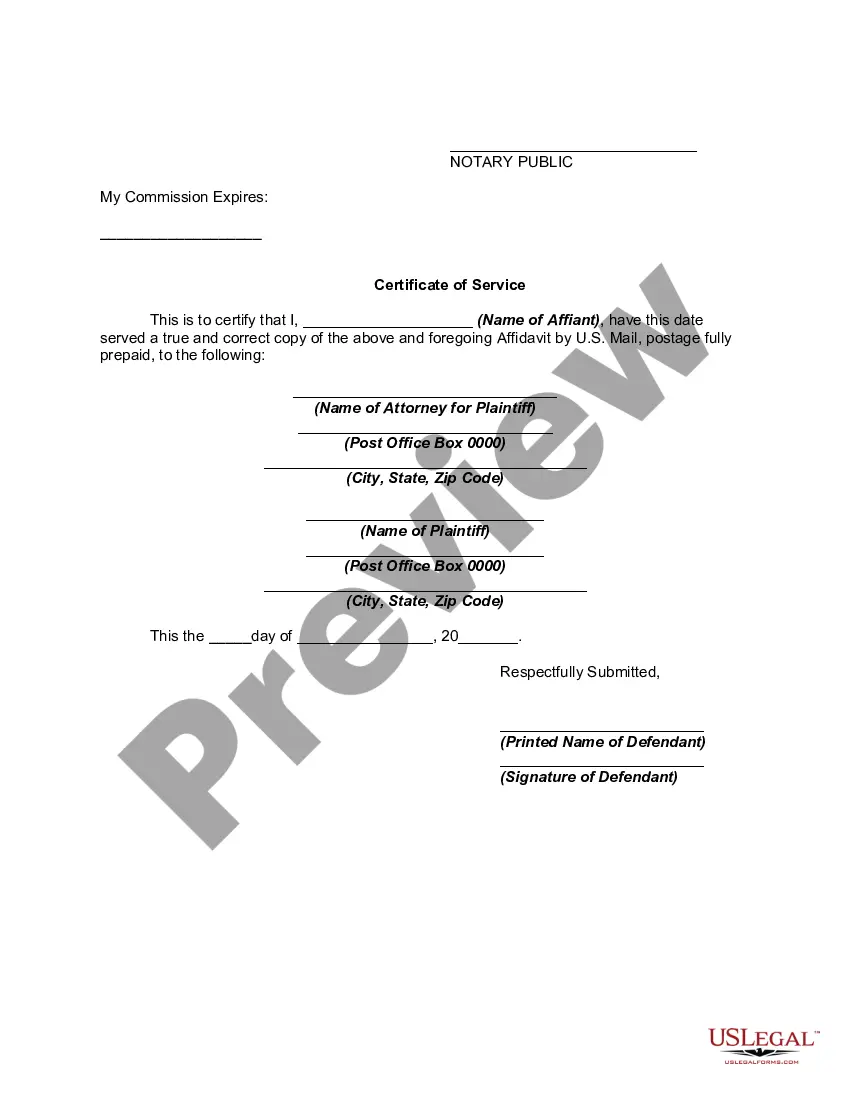




Get your form ready online
Our built-in tools help you complete, sign, share, and store your documents in one place.
Make edits, fill in missing information, and update formatting in US Legal Forms—just like you would in MS Word.
Download a copy, print it, send it by email, or mail it via USPS—whatever works best for your next step.
Sign and collect signatures with our SignNow integration. Send to multiple recipients, set reminders, and more. Go Premium to unlock E-Sign.
If this form requires notarization, complete it online through a secure video call—no need to meet a notary in person or wait for an appointment.
We protect your documents and personal data by following strict security and privacy standards.

Make edits, fill in missing information, and update formatting in US Legal Forms—just like you would in MS Word.

Download a copy, print it, send it by email, or mail it via USPS—whatever works best for your next step.

Sign and collect signatures with our SignNow integration. Send to multiple recipients, set reminders, and more. Go Premium to unlock E-Sign.

If this form requires notarization, complete it online through a secure video call—no need to meet a notary in person or wait for an appointment.

We protect your documents and personal data by following strict security and privacy standards.
Looking for another form?
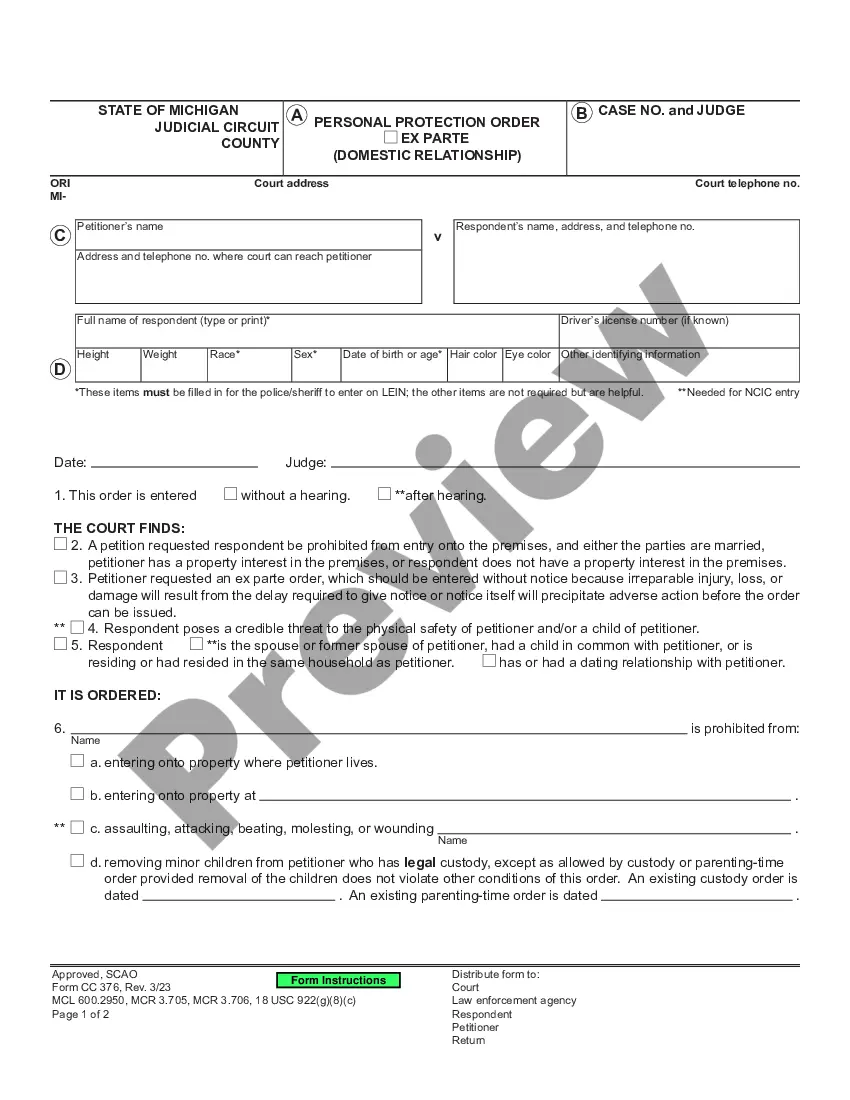

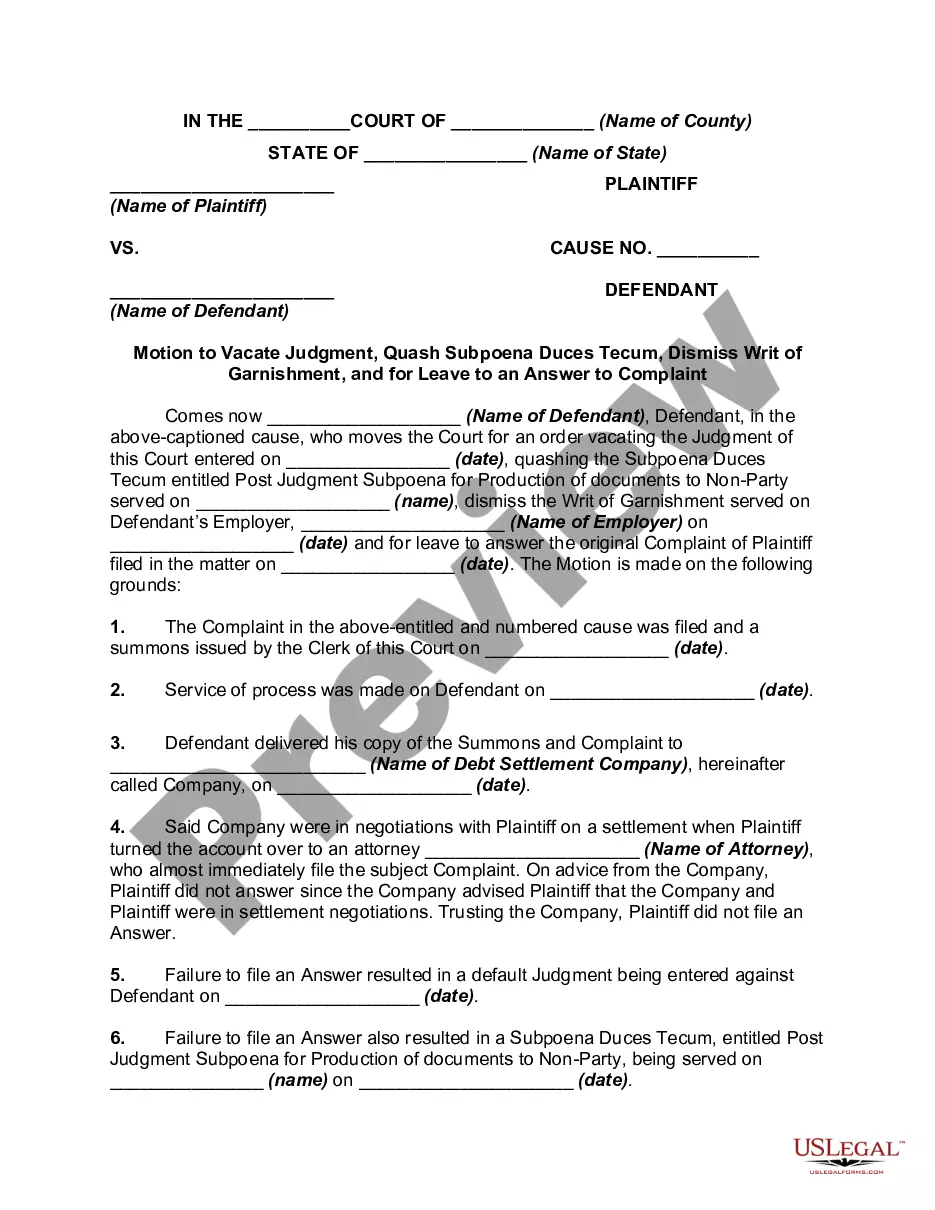

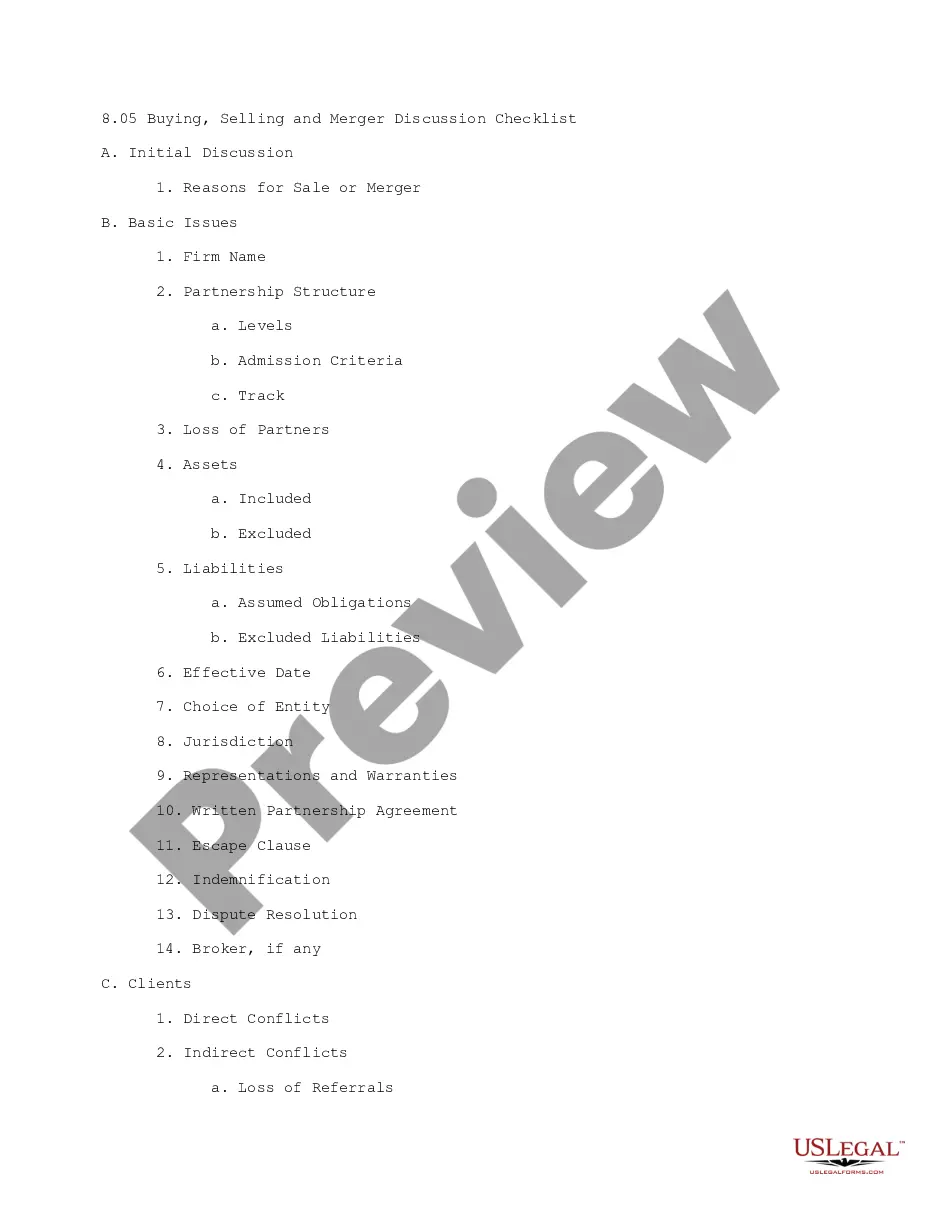

Form popularity
FAQ
File your Motion and the copies with the court clerk's office in the court where your case was heard. File a copy of the proposed order with your Motion. Contact your court to find out which filing methods are available. Depending on your court, you may be able to file electronically.
The court must sign a properly submitted proposed judgment or order if no written objections have been filed within 7 days after service of notice, as long as the judgment or order is consistent with the court's decision. MCR 2.602(B)(3). (This is commonly referred to as the “Seven-Day Rule.”)
If the defendant does not appear within 48 hours, the court shall issue a bench warrant unless the court believes there is good reason to instead schedule the case for further hearing.
If you do not file written objections to the proposed order within 7 days of the date of this notice, the judge may sign the proposed order without a hearing. If the judge decides that a hearing is needed, you will be notified of the hearing date.
What is a Michigan 74 11 law? “7411” comes from MCL 333.7411, which is considered a deferred sentence. 7411 only applies to certain drug crimes and can only be used once in a person's lifetime. A criminal defendant who pleads guilty under 7411 is placed on a period of probation.
Oral motion - You can make a motion verbally (orally) while in court. This can be at the initial appearance, at a status appearance, or during a hearing. Usually, you can use an oral motion when the request is not complicated, or if it is an urgent request that you are hoping the judge will grant that day.
A motion that claims a party has disobeyed a court order. The judge may issue a show cause order that requires the party to appear for a court hearing. At the hearing, the judge will decide if the party disobeyed the order and whether they should face penalties, such as paying a fine or going to jail.
The Federal Rules of Civil Procedure states that "The court may strike from a pleading an insufficient defense or any redundant, immaterial, impertinent, or scandalous matter." Similarly, for example, the California Code of Civil Procedure provides that a motion to strike may be made to strike out any "irrelevant, ...
Write a short and clear introduction. Draft a factually accurate narrative. Know the standard that must be met and craft an explanation of the standard. Use the most persuasive components of the relevant law. Apply the law to the facts in a convincing and credible manner. Conclusion.
Steps Check if the court has blank motion forms. Some courts have "check the boxes" or "fill in the blank" motion forms. Create your caption. Title your motion. Draft the introductory paragraph to the body of the motion. Request relief. Lay out the applicable facts. Make your legal argument. Insert a signature block.
