Texas Correction Deed Form Sample For Lieu Of Foreclosure
Description

Get your form ready online
Our built-in tools help you complete, sign, share, and store your documents in one place.
Make edits, fill in missing information, and update formatting in US Legal Forms—just like you would in MS Word.
Download a copy, print it, send it by email, or mail it via USPS—whatever works best for your next step.
Sign and collect signatures with our SignNow integration. Send to multiple recipients, set reminders, and more. Go Premium to unlock E-Sign.
If this form requires notarization, complete it online through a secure video call—no need to meet a notary in person or wait for an appointment.
We protect your documents and personal data by following strict security and privacy standards.

Make edits, fill in missing information, and update formatting in US Legal Forms—just like you would in MS Word.

Download a copy, print it, send it by email, or mail it via USPS—whatever works best for your next step.

Sign and collect signatures with our SignNow integration. Send to multiple recipients, set reminders, and more. Go Premium to unlock E-Sign.

If this form requires notarization, complete it online through a secure video call—no need to meet a notary in person or wait for an appointment.

We protect your documents and personal data by following strict security and privacy standards.
Looking for another form?
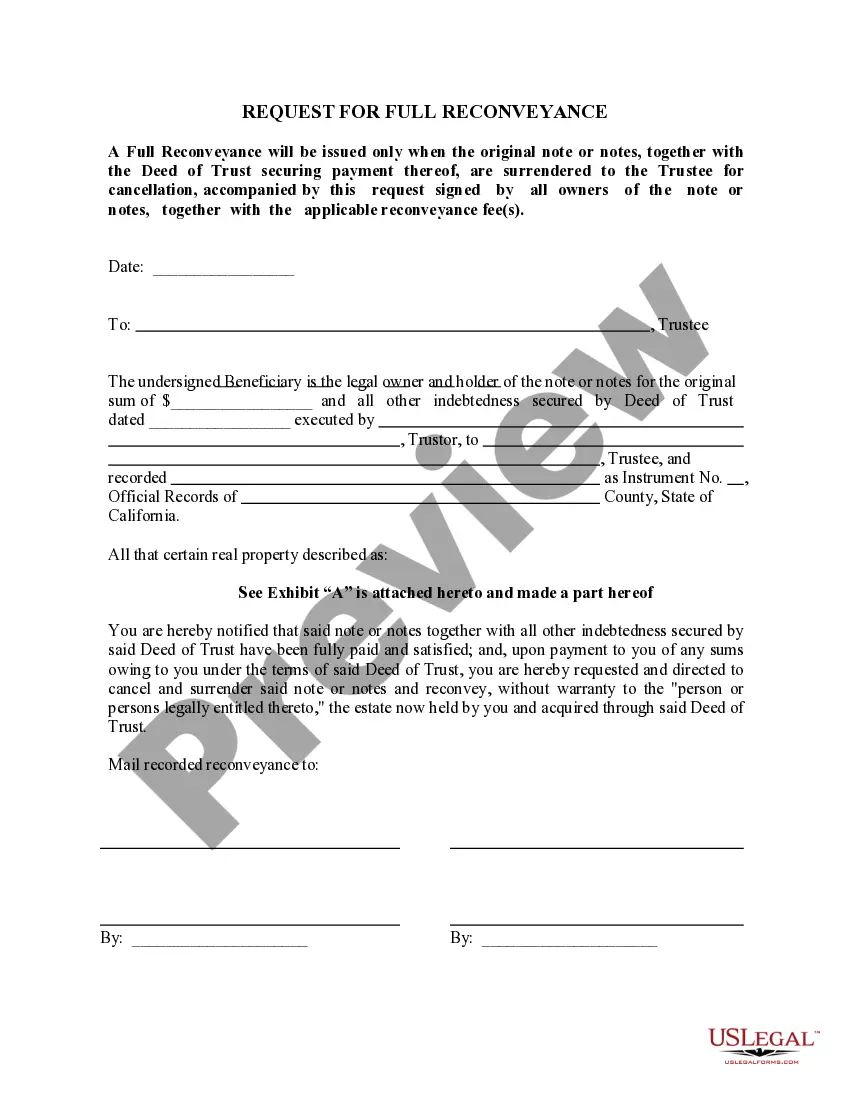

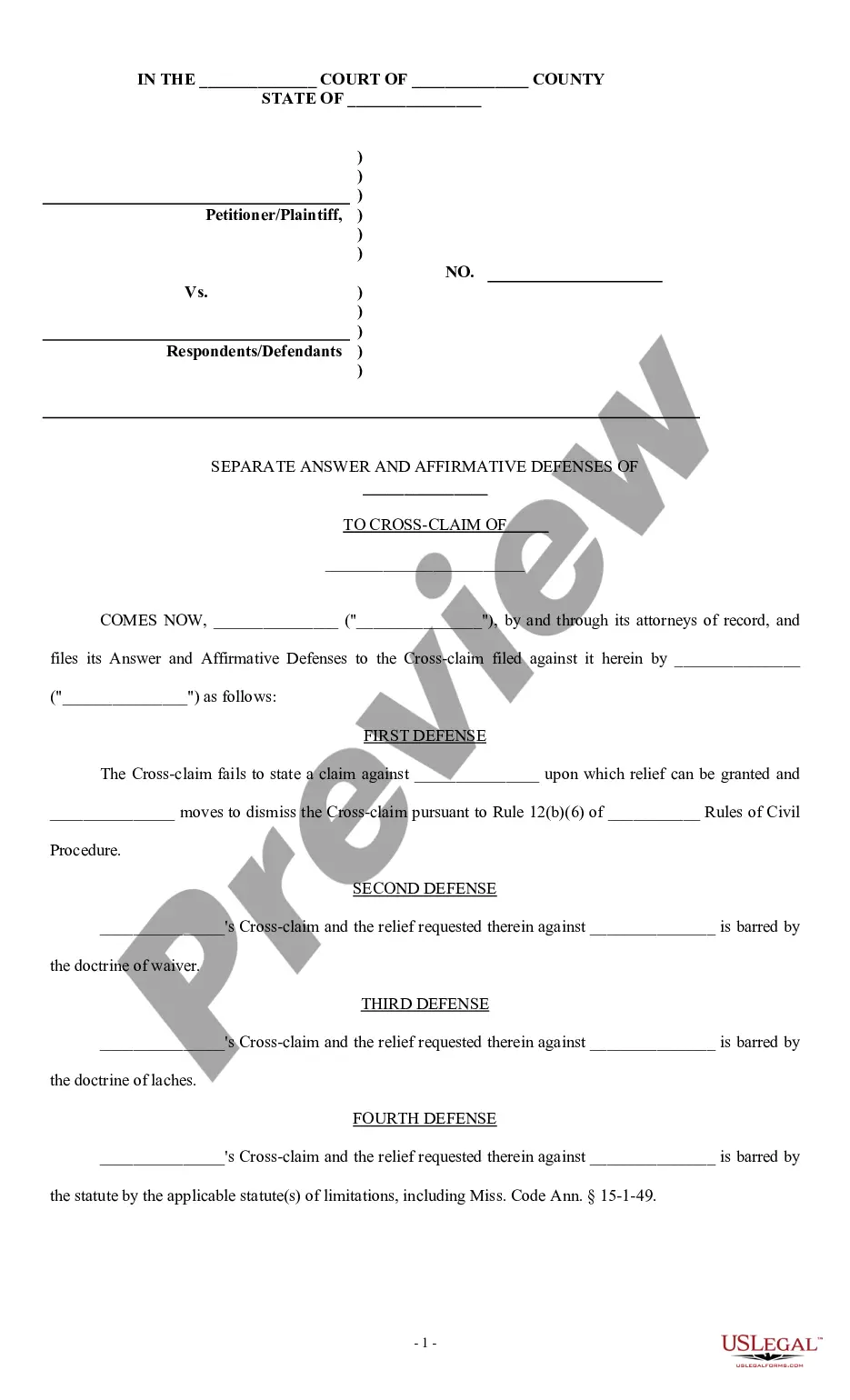
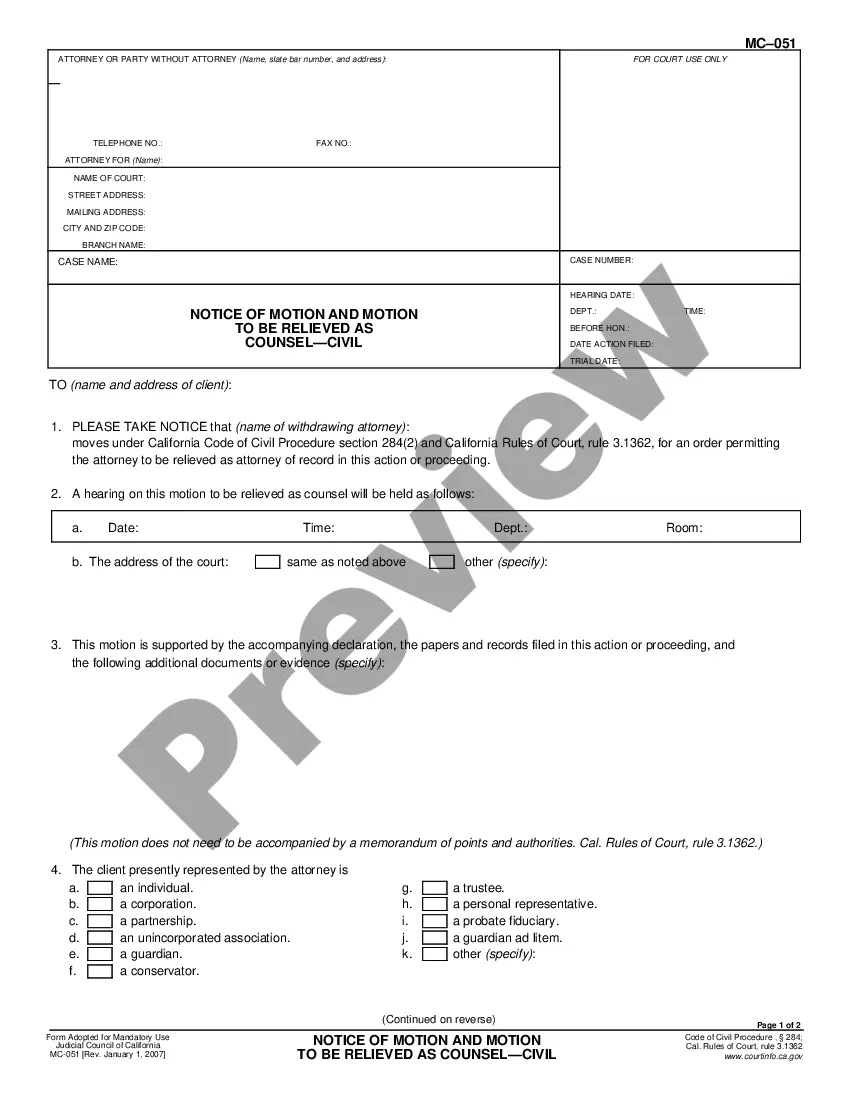
How to fill out Texas Correction Deed - Prior Deed From An Individual To An Individual?
- Log in to your US Legal Forms account if you're a returning user. Ensure your subscription is active for seamless access.
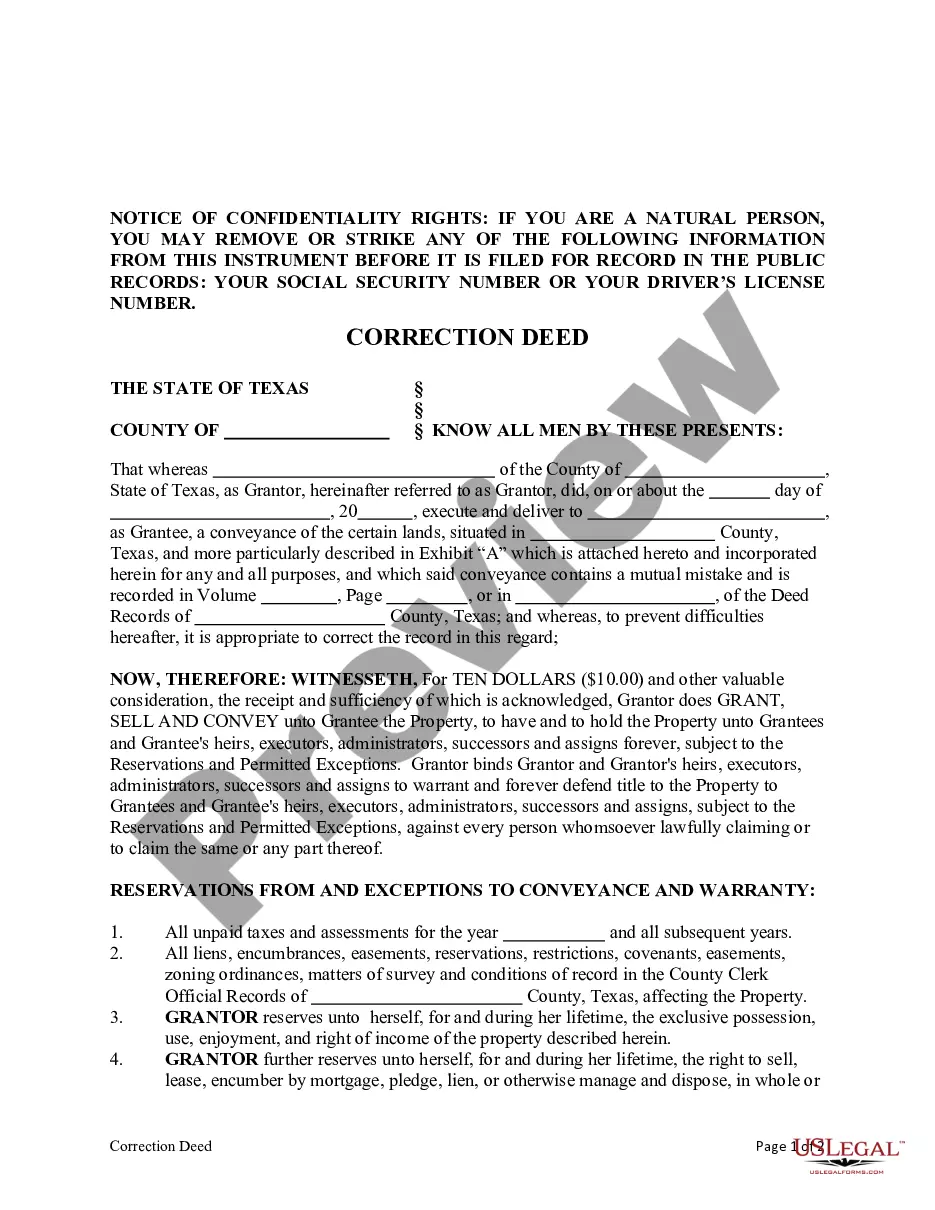
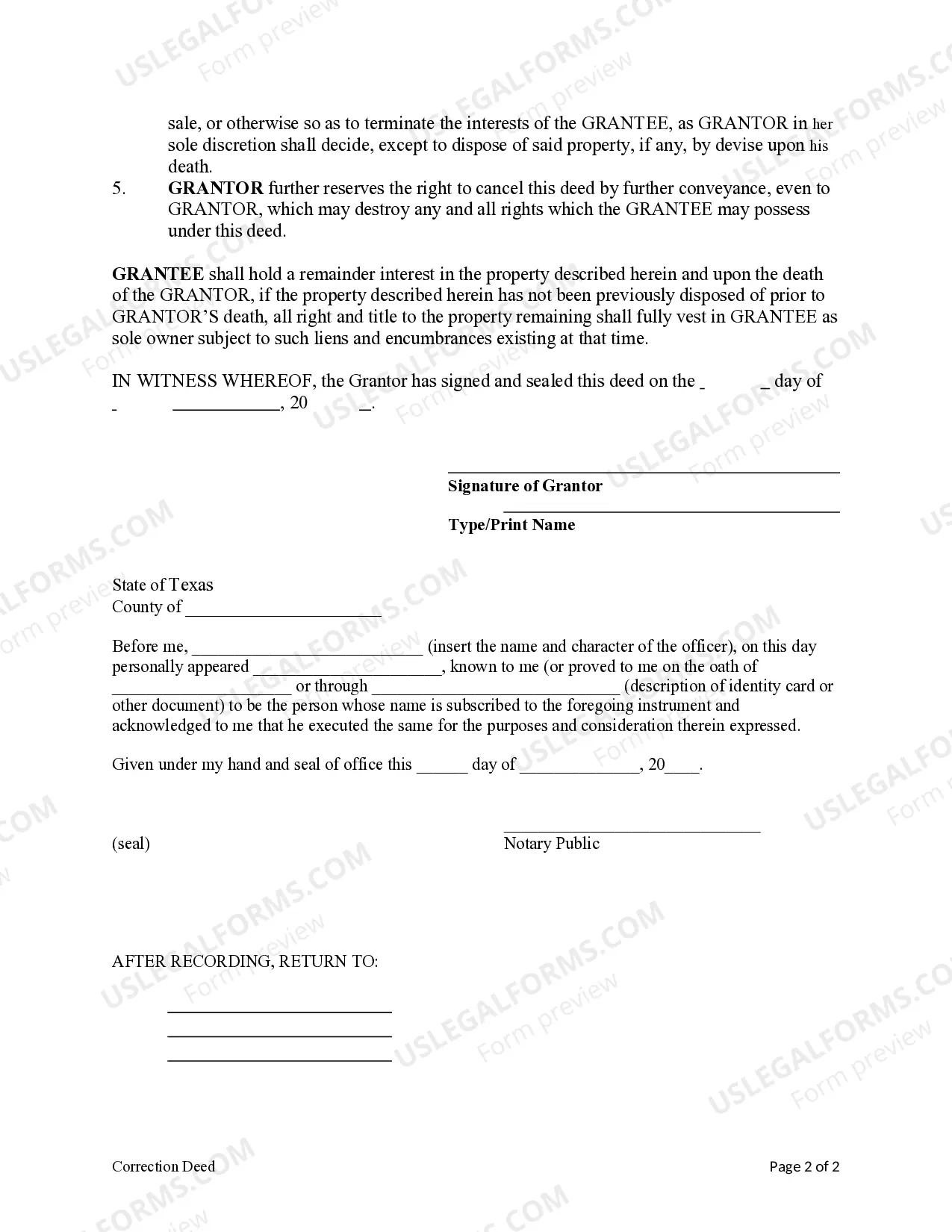
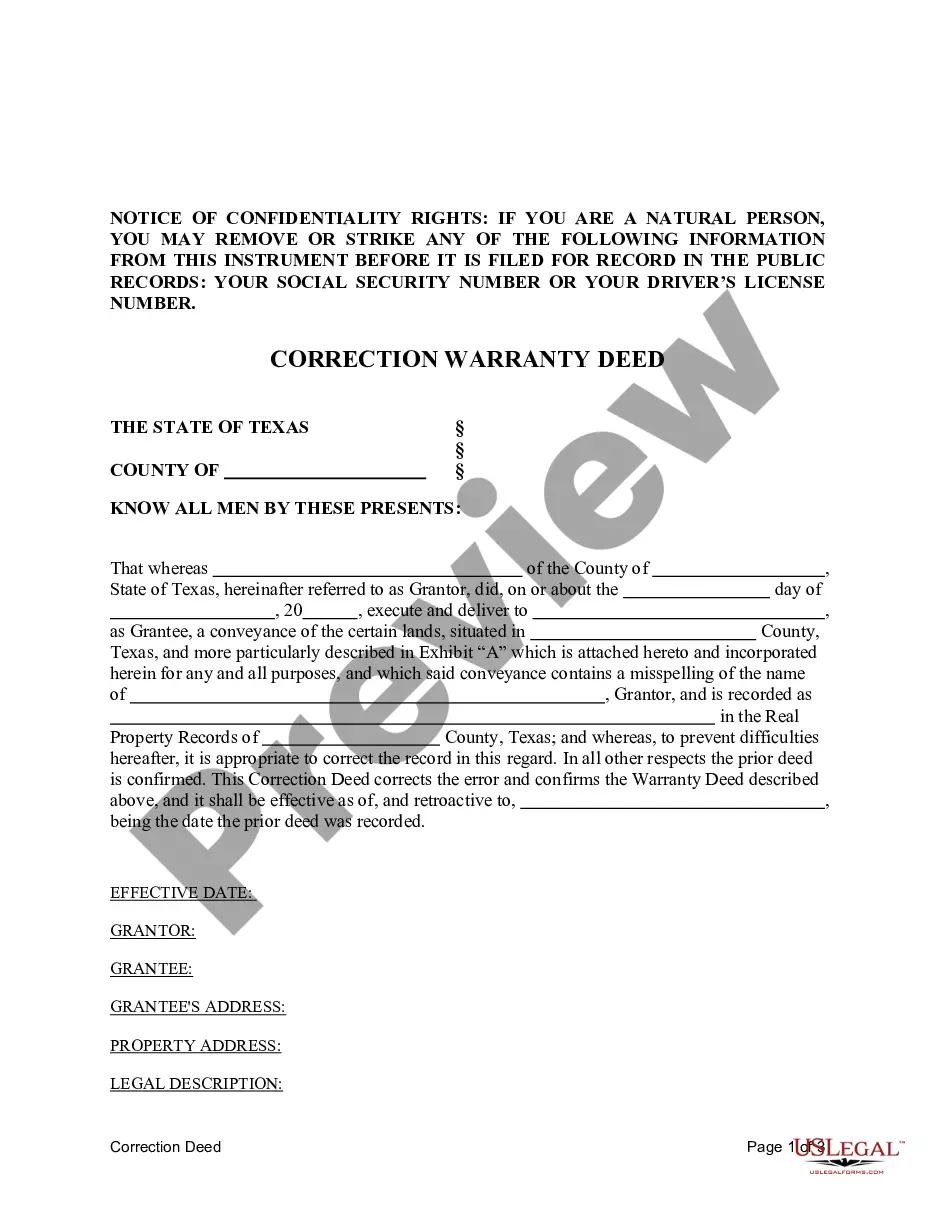
- Preview the Texas correction deed form sample to confirm it meets your needs and adheres to local jurisdiction requirements.
- If the form does not align with your requirements, utilize the Search feature to locate another suitable template.
- Once you've found the correct document, click on the 'Buy Now' button and select your preferred subscription plan.
- Complete your purchase by entering your credit card information or opting for PayPal.
- Download your chosen form and save it to your device. You can also access it anytime from the 'My Forms' section in your profile.
In conclusion, US Legal Forms simplifies the process of obtaining legal documents with its vast selection of over 85,000 forms. Whether you are an individual or an attorney, their platform ensures you access accurate and legally sound documents.
Start your journey with US Legal Forms today to streamline your legal document needs!
Form popularity
FAQ
Lenders are not obligated to accept a deed in lieu of foreclosure, as it is ultimately a negotiation between you and the lender. They will consider various factors such as the property's condition and your financial situation. By preparing a Texas correction deed form sample for lieu of foreclosure in advance, you can present a well-informed case to your lender. This preparation demonstrates your commitment and may increase the likelihood of acceptance.
To file a deed in lieu of foreclosure, start by contacting your lender to discuss your situation. You'll need to negotiate terms and gather the required documents, including a Texas correction deed form sample for lieu of foreclosure. Once you receive approval, complete and sign the deed, then file it with your county clerk's office. This process helps you transfer ownership of the property back to the lender and can provide a way to avoid foreclosure.
One disadvantage of a deed in lieu of foreclosure is the potential impact on your credit score. When you choose this option, it is often treated like a foreclosure, which can lower your score and affect your ability to obtain future loans. Additionally, you may face tax implications if forgiven debt qualifies as taxable income, which complicates financial planning. Consider reviewing a Texas correction deed form sample for lieu of foreclosure to better understand your situation.
To update a deed in Texas, you will need to file a new deed that reflects your desired changes, such as a name change or property boundary modification. It’s crucial to follow the correct procedures to ensure the changes are legally recognized. You can refer to a Texas correction deed form sample for lieu of foreclosure as a guideline to aid in drafting the new deed accurately. This ensures that your property records are up-to-date and legally sound.
Filing a deed in lieu of foreclosure involves a few important steps. Start by discussing the deed with your lender to obtain their approval, as they must accept the transfer. After that, complete the appropriate paperwork, like a Texas correction deed form sample for lieu of foreclosure, and ensure everything is signed and notarized. Submit the deed to your local county clerk’s office to finalize the process.
To correct a deed in Texas, you typically need to prepare a correction deed that indicates the errors made on the original document. This correction deed must be signed and notarized before being filed with the county clerk's office. Accessing a Texas correction deed form sample for lieu of foreclosure can guide you in drafting an accurate document, ensuring all legal requirements are met. This process helps maintain the property records without confusion.
A deed in lieu of foreclosure is a legal document where a homeowner voluntarily hands over their property to the lender to avoid foreclosure. This process often provides a smoother transition for both parties involved. For instance, a Texas correction deed form sample for lieu of foreclosure can illustrate how this transfer takes place, showcasing the necessary elements required for legality. Utilizing such a sample helps ensure that homeowners understand their rights and responsibilities.
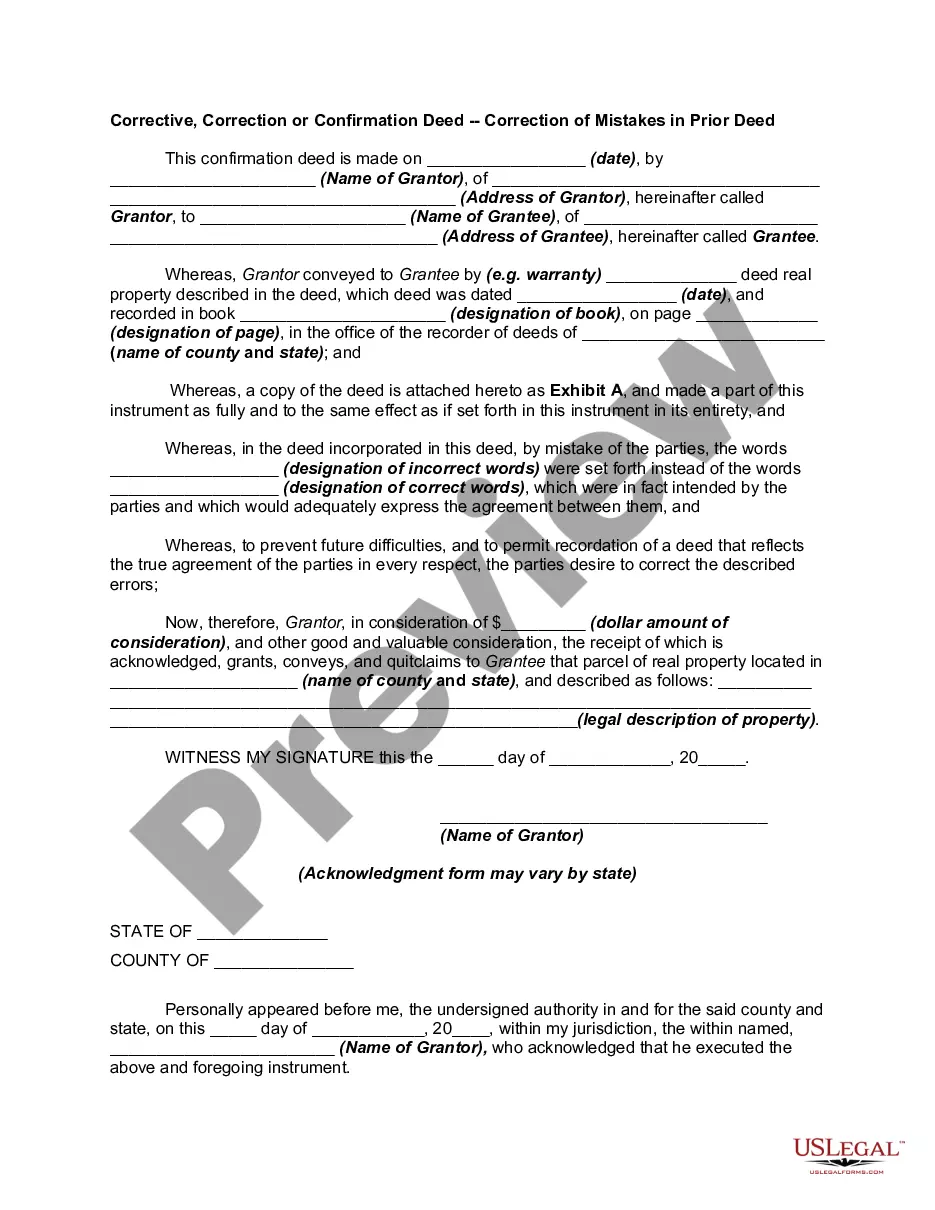
Yes, you can amend a deed by filing a correction deed, which allows you to address any errors or updates to the property's ownership details. This process requires you to provide clear information about what is being amended and reference the original deed. A Texas correction deed form sample for lieu of foreclosure is an excellent resource to ensure that all amendments conform to legal standards.
To correct a name on a deed in Texas, you need to prepare a correction deed that specifies the correct name and references the original deed. The correction deed must be signed, notarized, and then filed with the county clerk where the original deed is recorded. Using a Texas correction deed form sample for lieu of foreclosure simplifies this process, guiding you through the necessary legal language.
To correct a deed in Texas, you typically file a correction deed with the same county clerk where the original deed was recorded. This correction deed must clearly identify the errors being fixed and reference the original deed. Using a Texas correction deed form sample for lieu of foreclosure can streamline this process and ensure all necessary information is included.